
A geometric mean worksheet geometry resource should help students do one thing well: recognize when the geometric mean applies and solve the right-triangle problems where it shows up. In geometry, the geometric mean is the value that balances two numbers so that a proportion stays true, especially in similarity and altitude-to-hypotenuse setups. A strong worksheet gives short definition practice, guided examples, and enough problem variety to build confidence without extra topics.
Geometric Mean Basics
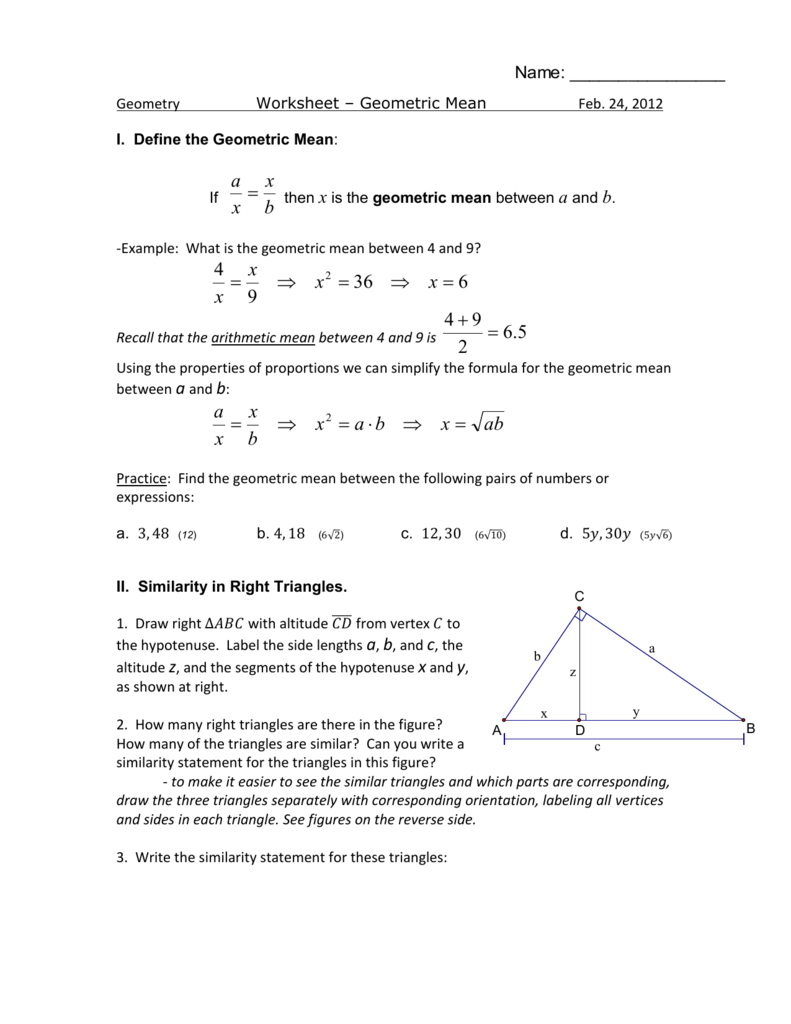
In geometry, the geometric mean of two positive numbers a and b is the number x that satisfies a/x = x/b, so x² = ab. On a worksheet, students should practice identifying the middle term in a proportion and solving by square rooting after multiplying the extremes. This is the core skill behind many right-triangle problems. Good practice items keep the numbers simple at first, then move to values that require careful simplification and answer checking.
Where It Appears
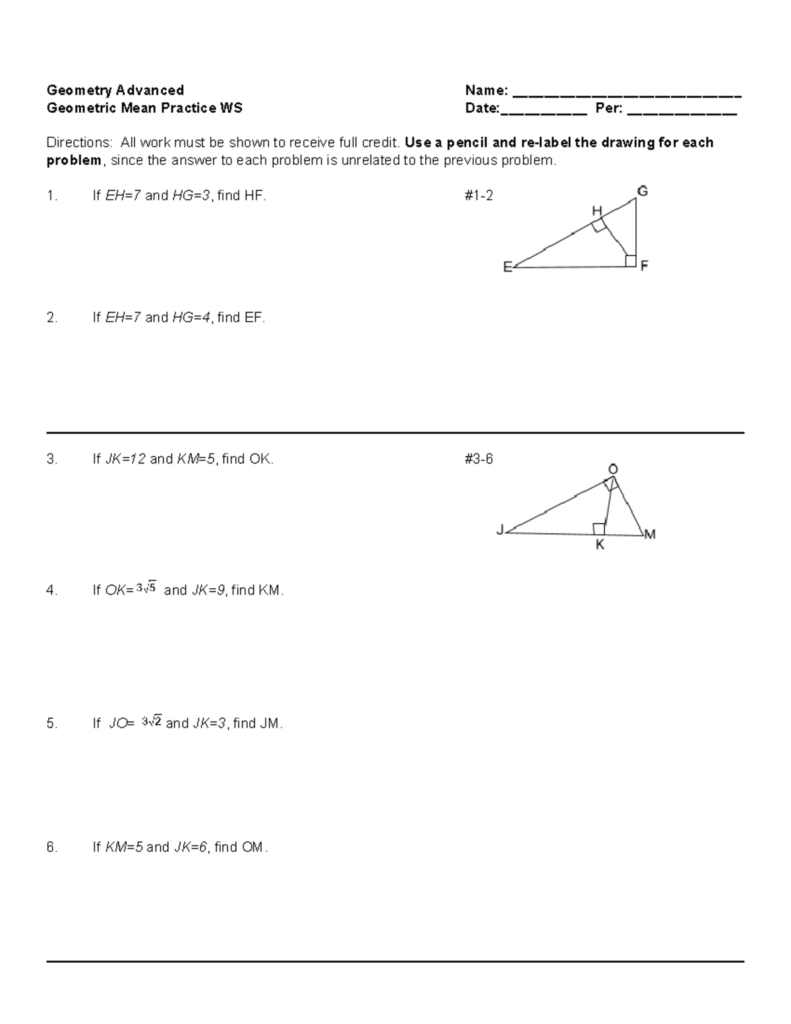
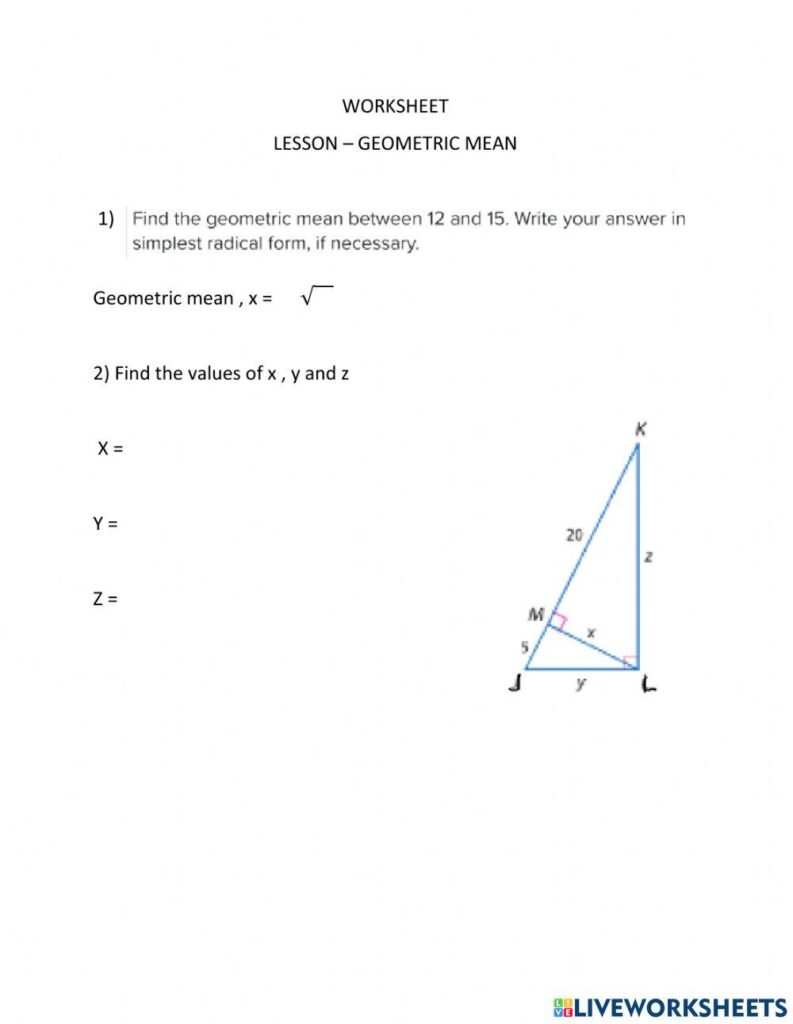
The geometric mean is most useful in right-triangle similarity problems, especially when an altitude is drawn to the hypotenuse. That altitude creates smaller triangles that are similar to the original triangle, and the side lengths form geometric-mean relationships. A worksheet should help learners decide whether the problem asks for the altitude, the hypotenuse segment, or a leg. Representative items might ask for the altitude from the right angle to the hypotenuse, or a leg length when the hypotenuse is split into two parts.
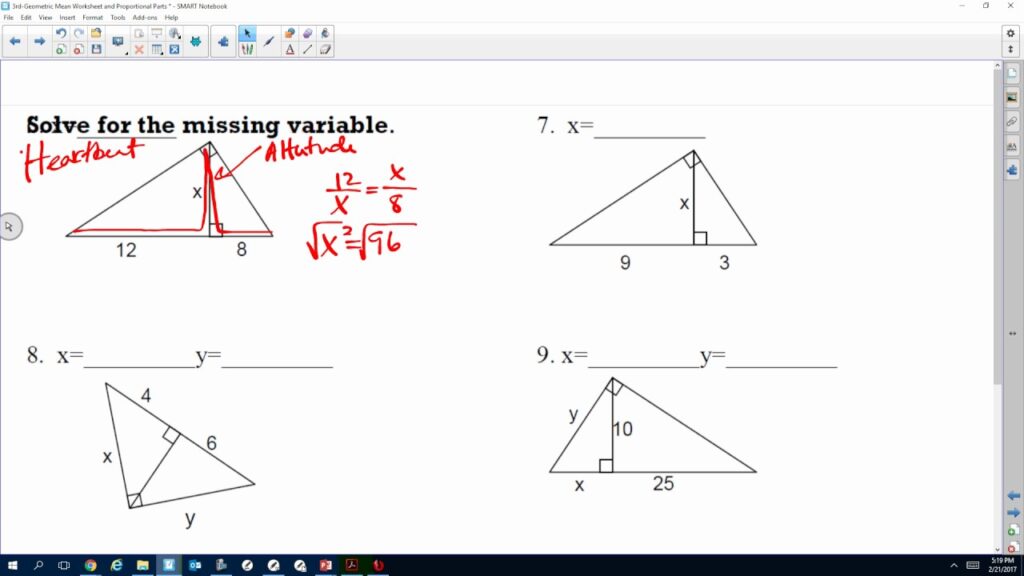
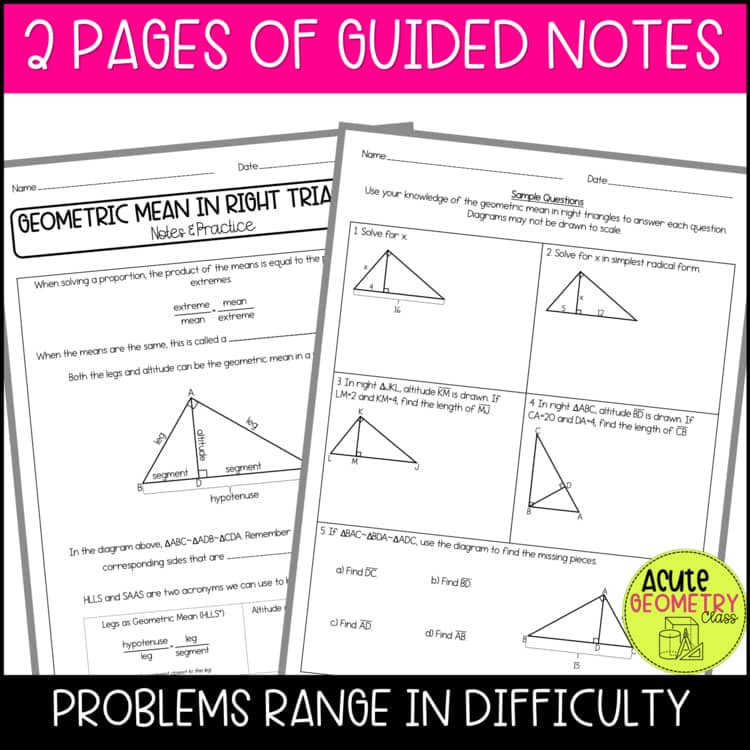
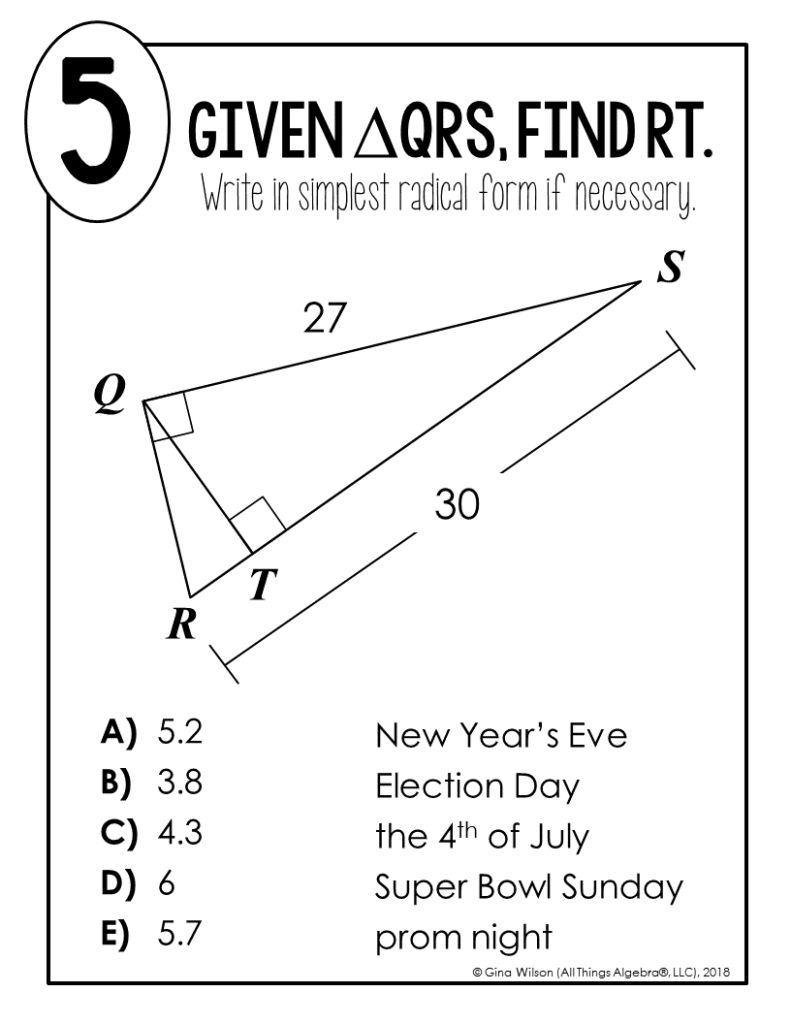
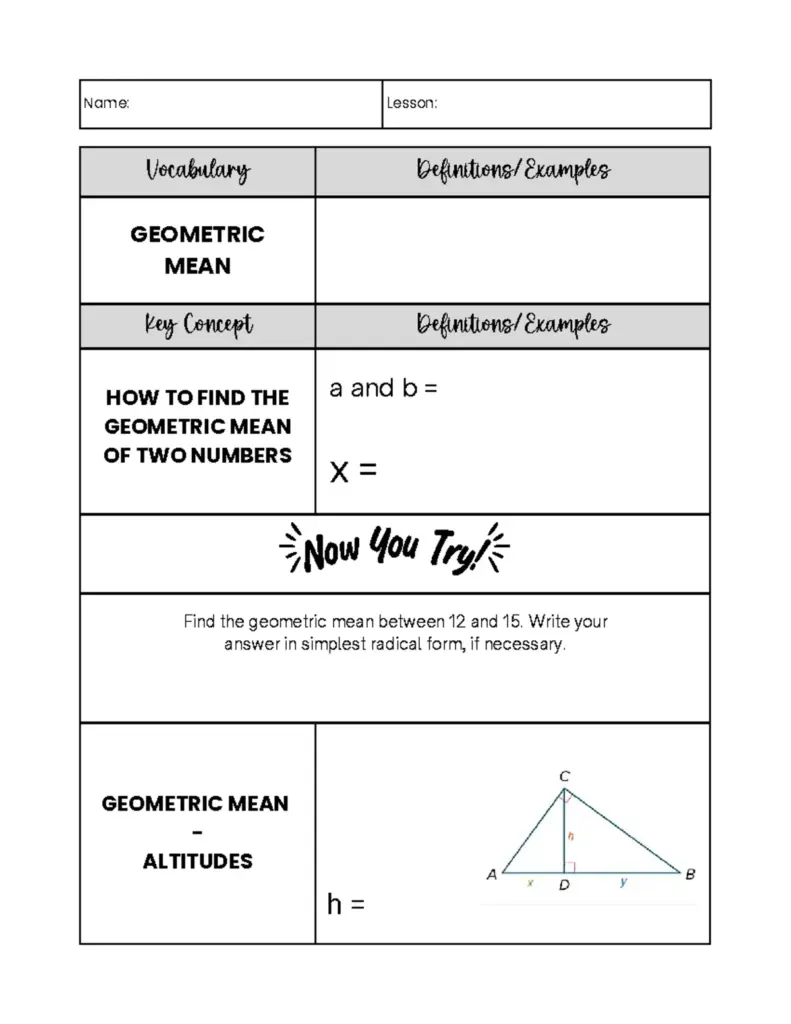
A focused worksheet should include three main problem types: finding a geometric mean from two given numbers, using the altitude-to-hypotenuse theorem, and solving for a missing leg in a right triangle. Students should be encouraged to check answers by squaring their result and comparing it to the product of the two related numbers. That quick check helps catch calculation errors and reinforces why the method works. For classroom practice, short sets with a few mixed problems are usually enough.



