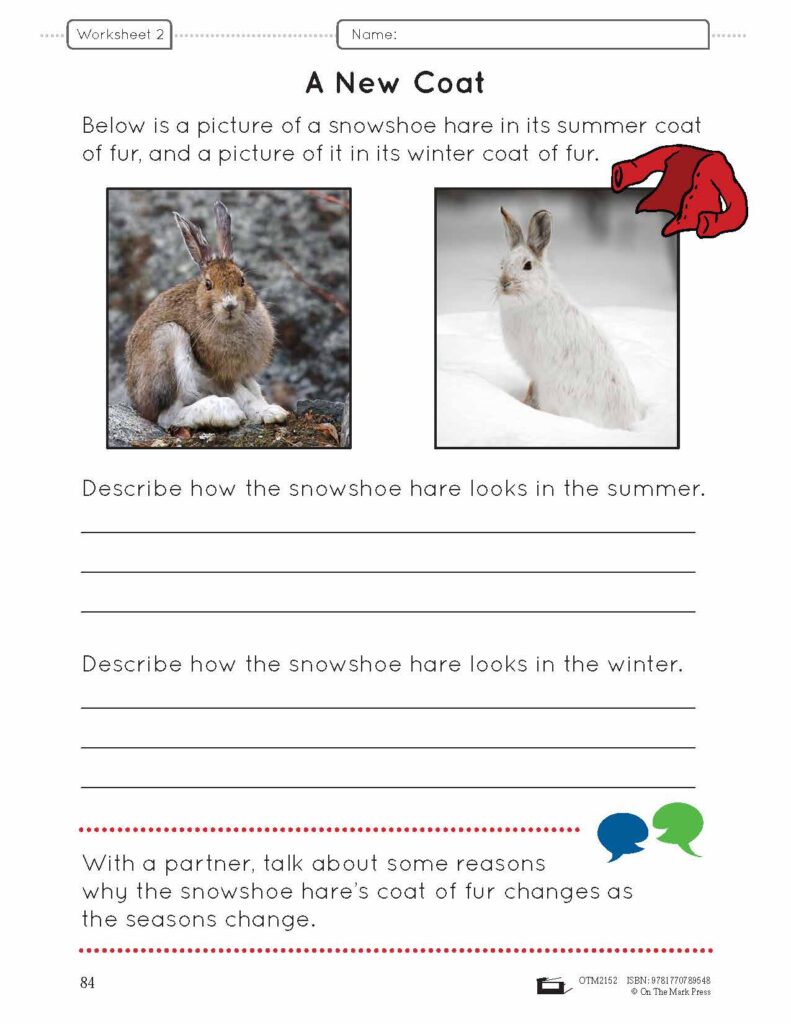
Winter worksheets about animal adaptations help children see how animals survive cold weather through real life science ideas. A strong set focuses on insulation, hibernation, migration, camouflage, and body features such as thick fur, blubber, and color changes. The best worksheets turn those ideas into age-appropriate practice so students can read, sort, label, and explain what helps animals stay alive in winter conditions.
Core adaptation skills
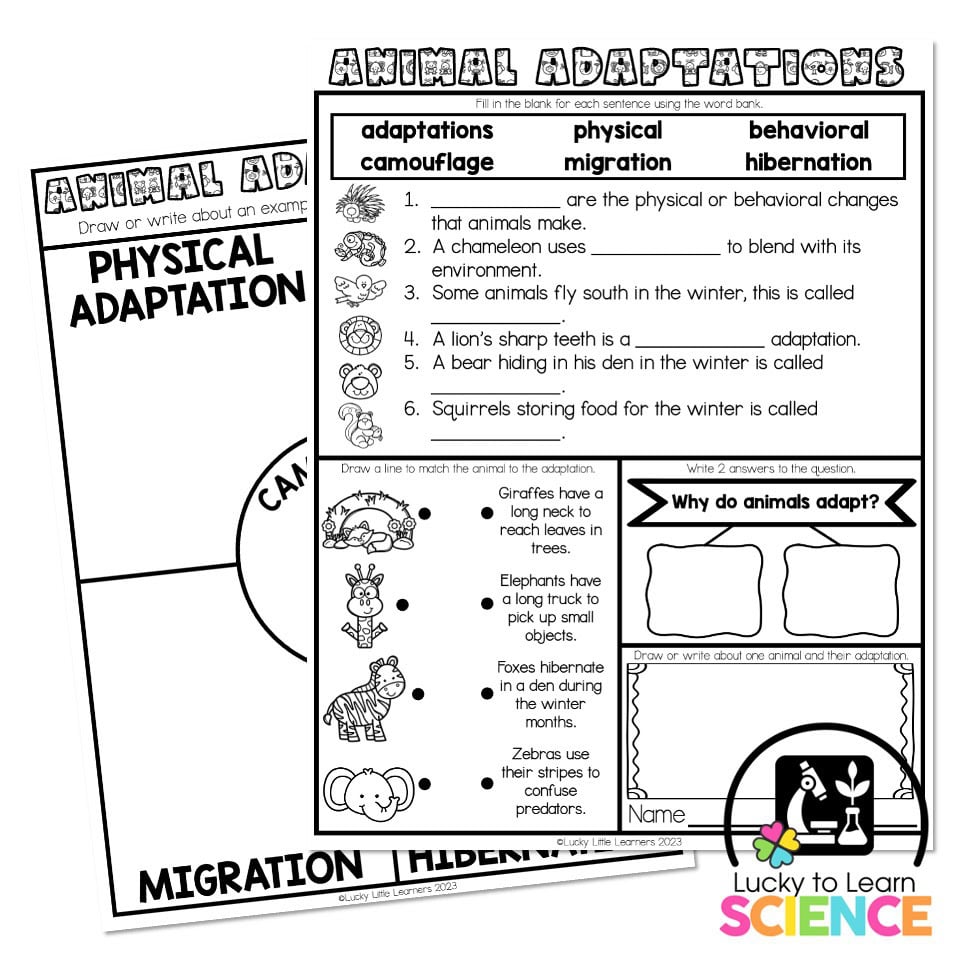
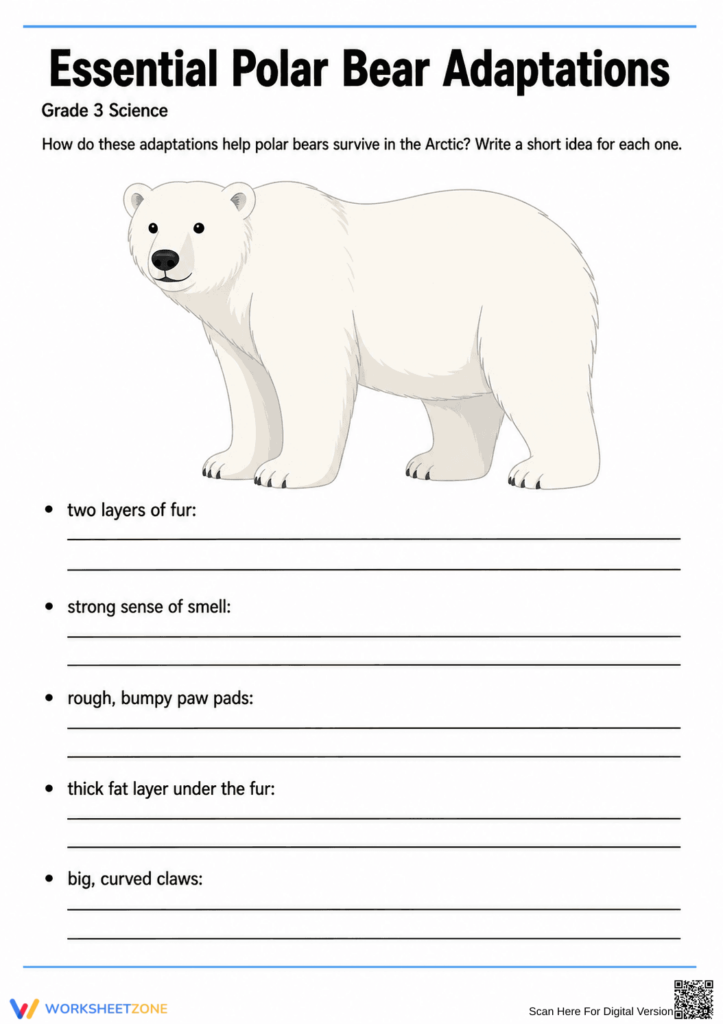
A useful worksheet set should clearly teach the adaptation, not just the animal. For example, children might match a polar bear to blubber, a snowshoe hare to camouflage, or a goose to migration. Short reading passages can explain why a trait matters in cold weather, while labeling tasks help students connect vocabulary to pictures. These activities work well when they stay focused on one winter survival idea at a time.
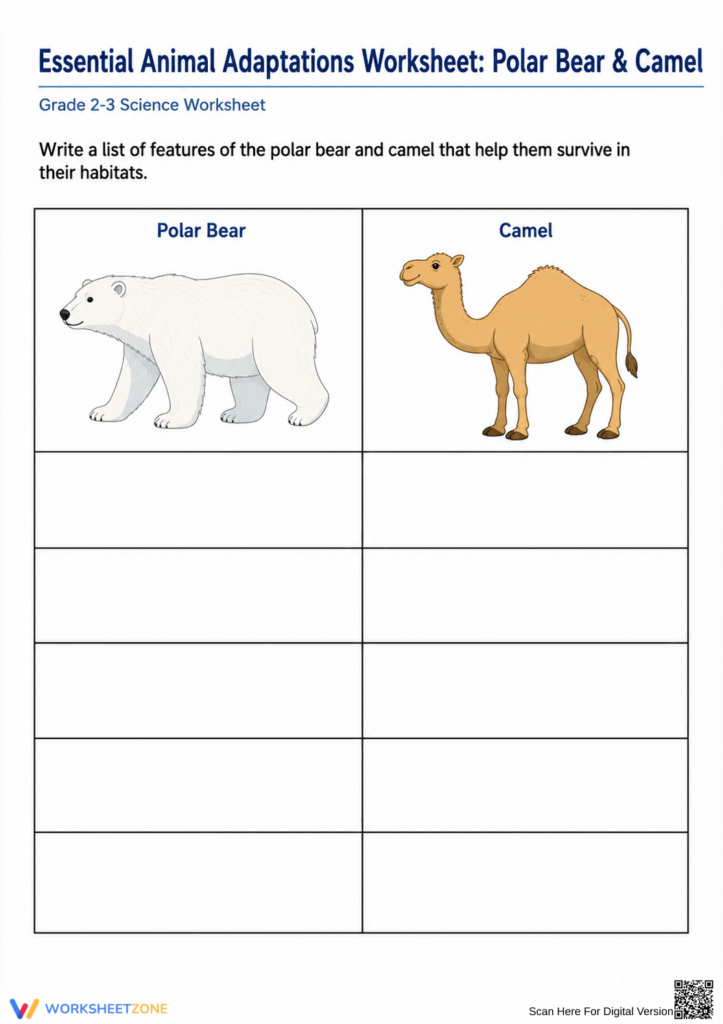
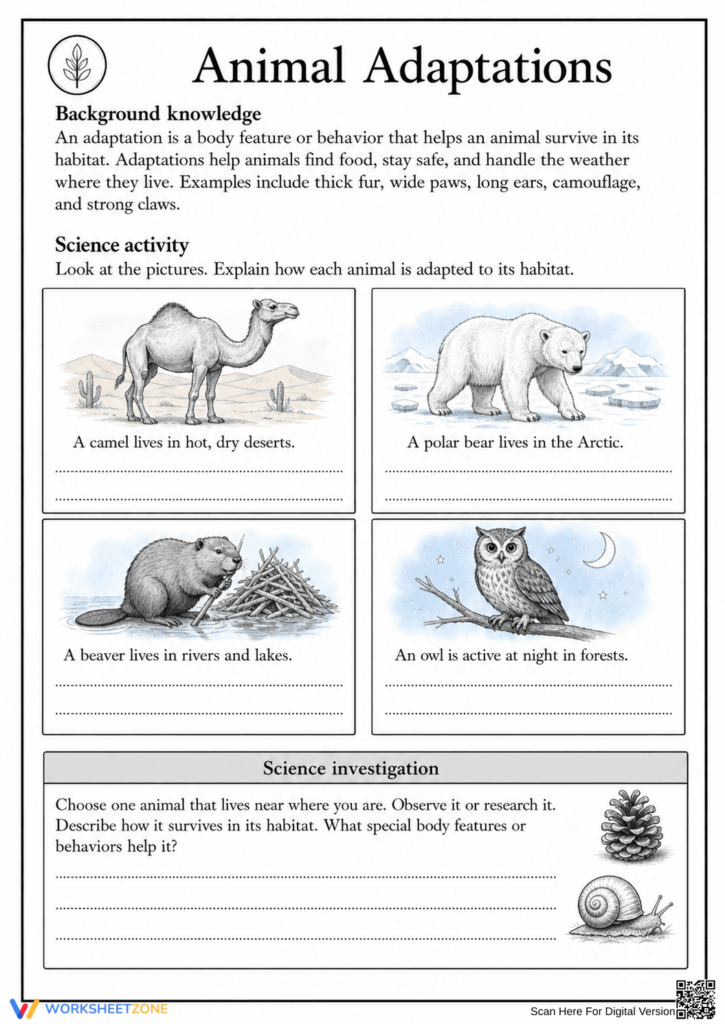
The most effective winter animal-adaptations worksheets use simple formats that support quick understanding. Sorting pages can ask students to group animals by hibernation, migration, or insulation. Matching and cut-and-paste tasks work well for younger learners, while short response prompts help older students explain how an adaptation helps. Clear visuals, minimal extra text, and direct questions make the set easier to use for both classroom centers and homeschool lessons.
Grade fit and use
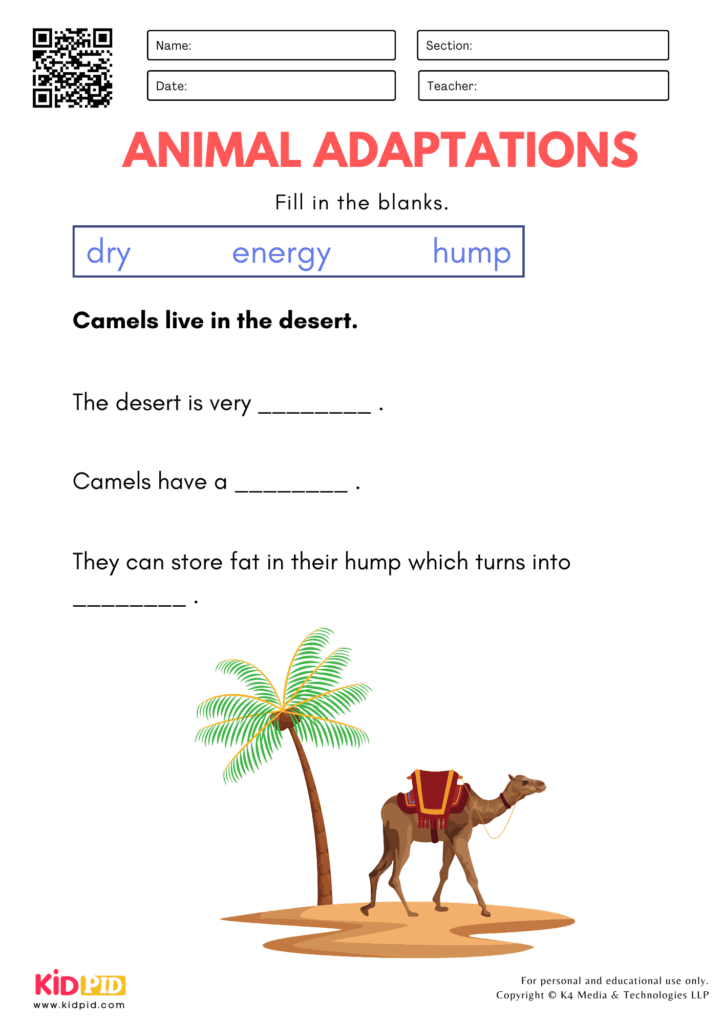
These worksheets are usually best for early elementary grades, especially kindergarten through third grade, though some simple versions also suit preschool with adult support. Younger children benefit from picture-based labeling, tracing, and matching, while first and second graders can handle short nonfiction reading and basic written answers. Third graders often do best with comparing adaptations across animals and explaining choices in complete sentences. Matching the worksheet to the child’s reading level is key.
When choosing winter worksheets about animal adaptations, look for clear winter examples, accurate science terms, and activities that reinforce understanding instead of busywork. A good set should help children answer questions such as how a trait keeps an animal warm, why some animals move to warmer places, or how camouflage helps in snowy habitats. If the pages are simple, focused, and age-appropriate, they can be an easy way to build seasonal science learning without drifting into unrelated winter topics.