
Preschool pattern worksheets with colors help young children notice, copy, and extend simple sequences in a way that feels familiar and manageable. These worksheets usually use bright, easy-to-name colors and short rows of shapes or objects. For preschoolers, the goal is not speed or complexity. It is building early pattern awareness through clear, repeated examples that children can see, say, and complete.
What Preschool Patterns Look Like
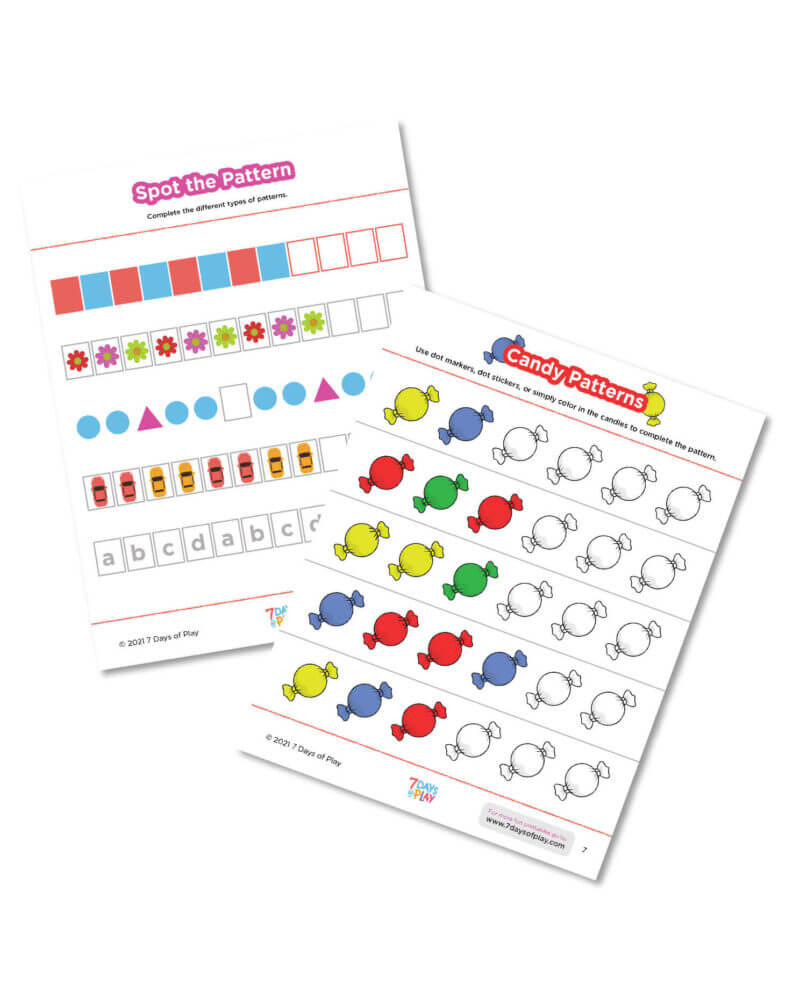
In preschool, color patterns are usually simple repeats such as AB, AAB, or ABB. An AB pattern might alternate red and blue, while an AAB pattern could show red, red, blue. Children may first copy the pattern, then identify what comes next, and later extend a short sequence. These exercises support pattern recognition and sequencing without moving into advanced math ideas. The best worksheets keep the visual rhythm obvious so children can focus on the color order.
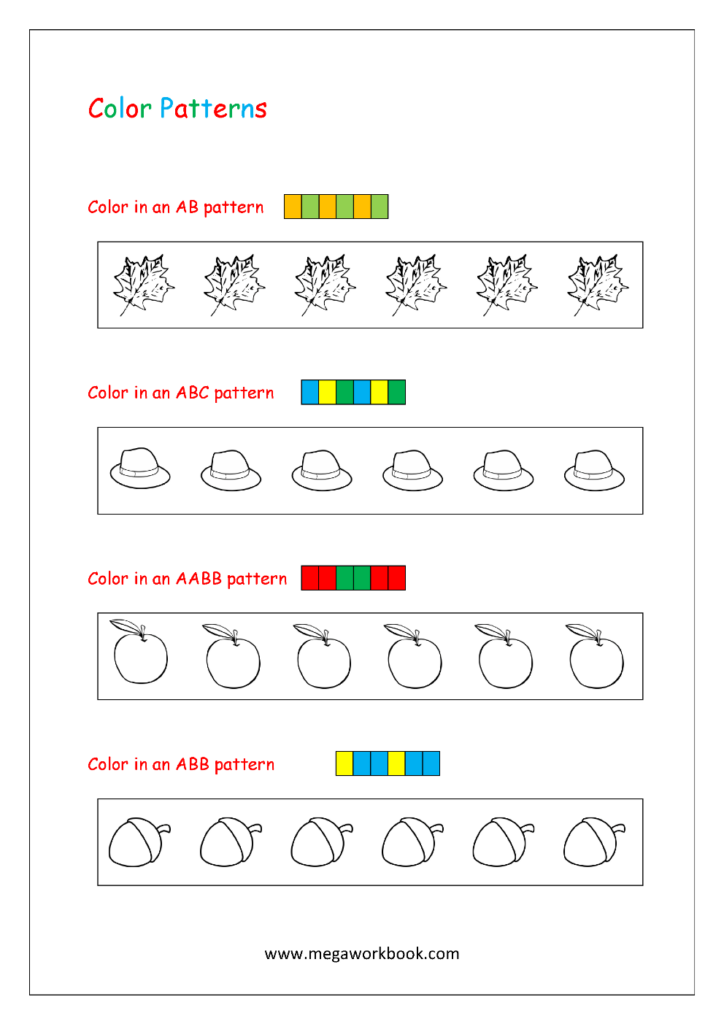
Age-appropriate worksheets should feel easy to follow at a glance. Large images help preschoolers see each item clearly, and limited color choices keep the task from becoming confusing. Simple directions, such as color the next shape or finish the row, reduce the need for adult explanation. Minimal writing is important because many children at this age are still developing pre-writing skills. A strong worksheet lets them work with crayons, point to answers, and learn through visual matching rather than text-heavy instructions.
Choosing a Good Worksheet Set
When choosing preschool pattern worksheets with colors, look for clear instructions, printable pages, and a steady increase in difficulty. A good set might begin with matching or copying a short color pattern, then move to finishing a missing color, and finally ask children to extend a longer row. This progression helps reinforce visual discrimination and color identification while keeping the work approachable. The pages should be uncluttered and easy to print, with enough space for little hands to color neatly.
The most useful worksheet sets stay focused on one skill at a time. For example, a child may start by copying a red-yellow-red-yellow pattern and later complete a red-red-blue sequence. That kind of practice builds confidence because the child can see the rule and apply it immediately. If the pages are too crowded or the directions are too complicated, the learning goal gets lost. A simple, well-paced set gives preschoolers repeated practice and makes color patterns easier to understand.



