
A simile and metaphor worksheet should give students clear, repeated practice with two closely related types of figurative language. The best worksheets keep the focus simple: learn the meaning of each term, notice the clue words that signal a simile, and practice sorting examples correctly. That structure helps learners move from definition to recognition without adding extra language skills that distract from the target.
Similes and Metaphors
A simile compares two things using words like like or as. For example, “The classroom was as quiet as a library” makes the comparison obvious. A metaphor also compares two things, but it says one thing is another without those signal words. For example, “The classroom was a library” is a metaphor. A good worksheet should state this difference in simple language so students can see why one example belongs in each group.
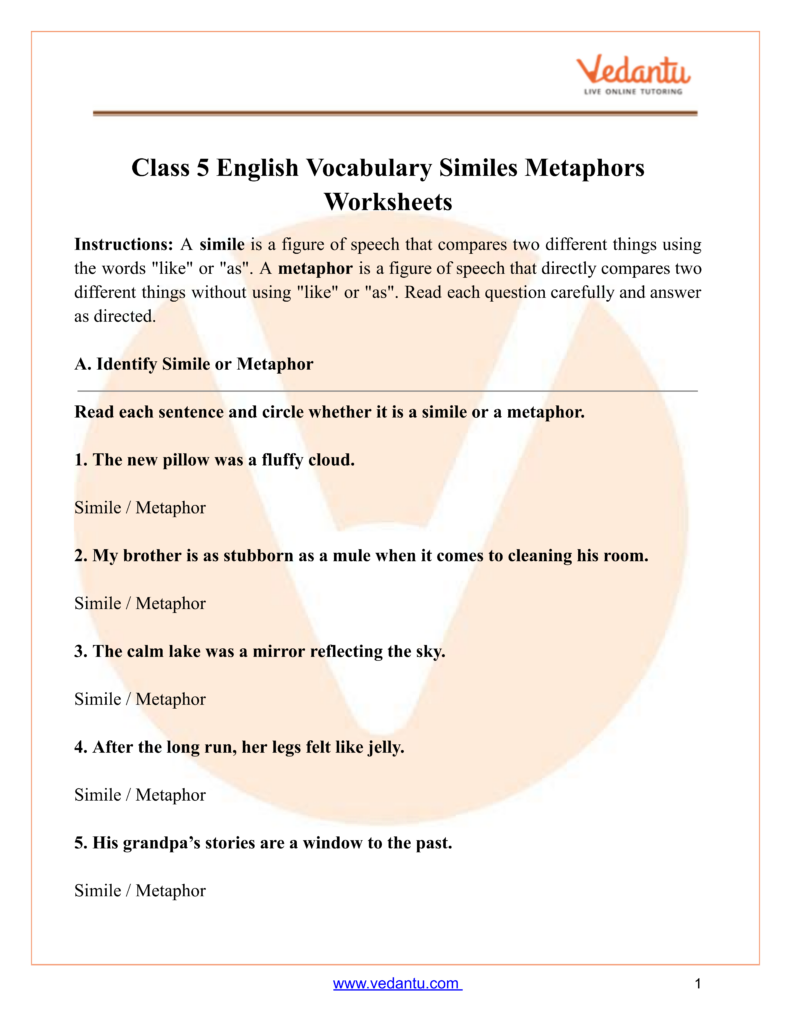
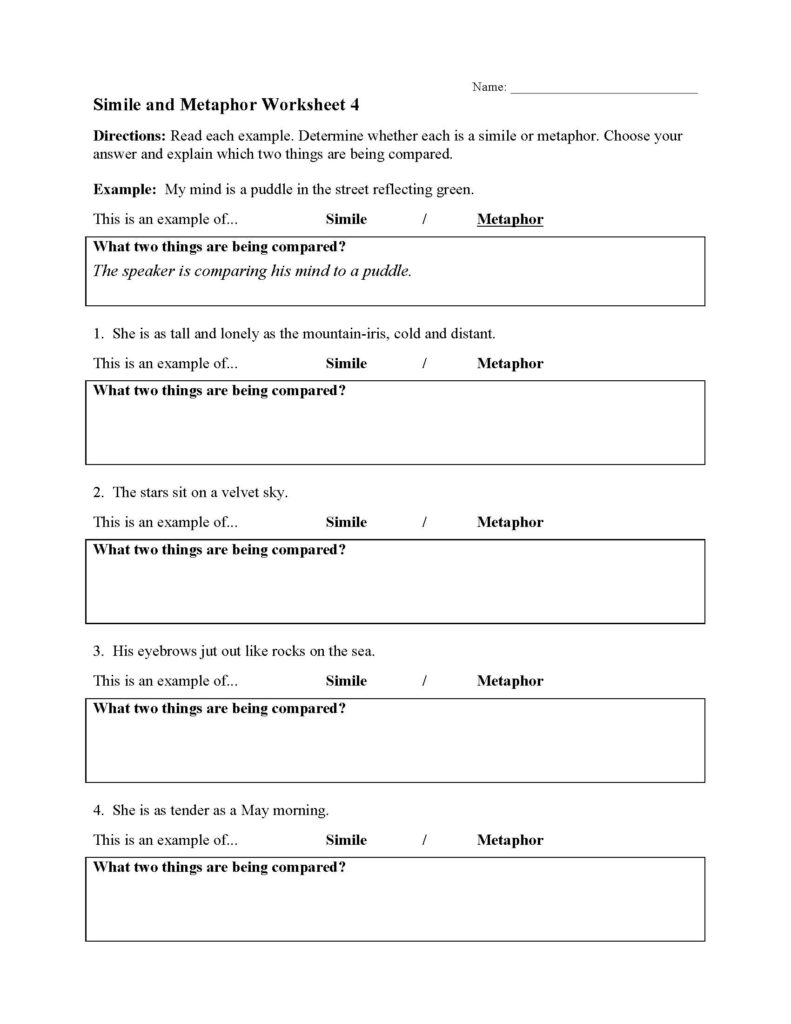
The strongest practice pages ask students to identify each type in short, manageable sentences. A worksheet might include a bank of examples and ask learners to circle similes, underline metaphors, or label each one. Another useful task is matching: pair the figurative phrase with its type. Some worksheets also ask students to rewrite a metaphor as a simile, which reinforces the difference while keeping the activity focused on direct comparison and clear wording.
Worksheet Practice Tasks
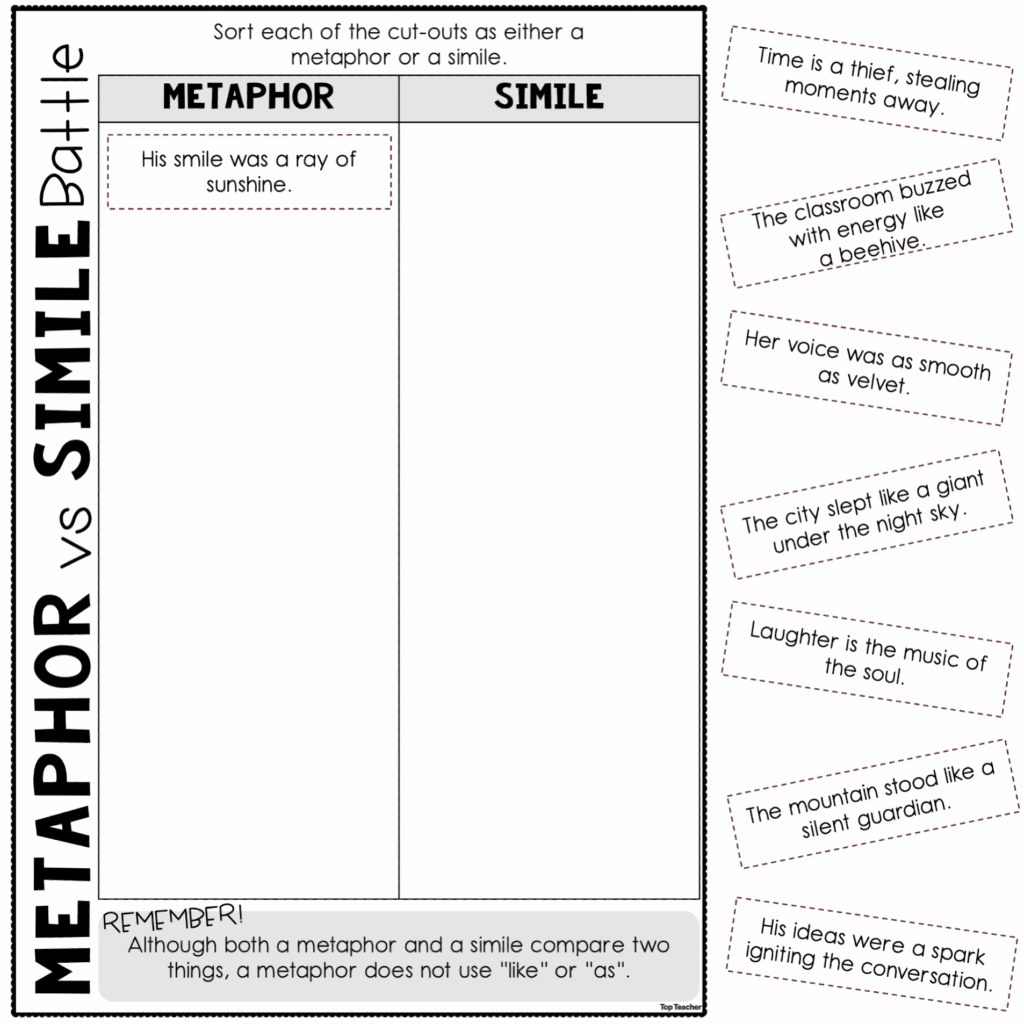
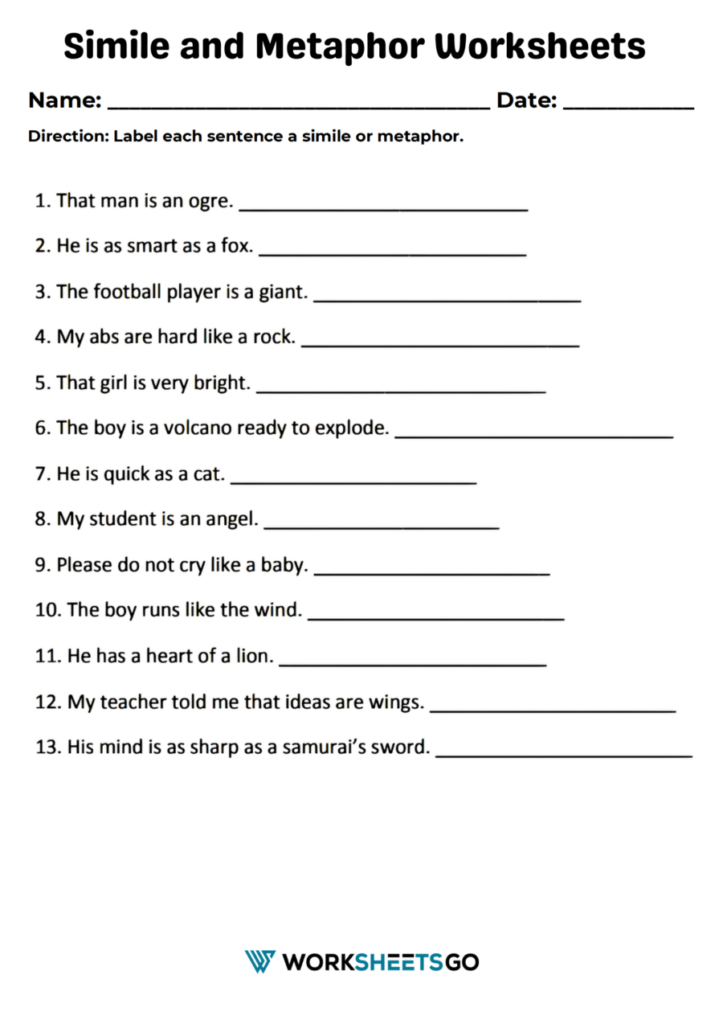
To be classroom useful, the worksheet should include a mix of examples that are easy to read and easy to compare. Sentences should be short enough for independent work, and the answer choices should be clear enough that students can explain their thinking. It also helps when the worksheet alternates between familiar topics, such as animals, weather, or sports, so the figurative language stands out. The goal is practice with recognizing the structure, not decoding difficult vocabulary.
A strong simile and metaphor worksheet gives students several ways to show understanding: identify, match, classify, and sort. That range is helpful because some learners notice clue words first, while others understand best when they compare examples side by side. If a worksheet does those jobs well, it supports quick review, independent practice, or small-group work. For best results, choose a page that keeps the focus tightly on similes and metaphors only.



