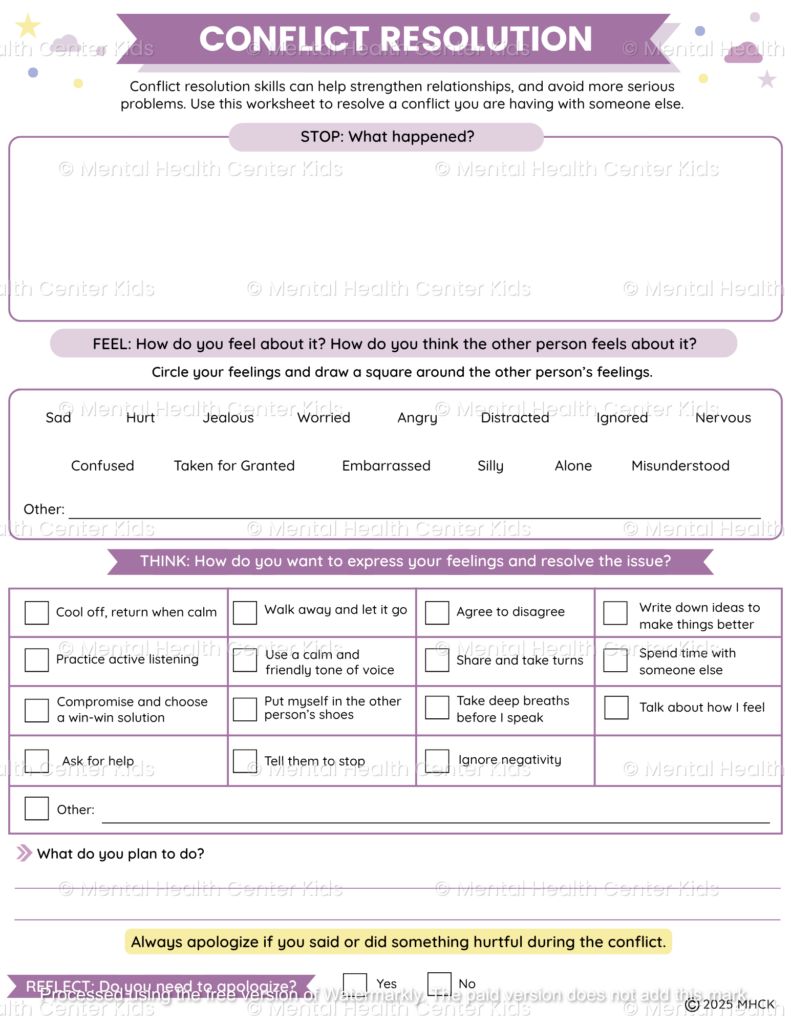
Conflict resolution worksheets for children work best when they guide kids through a few simple steps: notice what happened, name the feeling, calm the body, and choose a fair next move. The strongest worksheets keep language short, use pictures or boxes to fill in, and make it easy for an adult to talk through the page with the child.
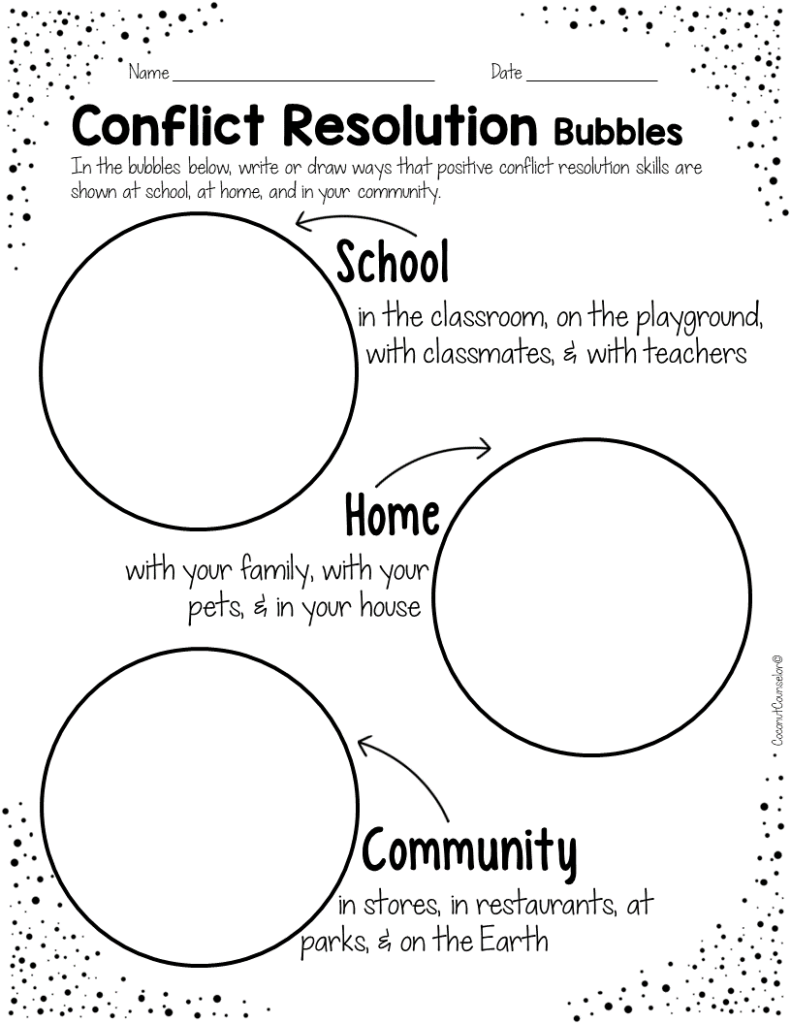
What Good Worksheets Include
Useful worksheets usually start with naming feelings, because children often react before they can explain why. A child might circle “mad,” “hurt,” or “frustrated,” then point to the part of the conflict that caused it. The next prompt should identify the problem in plain language, such as “We both wanted the same toy.” Many children benefit from a calm-down step built into the page, like taking three breaths, squeezing hands, or counting to five.
Worksheets can also include practice with “I-statements,” such as “I feel upset when you grab my marker.” These short prompts help children move from reacting to speaking clearly.
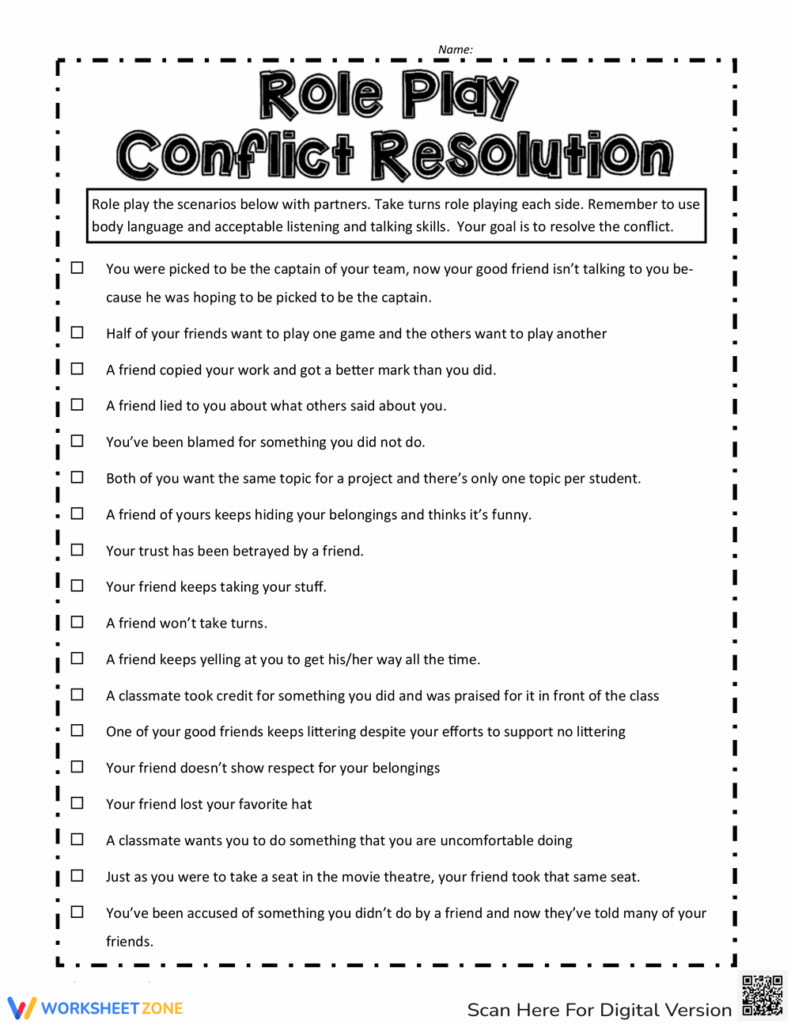
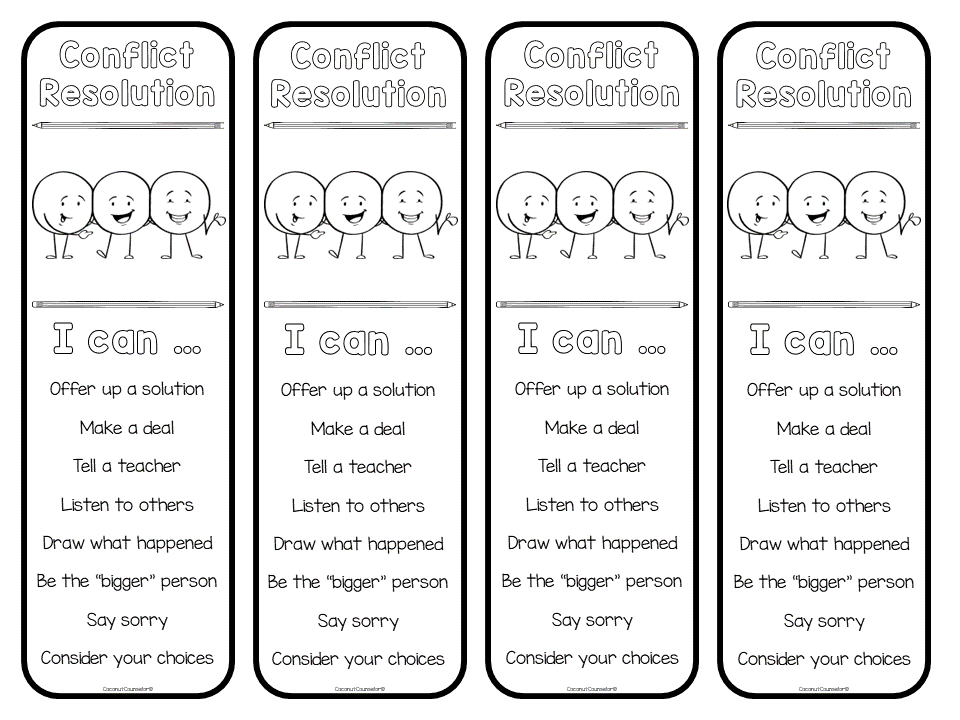
Age matters when choosing format. Preschool and early elementary worksheets should use large visuals, matching, coloring, or one-sentence choices, because younger children do better with concrete cues and limited writing. Older children can handle short reflection boxes, simple cause-and-effect questions, and more than one possible solution. In both age groups, the worksheet should stay brief and visually calm, with enough space for one idea at a time.
The goal is not to test reading or writing skill; it is to make the conflict easier to understand. If a worksheet feels crowded or wordy, children may focus on the page instead of the problem.
Using Worksheets Well
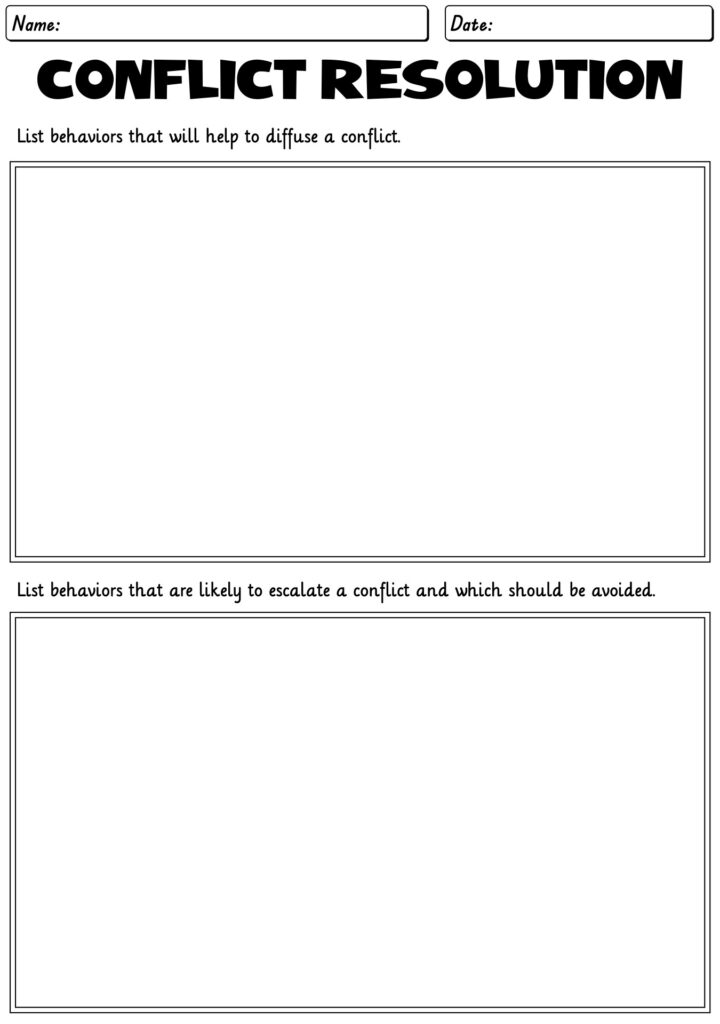
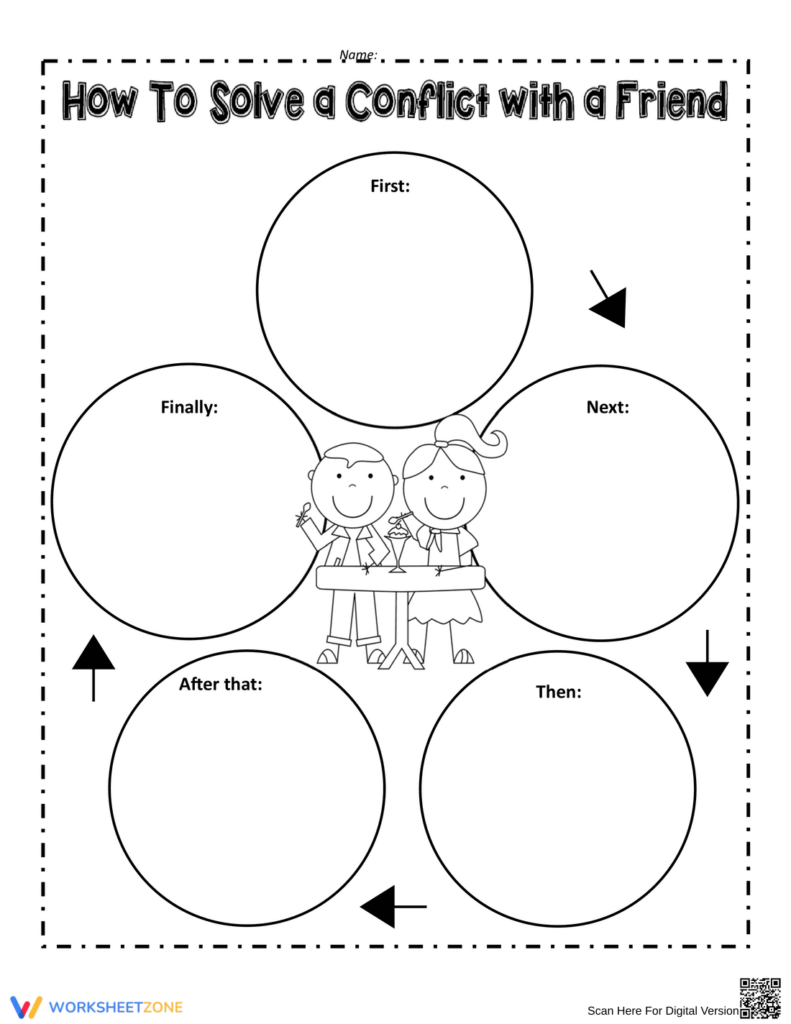
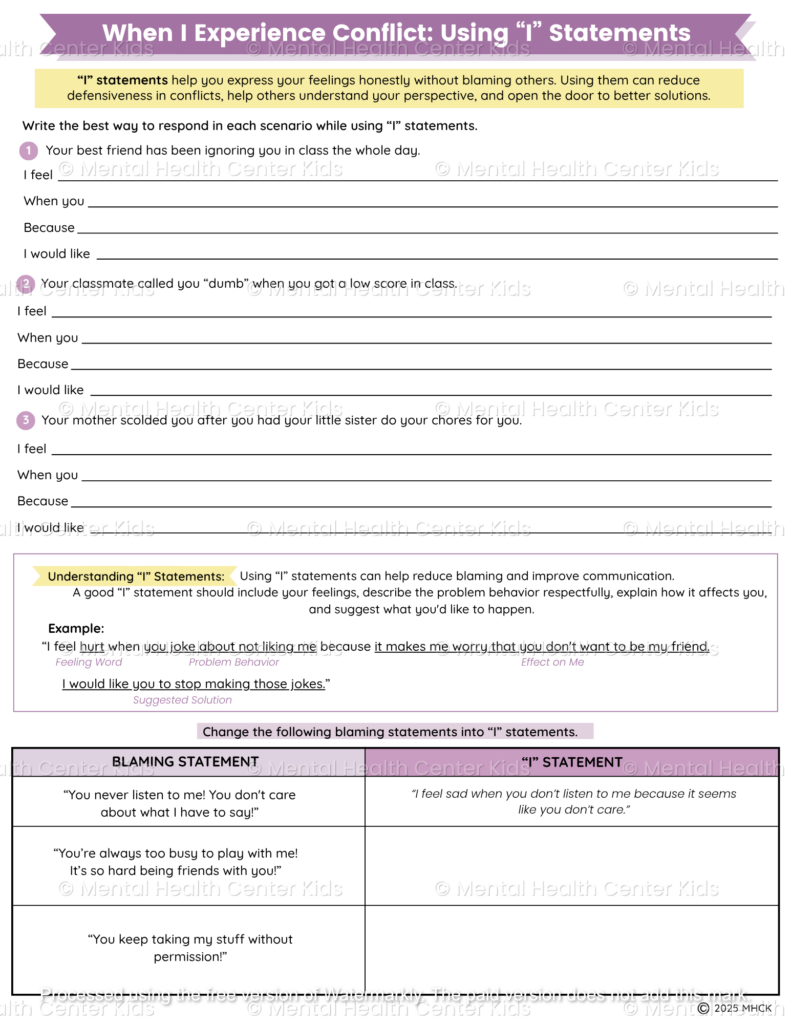
These worksheets work best when an adult stays close and guides the discussion without turning the page into a punishment. At home or in class, invite the child to complete the worksheet after emotions have settled, then review it together with a brief follow-up: What happened? How did it feel? What could we try next time? If the conflict was intense, keep the activity supportive and avoid asking a child to relive details that feel overwhelming.
For serious hurt, the worksheet should be one small step toward repair, not the whole solution. Used gently, it can help children practice fairness, calm words, and safer choices over time.