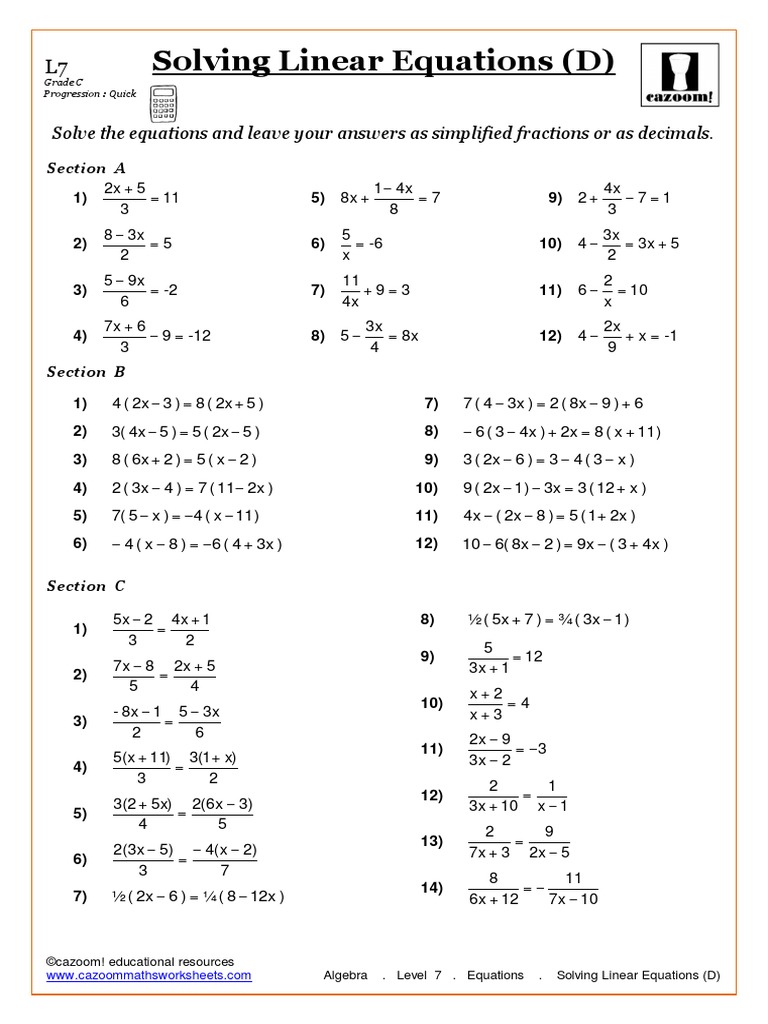
A good solving linear equations worksheet gives learners focused practice with the exact steps needed to isolate a variable. The best version starts with simple one-step problems and builds toward two-step equations and variables on both sides. It should feel challenging enough to teach the process, but not so crowded that students lose track of their work.
What It Should Practice
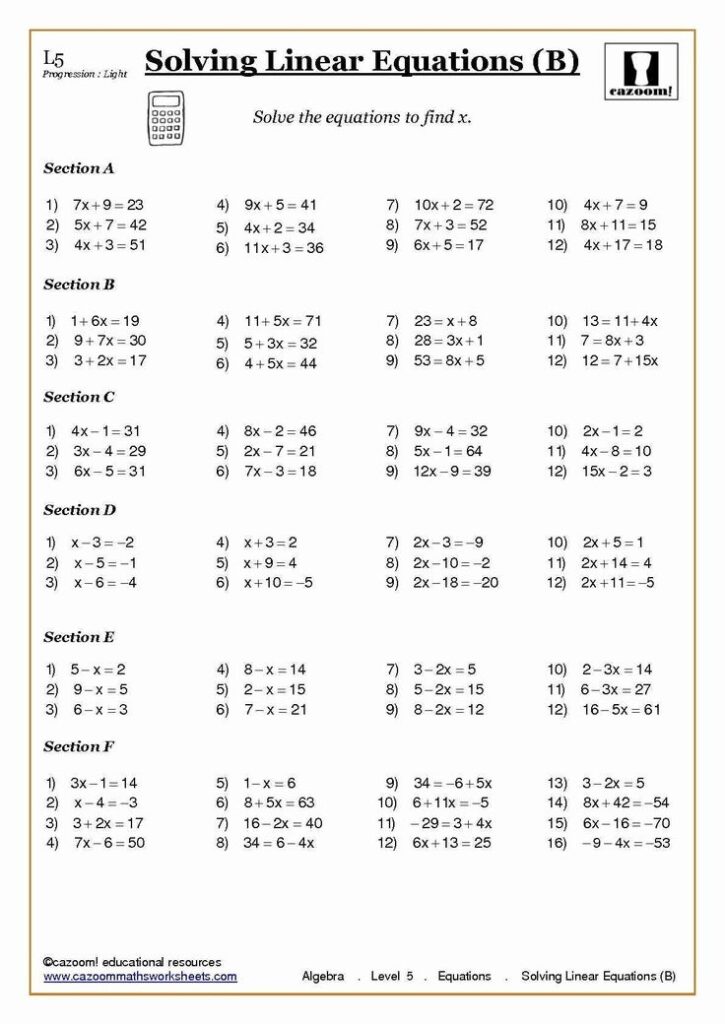
A useful worksheet should include a mix of linear-equation types so students can build fluency gradually. One-step problems help with basic inverse operations, while two-step equations add subtraction, addition, multiplication, or division in sequence. Problems with variables on both sides are important because they require combining like terms and moving variables correctly. A strong set may also include equations with fractions or decimals if the goal is a higher difficulty level.
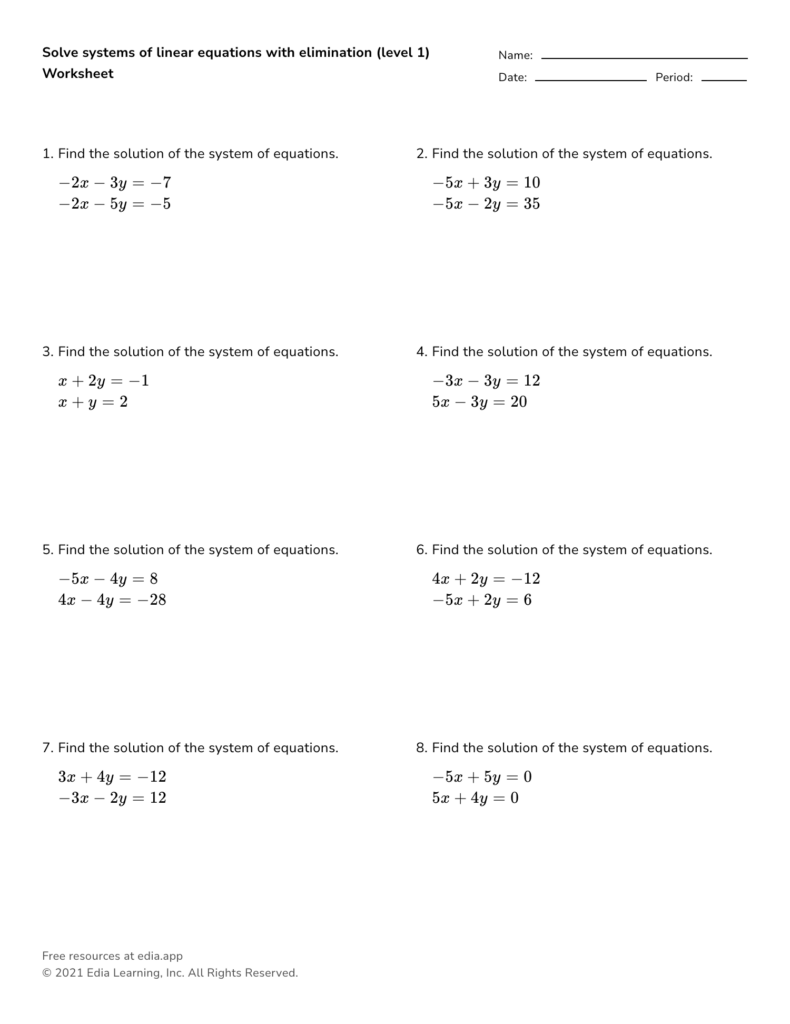
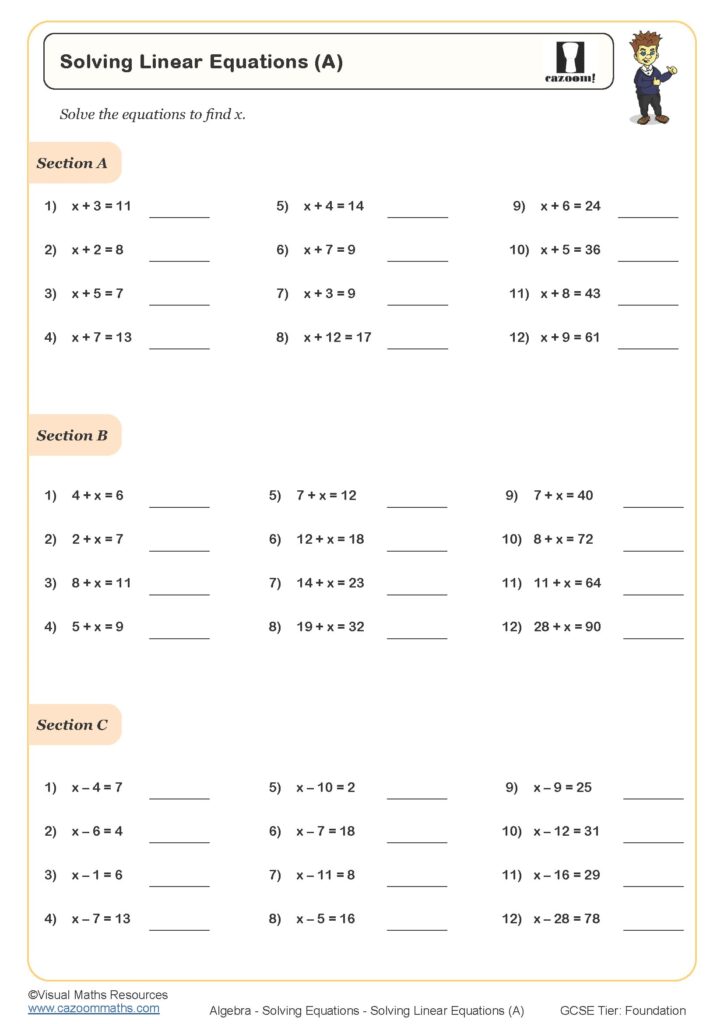
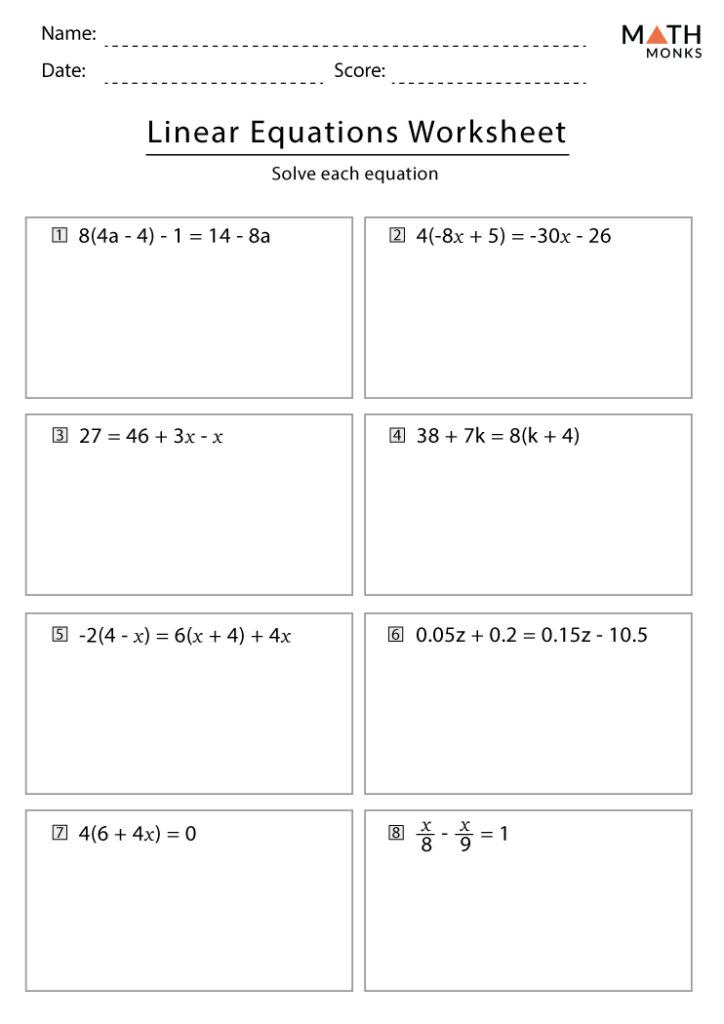
The worksheet should also be easy to use while students work. Clear spacing matters because learners need room to show each step, write inverse operations, and keep the equation balanced as they solve. A clean layout with one problem per line usually works best. If an answer key is included, it should list final answers clearly and, ideally, match the problem order so checking work is fast and accurate.
Skill Outcome
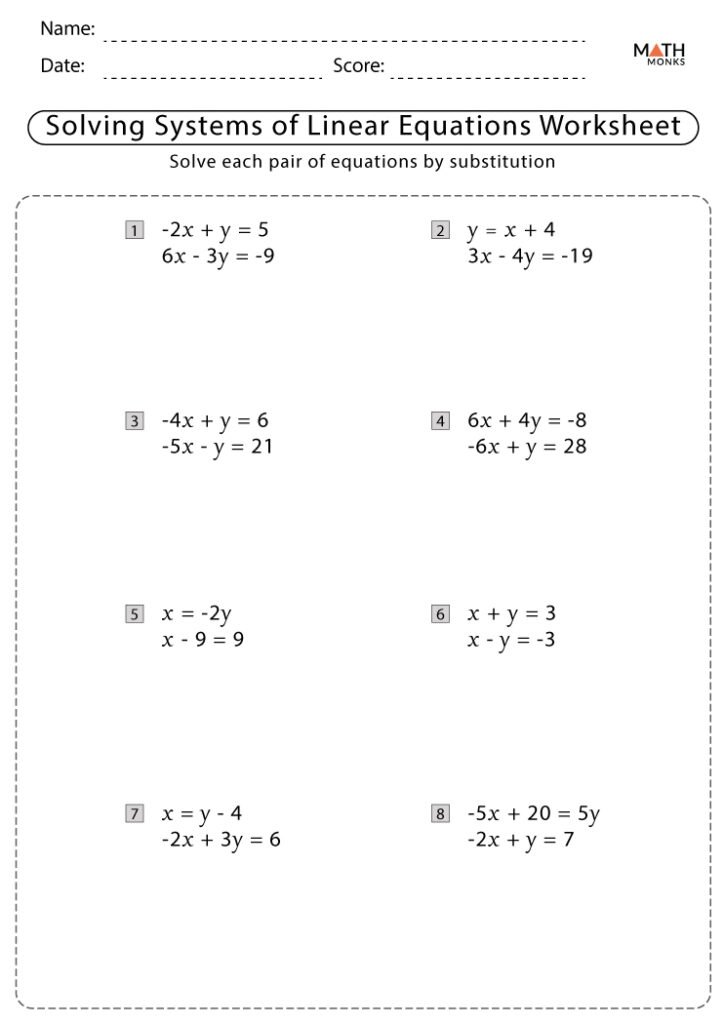
The main outcome of a solving linear equations worksheet is that the learner can isolate the variable correctly. That means using inverse operations, simplifying both sides when needed, and keeping track of signs and coefficients. A well-designed worksheet should not stop at getting an answer; it should help students show the full process. This is where equations become more than memorization, because each problem reinforces logical steps that can be repeated.
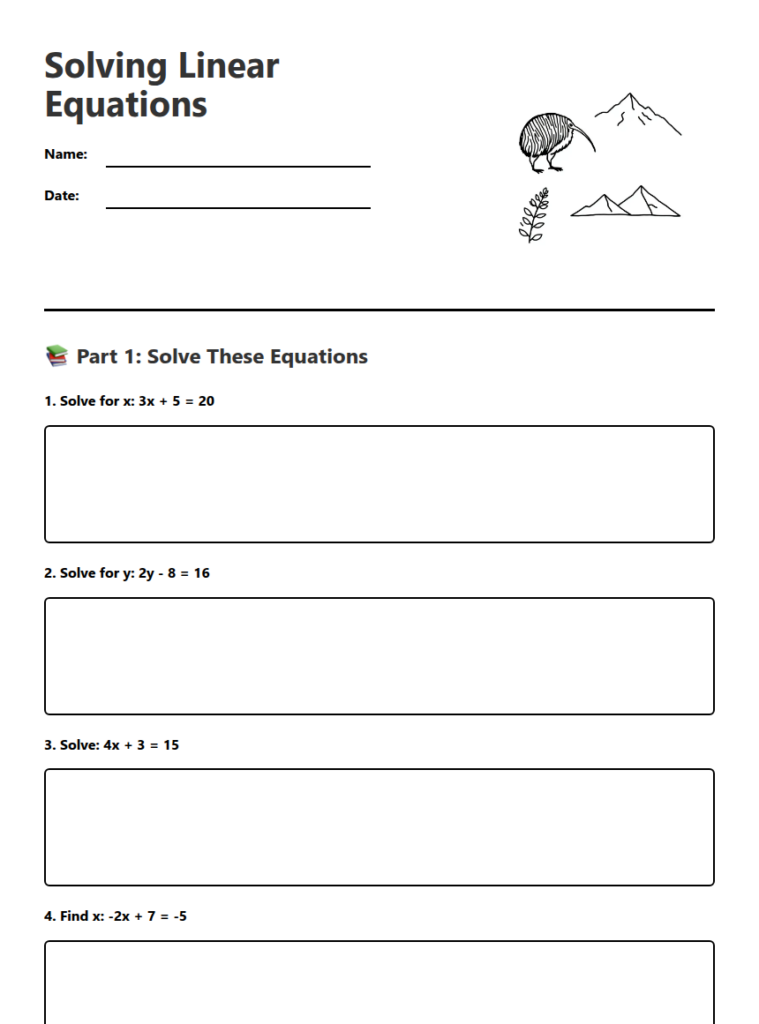
Just as important, the worksheet should train students to check their solutions. After solving, they should substitute the value back into the original equation to confirm that both sides are equal. That final step builds confidence and catches mistakes early. If the worksheet includes a balanced mix of problem types, room for work, and an answer key for review, it becomes a practical tool for steady skill growth and accurate equation solving.