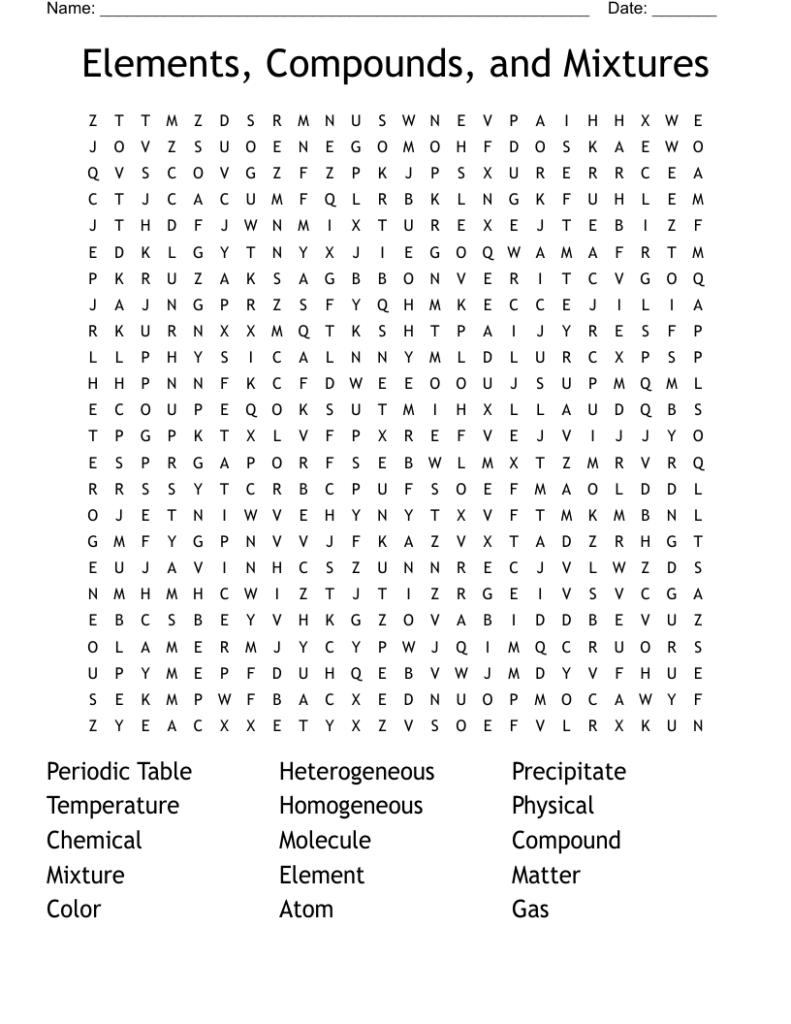
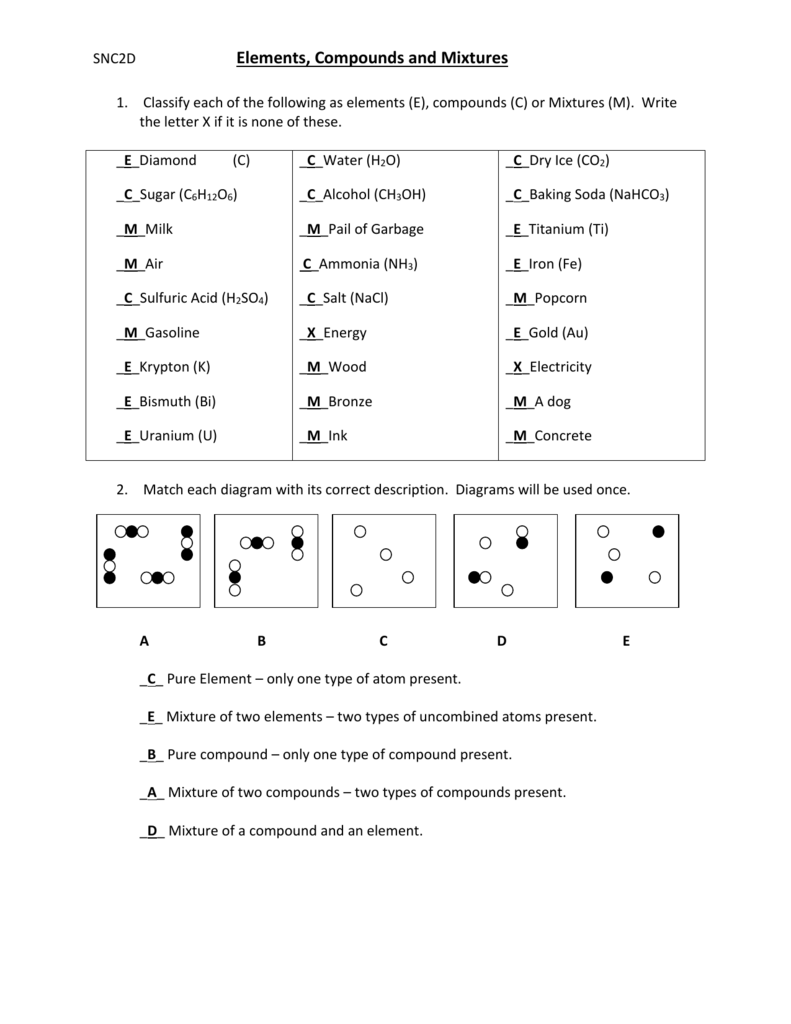
An elements compounds & mixtures worksheet helps students practice a basic chemistry skill: telling three kinds of matter apart. A strong worksheet should focus on simple definitions, clear visual clues, and short practice items that build confidence. Students need chances to read examples, compare features, and decide whether a substance is an element, a compound, or a mixture.
Key Substance Types
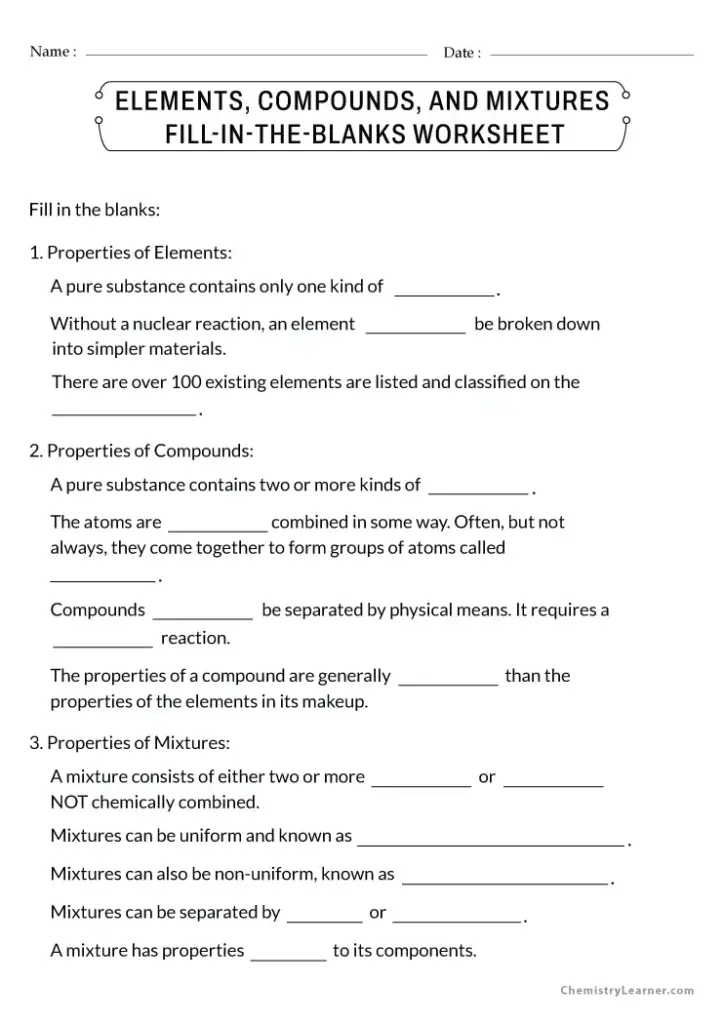
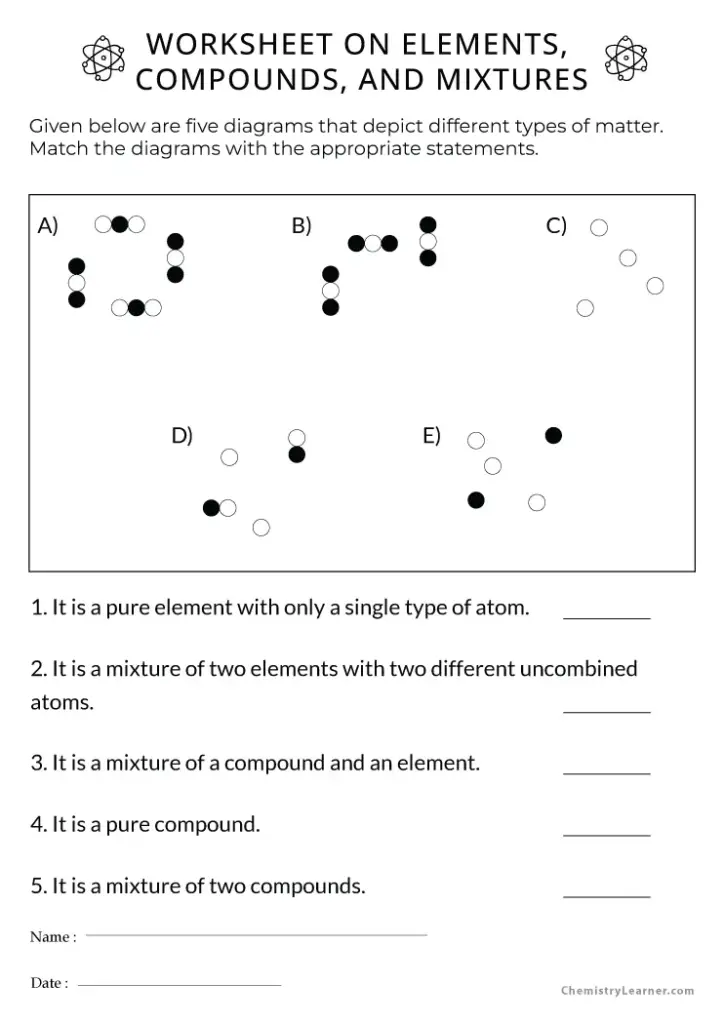
An element is made of only one kind of atom, so it cannot be broken down into simpler substances by ordinary chemical means. A compound is made of two or more different elements chemically bonded together in a fixed ratio. A mixture combines two or more substances without chemical bonding, so each part keeps its own properties. Worksheets should use student-friendly language and give familiar examples, such as copper, water, and salad, to help these ideas stick.
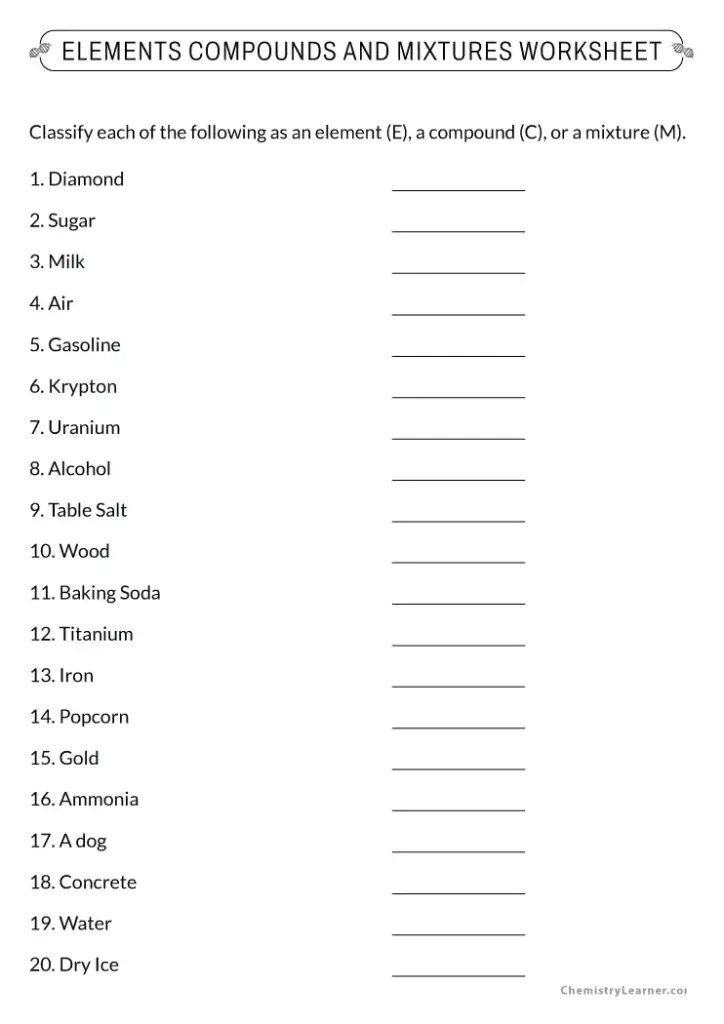
To sort examples correctly, students should look for a few clear features. First, ask whether the substance has one type of particle or several. Second, check whether the parts are chemically bonded or simply mixed together. Third, notice whether the composition is fixed, as in a compound, or variable, as in a mixture. Good practice sheets often include pictures, formulas, and short descriptions so students learn to use more than one clue when classifying each item.
Practice Items to Include
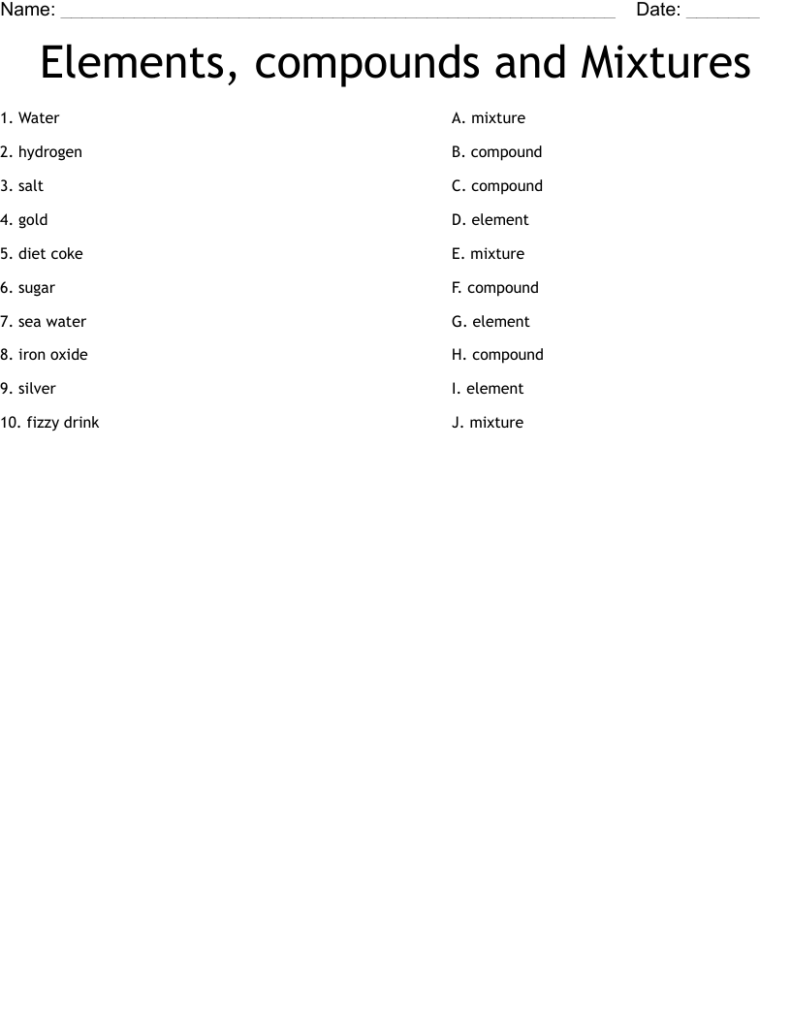
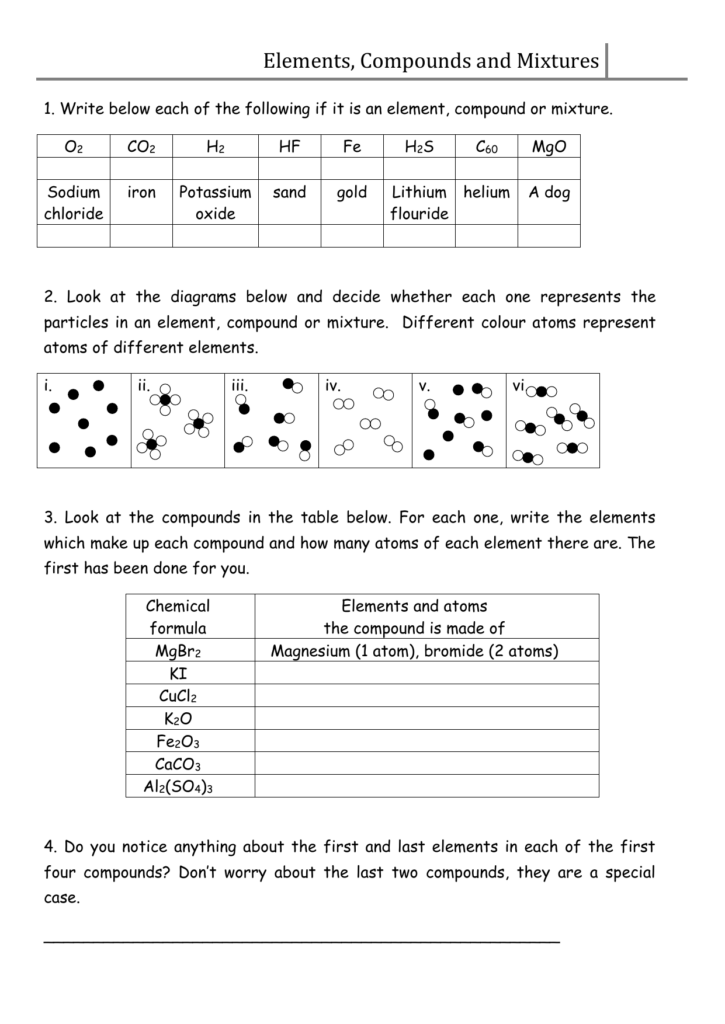
The best worksheets include several question types so students practice the skill in different ways. Classification questions ask them to label each example as an element, compound, or mixture. Matching items can pair terms with definitions or examples. Identification prompts may show a picture, word list, or chemical formula and ask for the correct category. These formats help students move from memorizing terms to actually recognizing patterns and applying the definitions.
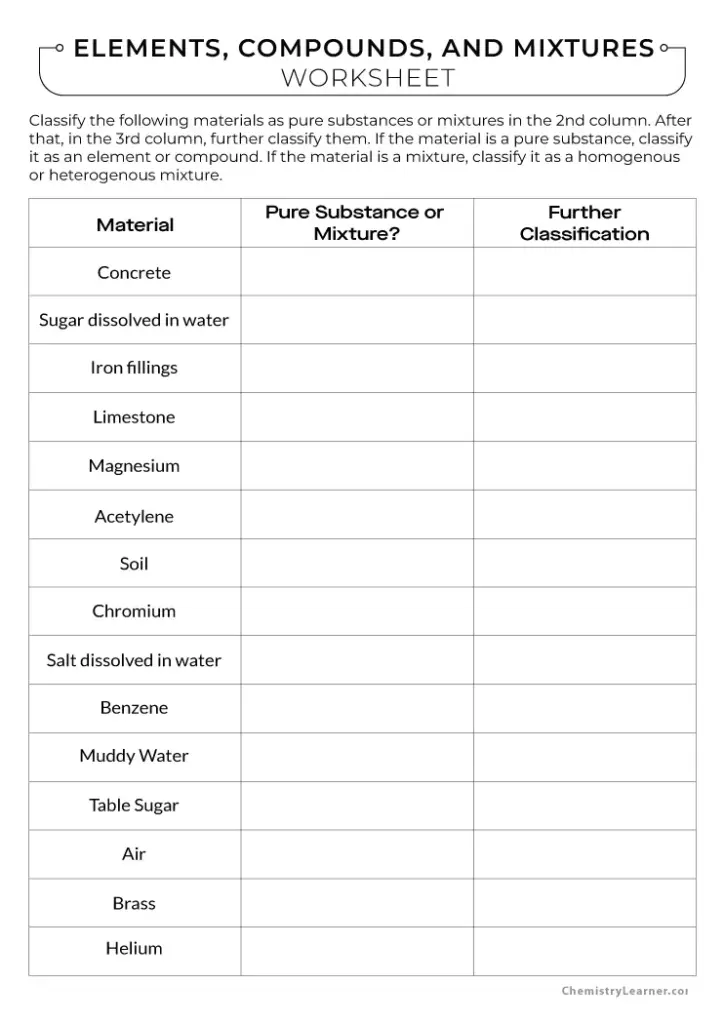
A useful worksheet should also give enough repetition for students to explain their choices, not just guess. Short review sections, cut-and-sort activities, or circle-the-answer prompts can make the practice approachable for younger learners, while still reinforcing accuracy. When students can point to composition, bonding, and whether parts are combined evenly or unevenly, they are ready to classify substances with confidence. That makes the worksheet a practical tool for building early chemistry understanding.