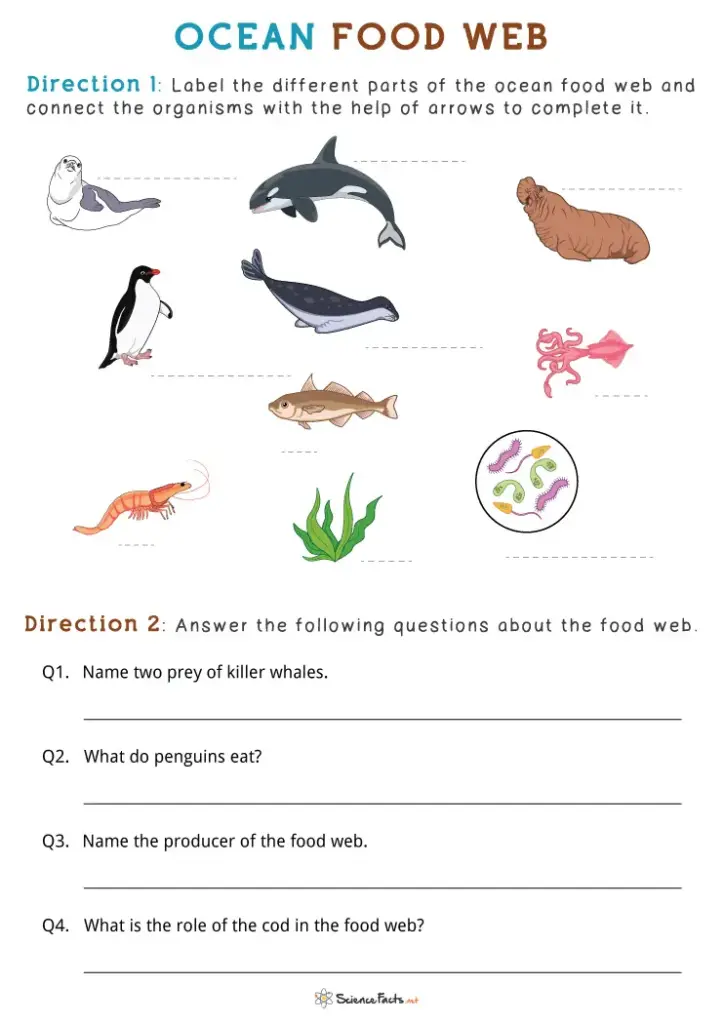
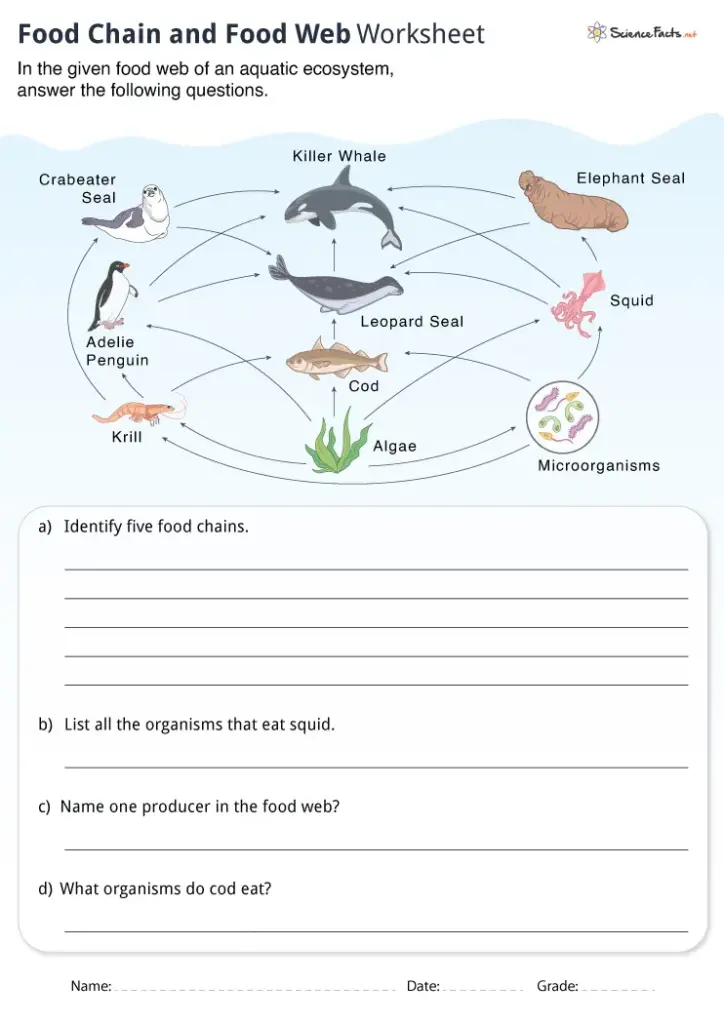
Food web worksheets printable materials help students see how living things are connected in an ecosystem. A good worksheet usually asks learners to sort organisms, follow arrows, and explain who eats what. That makes it useful for classroom review, homeschool practice, or a quick check of understanding. The best versions match the learner’s level and focus on the core ideas behind energy flow, not just memorizing vocabulary.
What students learn
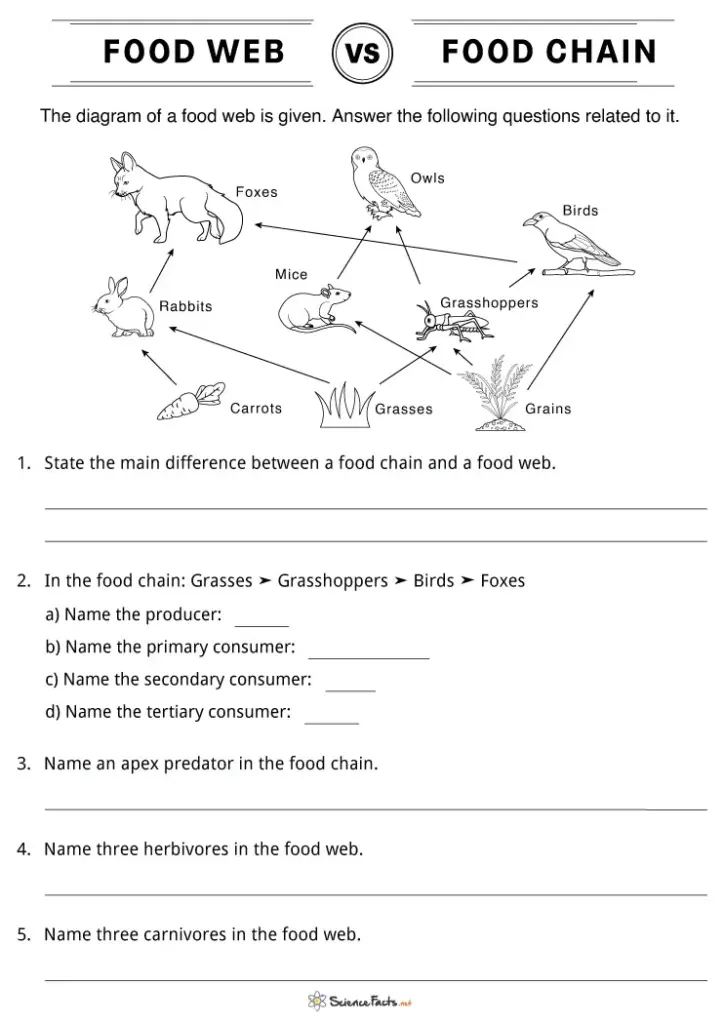
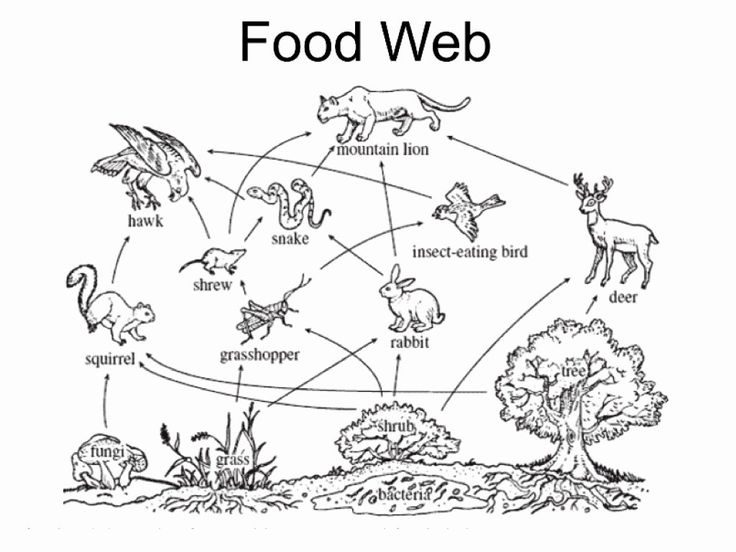
At the simplest level, a food web worksheet helps students identify producers, consumers, and sometimes decomposers. It also shows that one organism can connect to several others, unlike a single food chain. Students practice reading arrows as a sign of energy moving from food to eater, which is a common point of confusion. Many worksheets also ask learners to trace pathways through an ecosystem and explain how changing one organism can affect others.
Key worksheet features
The most useful food web worksheets printable resources include organism cards, labeled arrows, and an ecosystem setting such as a pond, forest, ocean, or grassland. Organism cards help students sort and place living things before they draw connections. Arrows should be clear enough to show direction, and the ecosystem context should fit the organisms shown. If a worksheet is well designed, students can understand the relationships without needing extra explanation on every step.
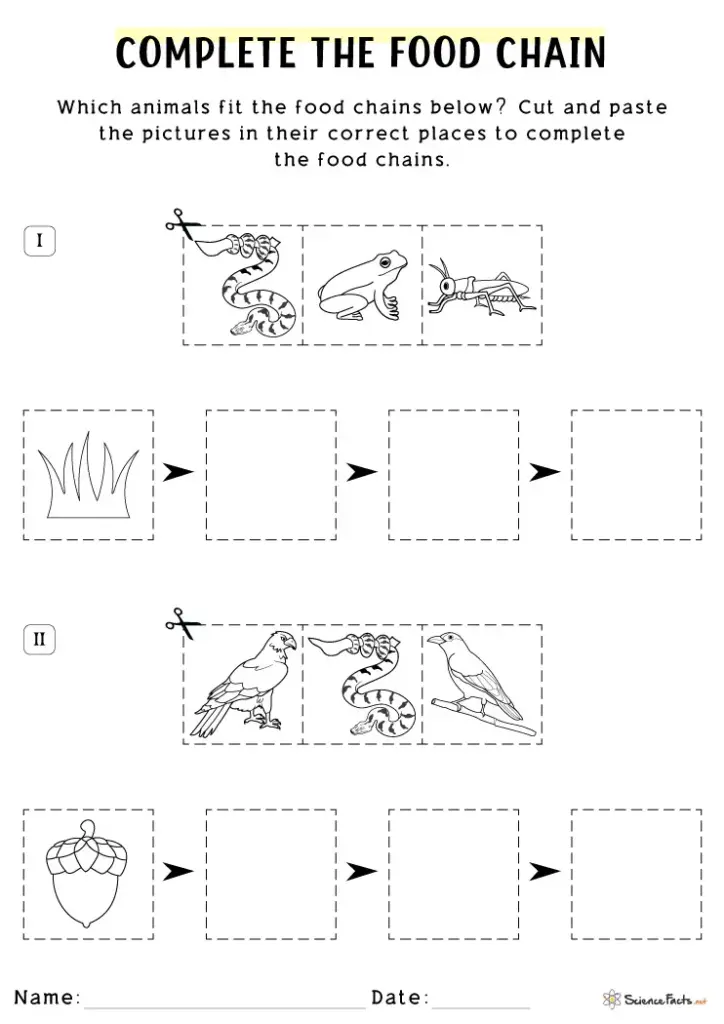
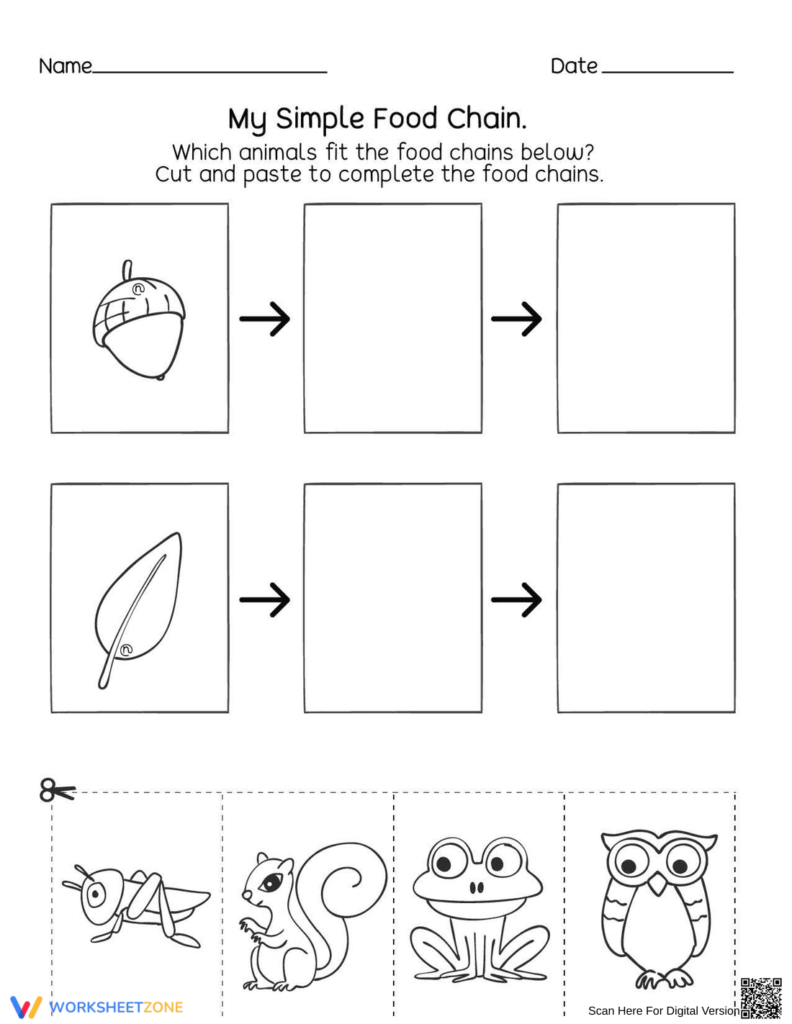
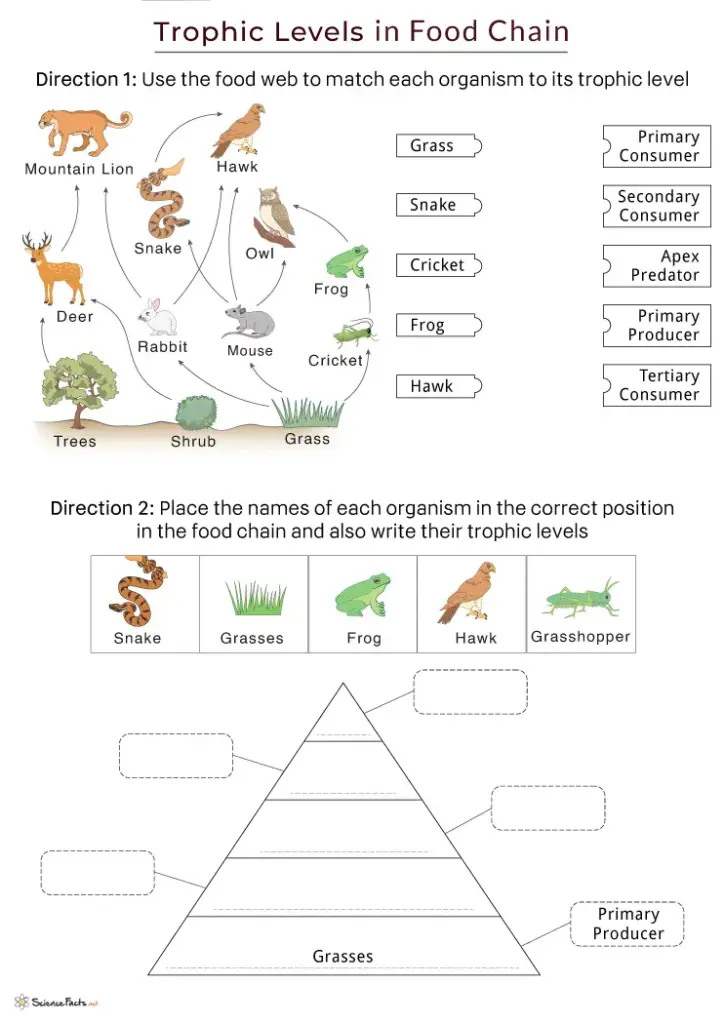
Age and grade fit matter because food webs can range from very simple matching tasks to more detailed analysis. Early elementary worksheets should use familiar animals, short labels, and a limited number of connections. Upper elementary and middle school versions can include more organisms, multiple food sources, and questions that ask students to interpret the web. Decide whether the worksheet is for practice, assessment, or extension: practice pages usually guide students more, while assessment sheets should require independent reasoning. Choose the version that matches both skill level and teaching goal.