
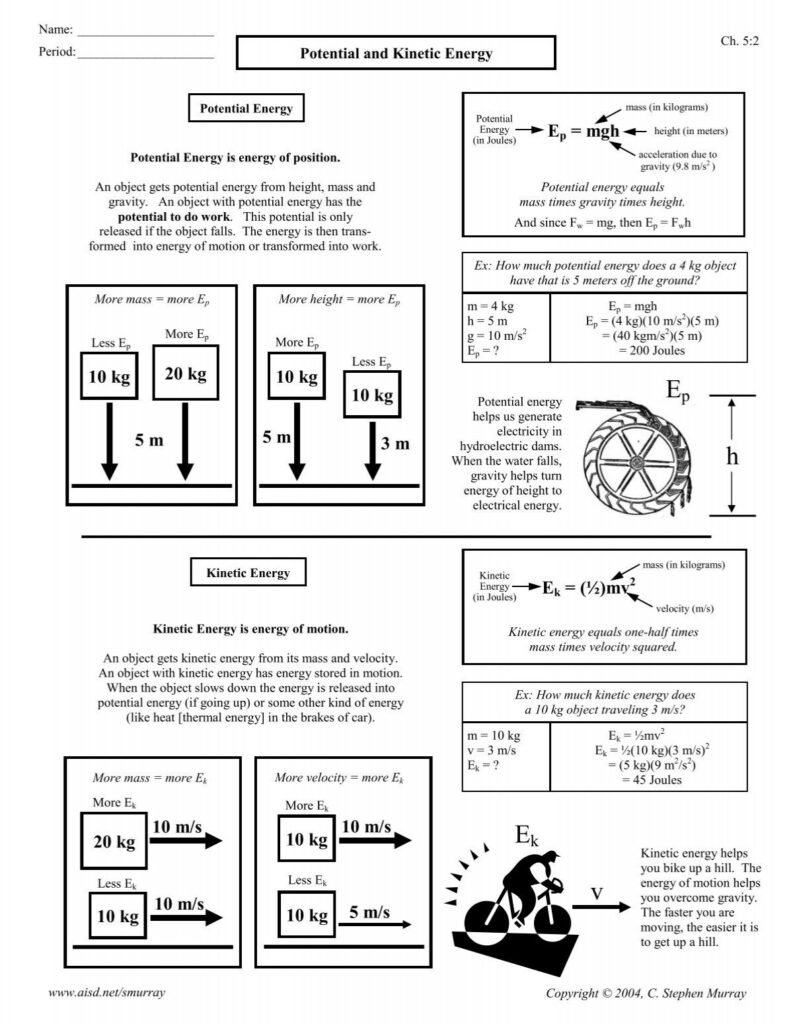
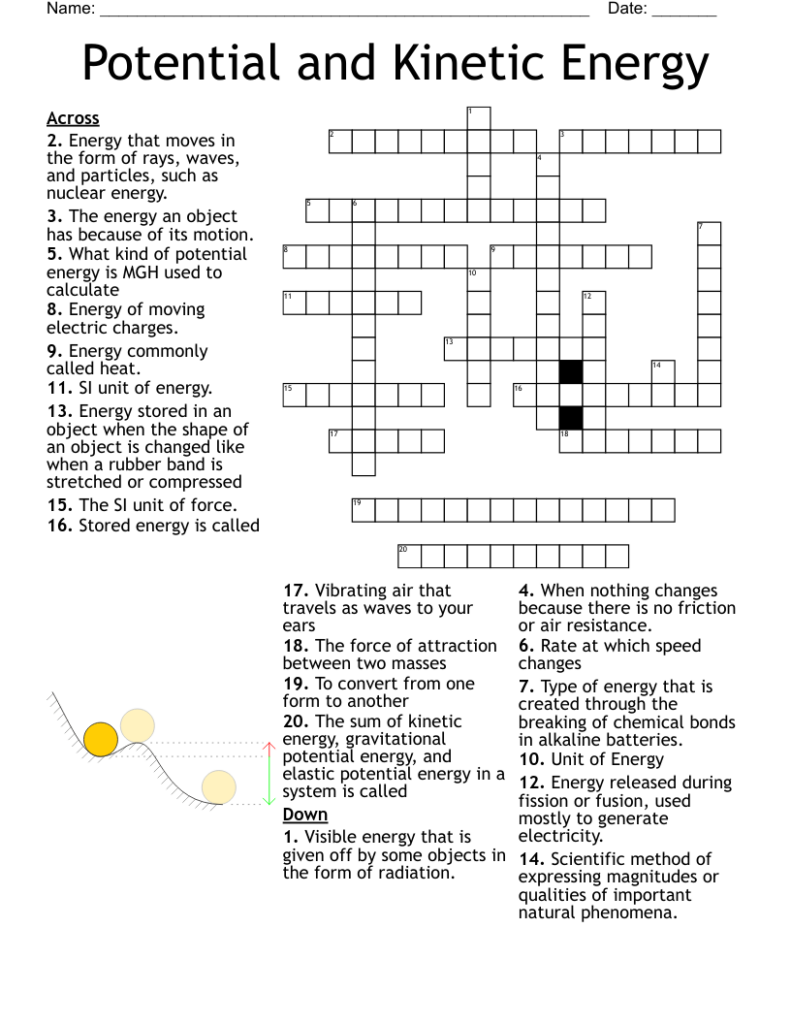
A potential and kinetic energy worksheet should help learners tell stored energy from motion energy and practice sorting simple examples. The best worksheets keep the focus on identifying whether something is waiting to move or already moving, such as a stretched rubber band, a rolling ball, or a parked bike at the top of a hill. That kind of practice builds confidence with a basic science idea before moving on to harder topics.
What learners should spot
Potential energy is energy stored because of position or condition, while kinetic energy is energy an object has when it is moving. A worksheet should make that difference clear through short prompts, picture clues, and matching activities. For example, a book on a shelf is potential energy because it could fall, while the same book sliding off the desk shows kinetic energy. Simple contrast questions help students learn the vocabulary and the concept at the same time.
Practice activities to include
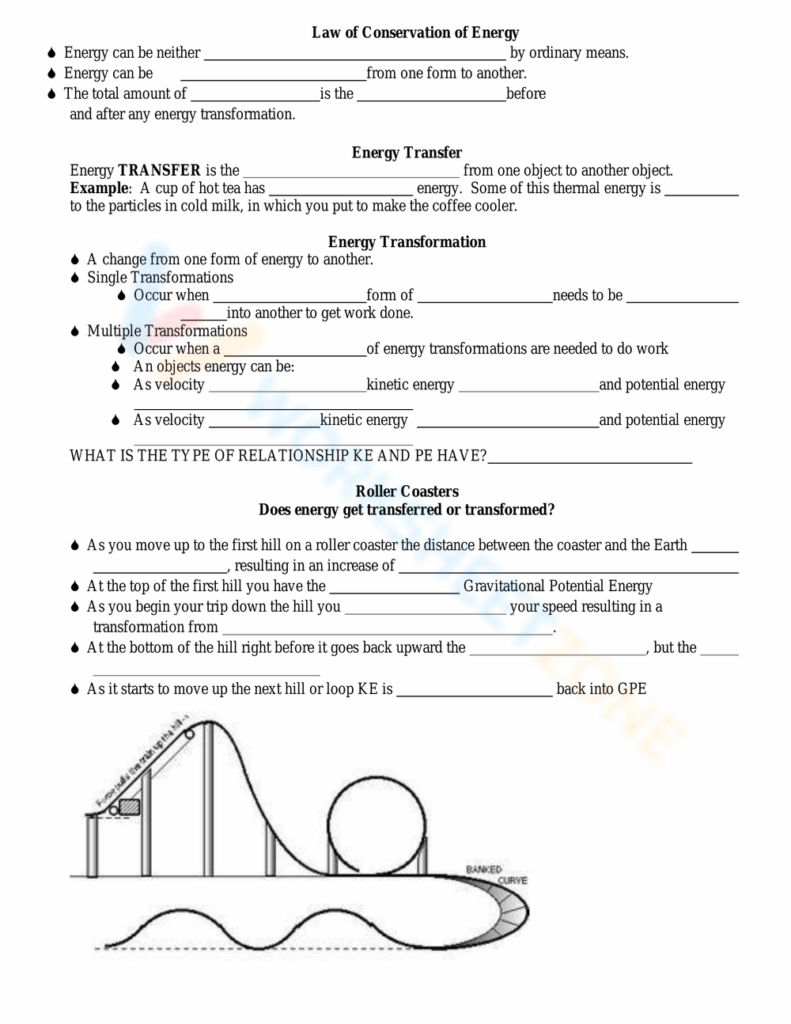
Good worksheet tasks ask students to circle, sort, or match each example as potential or kinetic energy. Items can include a drawn arrow, a bouncing ball, a stretched spring, a running child, or water behind a dam. Fill-in-the-blank sentences also work well if they stay simple, such as “This object is moving, so it has ___ energy.” The goal is quick classification practice, not long explanations, so students can show they understand the difference.
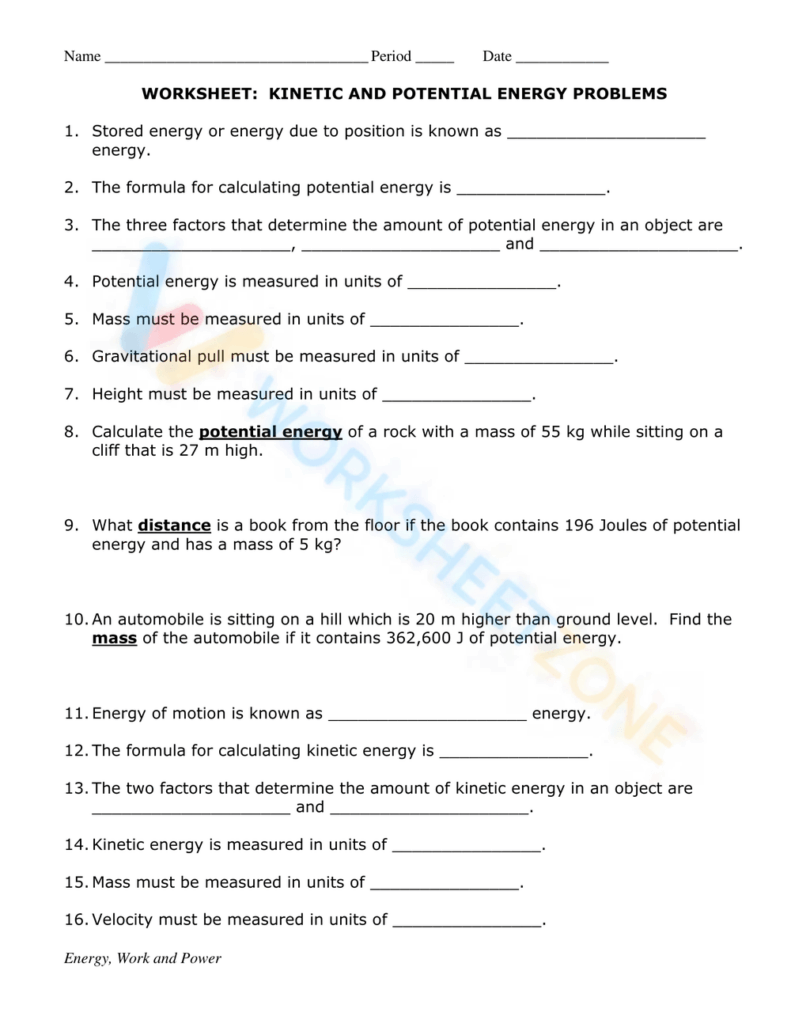
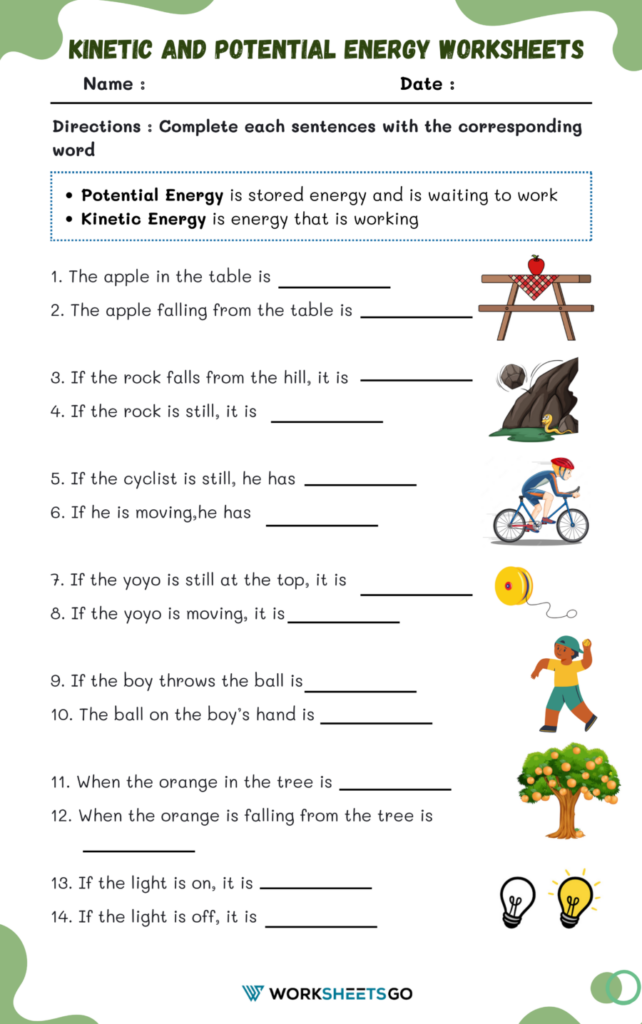
The most useful worksheet examples are familiar and easy to picture: a swung-up pendulum before it falls, a stopped car on a hill, a moving skateboard, a drawn bow, or a waterfall. These examples let learners connect science to everyday life without extra complexity. If the worksheet is for classroom use, an answer key should mark each item clearly and consistently. A good next step is to choose examples that match the students’ age and then check whether each one shows stored energy or motion.



