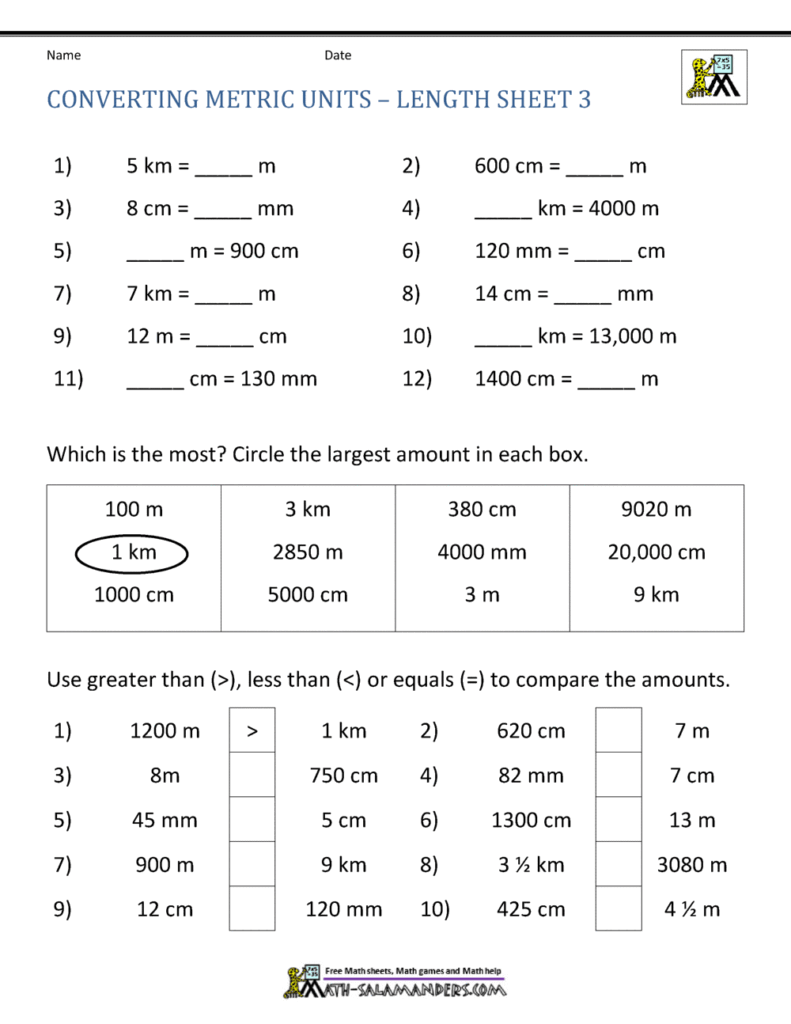
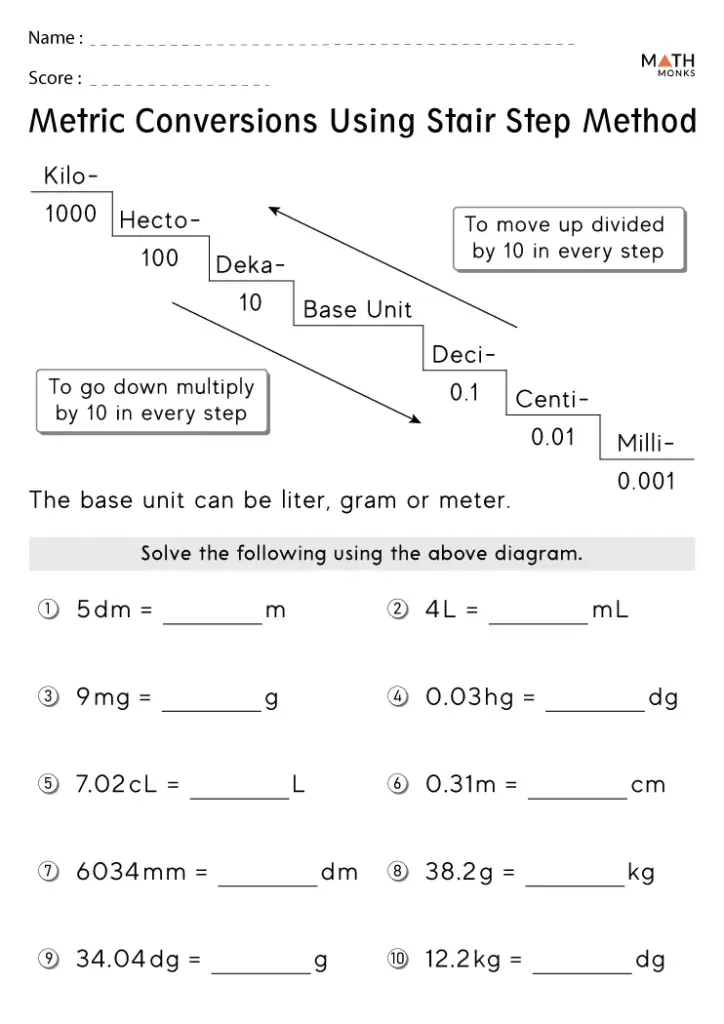
A conversion of metric system worksheet is most useful when it focuses on a small set of units and gives clear practice with the metric place-value pattern. Learners should be able to move between length, mass, and volume units without guessing. A strong worksheet makes the conversion direction obvious, then reinforces how decimal shifts or powers of 10 solve each problem.
Metric units on the worksheet
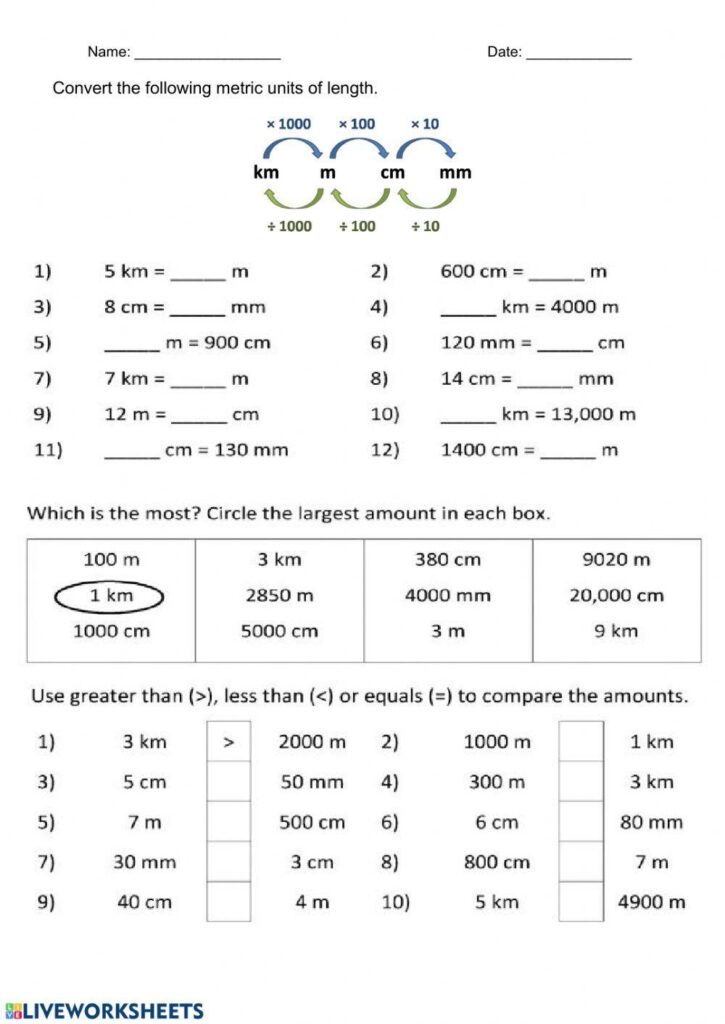
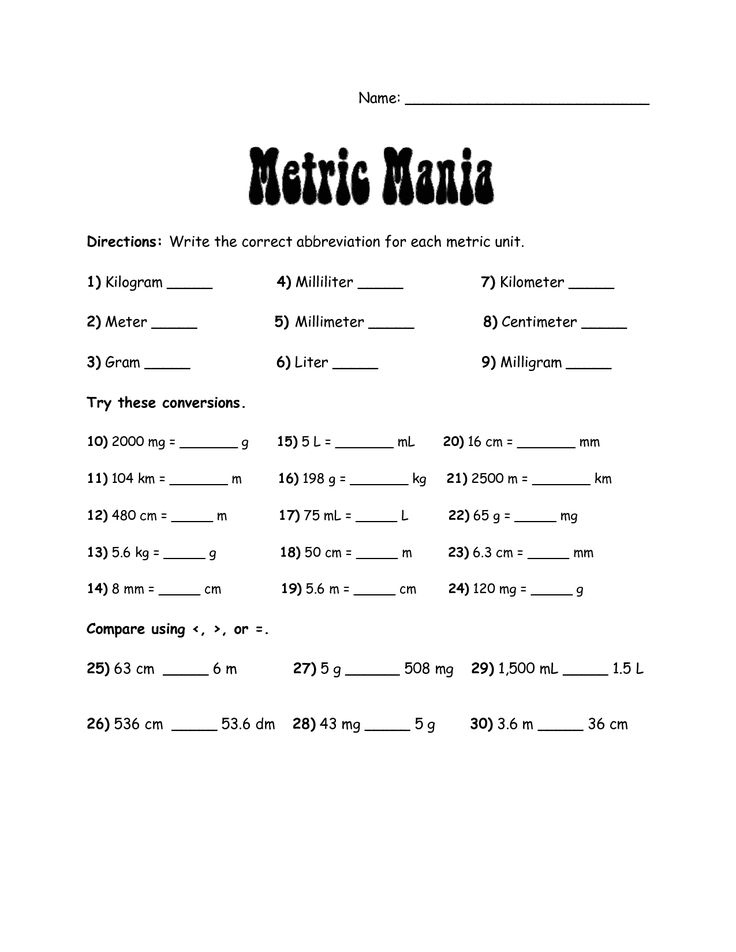
A good worksheet usually centers on the common metric units: millimeter, centimeter, meter, and kilometer for length; milligram, gram, and kilogram for mass; and milliliter and liter for volume. The key relationship is that metric units change by factors of 10. Smaller units are to the right of larger units on the metric ladder, so each step changes the value by 10. This pattern is what students use to decide whether to multiply or divide.
How to convert
To move to a smaller unit, multiply by 10 for each step and shift the decimal right. To move to a larger unit, divide by 10 for each step and shift the decimal left. For example, 3.4 meters equals 340 centimeters because meters to centimeters is two steps smaller, so multiply by 100. Likewise, 750 milliliters equals 0.75 liters because milliliters to liters is three steps larger, so divide by 1000. The worksheet should make the direction of the move clear before students calculate.
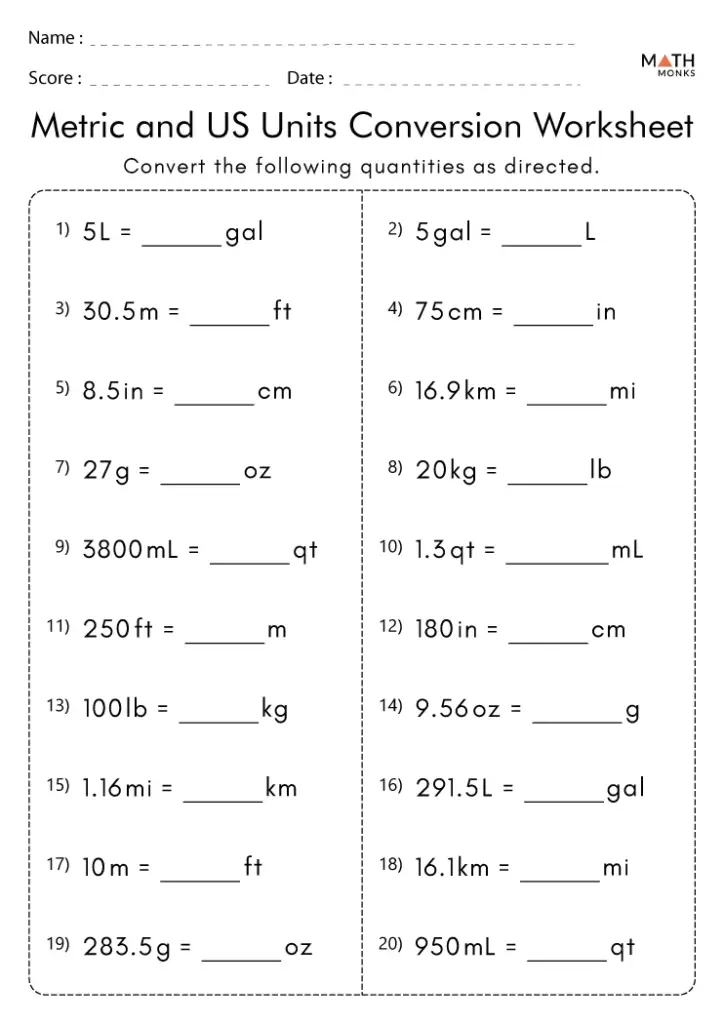
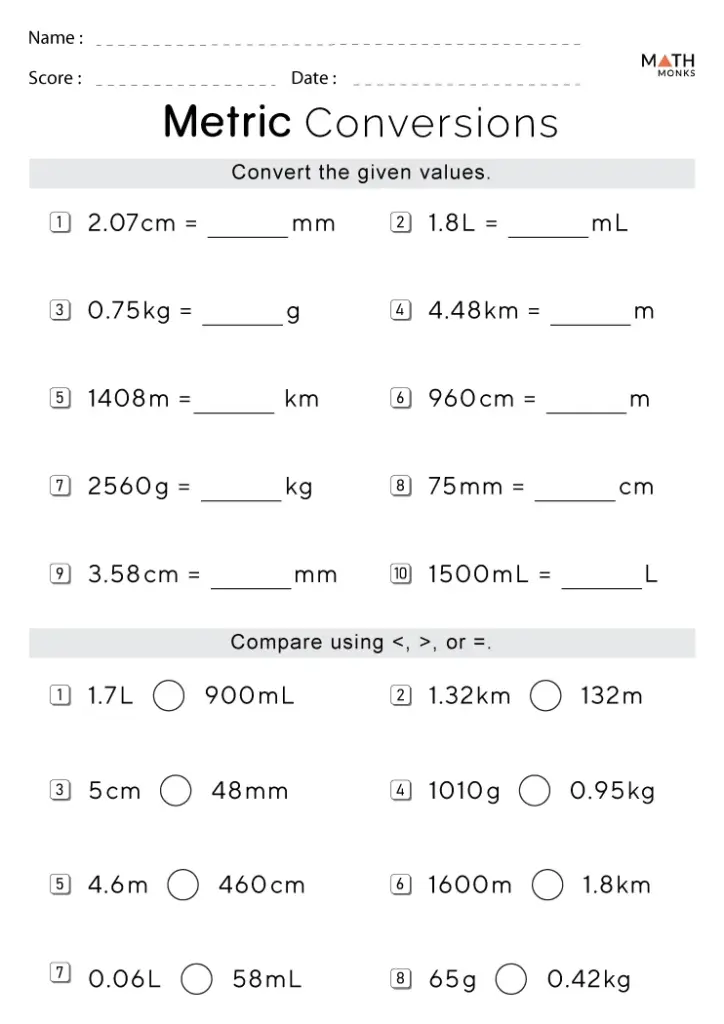
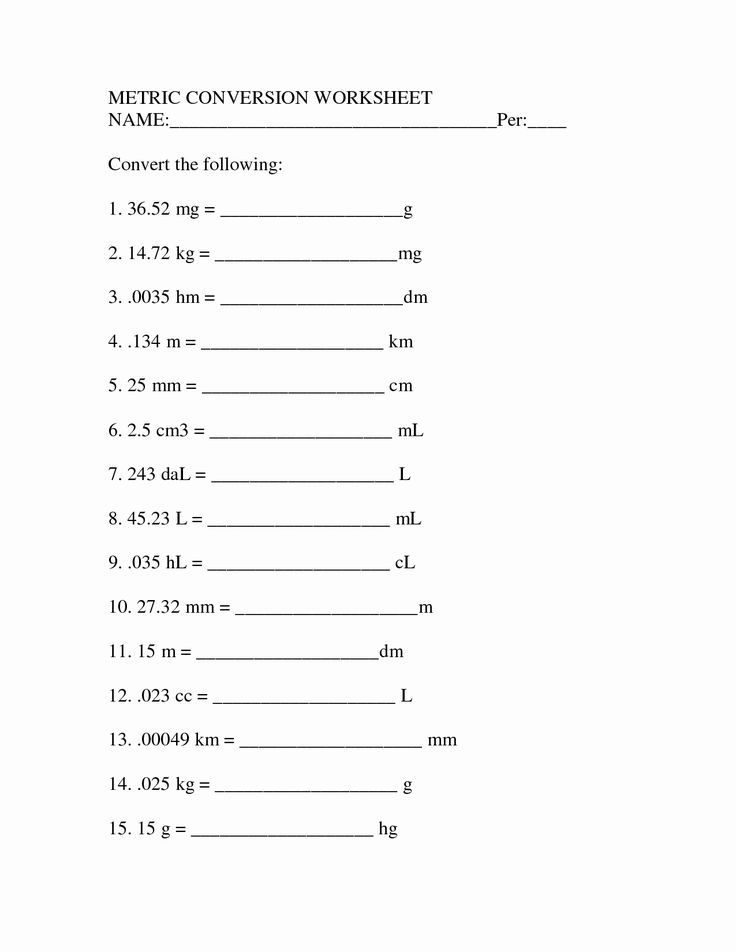
A few answer-key style examples help confirm the method: 5 kilometers = 5,000 meters; 240 centimeters = 2.4 meters; 8 liters = 8,000 milliliters; 630 grams = 0.63 kilograms. These examples show the same rule across length, mass, and volume. After the worksheet, students should check whether the unit got smaller or larger, then apply the matching decimal shift. That simple habit is usually enough to complete the exercises correctly and build confidence with metric conversions.