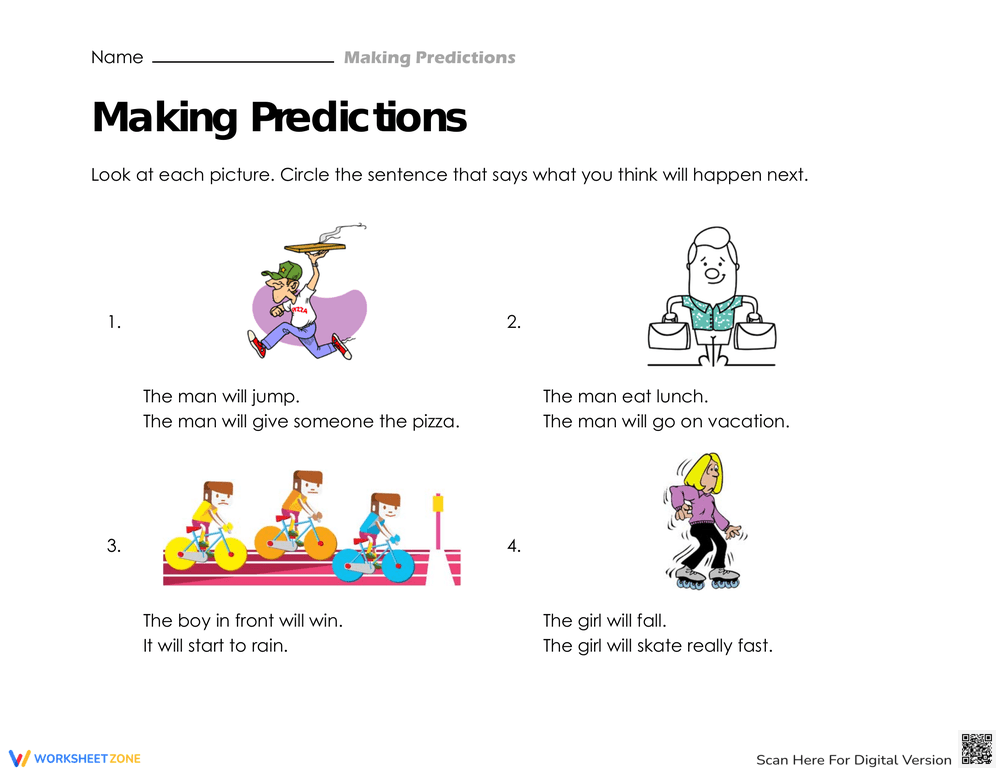
A making predictions worksheet helps learners practice using clues from a title, picture, short passage, or science observation to guess what might happen next. It keeps the task focused on prediction, not long comprehension work. The best worksheets are simple, visual, and easy to check, so students can make an initial guess and then revisit it after reading or observing.
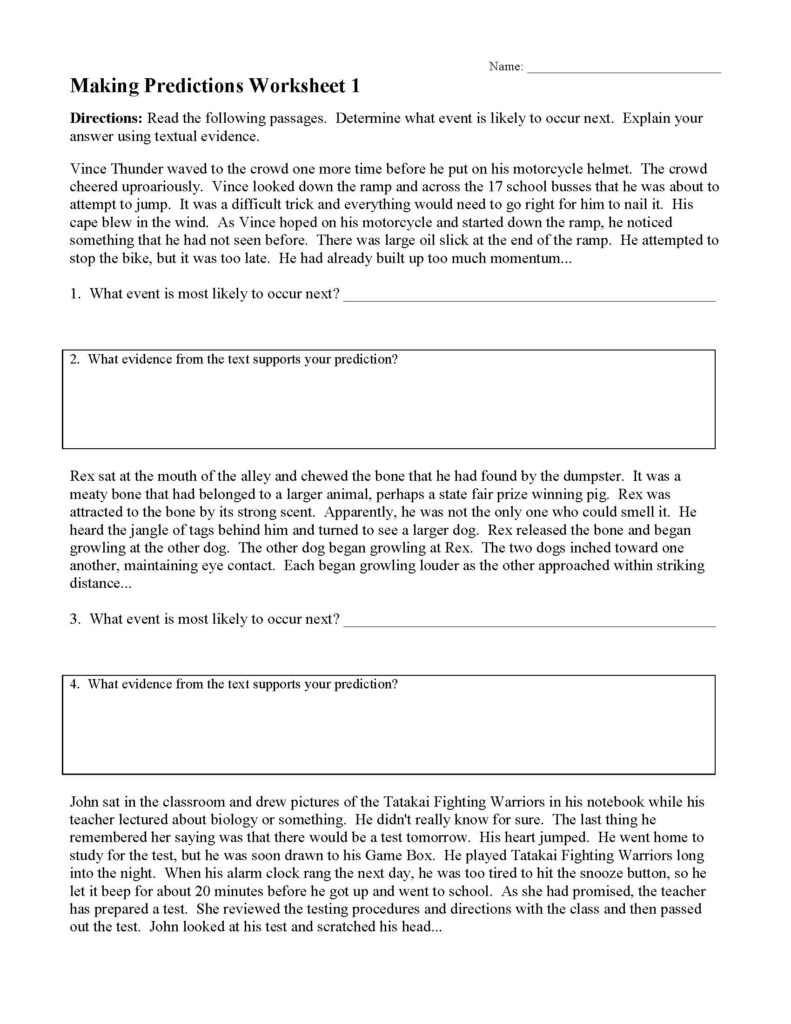
A useful worksheet should give clear prompts that point students to the clue they should use. For reading, that might be a title, a cover image, or a short paragraph. For science, it might be a picture of a plant, weather chart, or experiment setup. The page should also leave space for a written or drawn prediction, since some learners need sentence support while others can explain their thinking in a few words. A final check box or reflection line helps students compare their prediction with what actually happened.
Simple Guided Practice
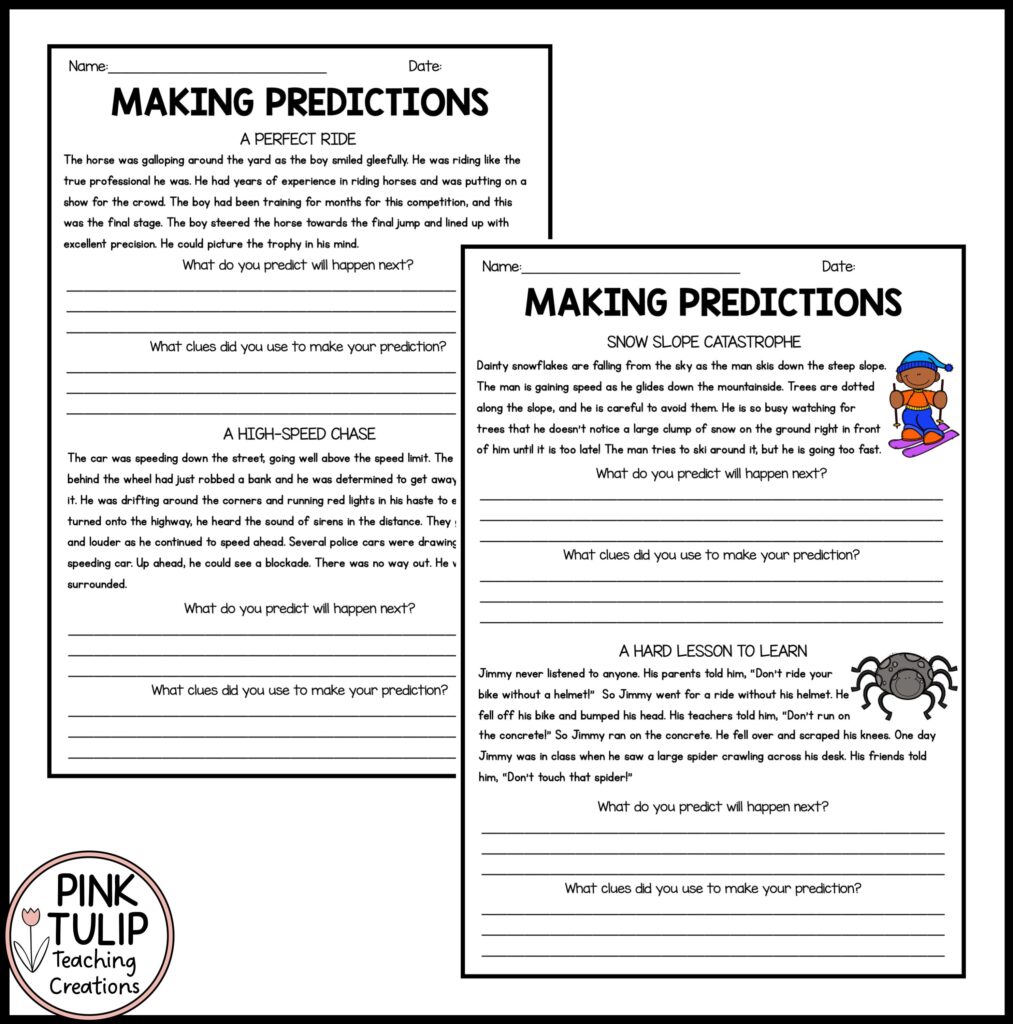
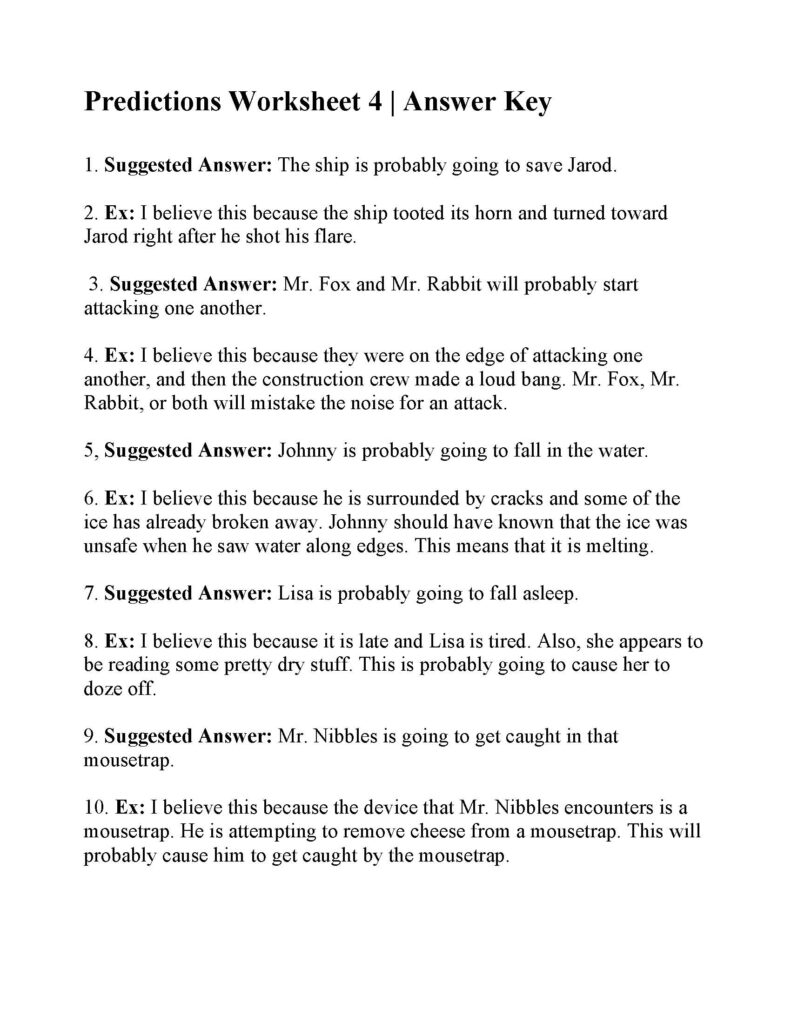
In a guided lesson, the teacher models one prediction aloud first. Read the title or show the image, ask what clues students notice, and write one prediction together. Then students complete the rest of the worksheet with a partner or independently. After reading the passage or finishing the science activity, return to the worksheet and ask whether the prediction matched the outcome. That second look is important because it shows prediction is a thinking process, not just a guess.
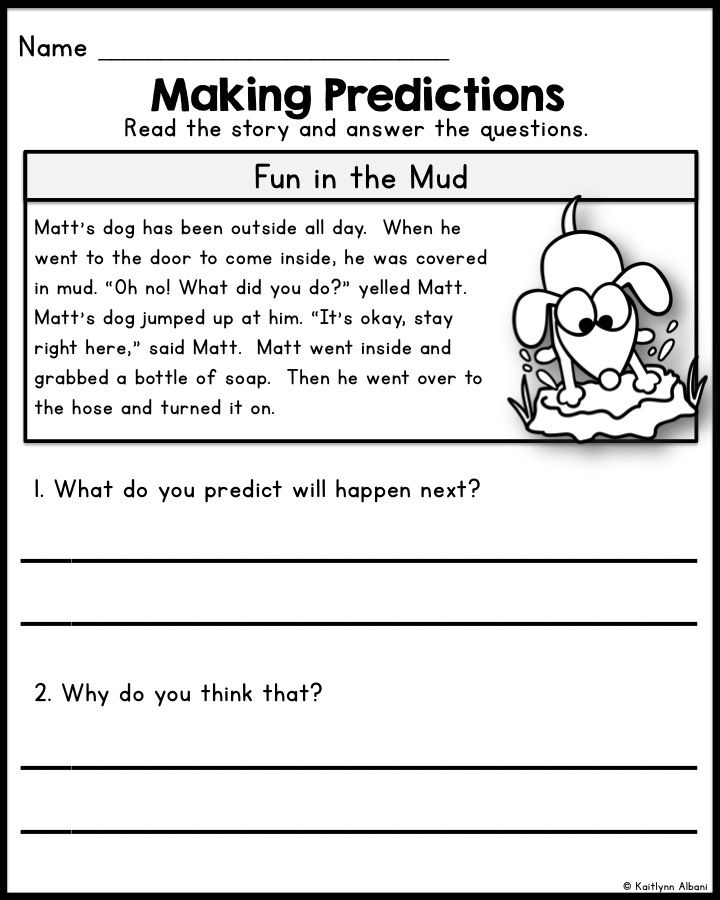
Choosing the Right Level
Grade level matters when choosing a making predictions worksheet. Younger learners do best with pictures, short phrases, and one-sentence responses. Early elementary students can usually handle a brief passage with a prompt such as What do you think will happen next? Older students may be ready for slightly longer clues and a space to explain why they predicted that outcome. If the worksheet is too crowded or the text is too long, students may focus on decoding instead of predicting.
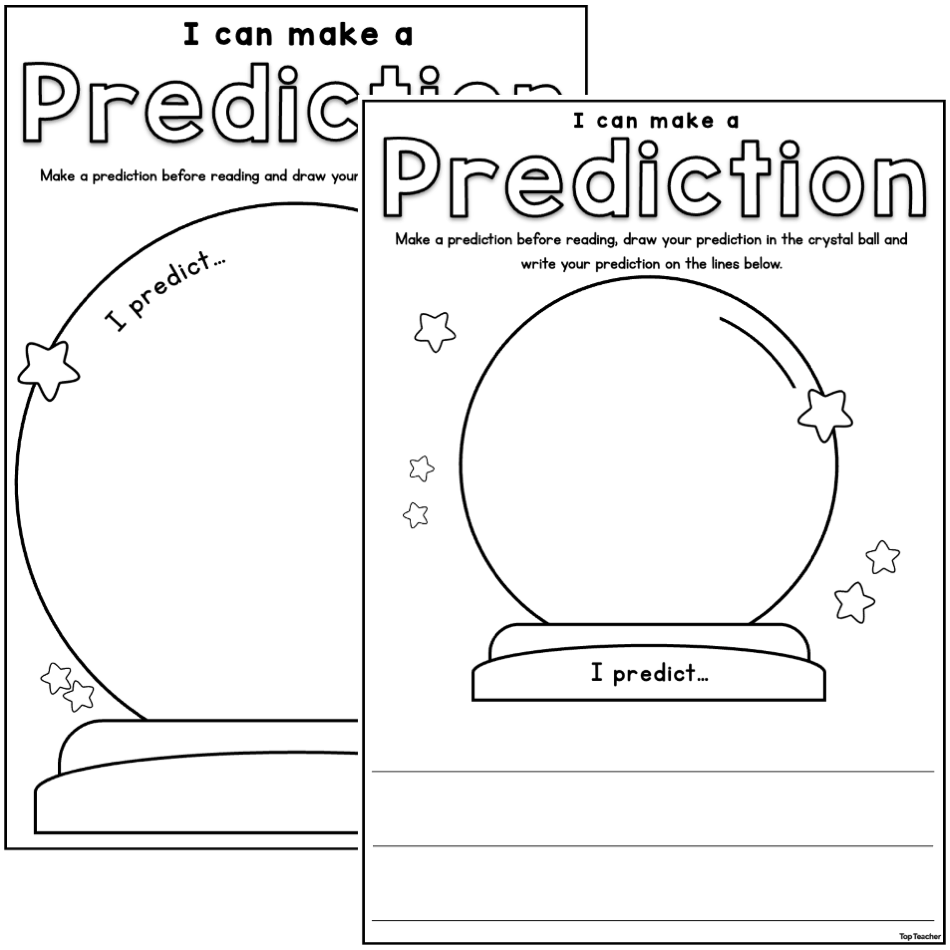
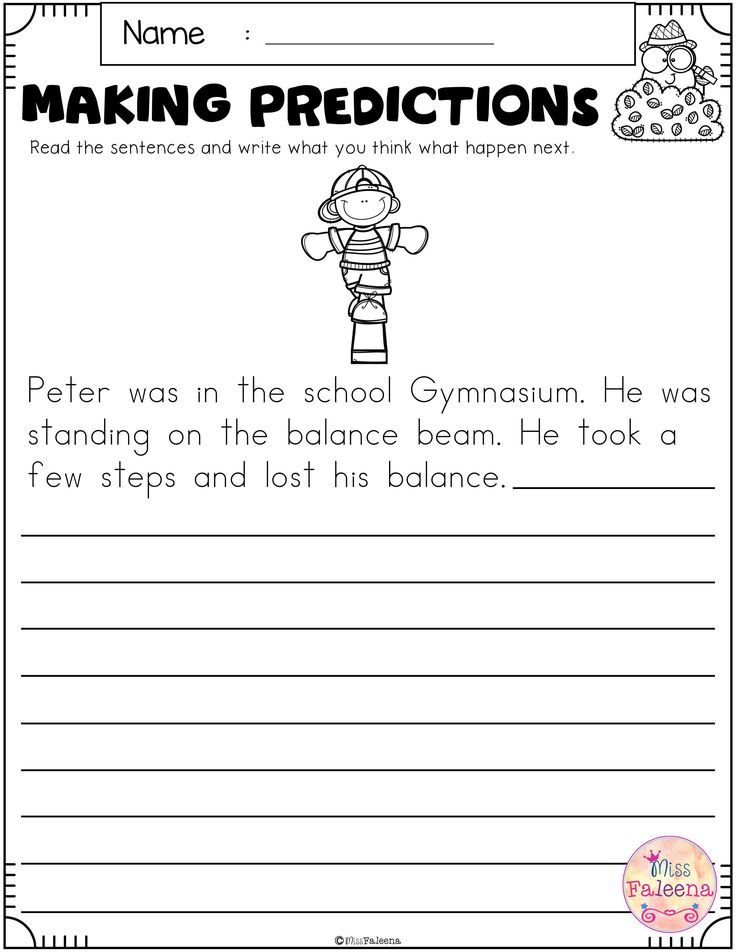
For independent practice, use the worksheet as a quick check before or after reading or a science observation. Students should have enough support to make a thoughtful prediction, but not so much that the answer is obvious. The clearest worksheets invite students to look closely, make a reasonable guess, and then revise if needed after more information appears. That balance makes the resource practical, focused, and easy to use in class.