
A naming acids worksheet helps students practice one specific skill: reading an acid formula and choosing the correct name. The worksheet should focus on the basic rules for binary acids and oxyacids, since those are the forms most beginners meet first. Used well, it reinforces formula recognition, common ion patterns, and the simple naming cues that make acid problems manageable.
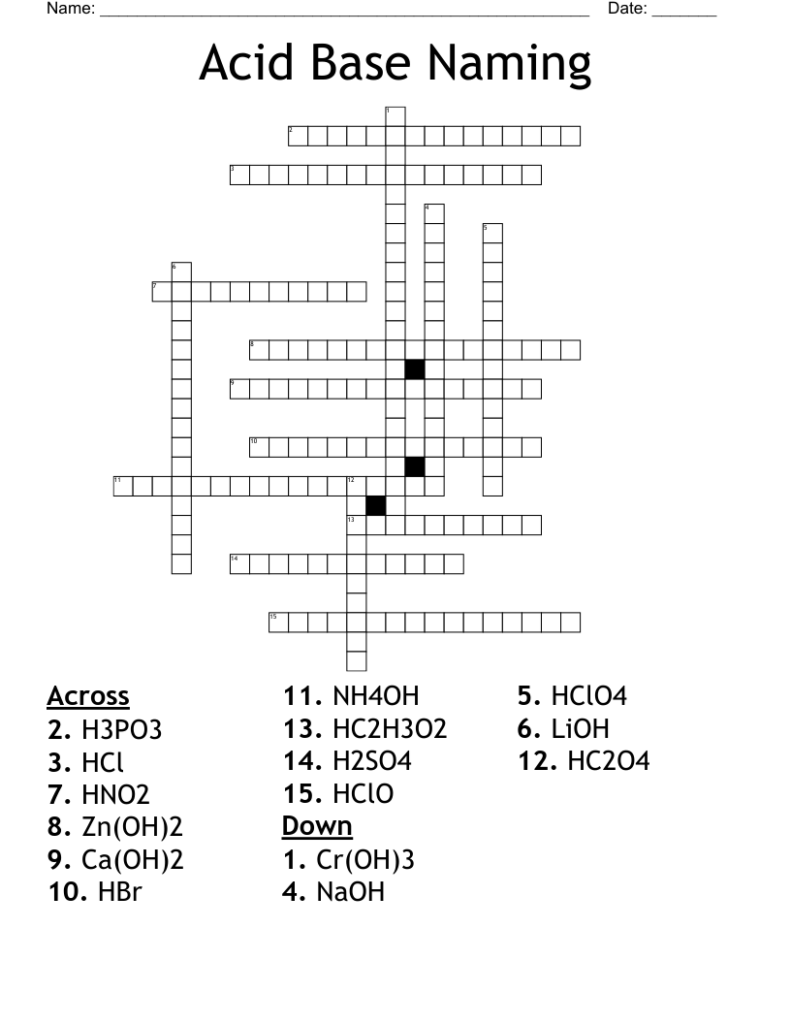
Core acid rules
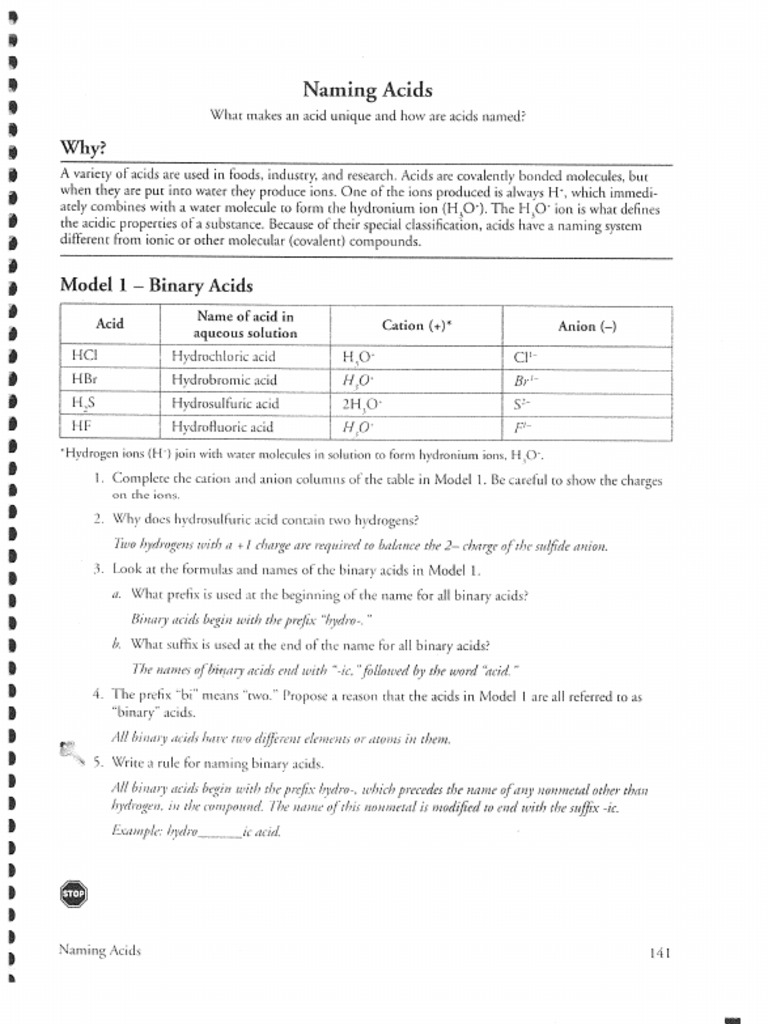
The essential worksheet rules are straightforward. Binary acids contain hydrogen and one other nonmetal, and they are named with hydro- plus the root of the nonmetal and -ic acid, such as HCl as hydrochloric acid. Oxyacids contain hydrogen, oxygen, and another element, and their names depend on the ending of the oxyanion: -ate becomes -ic acid, while -ite becomes -ous acid. Students should also notice that acid names usually begin with acid only when the formula is understood to be aqueous.
Practice item types
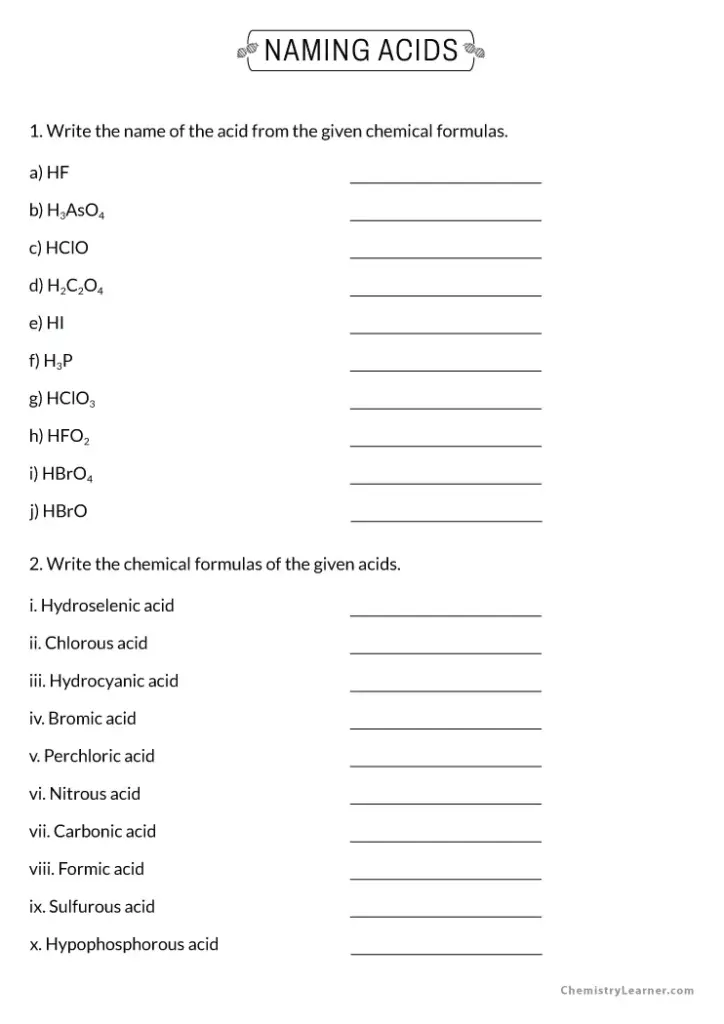
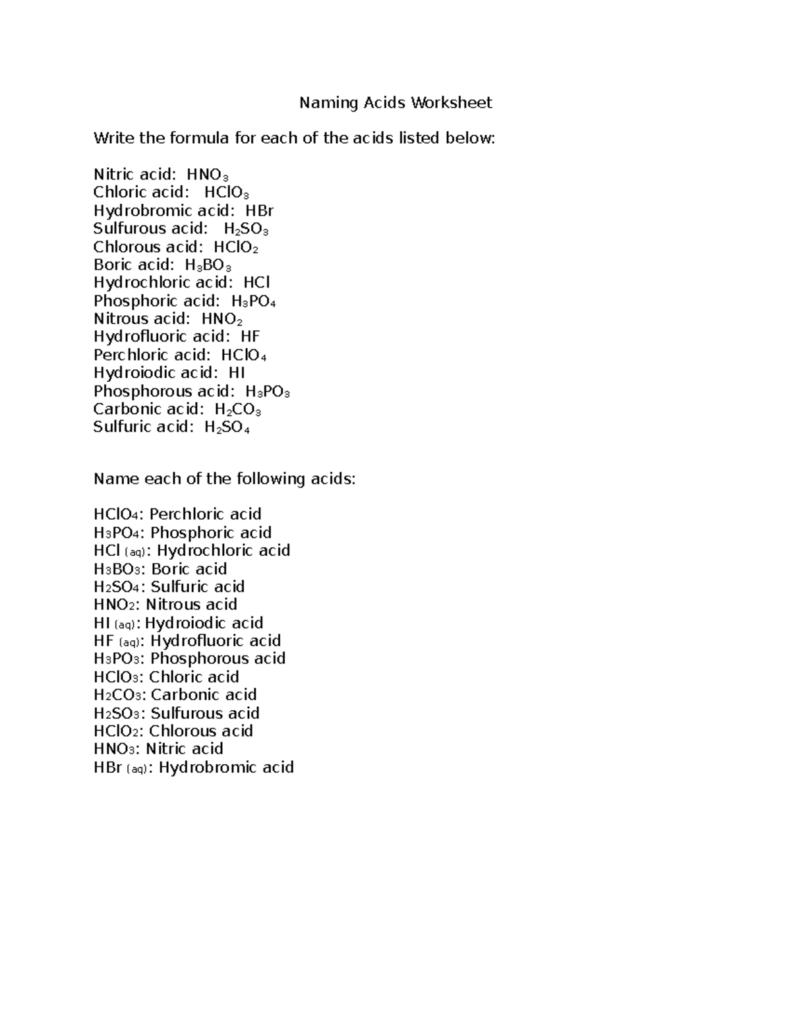
A strong worksheet should include a small mix of problem types. Students can name simple formulas such as HBr, H2S, HNO3, and H2SO4, then reverse the skill by matching names to formulas when appropriate. It also helps to include ions students already know, such as nitrate, sulfite, and phosphate, because those clues guide oxyacid naming. A good check is whether the student can explain why nitric acid uses the -ic ending while nitrous acid uses the -ous ending.
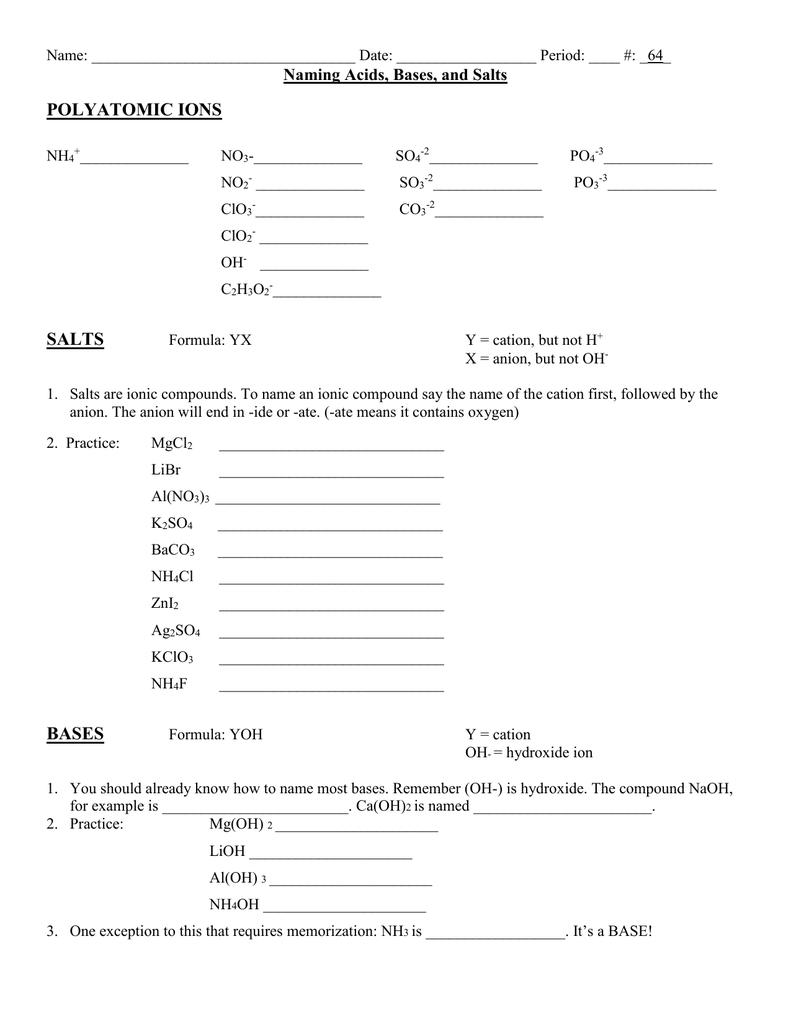
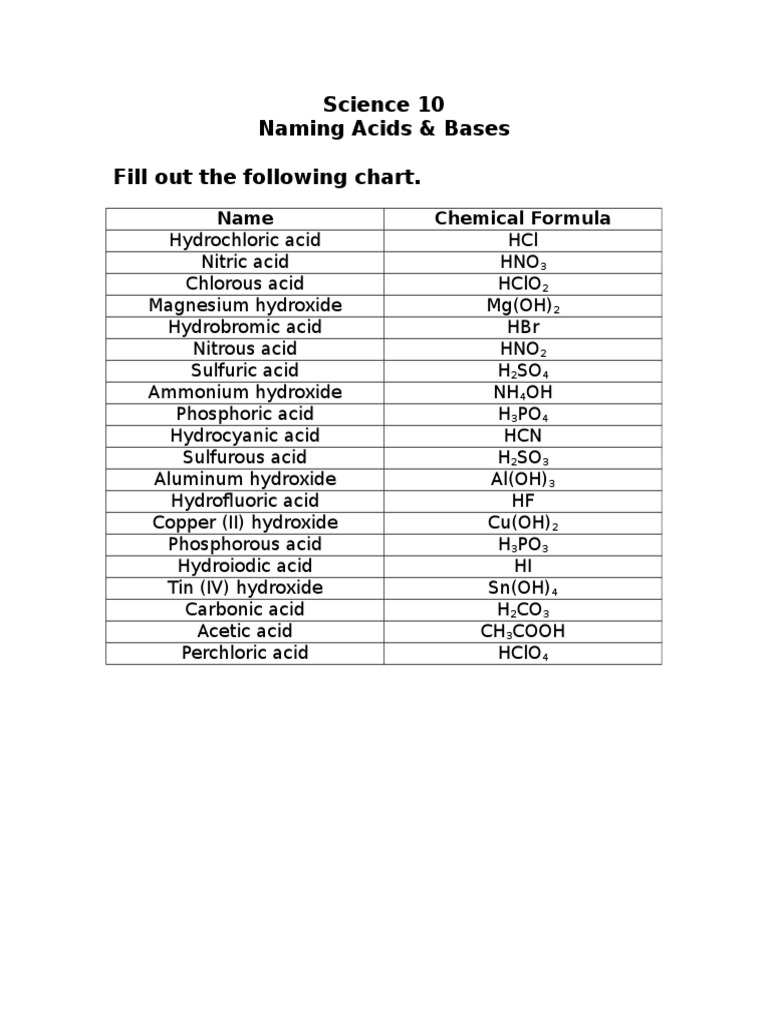
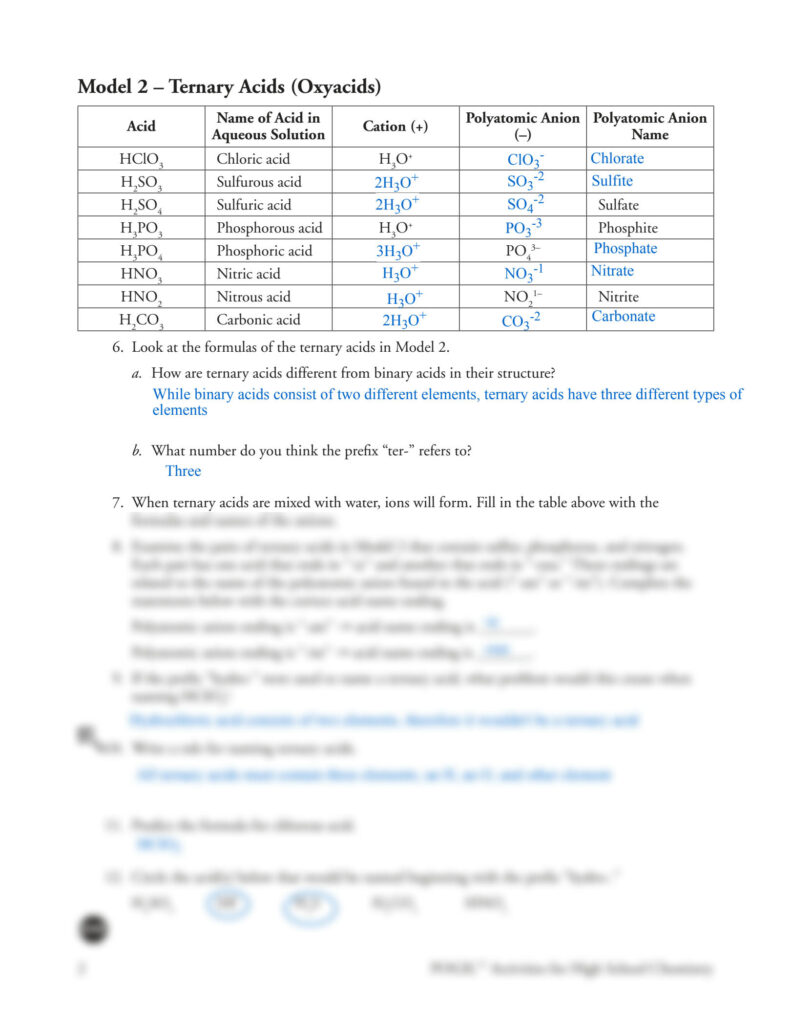
Before using the worksheet, learners should already recognize common polyatomic ions, know that hydrogen at the start of a formula often signals an acid, and understand the difference between a binary compound and an oxyacid. They should also be comfortable with simple formula reading, including element symbols and subscripts. If students can identify the anion first, naming becomes much easier. For a quick self-check, they can compare each answer to the ion ending: -ide, -ate, or -ite usually points to the correct acid pattern.



