
Refraction worksheets for kids should make one idea easy to see: light bends when it moves from one material to another, like air, water, or glass. The best worksheets keep the lesson simple, visual, and hands-on so children can connect the picture on the page to what they observe in real life. Good materials help kids notice how refraction changes the way objects look without overwhelming them with extra science terms.
What Refraction Means
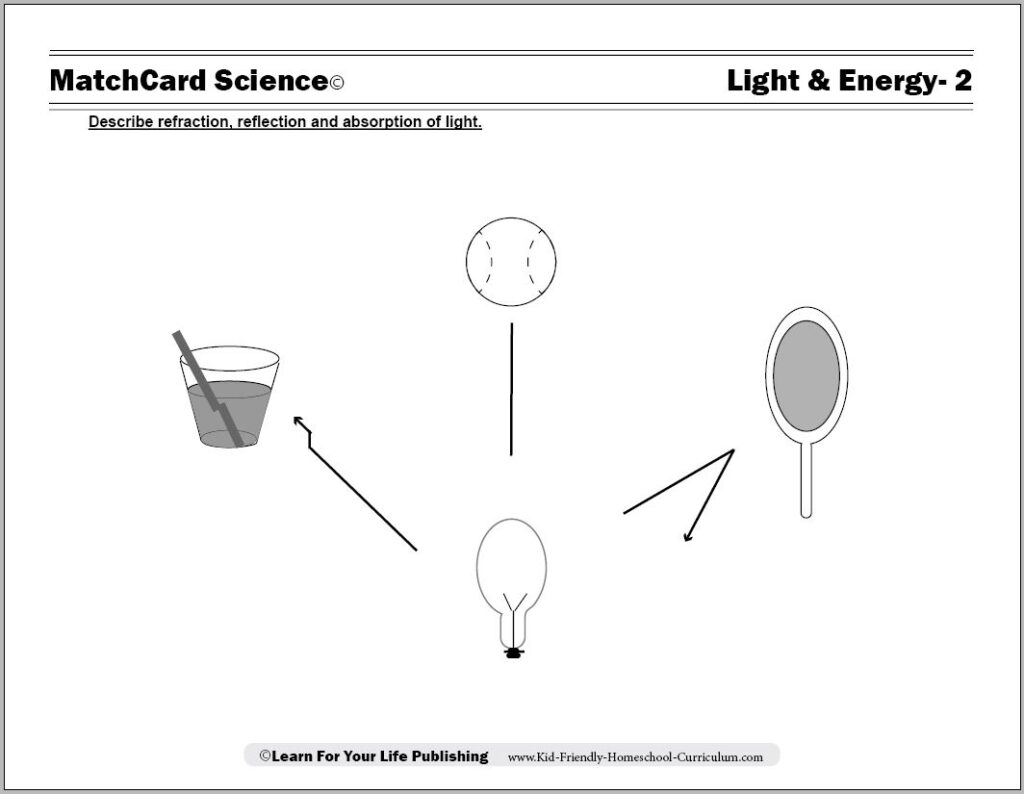
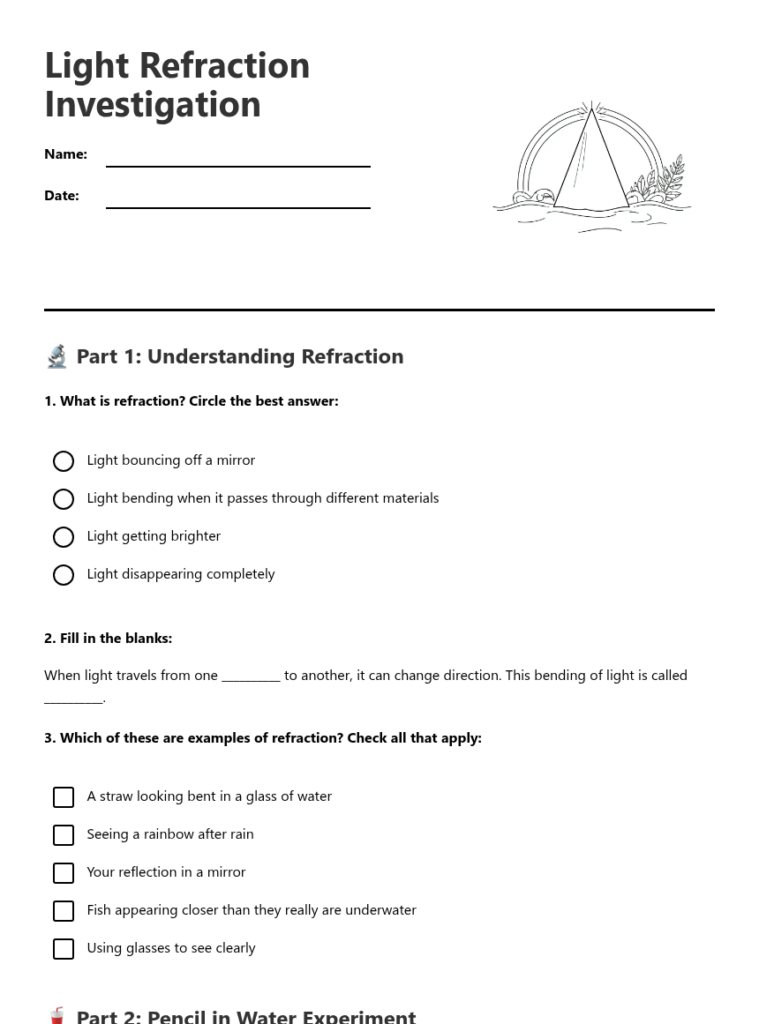
For young learners, refraction can be explained as light changing direction when it passes through different materials. A worksheet may show a pencil in a glass of water or a straw that looks bent, then ask children what they notice. This kind of activity helps them understand that the object is not really broken or curved; the light reaching their eyes is changing as it moves through water or another clear material.
Best Worksheet Tasks
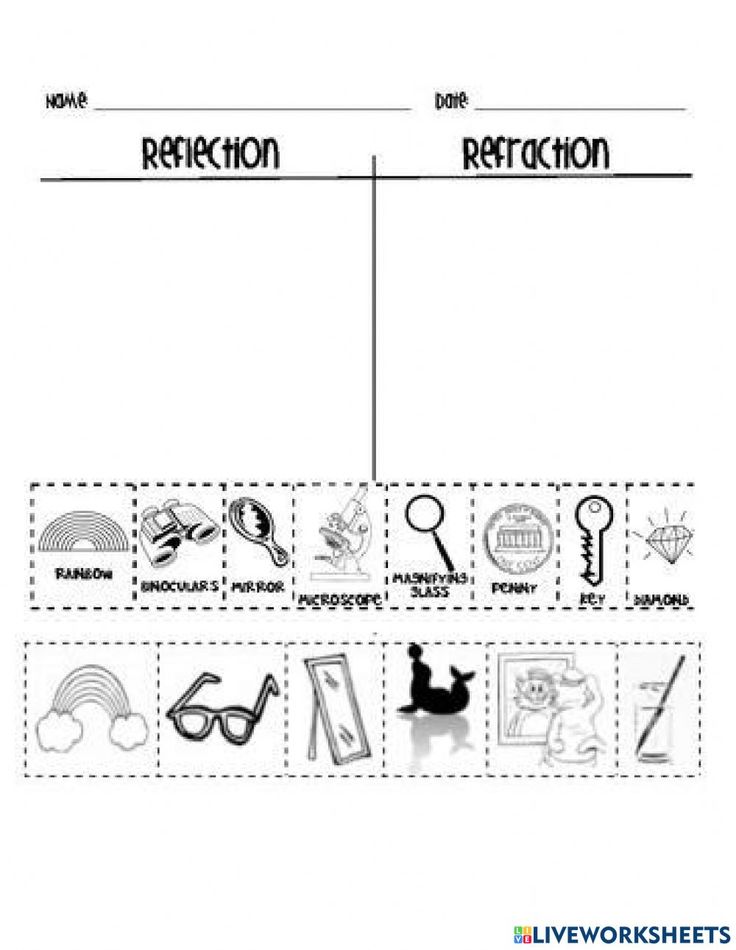
The most useful refraction worksheets include simple labeling, matching, and observation prompts. Kids might match pictures of water, air, and glass to examples of bent light or circle the image that shows refraction happening. Short questions such as “What looks different?” or “Where does the light pass through?” keep the focus clear. A draw-and-label page can also work well when children need to mark the material and the object they are observing.
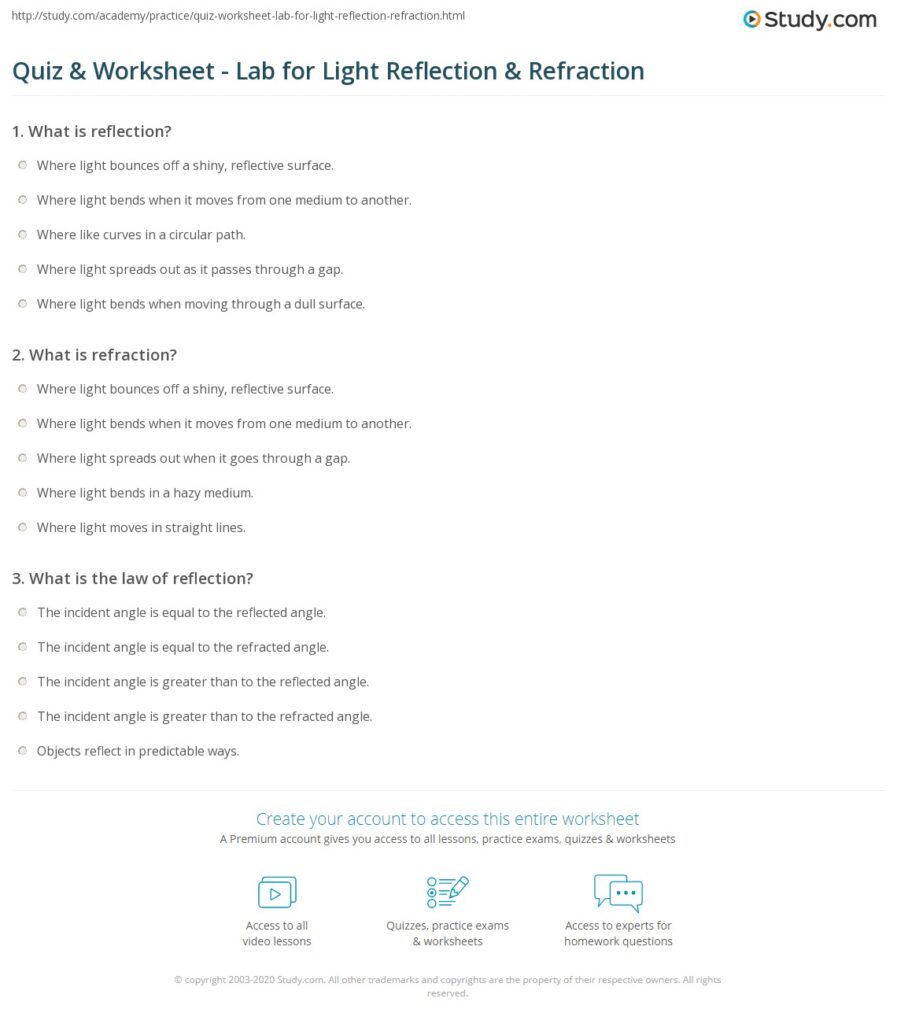
Age-appropriate refraction worksheets should match reading level and attention span. Younger children usually need large pictures, few words, and directions they can follow with adult support. Older elementary students can handle a little more text, such as short explanation boxes or simple compare-and-contrast questions. In every case, the page should support the idea visually first and linguistically second. If the worksheet is clear at a glance, it is more likely to help children understand refraction instead of just memorize a term.



