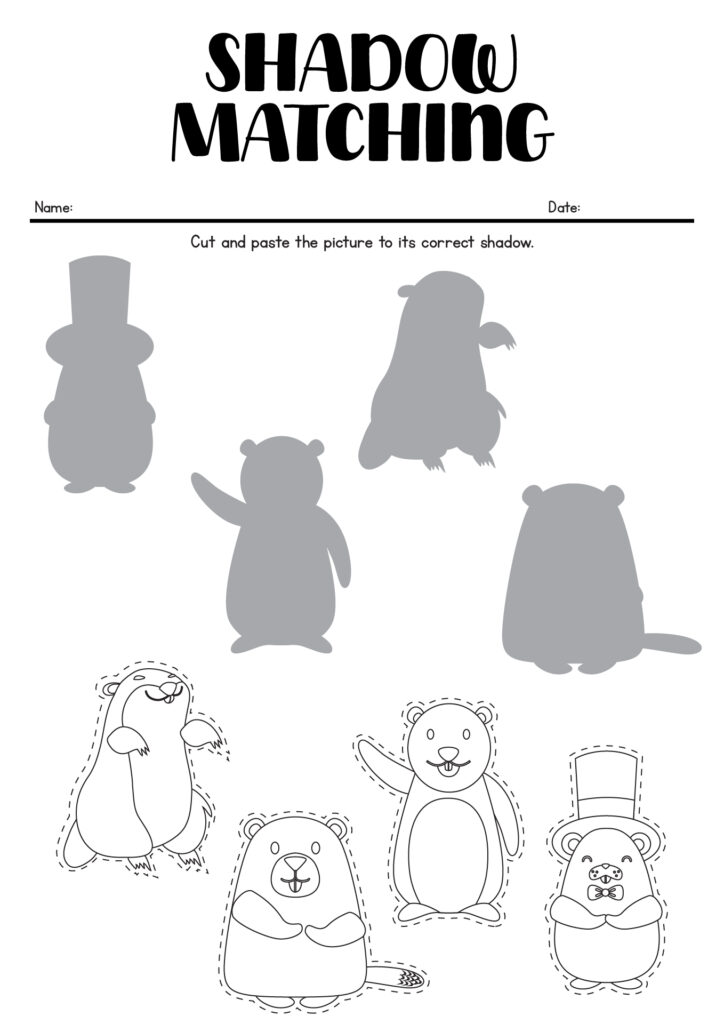
Shadow worksheets for kids are simple activities where a child matches an object to its shadow silhouette or identifies the correct outline. They are an easy way to build early thinking skills without a lot of setup. Most worksheets use familiar pictures, clear shapes, and a matching task that feels like a game while supporting learning.
What Kids Practice
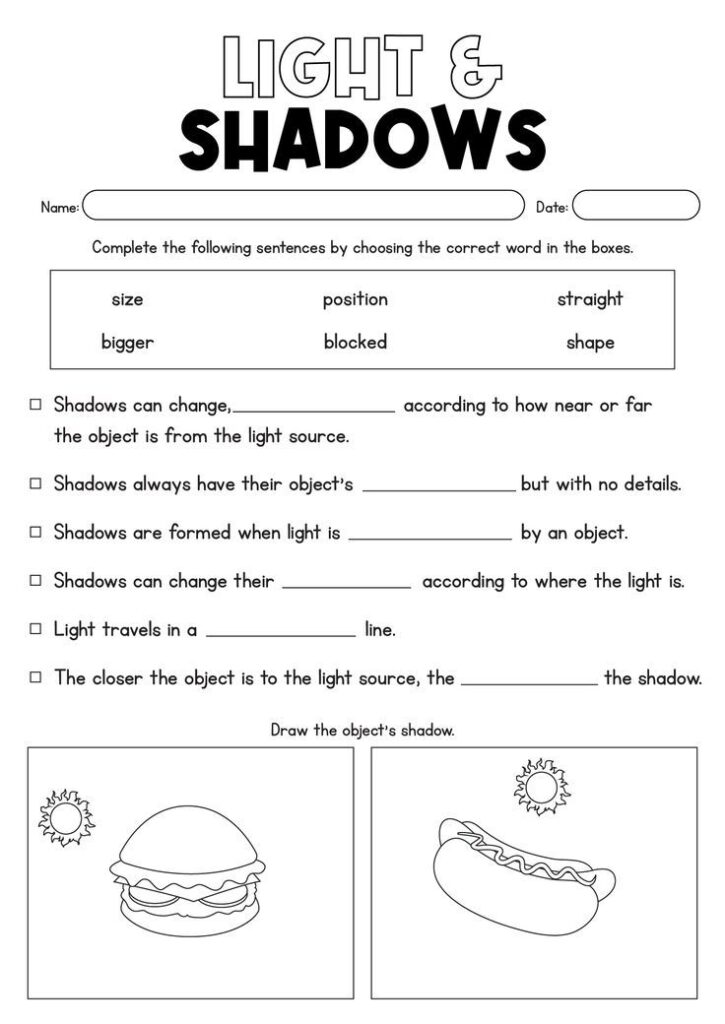
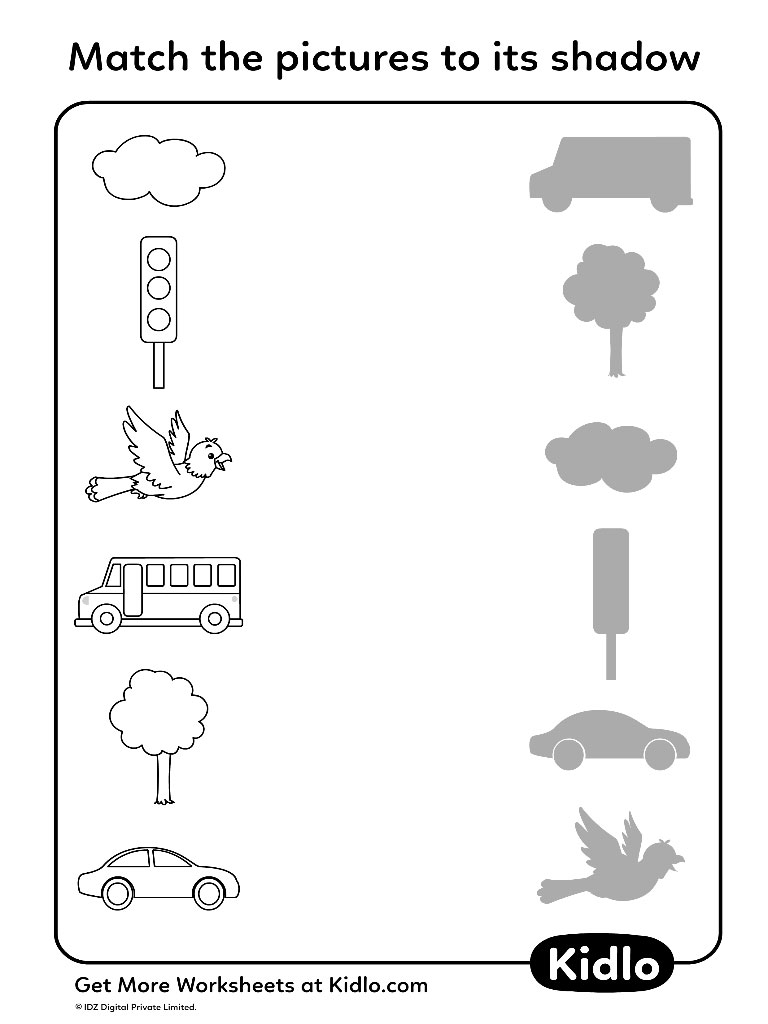
These worksheets help children notice small details, compare shapes, and choose the best match. That supports visual discrimination, observation, and early matching skills. For preschoolers, the task may be as simple as pairing a cat with its shadow. For early elementary learners, the worksheet can add more objects or slightly trickier outlines. Shadow matching also supports early pre-reading skills because children learn to scan left to right, compare symbols, and follow directions.
In science-related learning, it can introduce the idea that an object has a shape that can be seen in another form, without going into advanced science.
Where They Fit
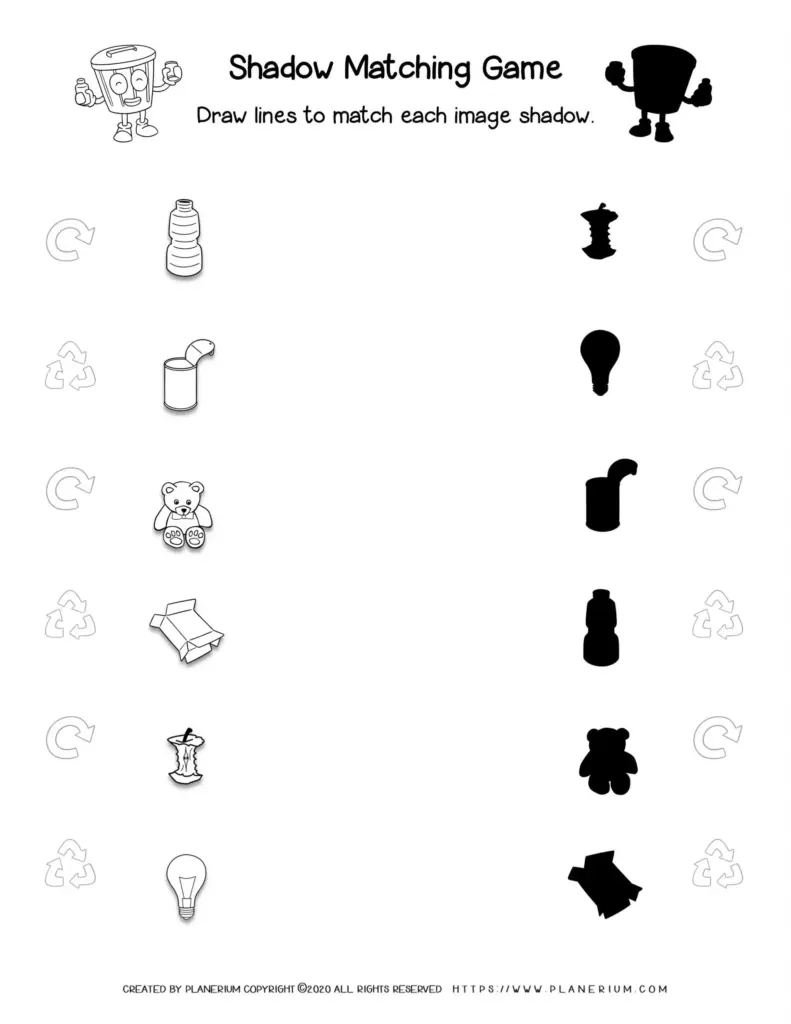
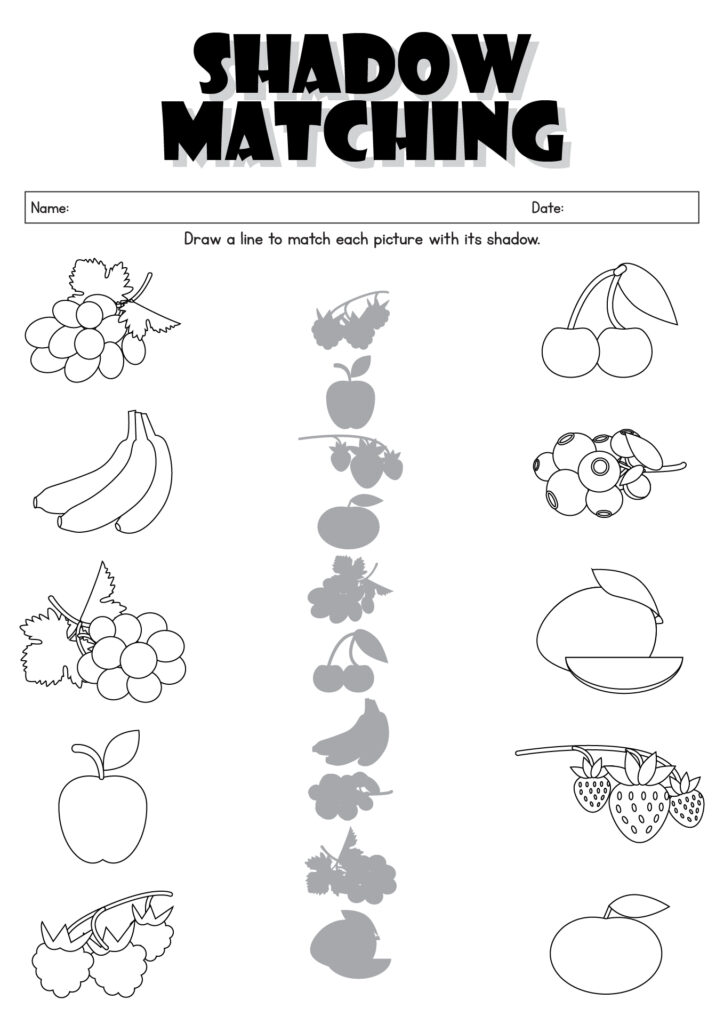
Shadow worksheets for kids work well in preschool and kindergarten, and they can still be useful in early elementary grades when the activity is kept simple. Teachers often use them in learning centers, quiet morning work, small-group practice, or fast finishers. Parents can also use them at home for a short screen-free activity. Because the task is quick, it fits well into a lesson warm-up or a review activity.
A worksheet with a few large images may be best for younger children, while older children can handle more items on a page or a mix of similar-looking shapes that require closer attention.
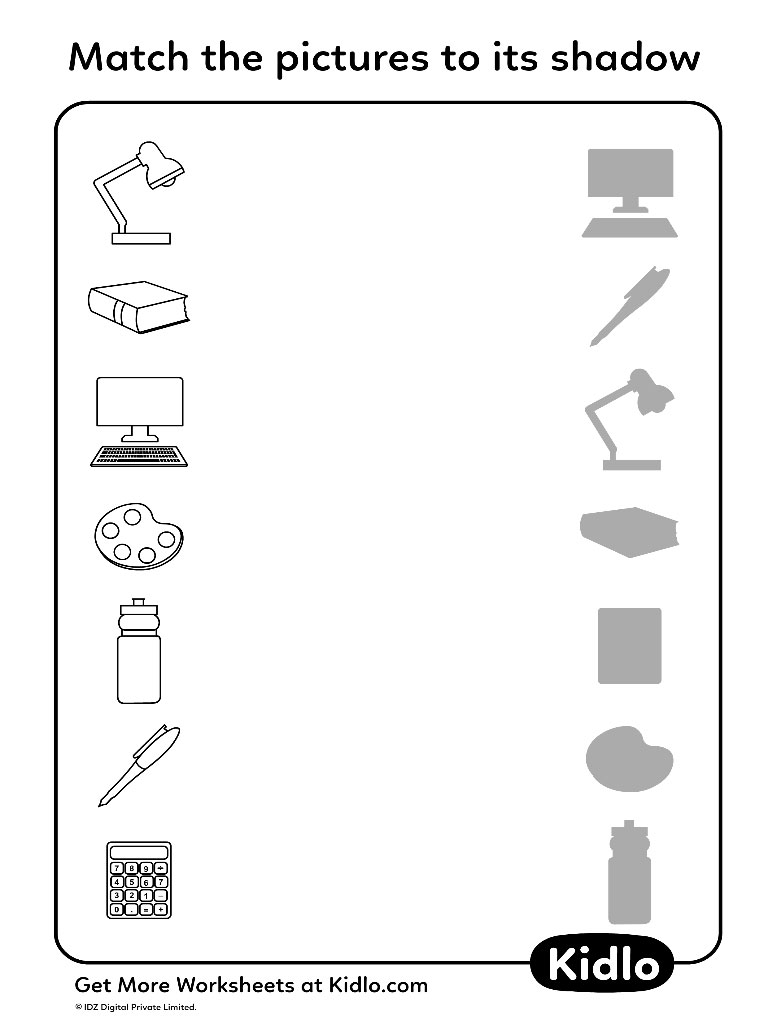
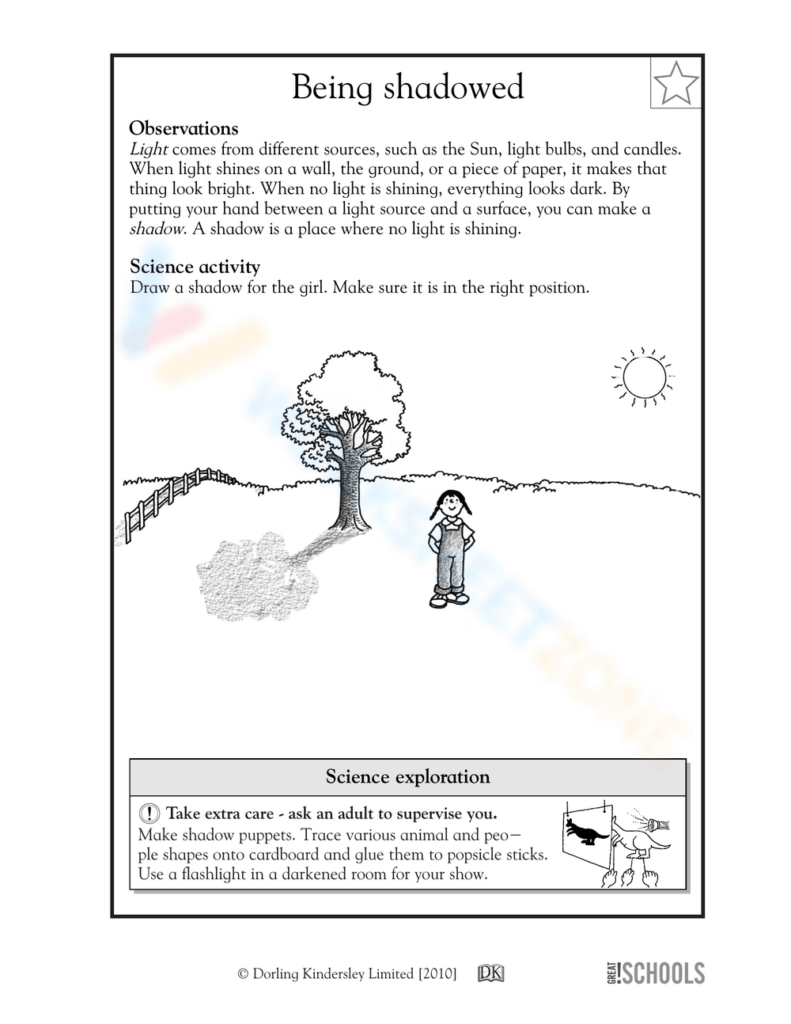
Choosing the Right Level depends on how much support a child needs. Beginners usually do best with bold outlines, familiar objects, and only a few choices on the page. That keeps the activity simple and builds confidence. As children improve, worksheets can include more detailed silhouettes, extra answer choices, or objects that look similar, such as different animals or everyday items.
The best worksheet matches the child’s age, attention span, and shape-recognition skill. If the goal is practice rather than challenge, choose clear and uncluttered pages. If the goal is enrichment, pick a worksheet that asks the child to look more carefully before matching.