Five senses worksheets for kindergarten should help young children notice, name, and match sight, hearing, smell, taste, and touch in simple ways. The best pages use big pictures, short directions, and familiar objects so children can work with confidence. For kindergarten, the goal is not heavy reading or science detail, but clear practice that builds vocabulary and recognition through easy activities.
What Works Best
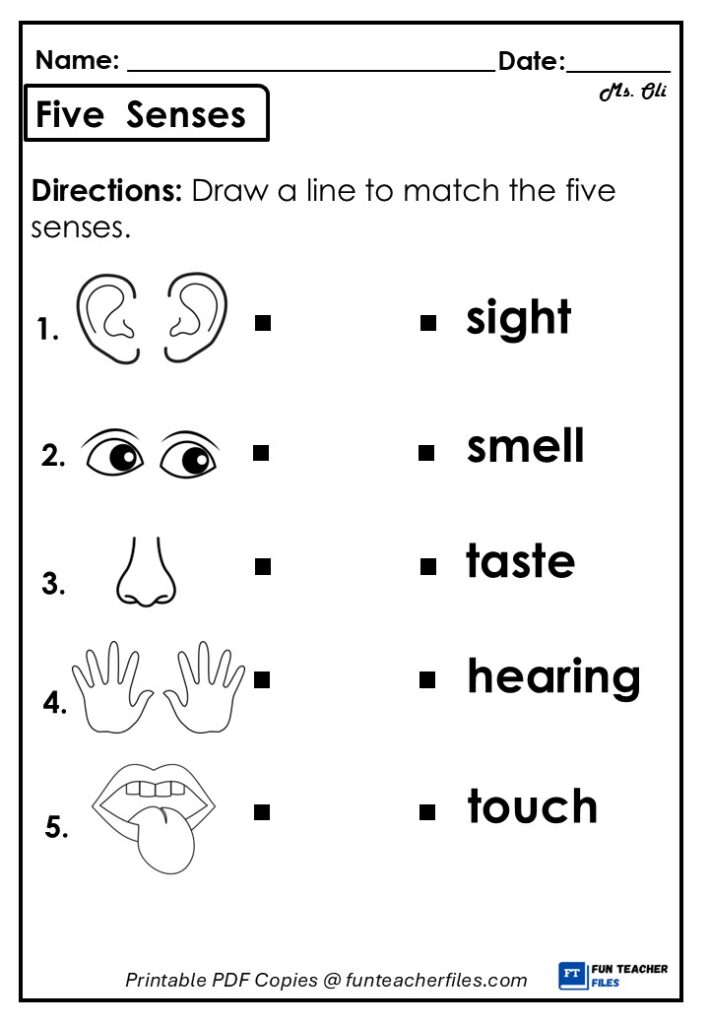
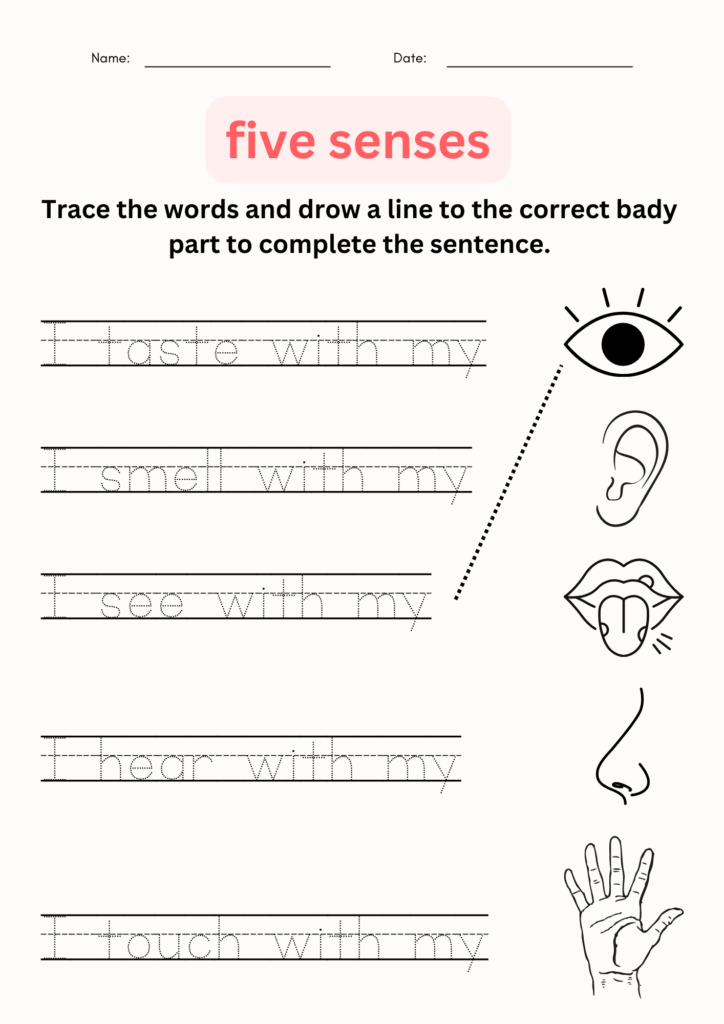
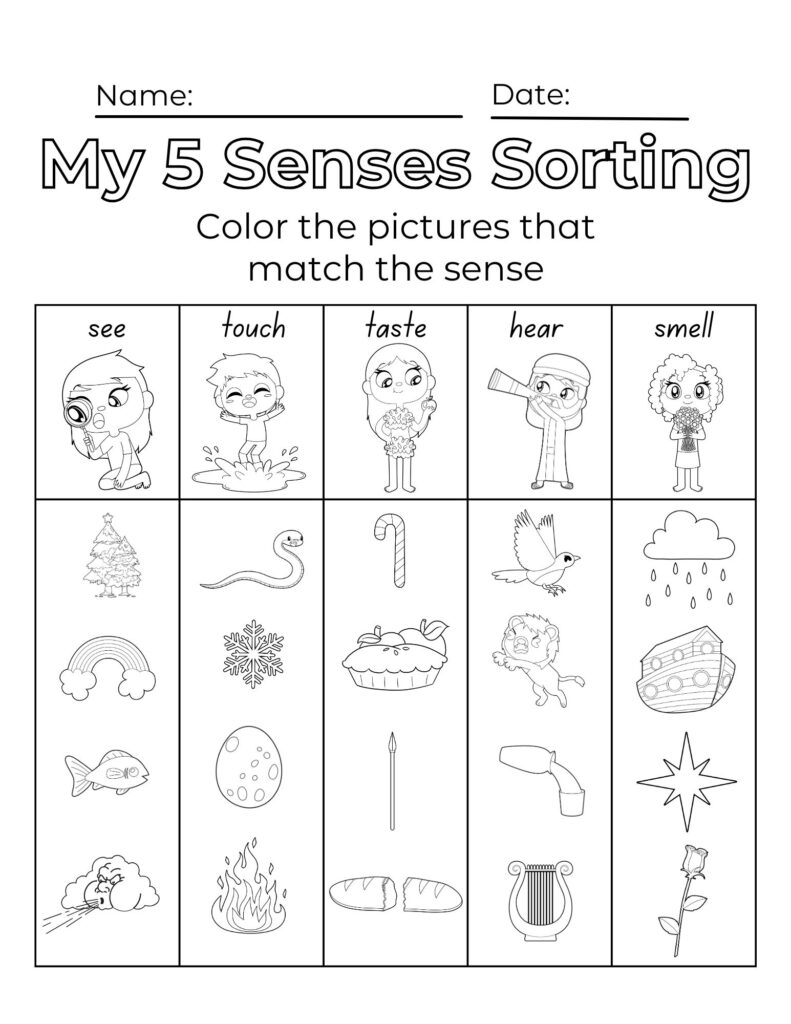
Effective kindergarten worksheets keep each task small and visual. Large illustrations help children focus, while tracing and matching give them an easy first step. Coloring pages can reinforce each sense with familiar items, and sorting activities help children group pictures by what they see, hear, smell, taste, or touch. Simple directions such as “circle,” “draw a line,” or “cut and paste” make the page easier to complete with teacher or adult support.
Core Activity Types
Common five senses worksheets for kindergarten often include labeling body parts like eyes, ears, nose, tongue, and hands. Other useful pages ask children to match a sense with an object, such as ears with music or eyes with a sun. Basic cut-and-paste tasks are also helpful because they combine movement with sorting. These activities support early learners by connecting words, pictures, and actions without overwhelming them with text.
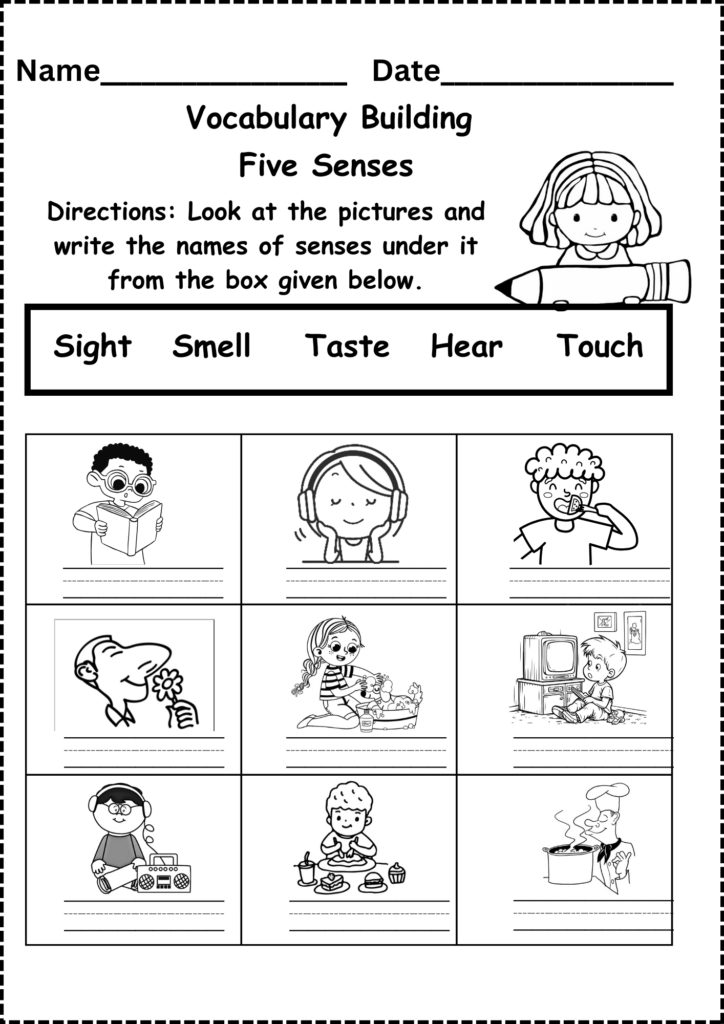
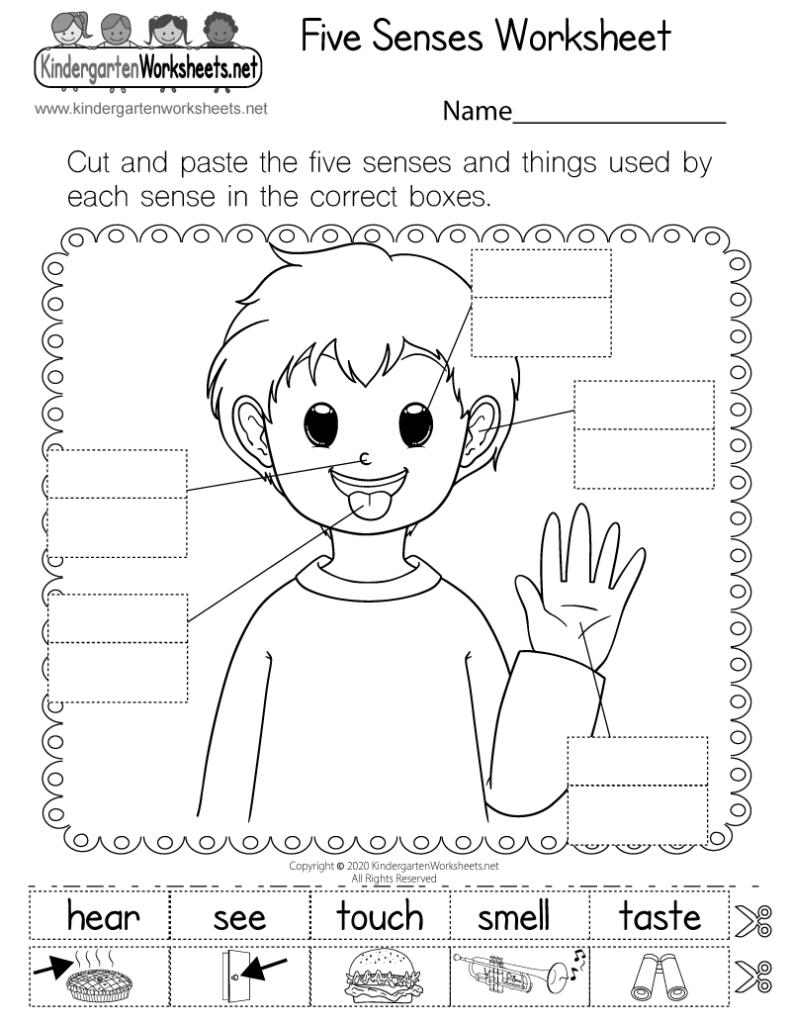
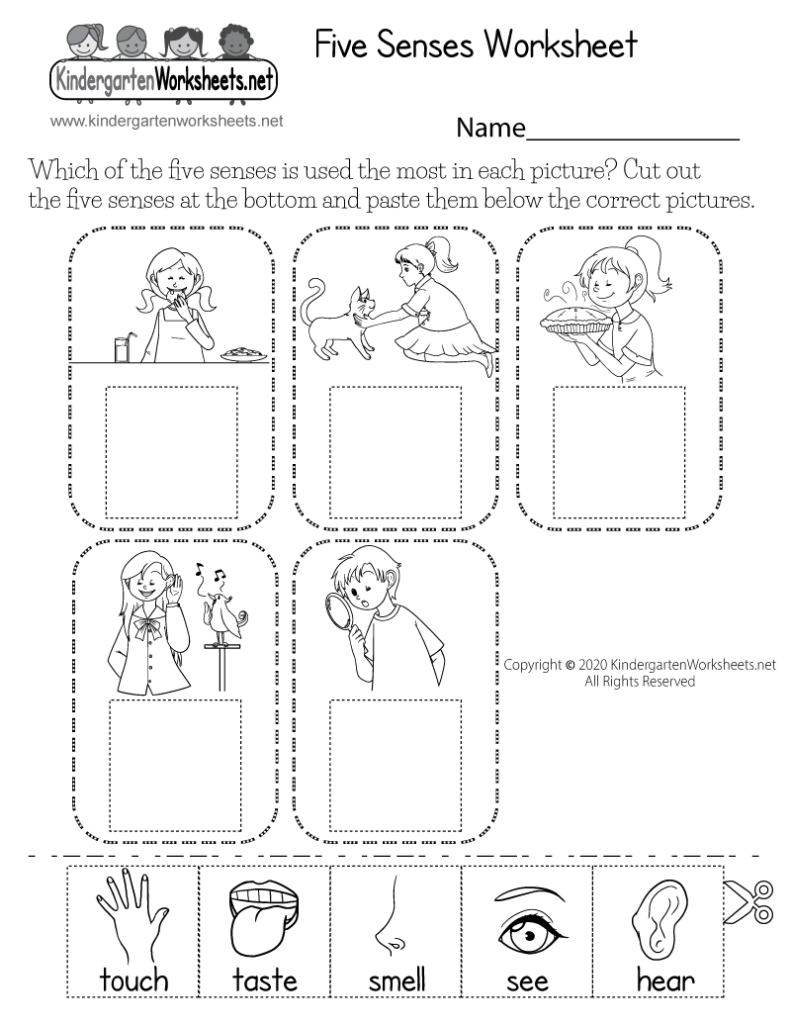
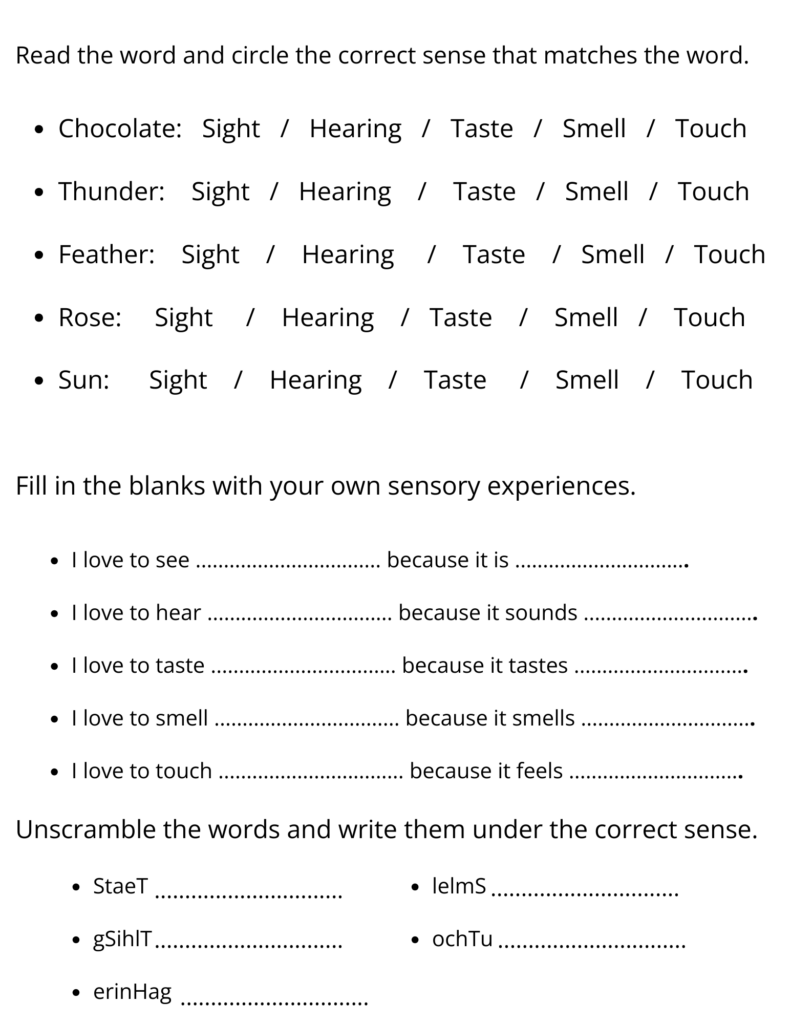
Kindergarten-friendly worksheets should use minimal text, clear picture cues, and one direction at a time. Pages work best when children can finish them in a short sitting and need only light support from a teacher or parent. A good worksheet may include tracing words, coloring one image, or choosing between two simple options. When the layout is calm and uncluttered, children can focus on identifying the senses and build confidence with each completed page.