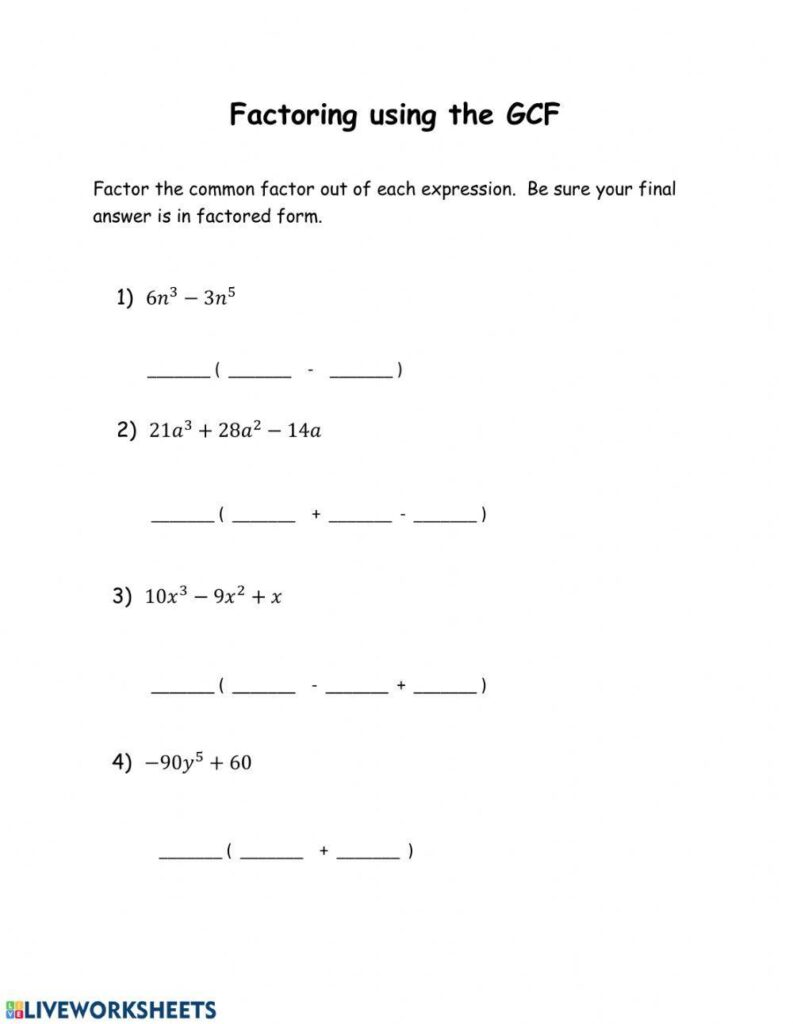
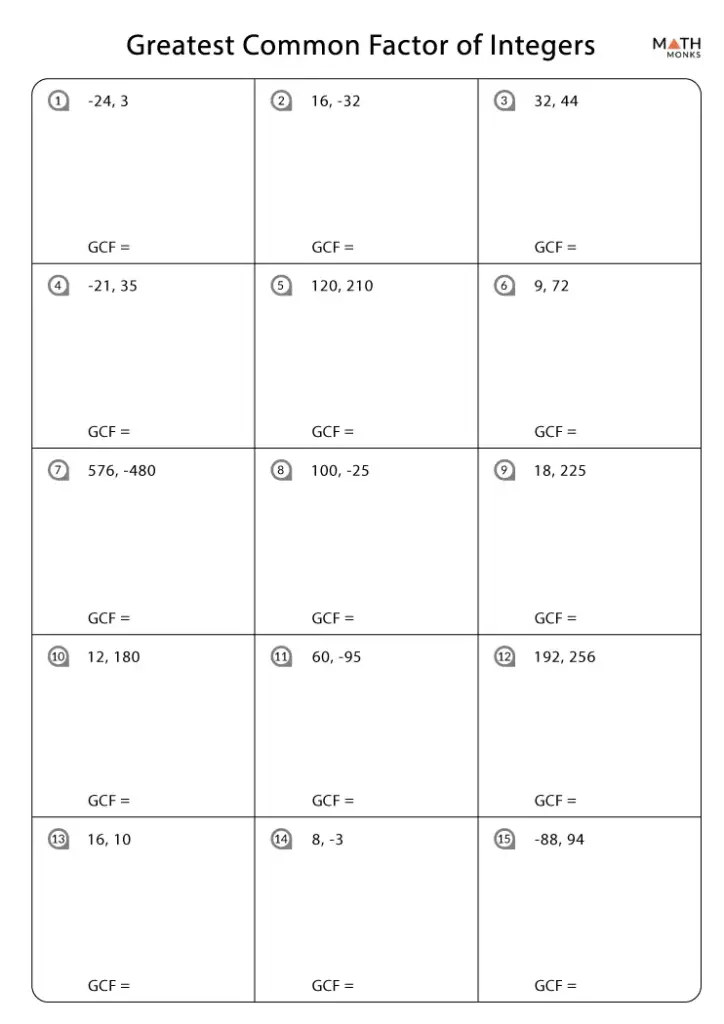
A factoring common factors worksheet gives students focused practice finding the greatest common factor and rewriting algebraic expressions in simpler factored form. It is especially useful when learners already know basic multiplication facts and are ready to connect them to algebra. The best worksheets keep the task clear: look for shared factors, identify the GCF, and factor it out correctly.
What It Practicing
In this worksheet context, factoring common factors means identifying the number, variable, or expression shared by every term in an algebraic expression and pulling it outside parentheses. For example, a student might rewrite 6x + 12 as 6(x + 2). That process helps show equivalent expressions in a more compact form. The focus stays on one method only, so learners practice recognizing the common factor and using it to rewrite the expression, rather than switching between different factoring strategies.
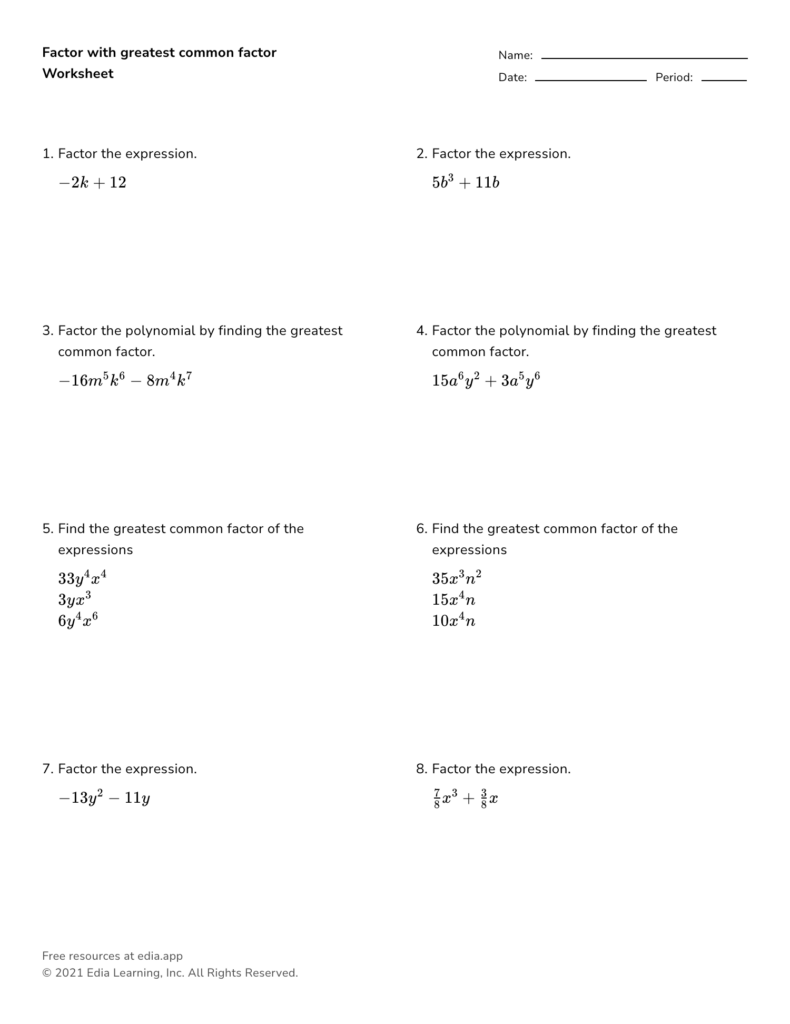
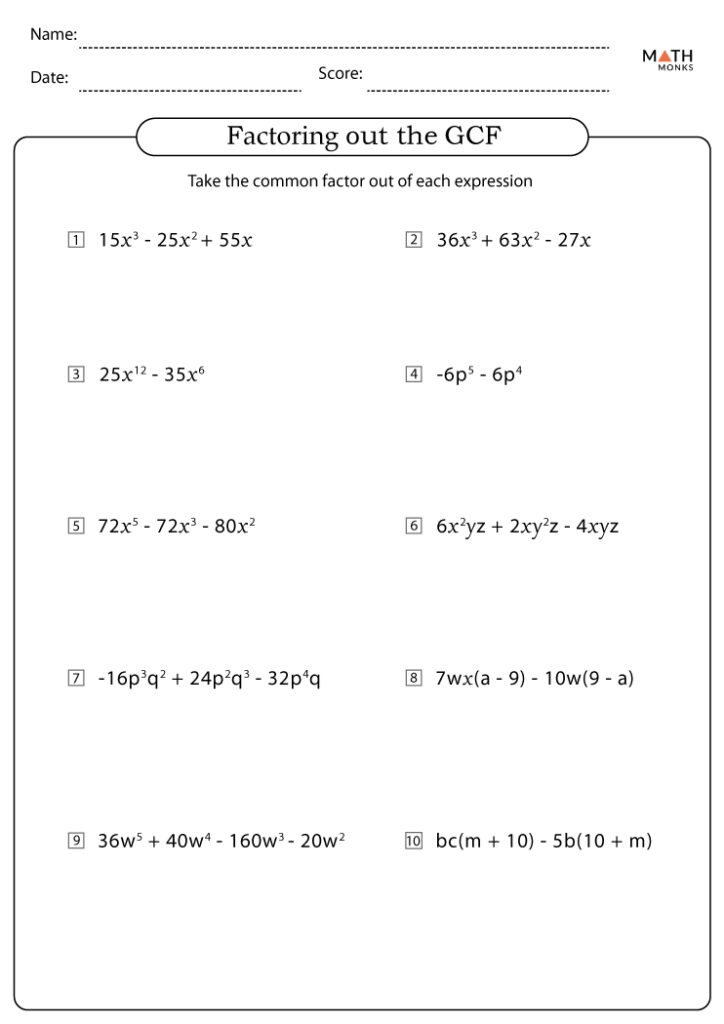
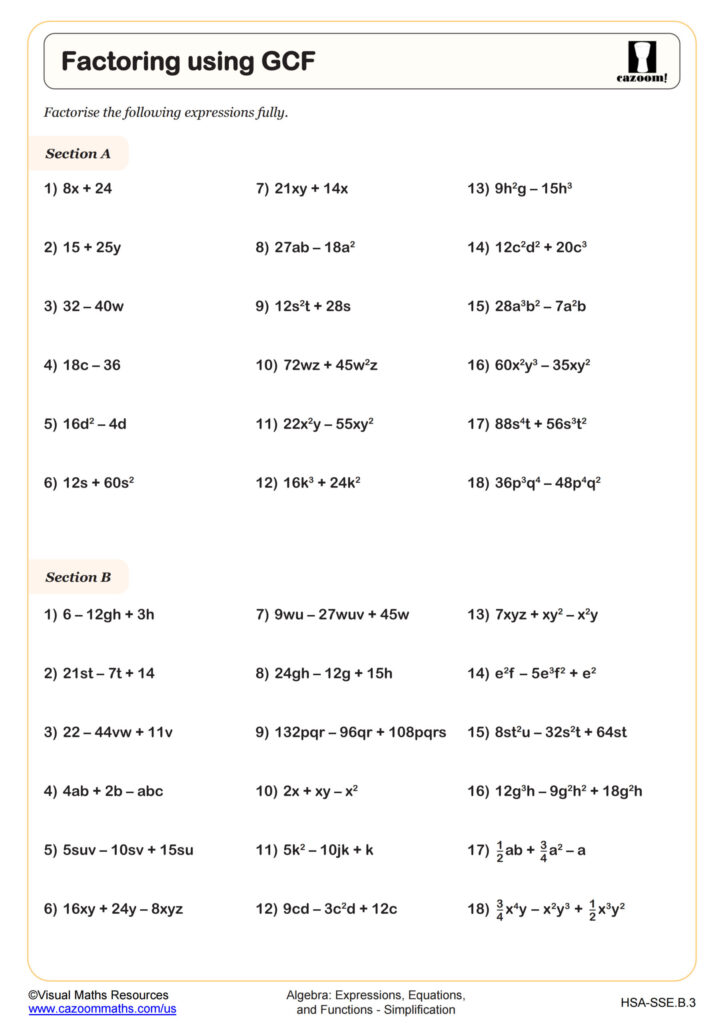
This practice is usually appropriate for late elementary through middle school students, especially grades 6 to 8 when factoring is introduced or reinforced. A strong worksheet at this level should begin with simpler numeric common factors and move toward expressions with variables, such as 8y + 12 or 9a + 6a. That gradual structure helps students build confidence while still working with problems that require attention to coefficients, variables, and the greatest common factor.
Key Practice Tasks
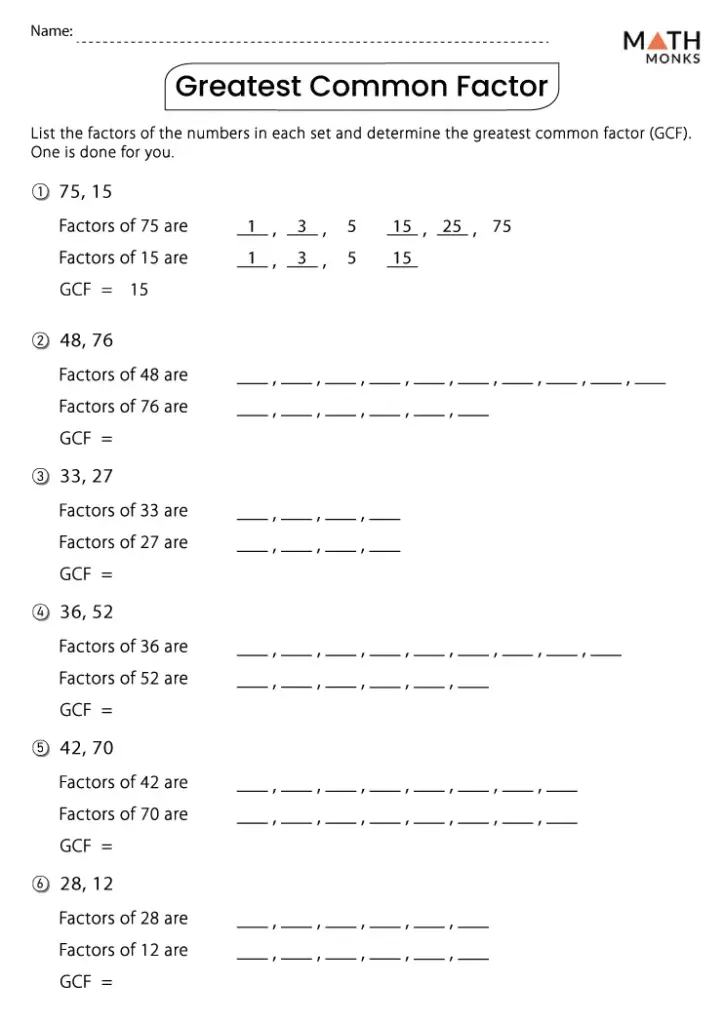
The most useful worksheet tasks ask students to identify the greatest common factor first, then rewrite the expression in factored form. Good items may include multiple-choice identification, fill-in-the-blank factoring, or short-response rewriting. Some worksheets also mix in expressions with a common monomial factor, such as 4m + 8m, so learners can see how the same skill works with numbers and variables. The goal is repeated practice with one clear procedure, not broad algebra review.
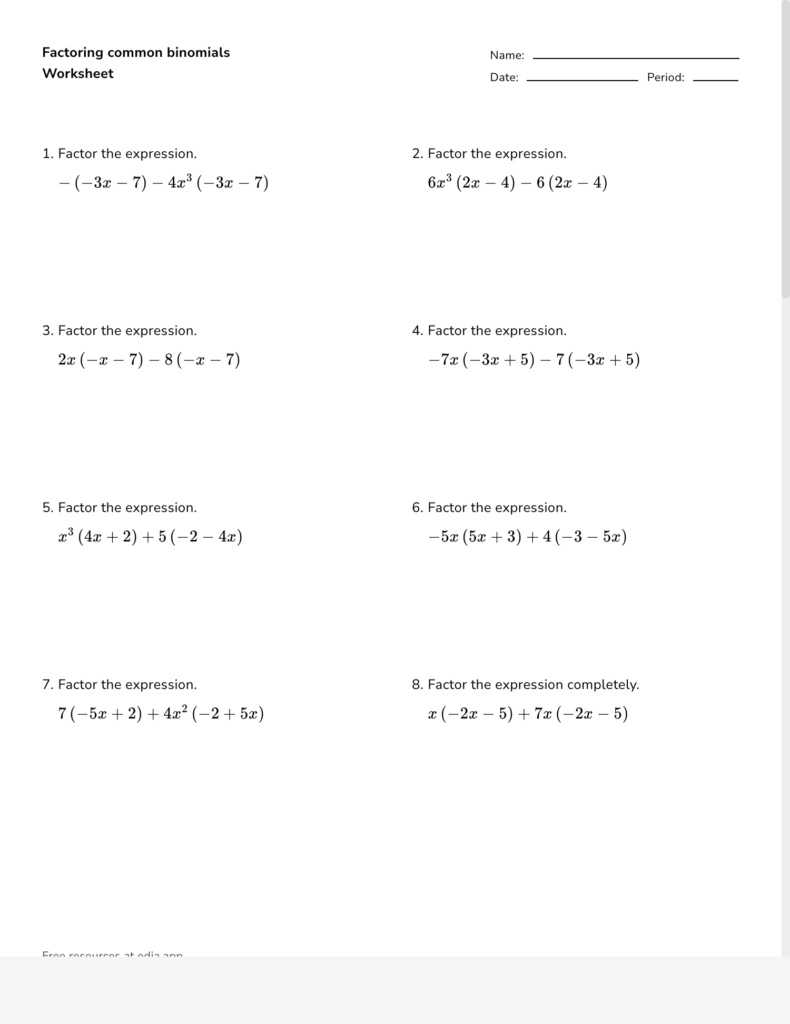
When choosing a factoring common factors worksheet, look for clear directions, a manageable number of problems, and examples that match the student’s current level. A well-designed resource should help learners notice shared factors faster and explain their answer in standard factored form. After using it, students should be able to spot the GCF, divide each term by that factor, and write the expression correctly in parentheses. That makes the worksheet a focused step toward stronger factoring fluency.