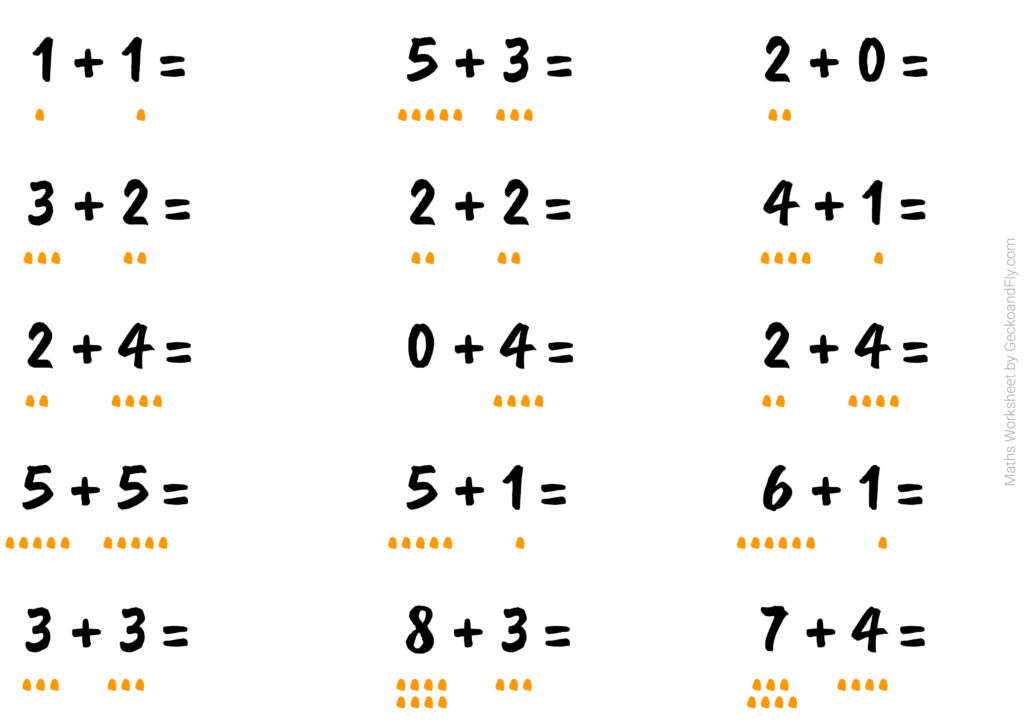
Addition worksheets for 5 year olds should feel like play, not pressure. At this age, the best pages use tiny sums, simple counting, and easy visual clues so children can solve problems with little reading. Look for worksheets that keep each task short, clear, and inviting, with just enough challenge to build confidence one problem at a time.
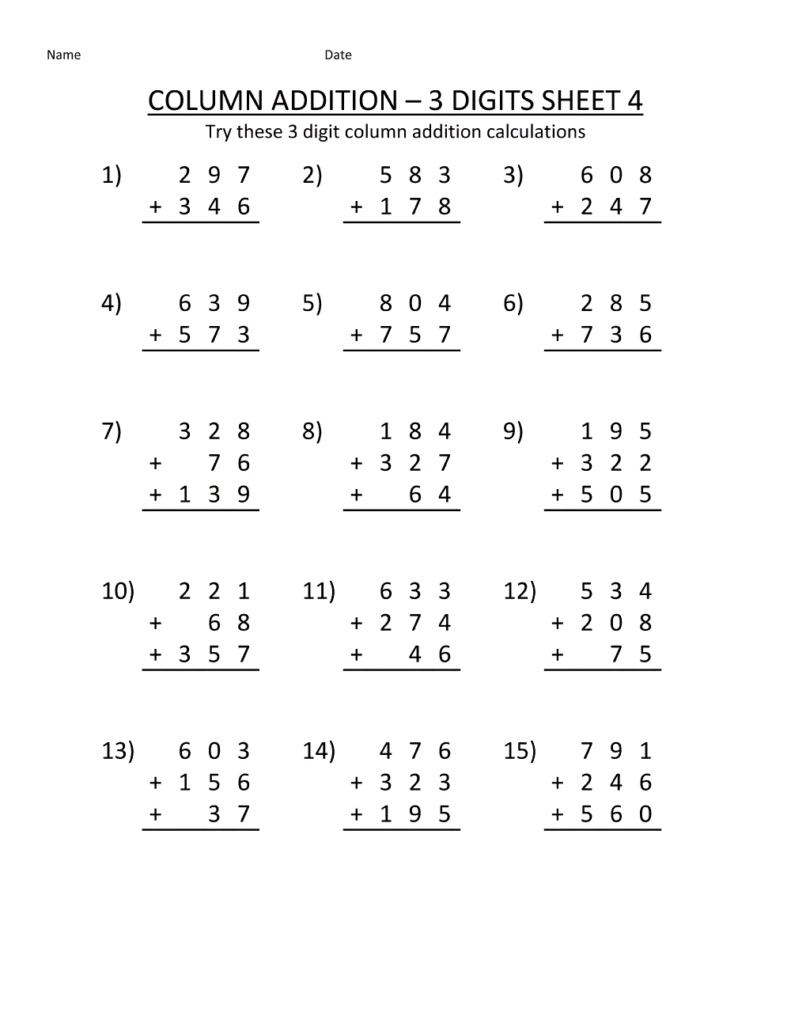
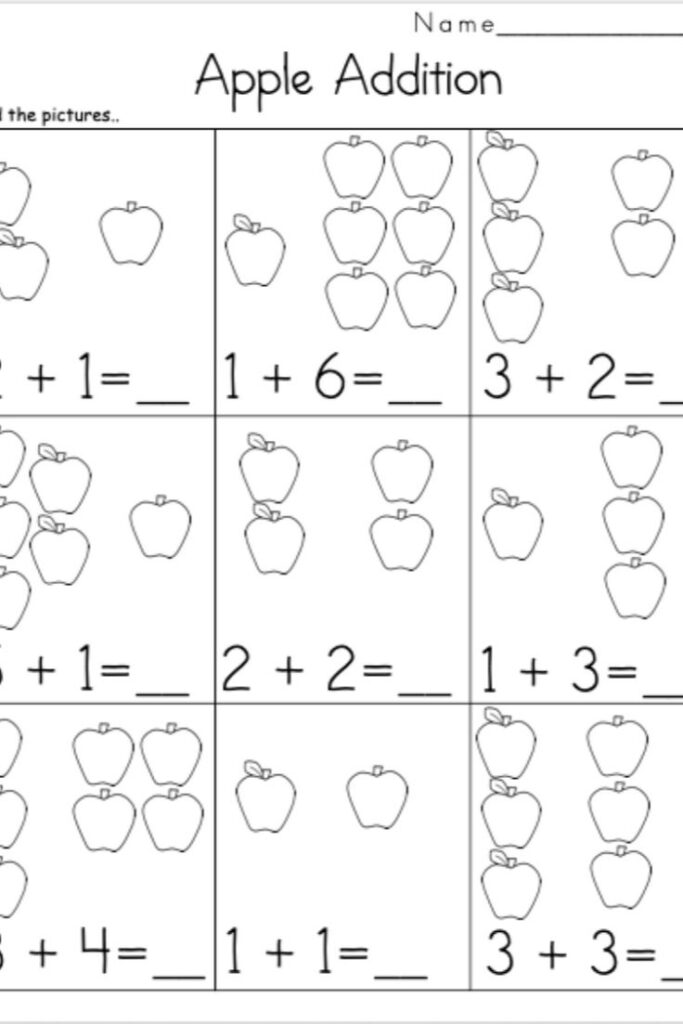
The right worksheet for a 5-year-old usually stays within very small numbers, such as adding 0, 1, or 2, and often uses pictures to show the sum. A child might count apples, stars, or blocks and then choose the total. This helps them connect addition to real quantities before they rely on numbers alone. Pages with only a few problems can work better than crowded sheets because young learners may lose focus quickly.
Picture-Based Practice
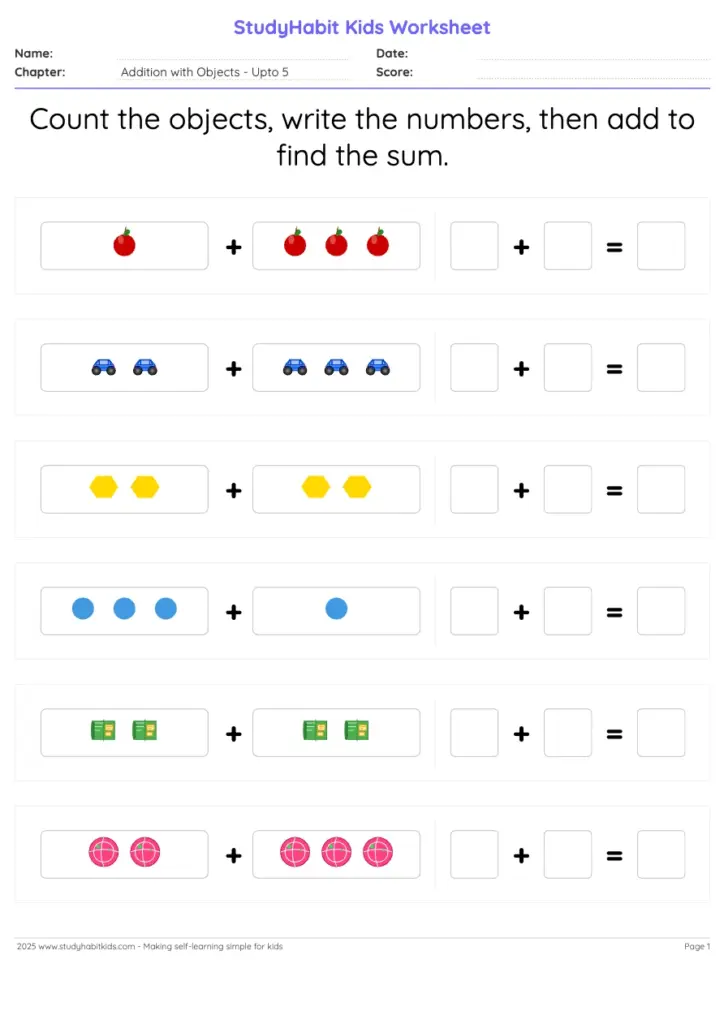
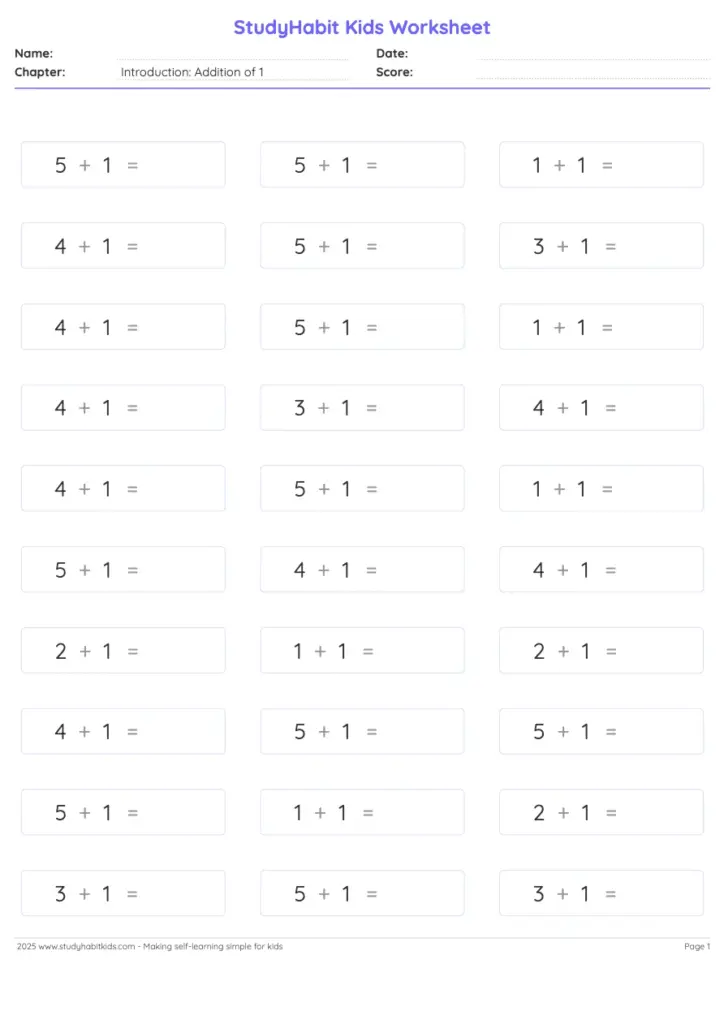
Visual design matters a lot for early learners. Good worksheets use large, clear spaces, bold numbers, and simple illustrations that are easy to count. Tracing lines, circling objects, or drawing one more item can make the activity more hands-on. These features support children who are still developing fine motor skills and may not read directions independently. The page should look open and uncluttered so the math stands out immediately.
Choosing the Right Pages
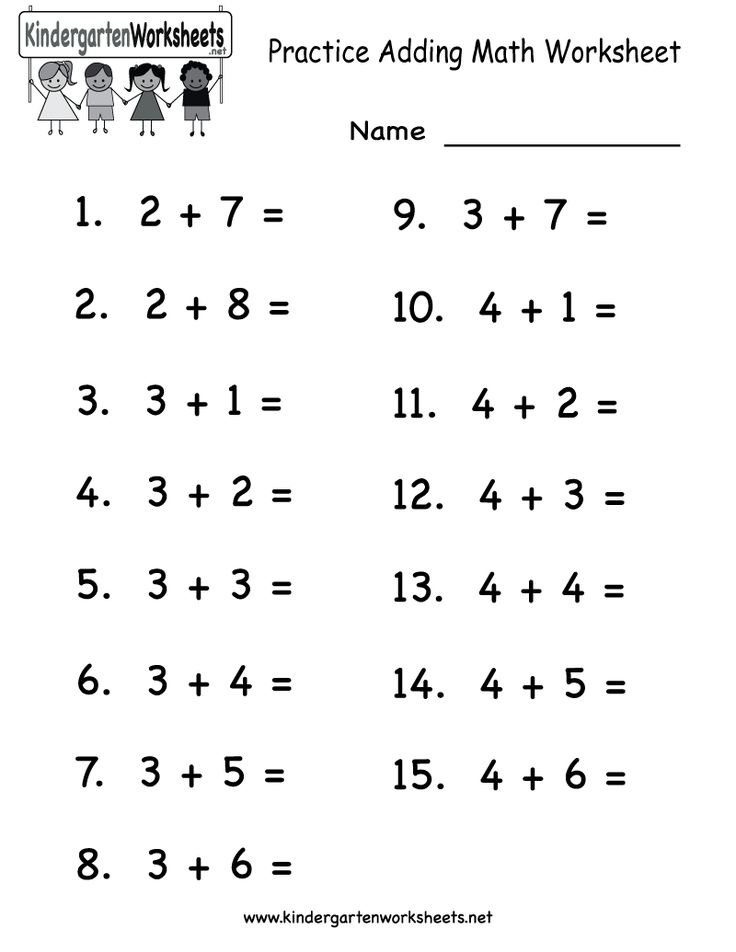
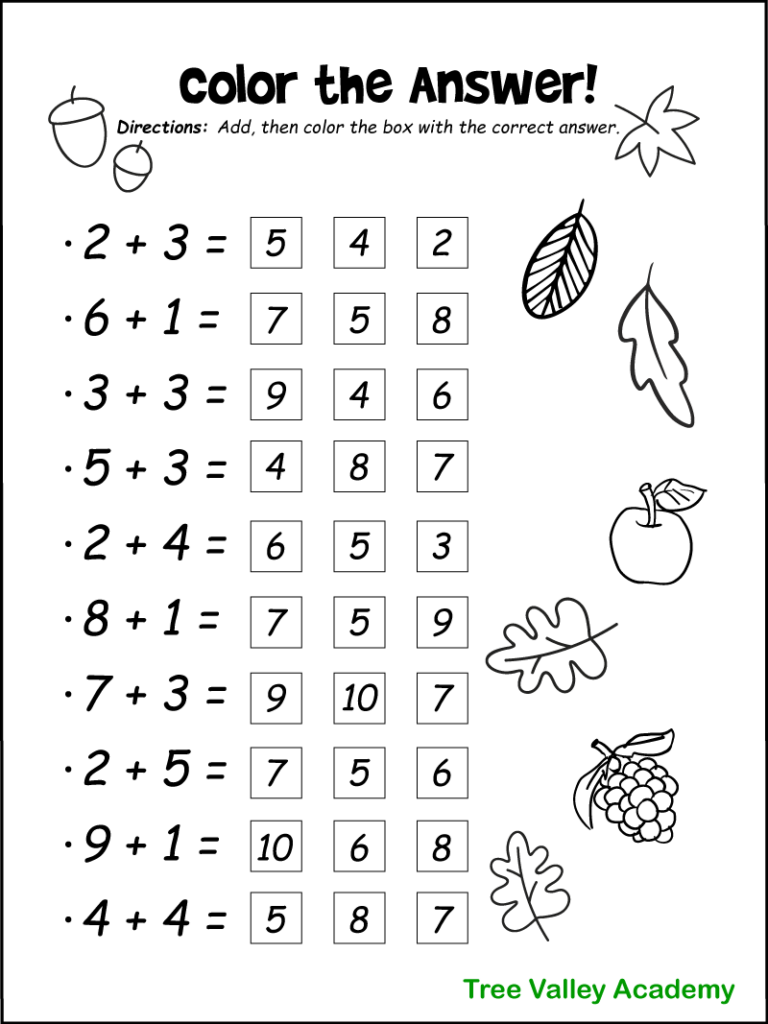
When choosing addition worksheets for 5 year olds, match the page to the child’s attention span and pre-reading level. Short sets with one direction at a time are easier to finish than long mixed pages. Worksheets that use familiar objects and repeat the same task pattern can reduce frustration. If a child is not ready for number-only problems, picture counting and matching are usually a better fit than abstract equations.
A strong worksheet for this age gives children a small success they can see right away. The best choices are simple, visual, and calm, with enough repetition to help learning stick but not so much that the child gets tired. Start with very easy sums, watch how the child responds, and choose pages that keep the experience positive. That way, addition practice stays age-appropriate and builds early number confidence.