
An area of polygons worksheet should help students practice finding the area of common shapes with clear, direct problems. The best versions focus on triangles, rectangles, parallelograms, trapezoids, and composite figures made from those shapes. Students should know whether they are counting squares, using formulas, or combining steps, so the worksheet matches their level and supports independent practice or homework.
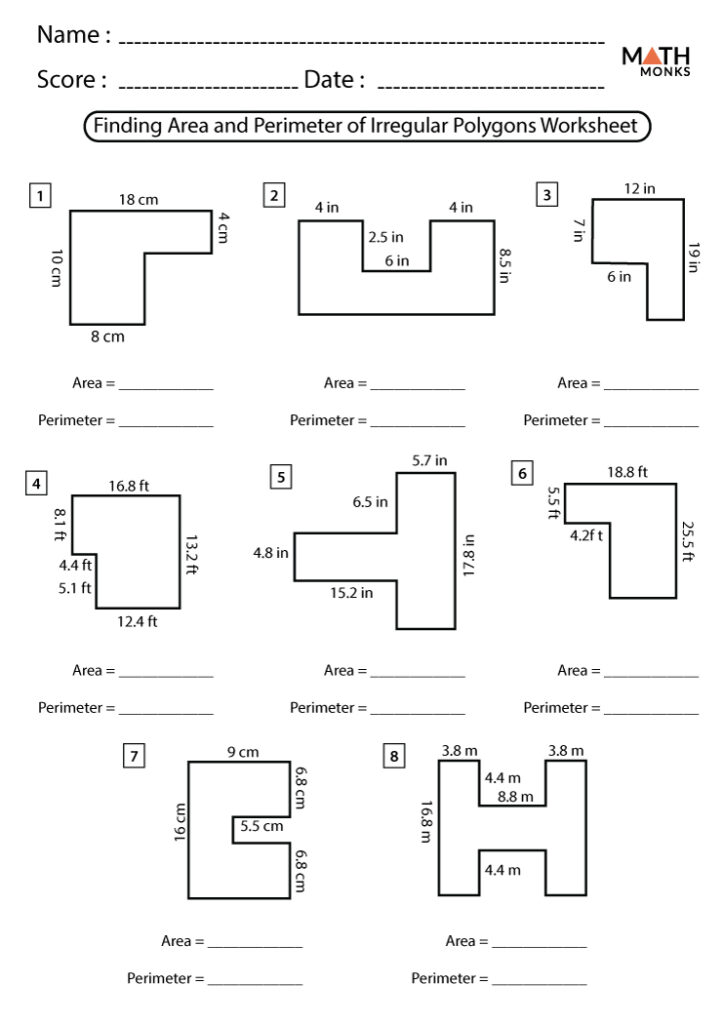
For basic practice, the worksheet should present each polygon in a way that makes the needed method obvious. Rectangles use length × width, triangles use one-half base × height, parallelograms use base × height, and trapezoids use one-half times the sum of the parallel sides times the height. Good problems may include labeled diagrams, grids, or dimensions that force students to identify the base and height correctly before calculating.
Skill level and format
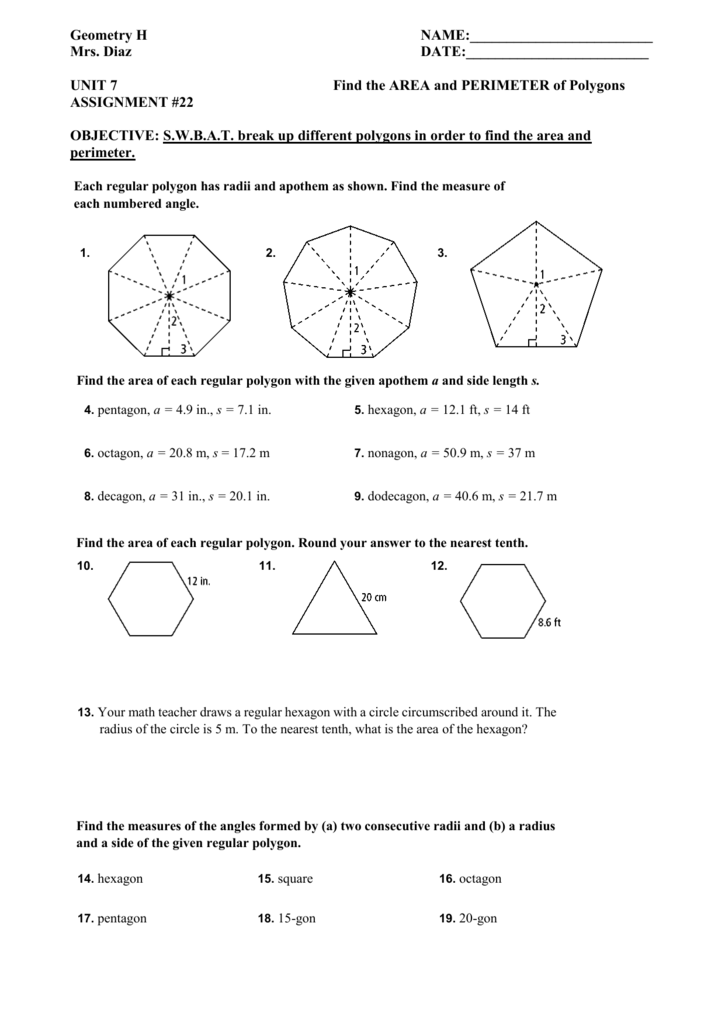
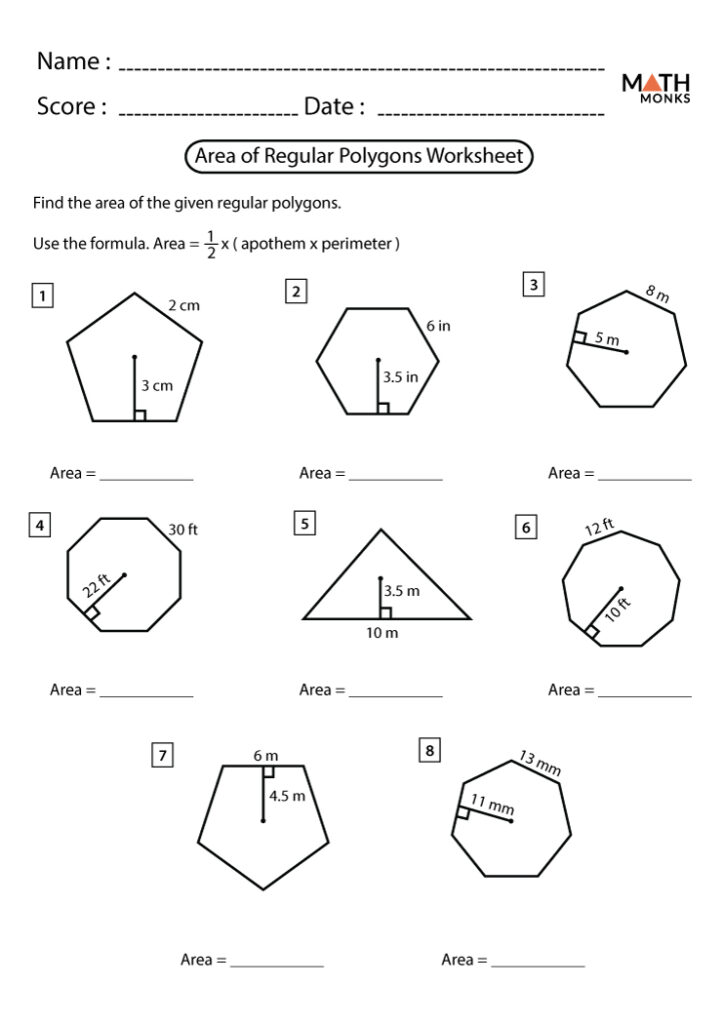
A useful worksheet also shows the difference between simple and multi-step tasks. Early practice may ask students to count square units on grid paper or find area from a single formula. More advanced versions should include composite figures, where students break a shape into smaller polygons, find each area, and add or subtract parts. That makes the worksheet useful for grades that are moving beyond one-step area problems and into flexible geometry reasoning.
What strong problems include
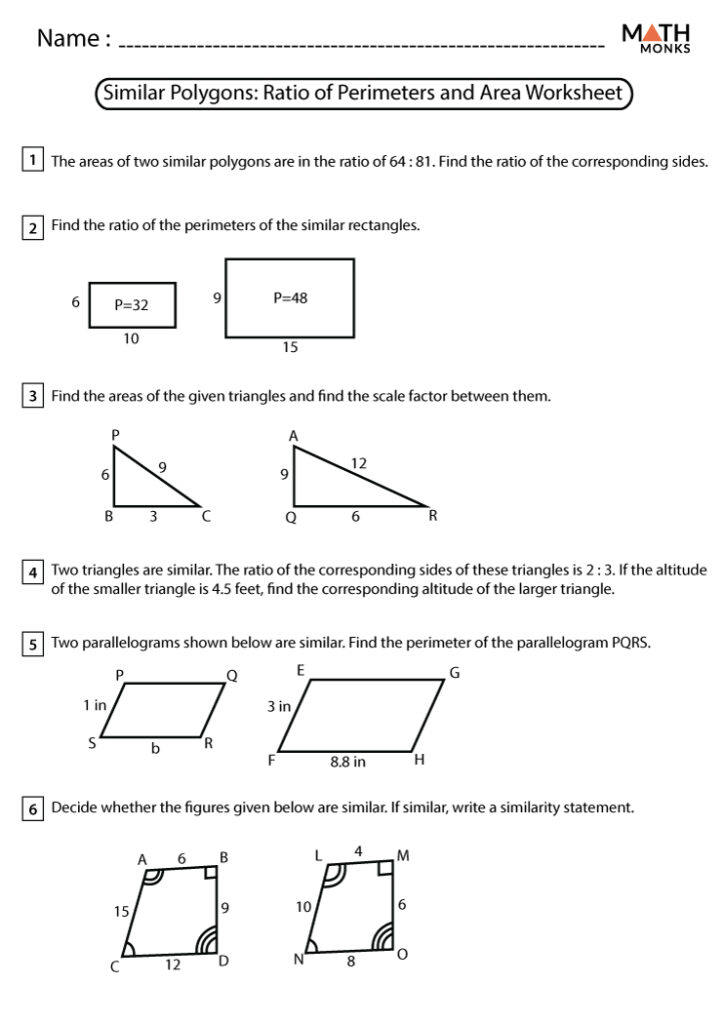
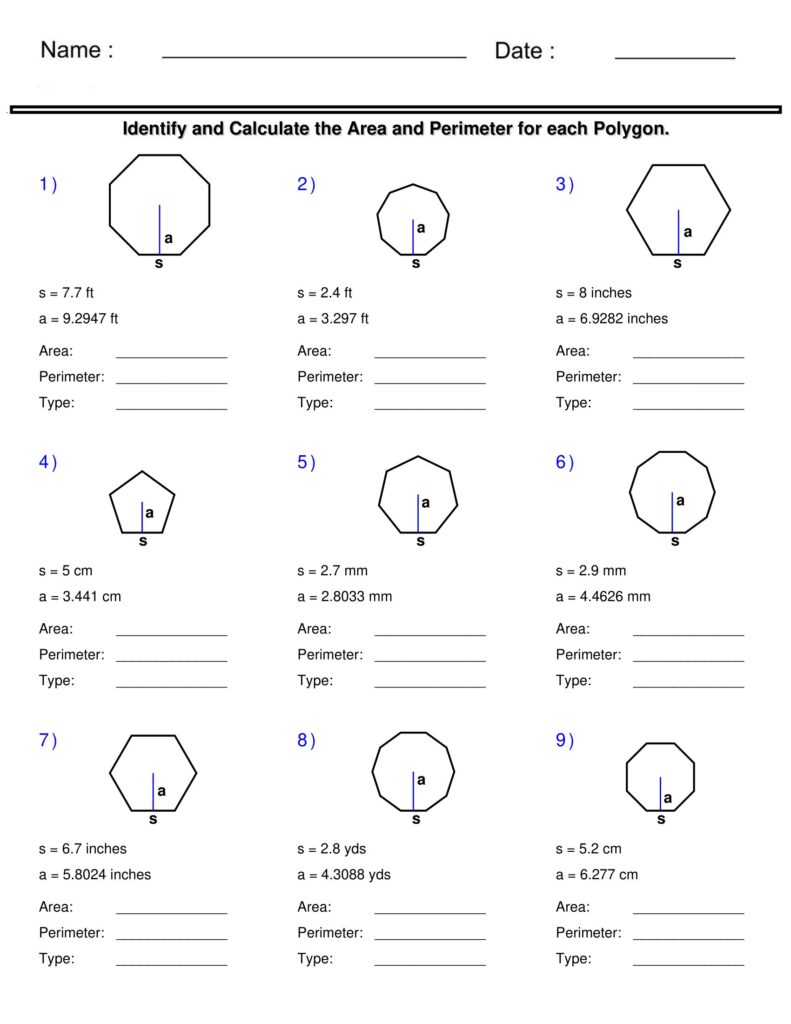
The strongest worksheet problems do more than ask for a final number. They should mix unit labels, missing dimensions, and a few word-style geometry prompts so students have to choose the correct formula, not just apply it automatically. Worked examples can be especially helpful if they show how to identify height in non-rectangular shapes or how to split a composite figure into simpler parts. An answer key is valuable for checking accuracy and supporting self-study.
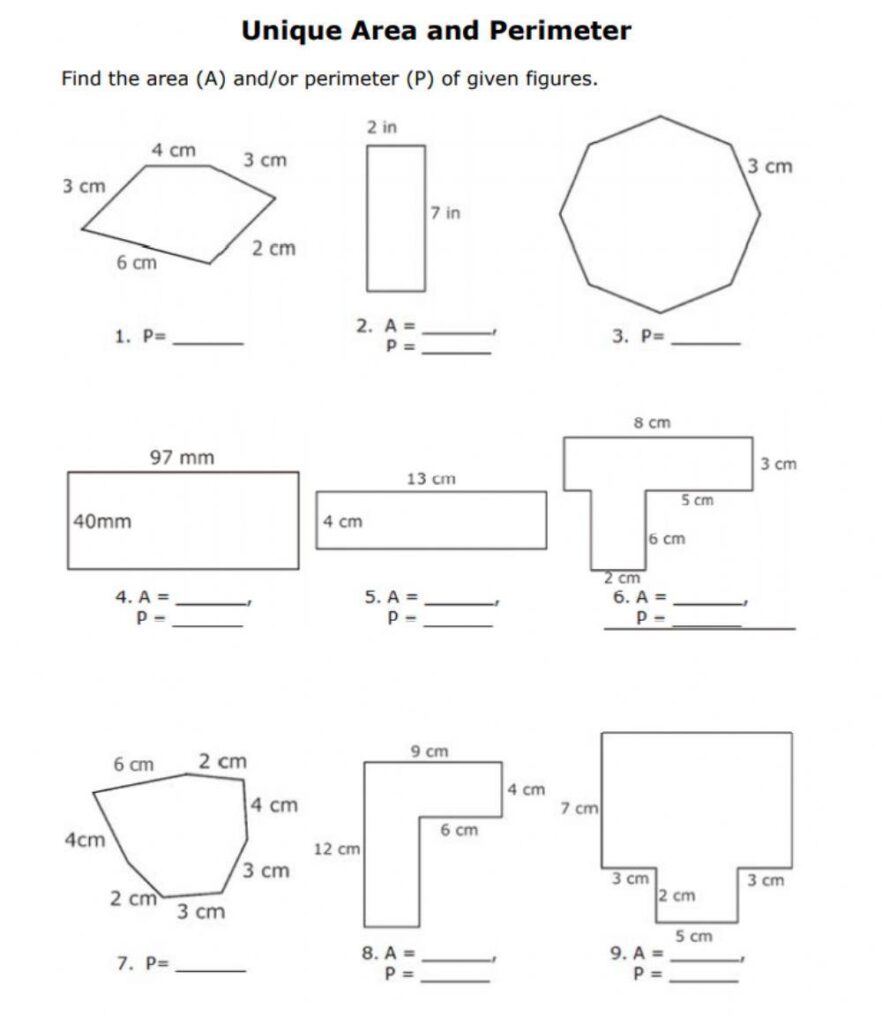
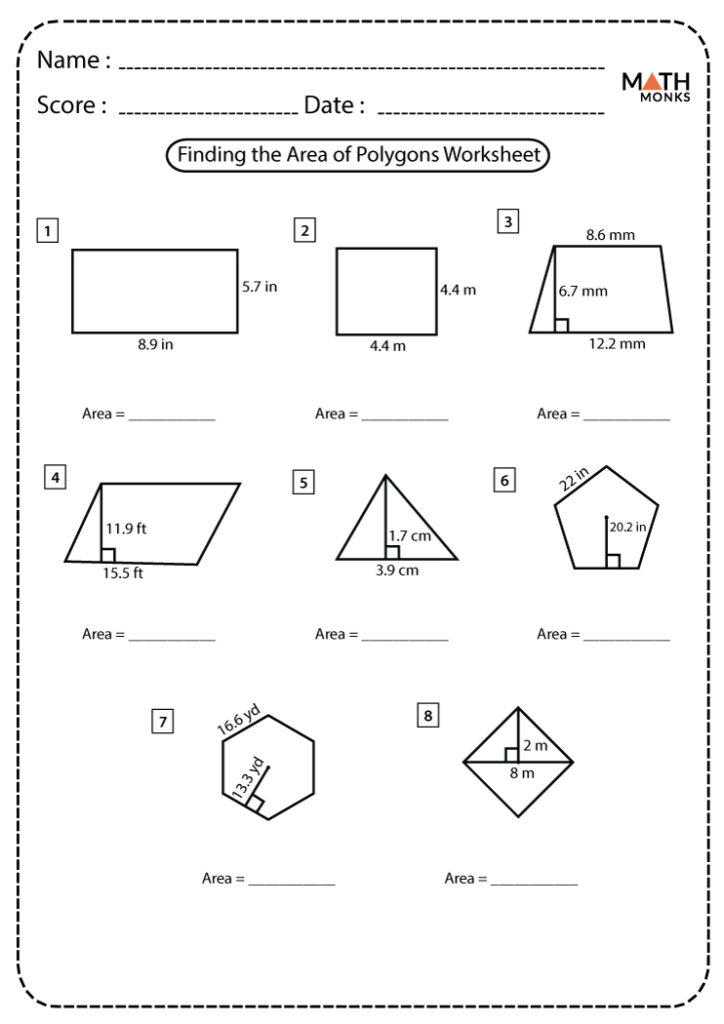
For classroom or homework use, the best area of polygons worksheet is one that matches the student’s current method and gradually increases difficulty. It should build confidence with common polygons first, then move into combined figures and slightly less direct measurements. A clear worksheet gives students repeated practice with the right formulas while still requiring them to think about shape structure, which is what makes area skills transfer to new problems.



