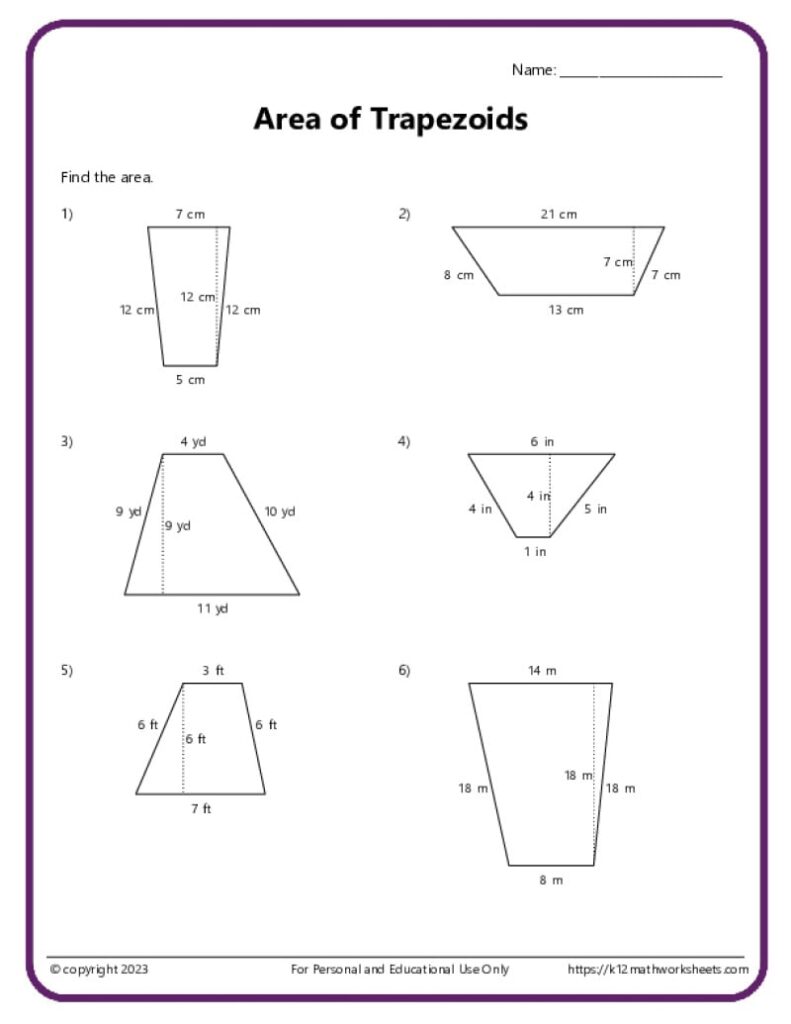
An area of trapezoid worksheet should help students practice the formula, identify the bases and height, and solve problems with confidence. The best versions keep the focus narrow: read the measurements, choose the correct dimensions, substitute them into the equation, and write the answer with units. A clear worksheet can support first practice, review, or homework without adding extra geometry topics that distract from the skill.
Formula and setup
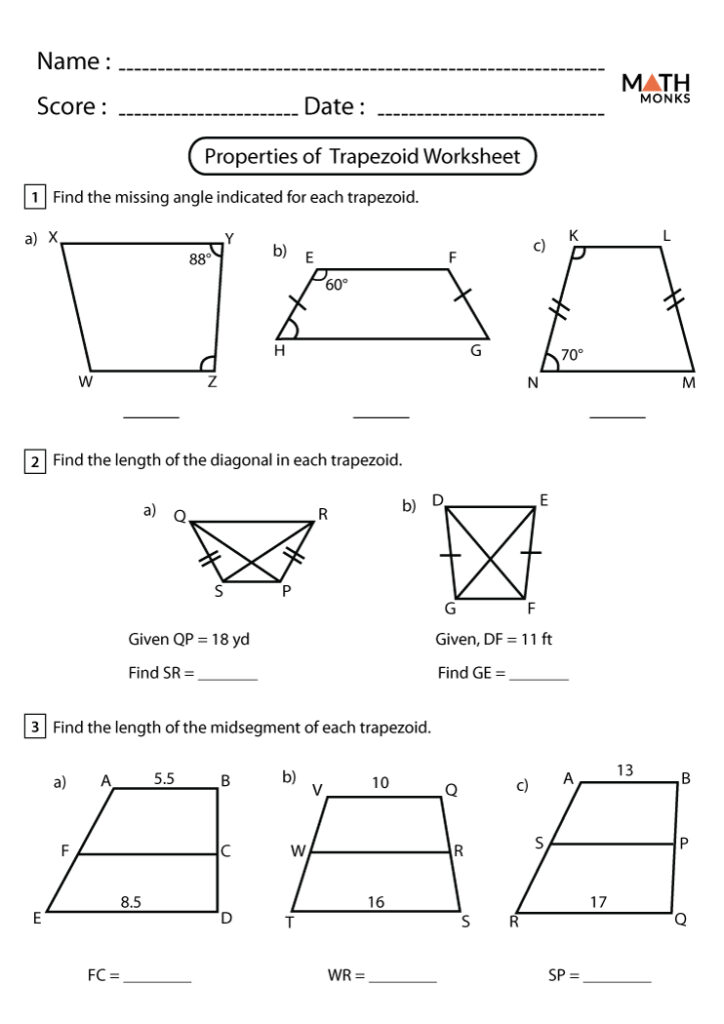
The worksheet should state the area formula clearly: A = 1/2(b1 + b2)h, where b1 and b2 are the parallel bases and h is the perpendicular height. Students should see that the height is not the slanted side unless a right angle shows it is perpendicular. A useful worksheet introduces this formula near the top and then asks learners to label the bases and height before calculating, so they build the habit of reading the diagram carefully.
Worked examples
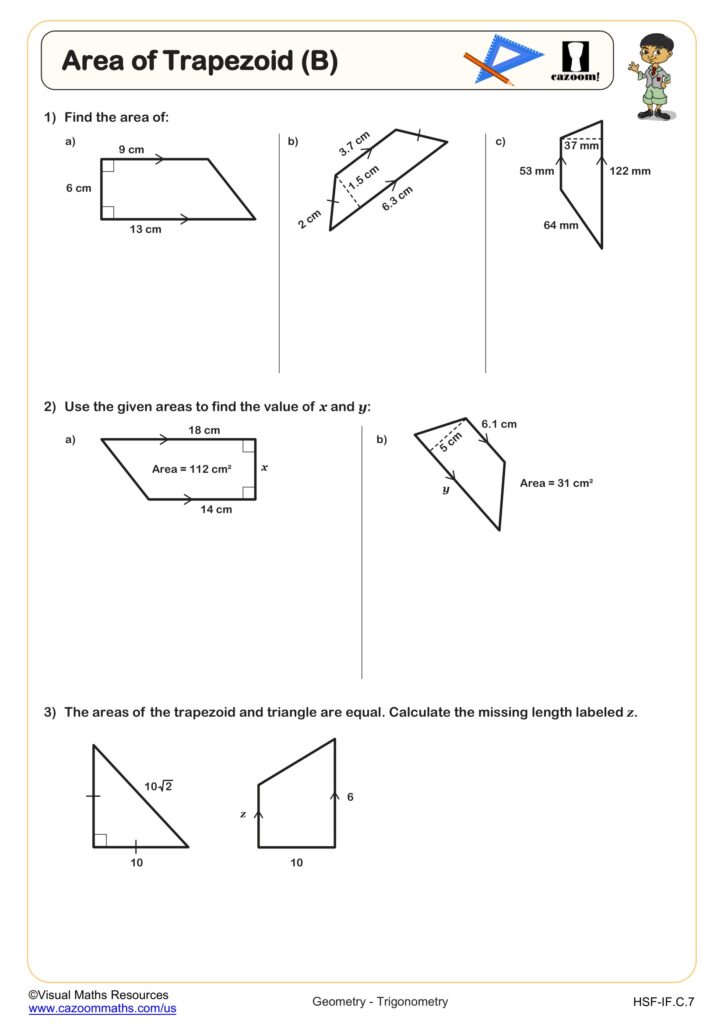
Good practice pages include at least one worked example before the independent problems. For instance, if the bases are 8 cm and 12 cm and the height is 5 cm, students substitute into the formula: A = 1/2(8 + 12)5 = 1/2(20)5 = 50 cm². A second example can use a mixed-number or decimal measurement to show the same process. This helps students see that the method stays the same even when the numbers change.
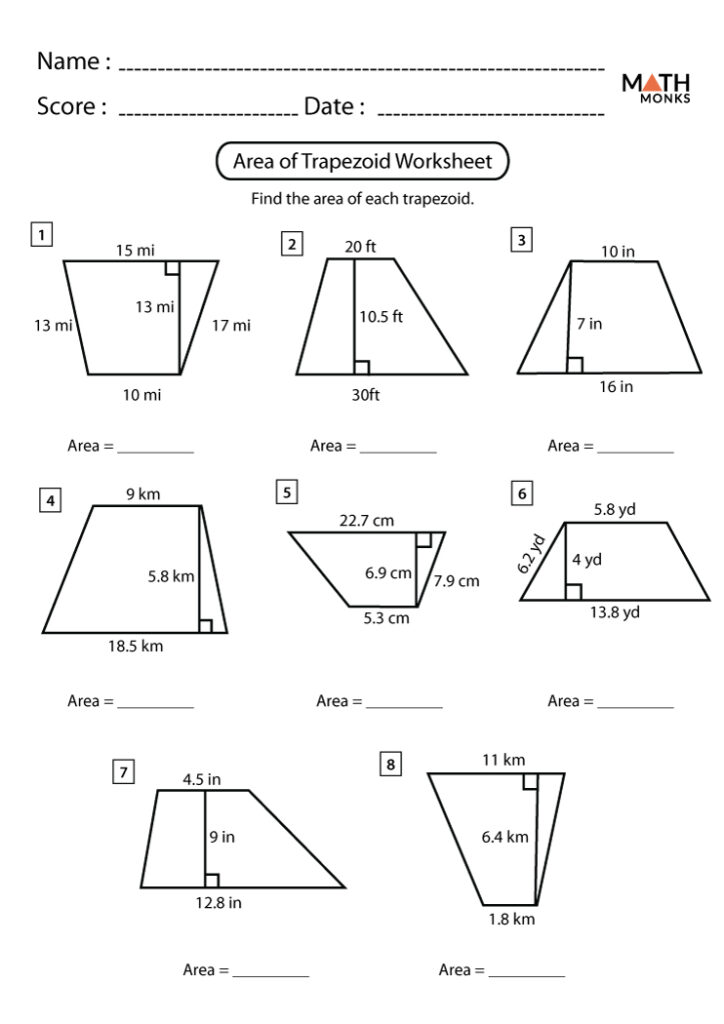
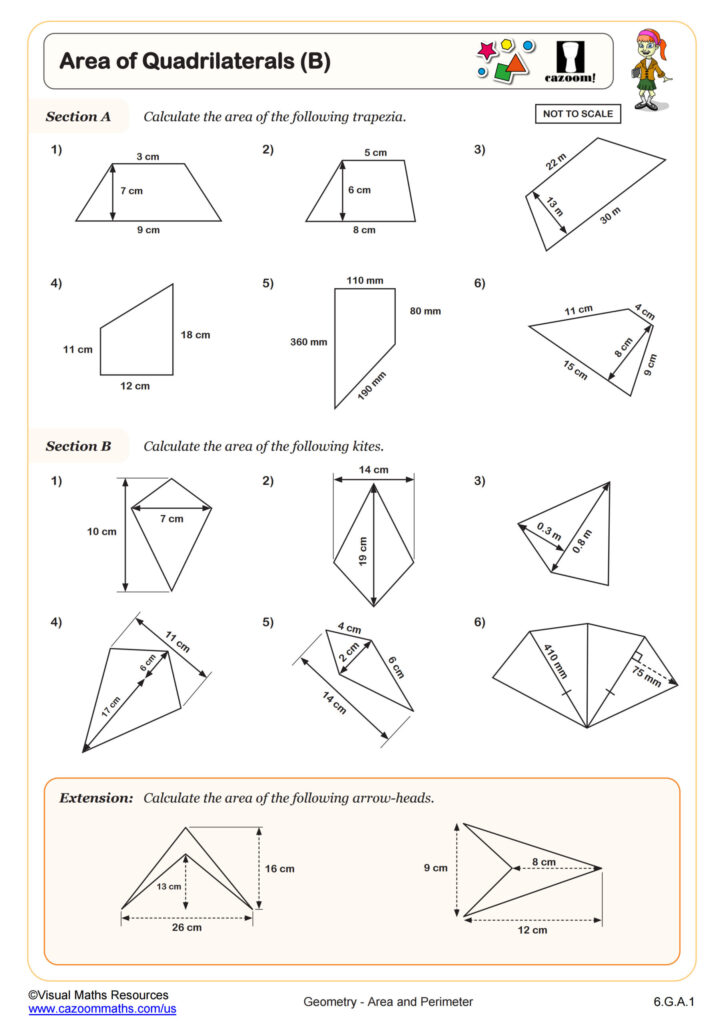
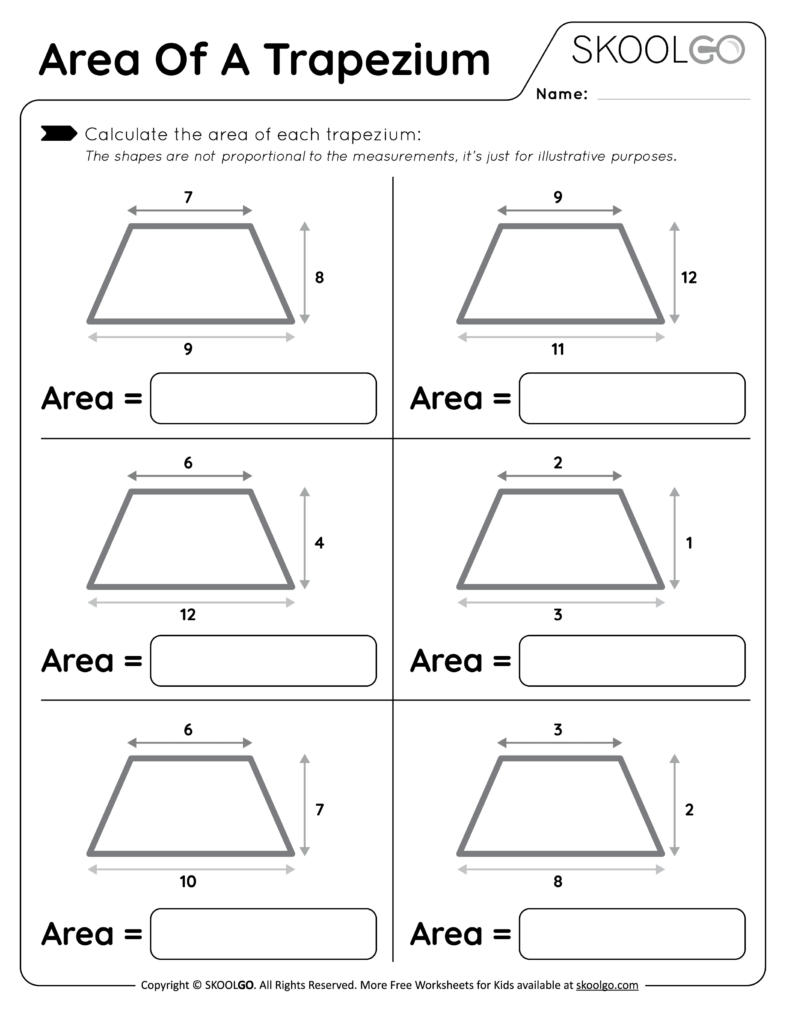
A strong worksheet should remind students to include square units, such as cm², in every final answer. It should also ask them to show the substituted values, not just the final number, so teachers can check understanding. If diagrams are included, the height should be marked with a right-angle symbol or a dashed perpendicular segment. This is especially helpful for students who are learning at the middle school level and already know basic multiplication, addition, and how to read labeled shapes.
For best results, choose a worksheet that stays focused on trapezoid area only and gives enough practice to reinforce the formula.