
An arithmetic and geometric sequences worksheet should help students quickly spot whether a pattern changes by addition or multiplication. The best worksheets keep the focus on identifying the type of sequence, extending it, and checking the rule behind it. Students should practice with short number patterns, missing terms, and simple prompts that build confidence without adding extra algebra topics.
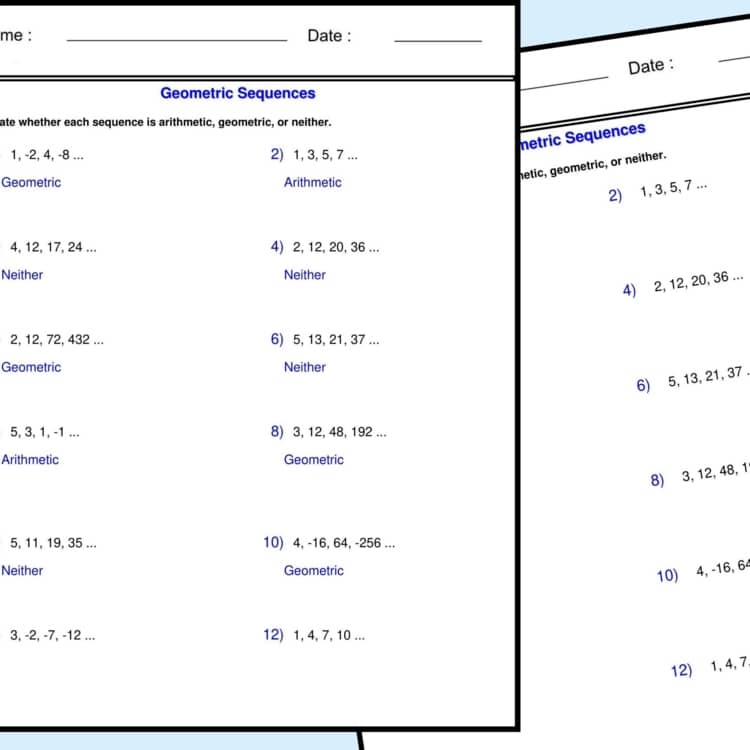
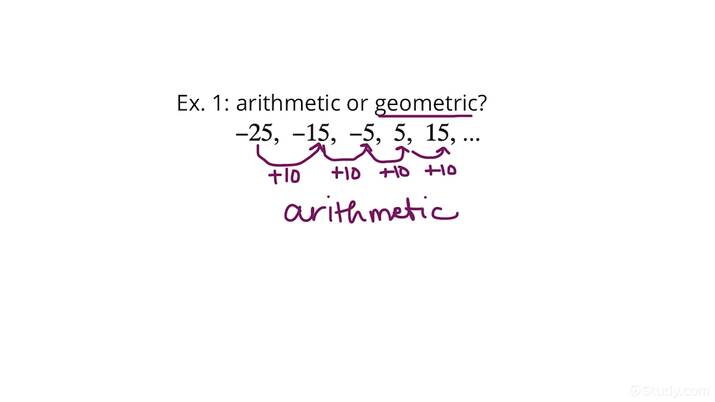
A strong worksheet starts with pattern recognition. In an arithmetic sequence, each term changes by the same difference, such as 4, 7, 10, 13. In a geometric sequence, each term is found by multiplying by the same ratio, such as 3, 6, 12, 24. Learners should be asked to identify which kind of sequence they see and explain how they know. That early check helps them compare addition-based and multiplication-based patterns clearly.
Find the Rule
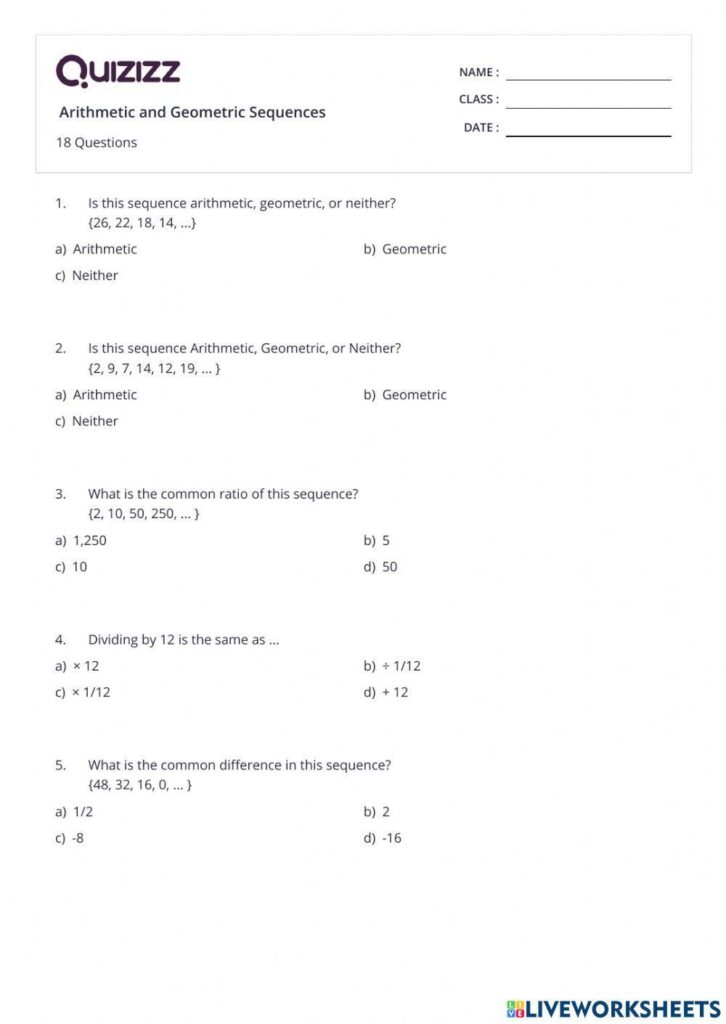
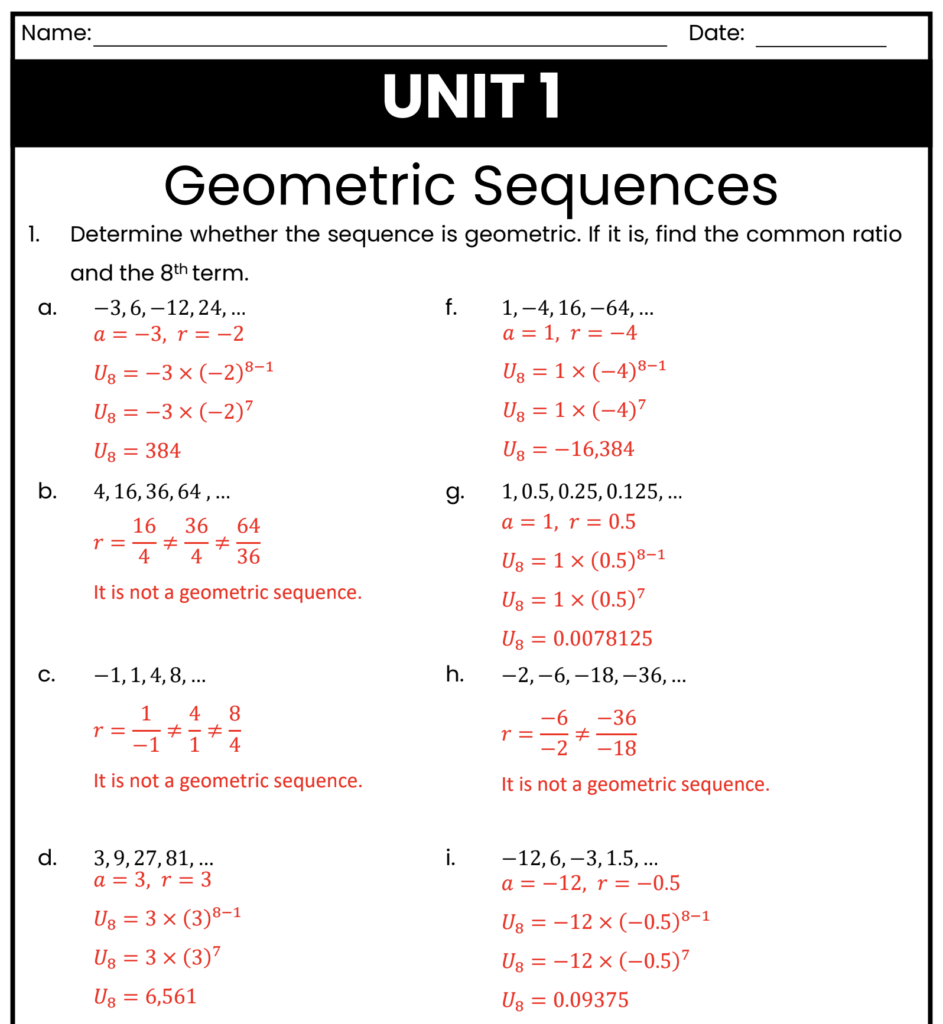
The next practice should ask students to find missing terms and determine the common difference or common ratio. Good items might leave blanks in the middle of a sequence or ask for the next three terms. For arithmetic work, students can compare nearby terms to see if the difference stays constant. For geometric work, they can divide consecutive terms to test whether the ratio stays the same. This gives them a simple method for checking their answers.
Quick Answer Checks
A useful worksheet also includes answer-checking cues. Students should ask: do I add the same number each time, or do I multiply by the same number each time? If the step is consistent by subtraction, the sequence is arithmetic; if it is consistent by division, it is geometric. Mixing both types on the same page helps learners compare them and avoid guessing. Short directions and example rows can make the worksheet easier to use during class practice.
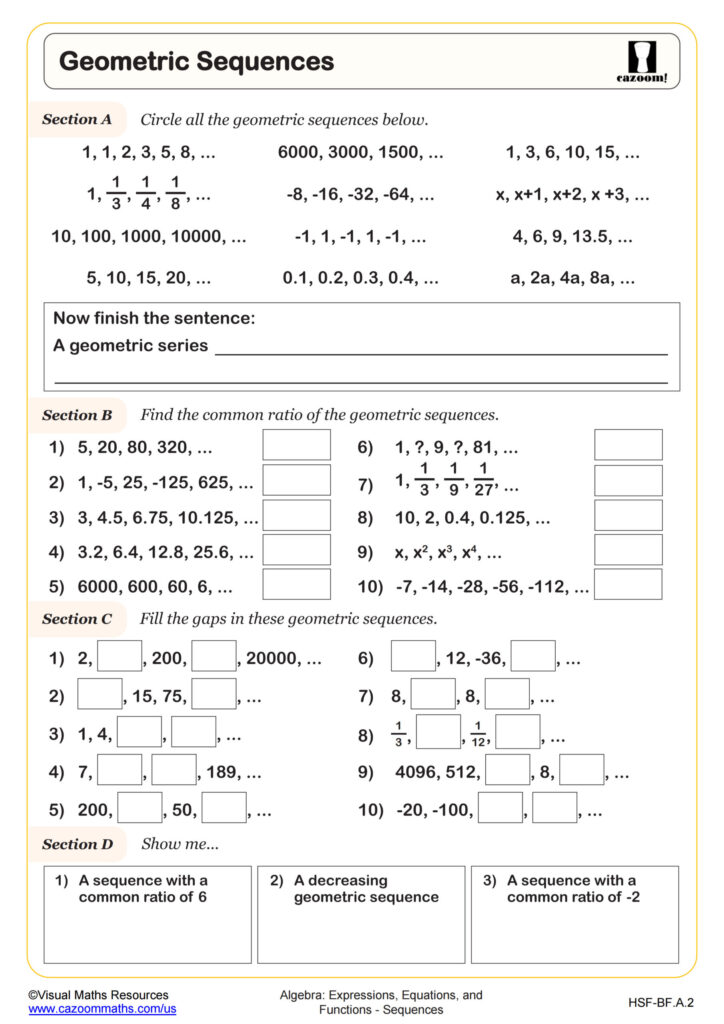
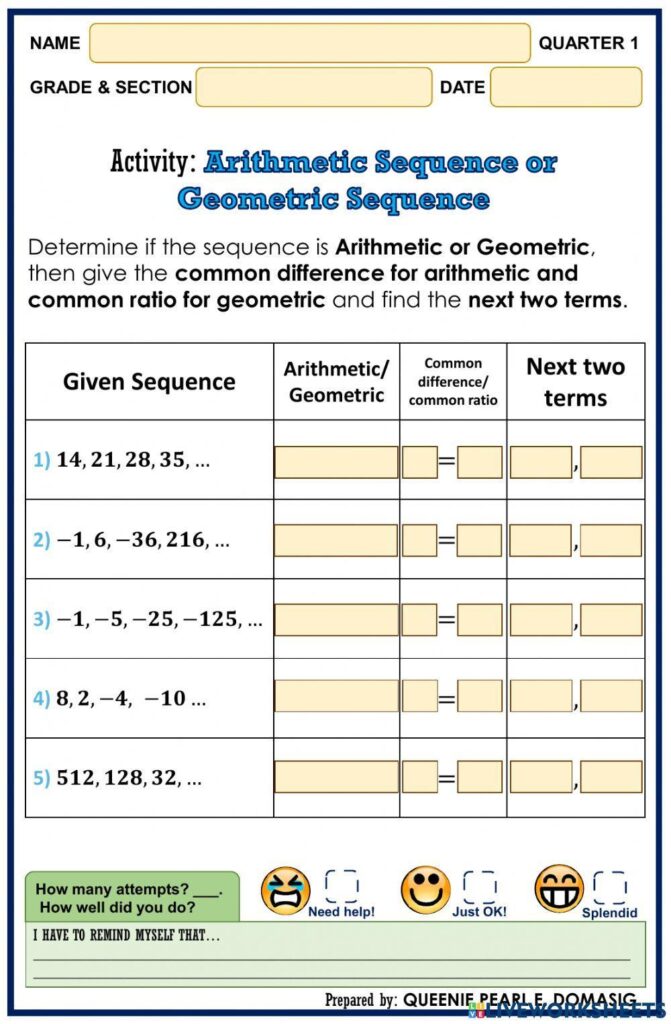
For classroom use, the best arithmetic and geometric sequences worksheet is short, focused, and repeated enough to build pattern fluency. It should cover identifying the sequence type, filling in missing terms, naming the common difference or ratio, and writing the next terms. If students can explain how they checked their work, the worksheet has done its job: it teaches them to recognize the rule, not just complete the numbers.



