
A bill of rights worksheet answer key usually focuses on matching each amendment with its main idea. The most common worksheets cover the first 10 amendments, so the clearest way to check your work is to know the core protection for each one. Use the short meanings below to compare your answers with the wording on your page.
Amendments 1 to 5
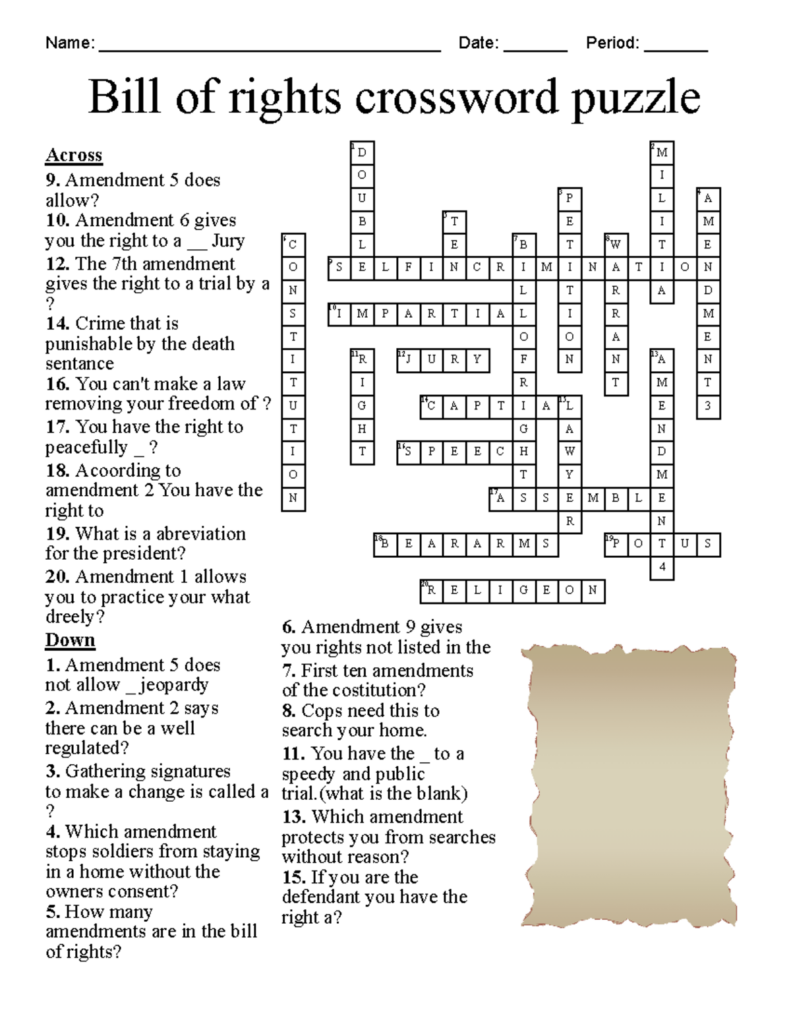
1st Amendment: freedom of religion, speech, press, assembly, and petition. 2nd Amendment: the right to keep and bear arms. 3rd Amendment: no quartering soldiers in private homes. 4th Amendment: protection from unreasonable searches and seizures. 5th Amendment: rights of due process, no self-incrimination, and no double jeopardy. On many matching worksheets, these are paired with phrases like “free speech,” “privacy,” “fair legal process,” or “no forced housing of soldiers.”
Amendments 6 to 10
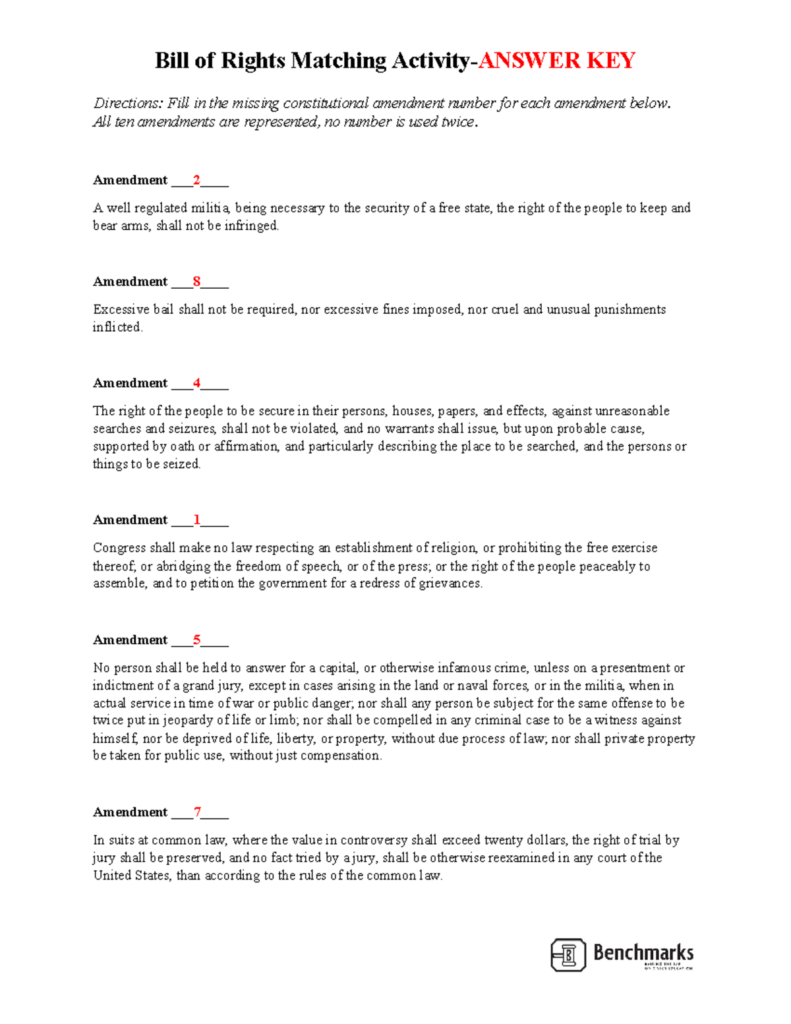
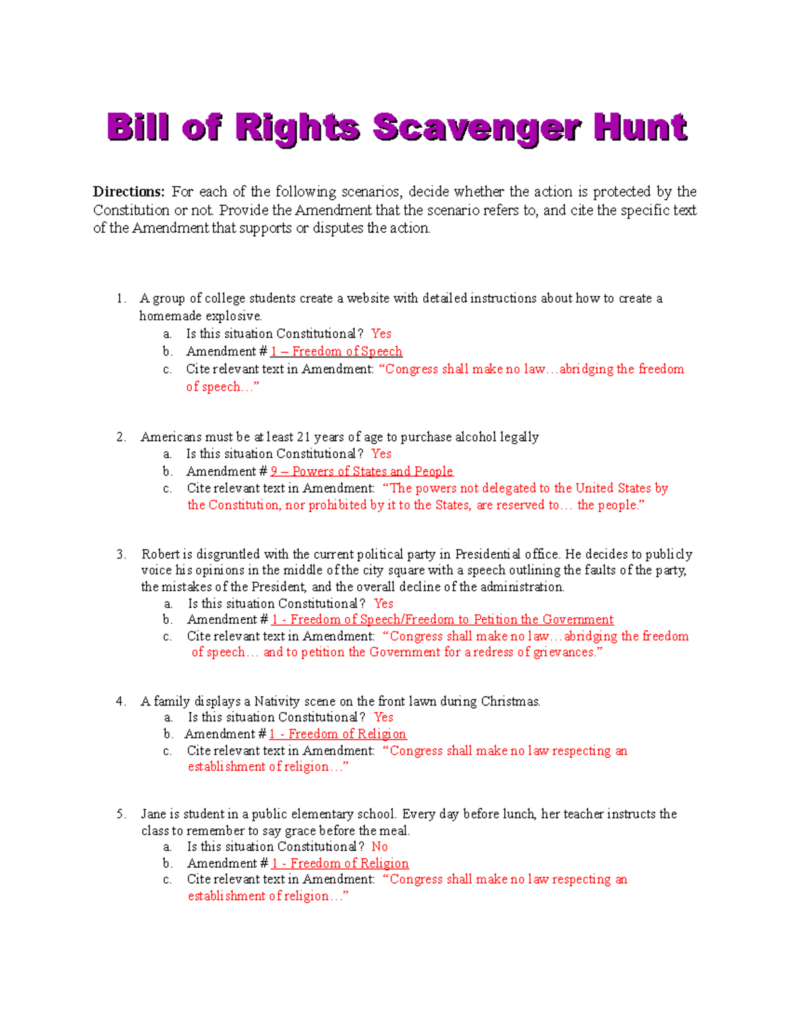
6th Amendment: rights of the accused in a criminal case, including a speedy and public trial, an impartial jury, and a lawyer. 7th Amendment: jury trial in civil cases. 8th Amendment: no cruel and unusual punishment and no excessive bail or fines. 9th Amendment: people have rights not listed in the Constitution. 10th Amendment: powers not given to the federal government belong to the states or the people. These are often matched with “criminal trial rights,” “civil jury,” “fair punishment,” “unlisted rights,” and “state powers.”
If your worksheet uses a word bank or numbered matching list, the safest answer key is the one that follows the exact wording in the prompts. For example, “freedom of the press” belongs with the 1st Amendment, while “search and seizure” belongs with the 4th. “Due process” and “self-incrimination” usually point to the 5th, and “speedy trial” points to the 6th. Small differences in wording are normal, but the constitutional idea stays the same.
For quick checking, remember the pattern: 1st speech and religion, 2nd weapons, 3rd soldiers in homes, 4th privacy, 5th legal rights, 6th criminal trial rights, 7th civil jury, 8th fair punishment, 9th unnamed rights, and 10th state powers. If your worksheet asks for a match, compare the concept first, then the amendment number. That will help you verify answers accurately even when the wording changes from one class sheet to another.



