
A comparative and superlative worksheet helps students practice how adjectives change when they compare two things or more than two things. It should give clear, grade-appropriate exercises that build accuracy with forms like bigger and biggest, taller and tallest, or more interesting and most interesting. The best worksheets keep the focus narrow: recognize the rule, choose the correct form, and use it in a sentence.
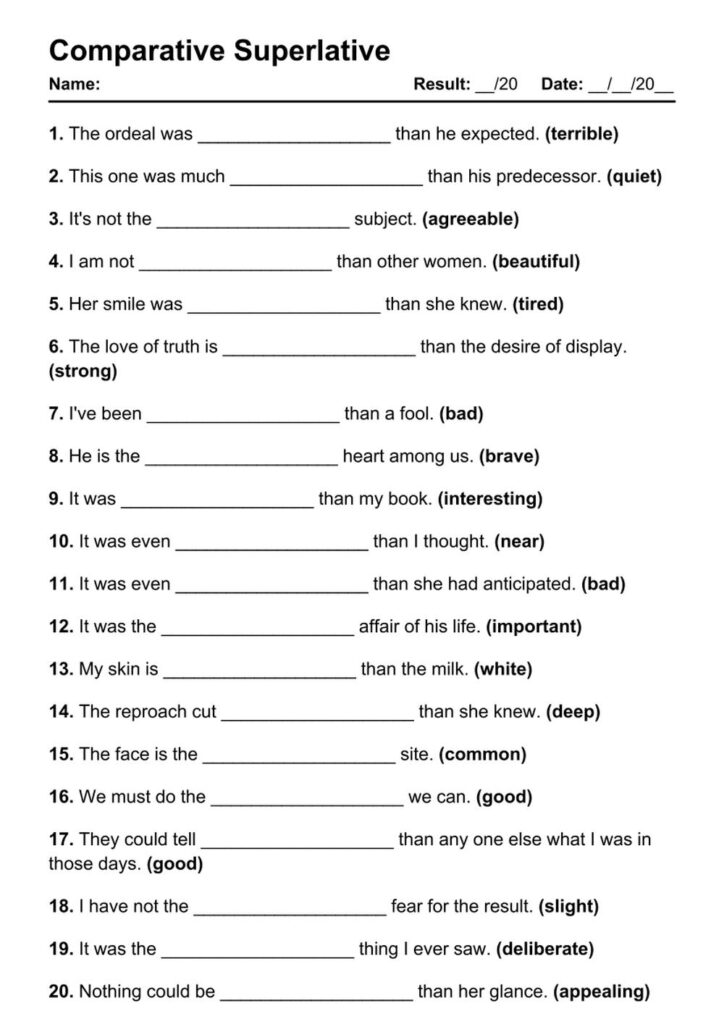
A strong worksheet should first make the difference between comparative and superlative adjectives easy to see. Comparative forms compare two people, places, or things, while superlative forms show the highest or lowest degree in a group of three or more. Good practice includes short explanations beside simple examples, so students know why one form is correct. This helps learners connect the grammar rule to actual usage instead of memorizing endings without context.
Core Practice Tasks
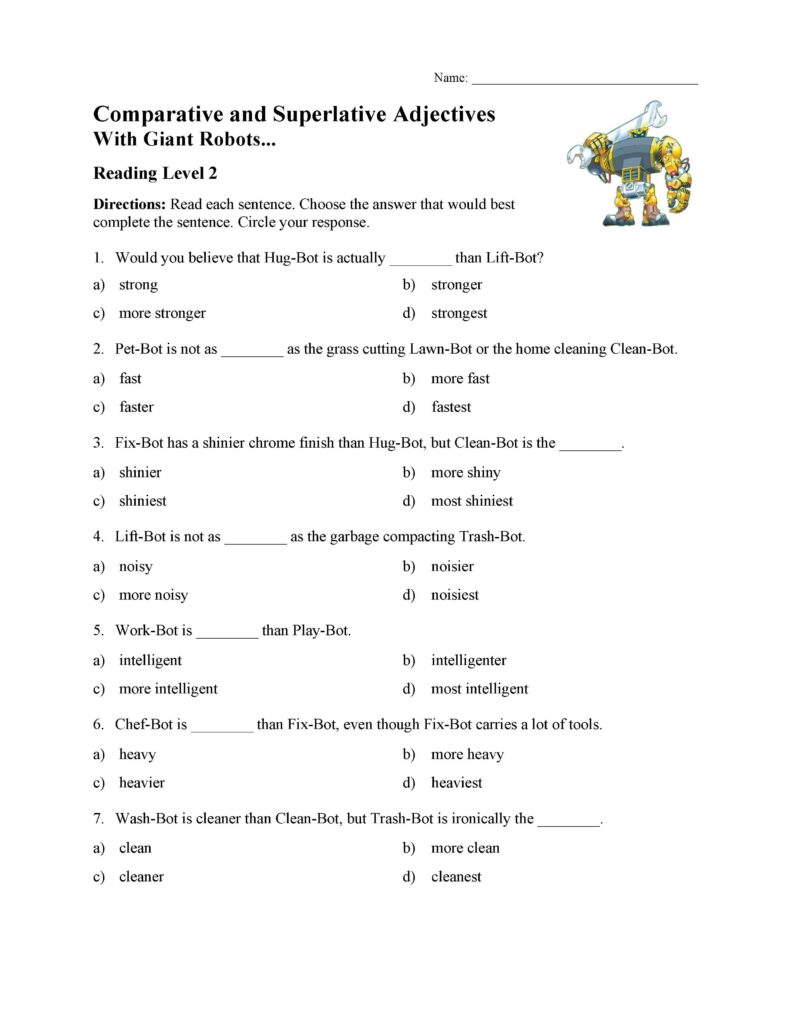
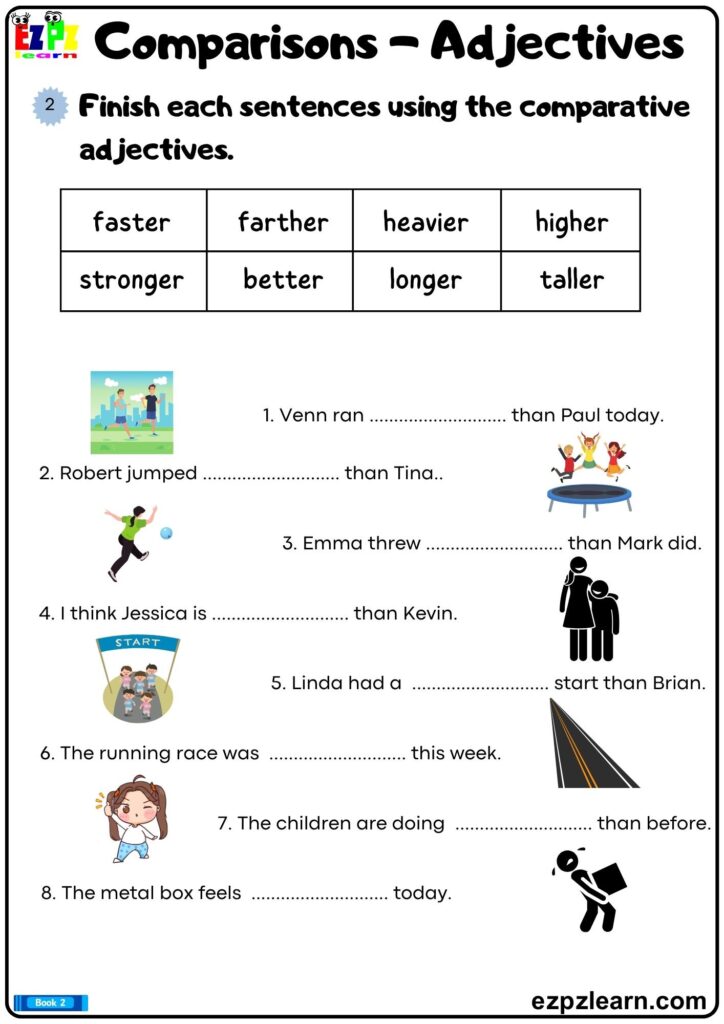
The most useful tasks usually ask students to choose the correct adjective form, complete sentences, or rewrite a sentence with the right comparison. For example, students might pick between faster and fastest, then finish a sentence such as “This bike is ___ than that one.” Mixed practice is helpful because it checks both recognition and application. A worksheet can also include word banks, which support younger learners while still reinforcing the pattern.
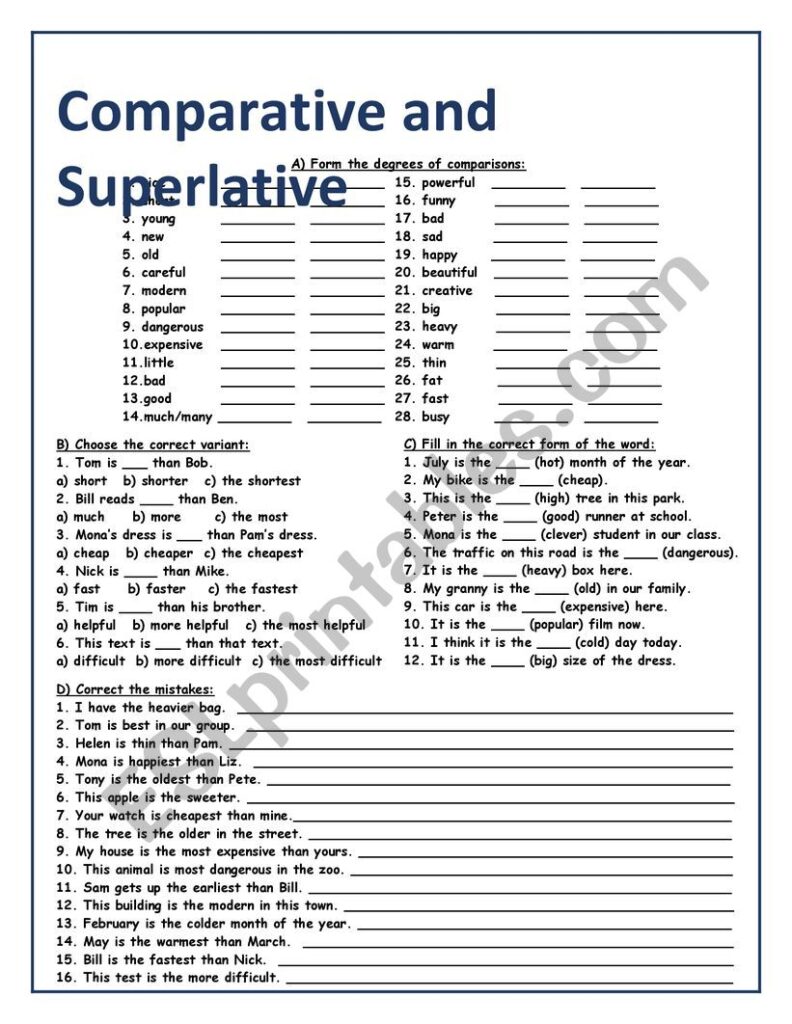
Clear Directions Matter
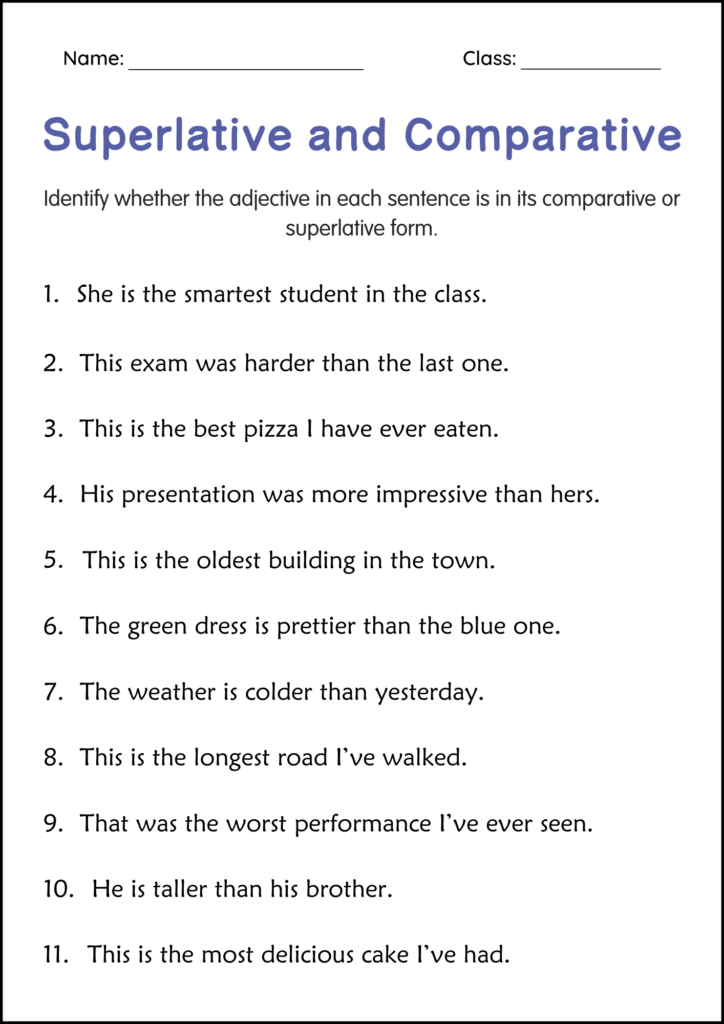
Clear instructions are essential because comparison rules can feel confusing at first. A good worksheet should explain whether students are comparing two items or a larger group before they start. Directions should be short, direct, and easy to follow, with one task type per section when possible. That structure reduces guessing and keeps attention on grammar practice. Simple formatting, readable fonts, and enough space to write answers also make the worksheet more effective for classroom or independent use.
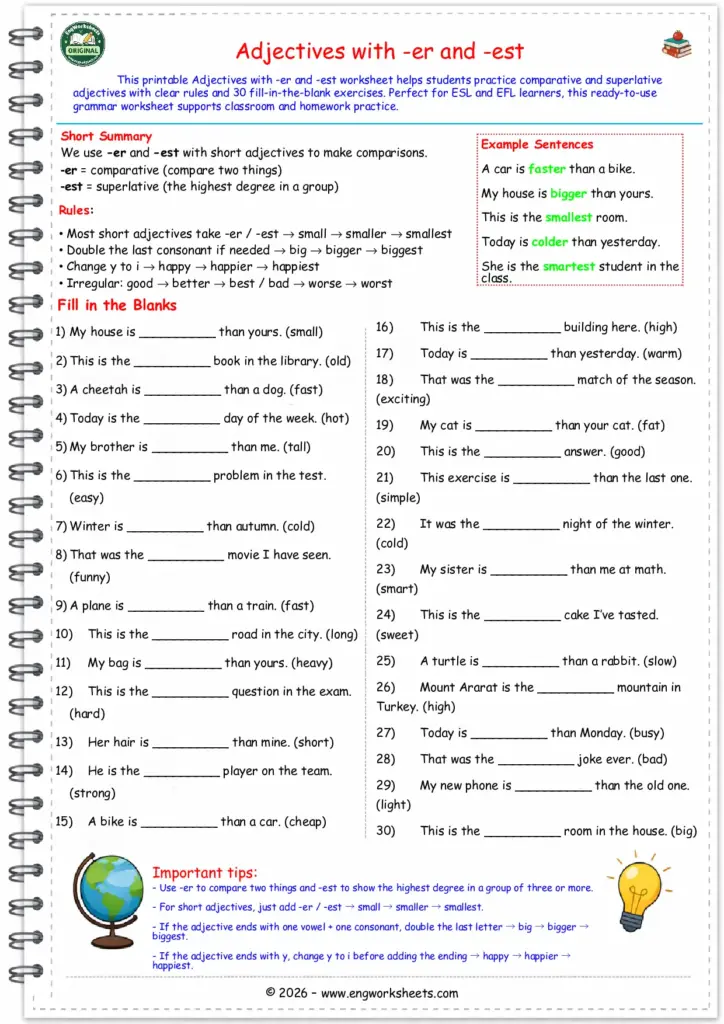
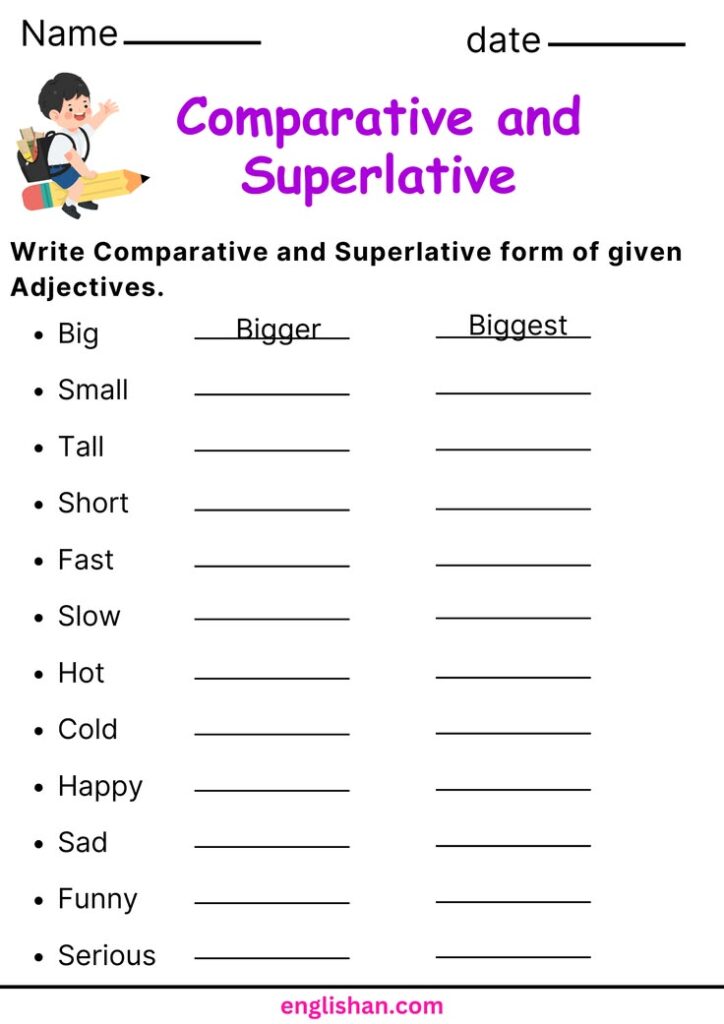
When choosing a comparative and superlative worksheet, look for grade-level language, focused practice, and clean examples that match the skill being taught. The resource should help students build confidence step by step, not overload them with unrelated grammar topics. Used well, a worksheet like this gives repeated practice with forming and using comparisons correctly, making it a practical tool for review, homework, or quick skill checks.



