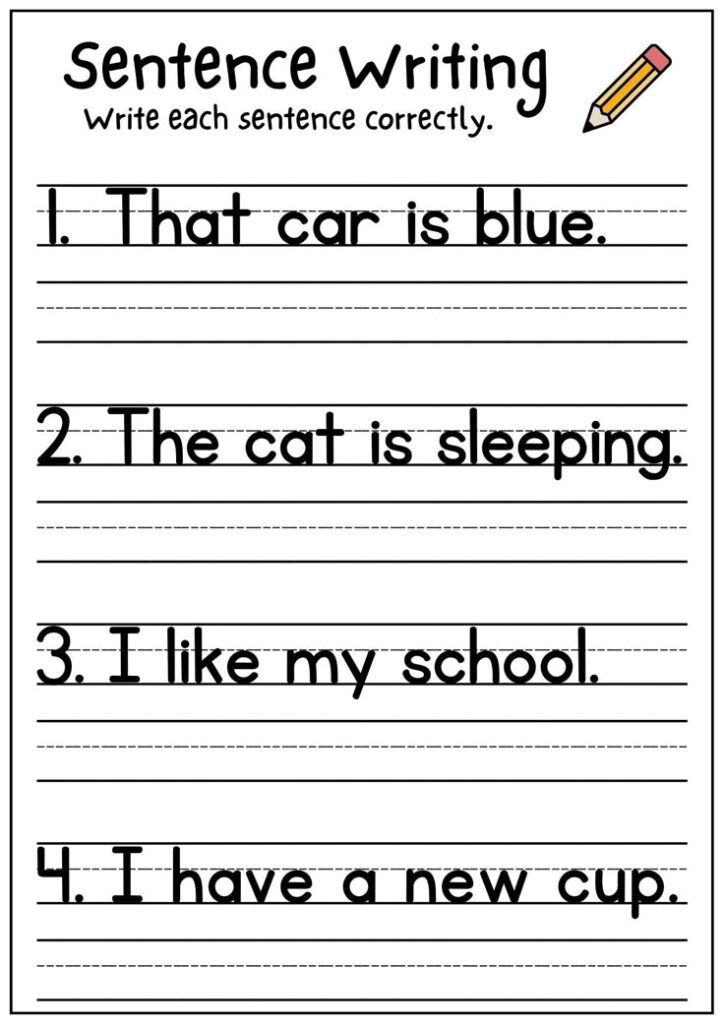
Educational sentence writing worksheets work best when they teach one clear skill at a time. The most useful ones help learners move from simple copying to independent sentence writing while practicing capital letters, end punctuation, spacing, and complete thoughts. When choosing a worksheet, the key is matching the format and difficulty to the student’s current level so practice feels manageable and purposeful.
Skills to Reinforce
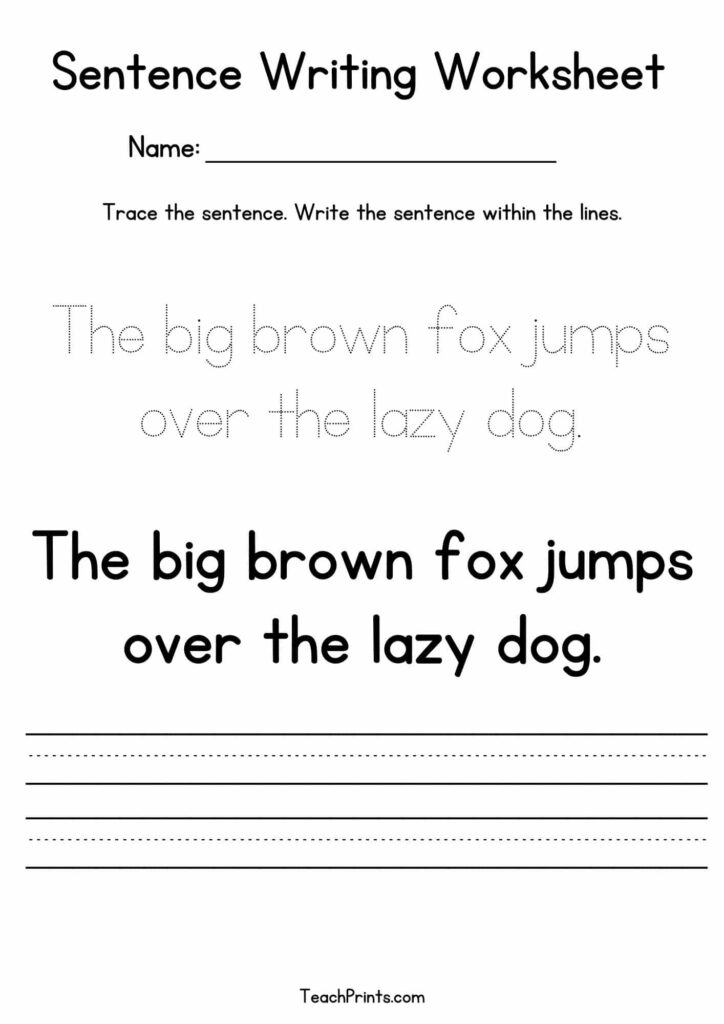
Strong worksheets focus on the basics that make a sentence readable and correct. That includes starting with a capital letter, ending with a period, question mark, or exclamation point when appropriate, leaving spaces between words, and completing an idea instead of stopping halfway. Some pages also support grammar awareness by asking students to choose the right word or fix a sentence fragment. The best sheets keep the target skill obvious, so the learner knows exactly what to practice.
Useful Worksheet Formats
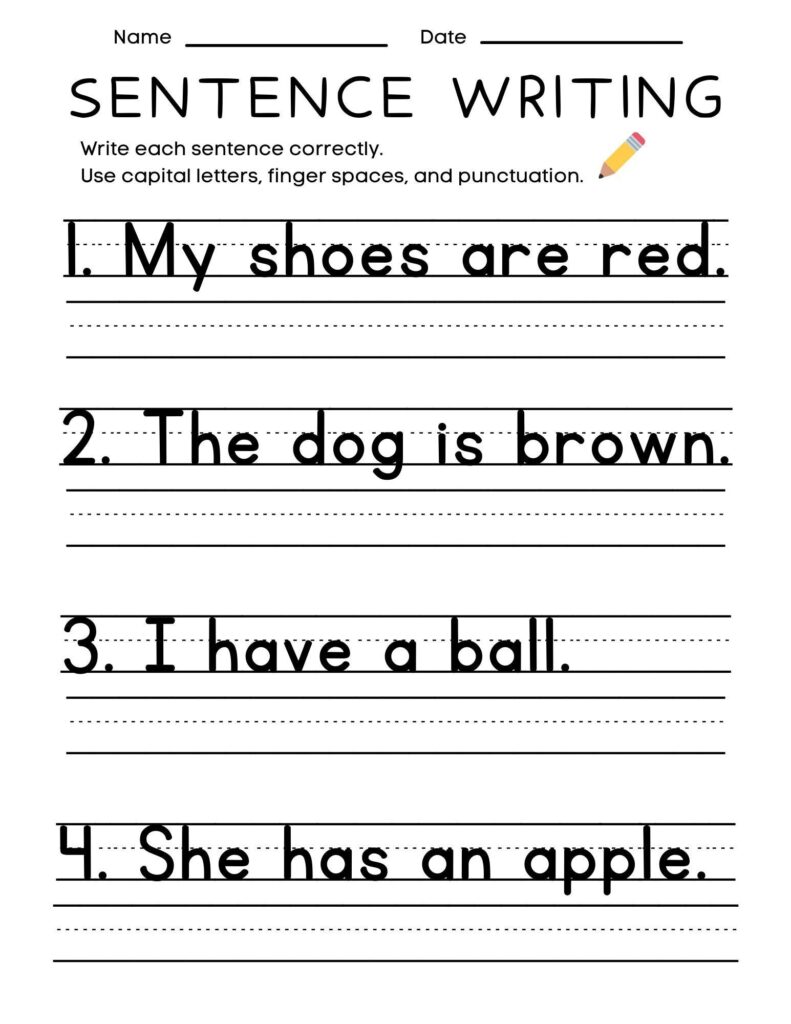
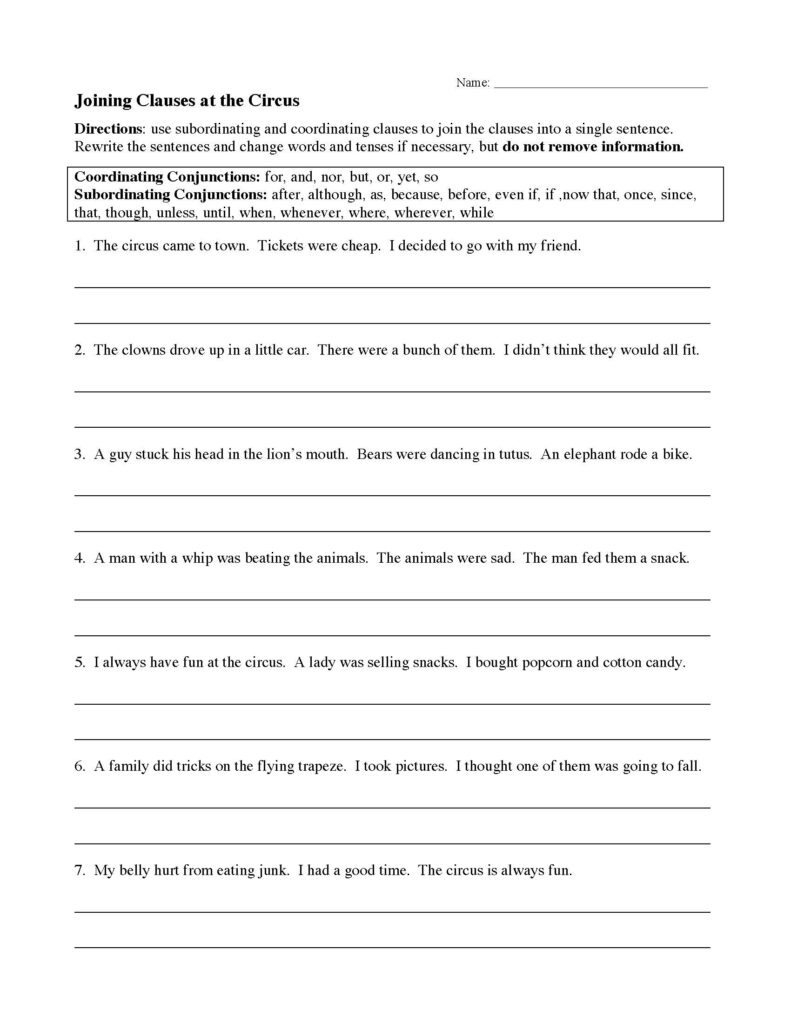
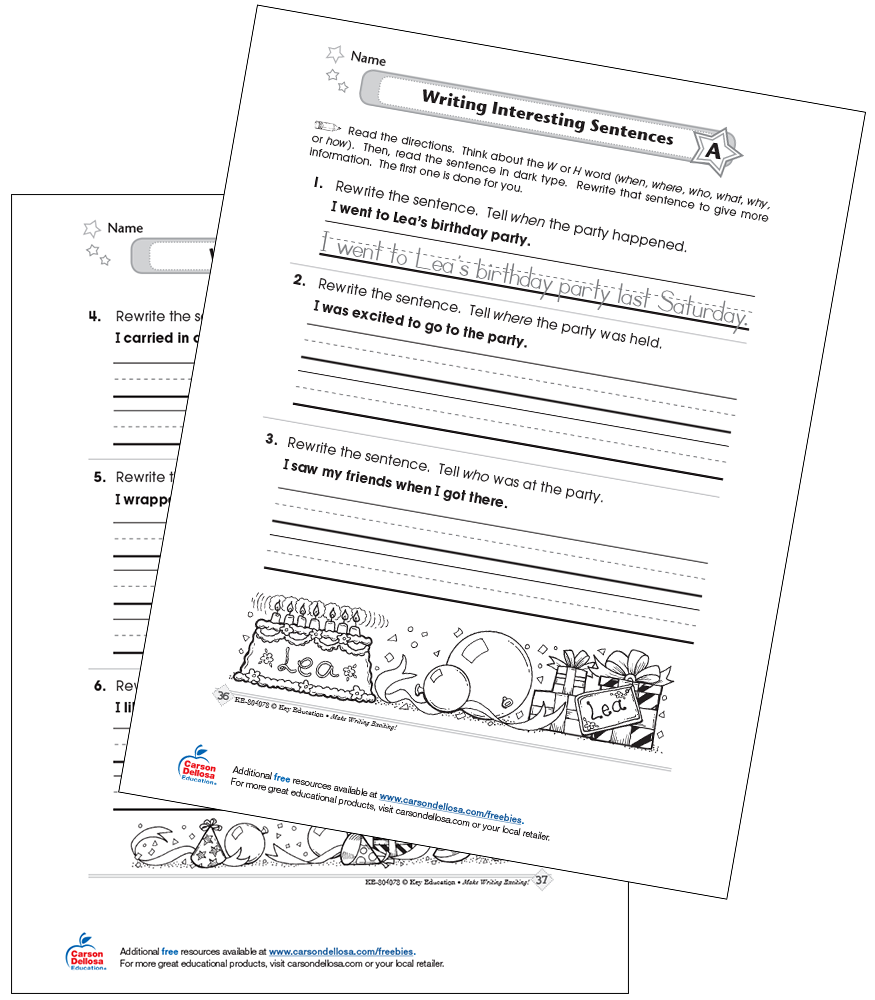
Worksheet difficulty should progress in small steps. Beginners may trace letters, copy short words, or rewrite a model sentence with support. Next, learners can fill in missing words, build sentences from word banks, or answer picture prompts with a simple sentence. More advanced students should write complete sentences with fewer clues, then combine ideas into two- or three-sentence responses. A good worksheet matches the learner’s confidence level, giving enough support to succeed without making the task too easy.
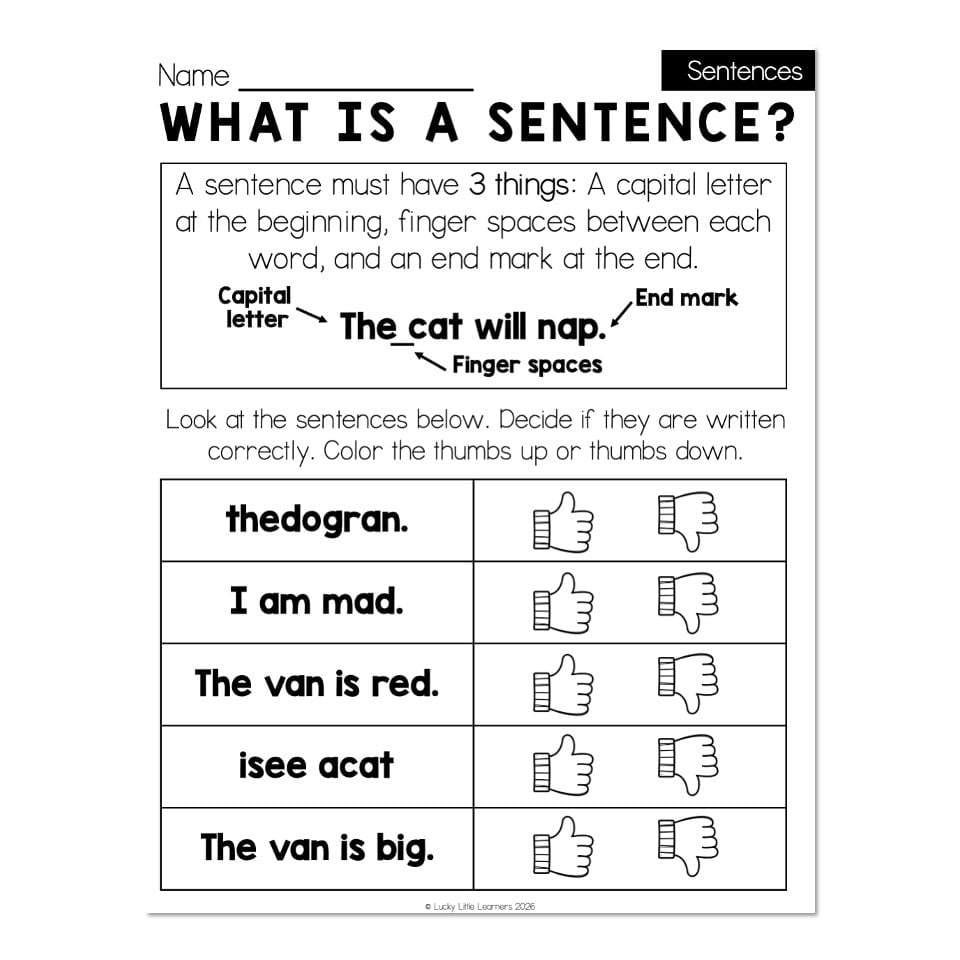
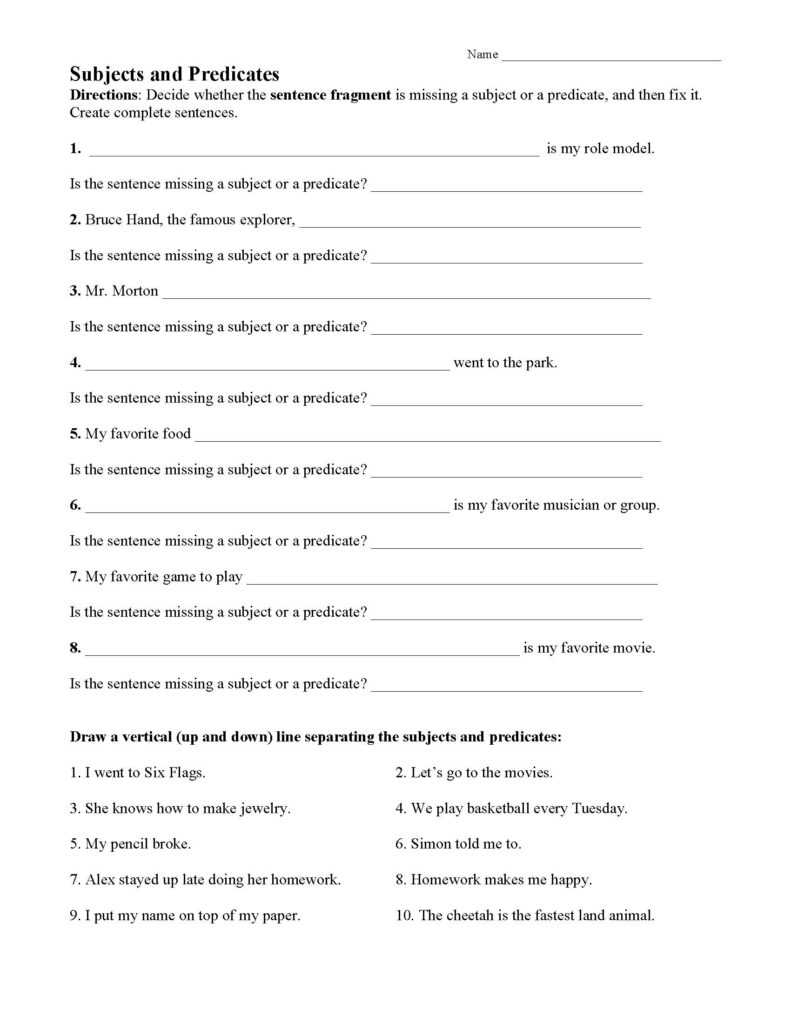
The most useful formats are the ones that guide writing without doing all the work for the student. Tracing pages help with letter formation and spacing. Fill-in-the-blank sentences keep the structure clear. Picture prompts encourage original wording, and guided sentence starters reduce overwhelm. Before using a worksheet, check that directions are easy to read, the print is legible, and the activity focuses on one main skill. If those pieces are in place, the worksheet is more likely to build real sentence-writing practice.