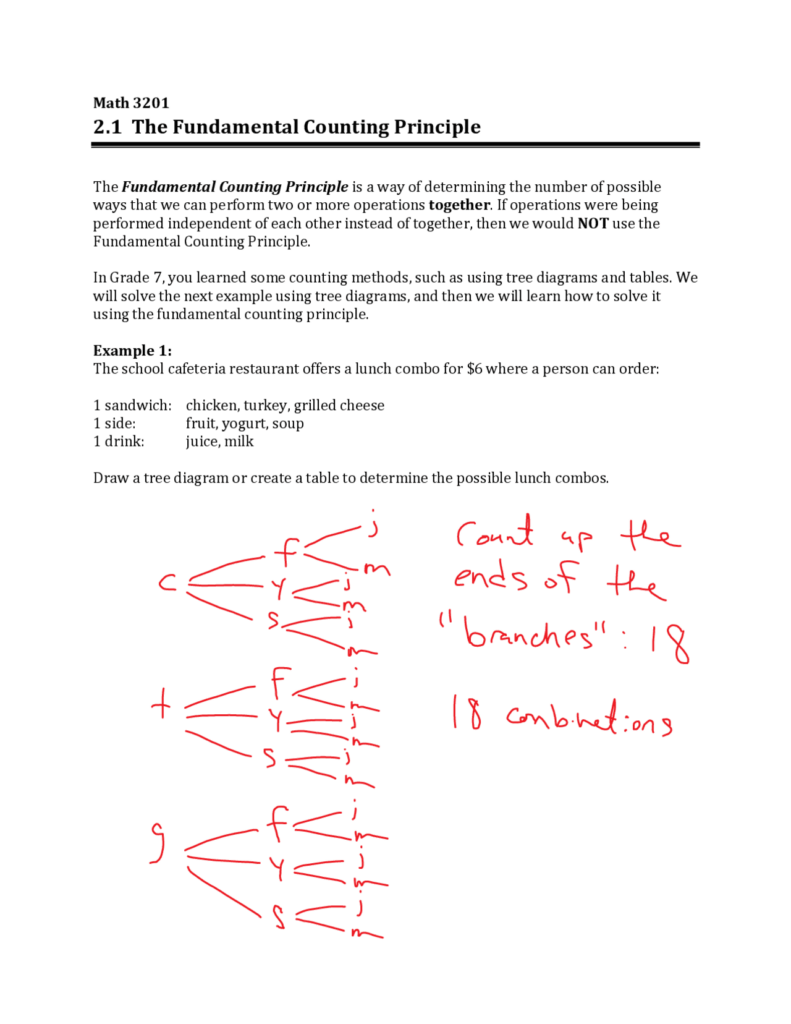
A fundamental counting principle worksheet helps students spot multiplication situations and find how many outcomes are possible. The main idea is simple: if one choice can be made in several ways and another choice can be made in several ways, multiply the numbers. This worksheet style works best when students practice deciding whether to multiply, then carry out the calculation carefully.
Simple Rule to Remember
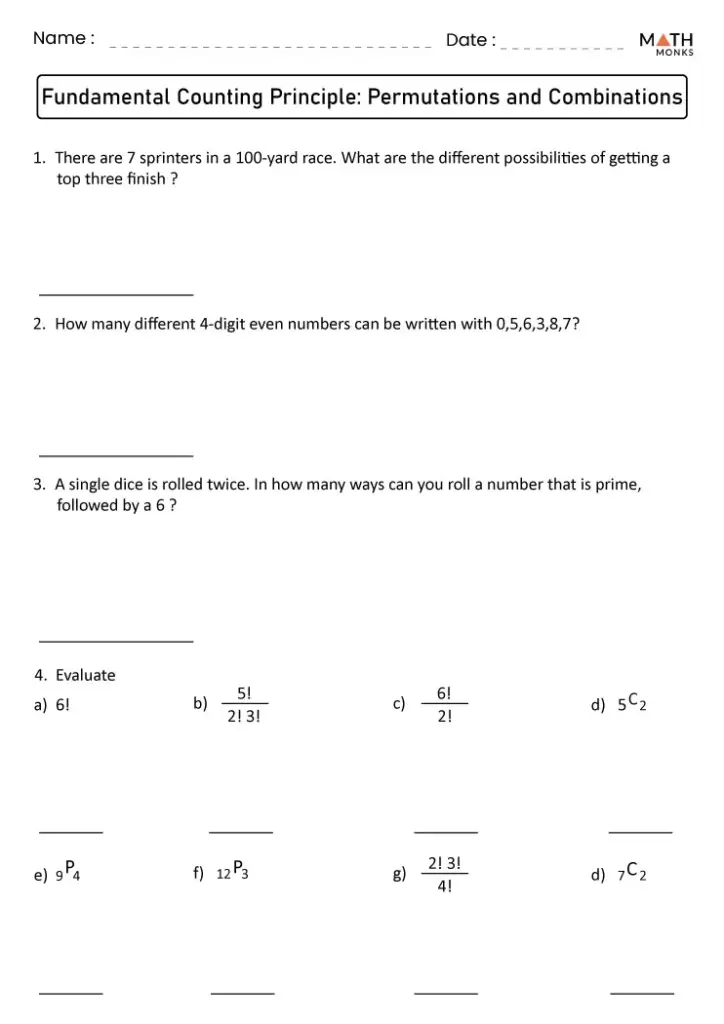
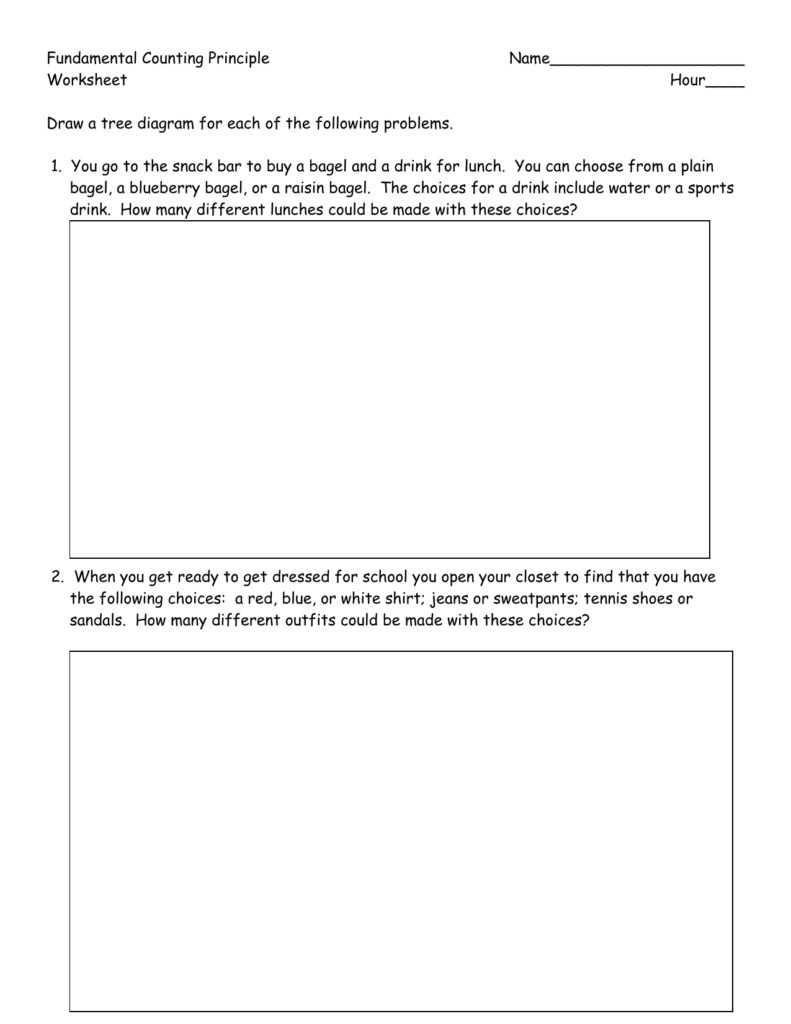
The Fundamental Counting Principle says to multiply the number of choices for each stage of a task. For example, if a shirt can be chosen in 3 colors and pants in 4 colors, there are 3 × 4 = 12 outfit combinations. A good worksheet keeps the numbers small and the situations familiar so students can focus on recognizing when multiplication applies, not on complicated wording.
Practice Problems
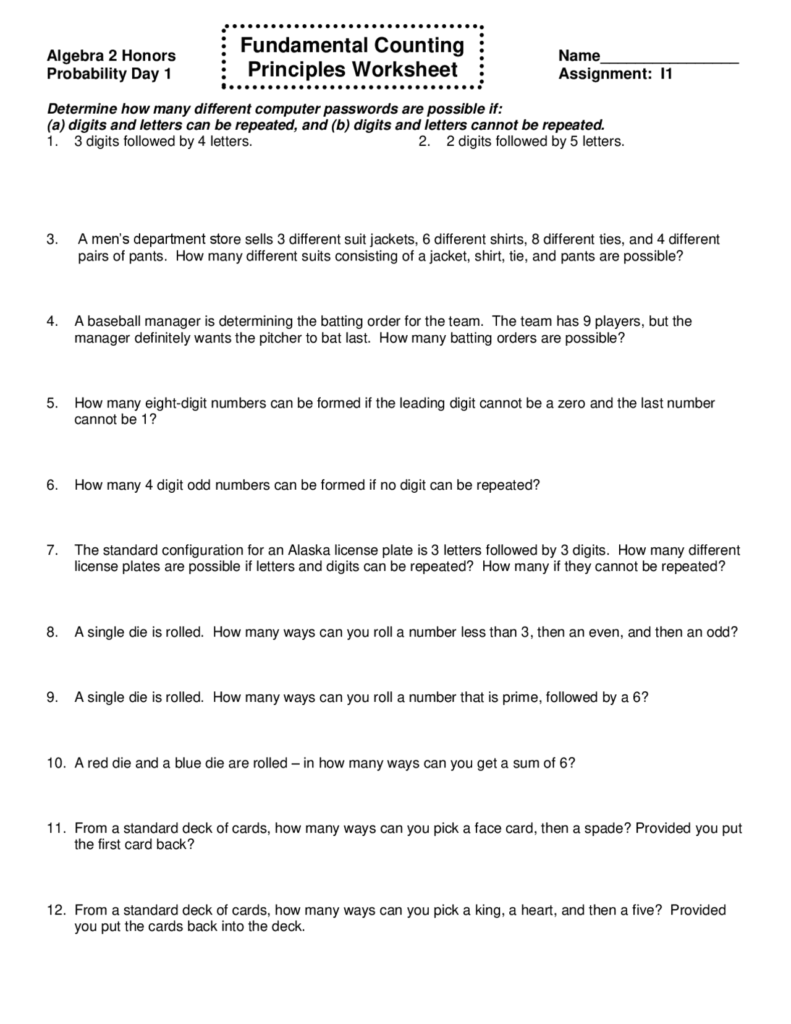
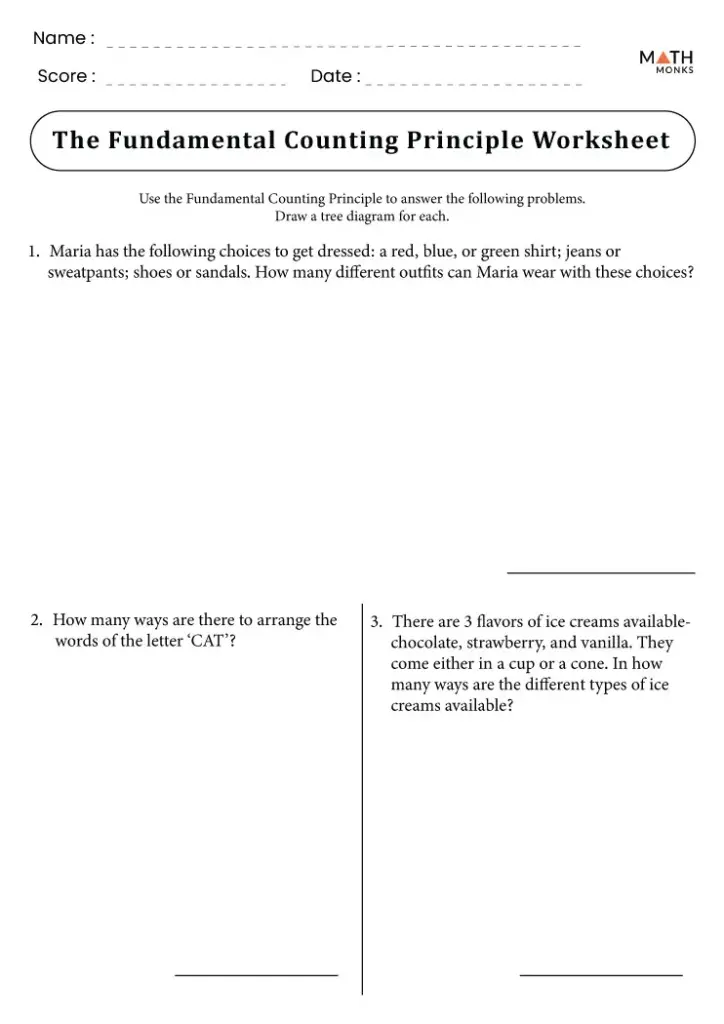
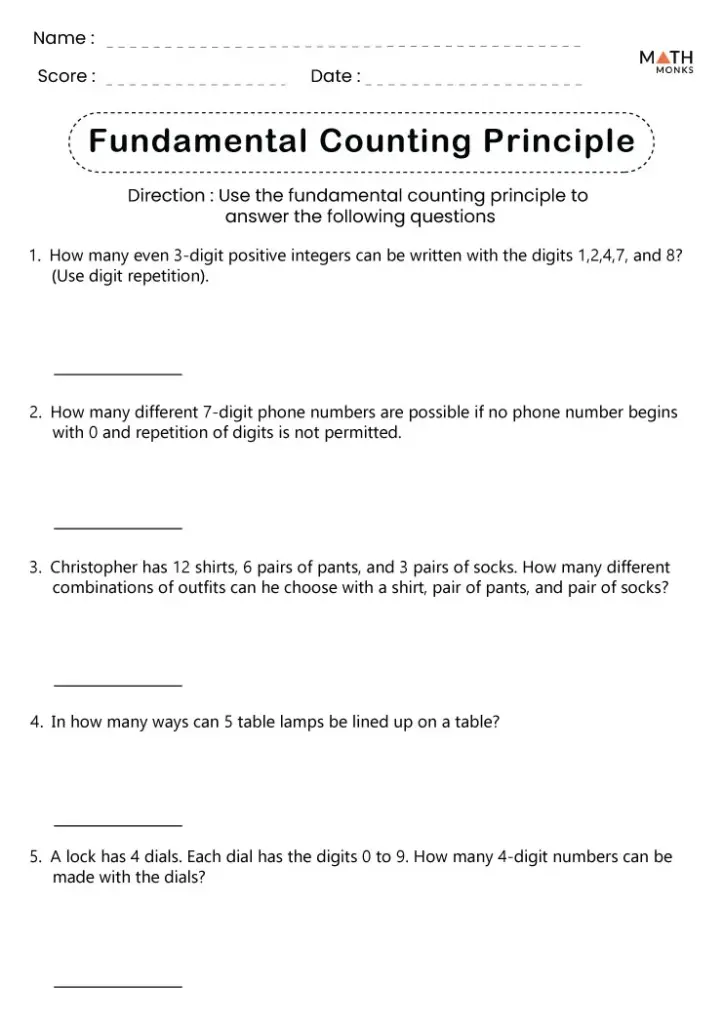
1) A snack menu has 2 drinks and 5 sandwiches. How many meal combinations are possible? 2) A password uses 3 letters and then 2 numbers. If each letter and number choice is counted separately, how many possible passwords are there? 3) A student chooses 4 notebook colors and 3 pen colors. How many supply combinations can be made? These problems all require multiplying the choices from each stage.
1) 2 × 5 = 10 combinations. 2) 3 × 2 = 6 possible passwords. 3) 4 × 3 = 12 supply combinations. A worksheet should include answers like these so students can check their work independently and see whether they multiplied the correct numbers. The best next step is to try a few more short problems until the pattern feels automatic.