
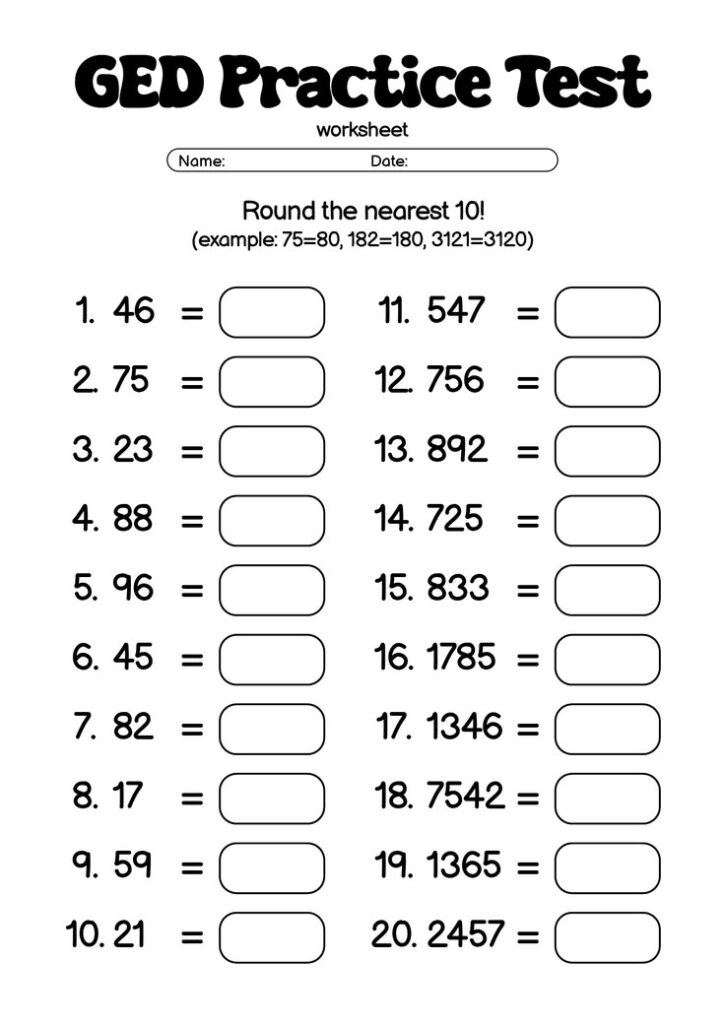
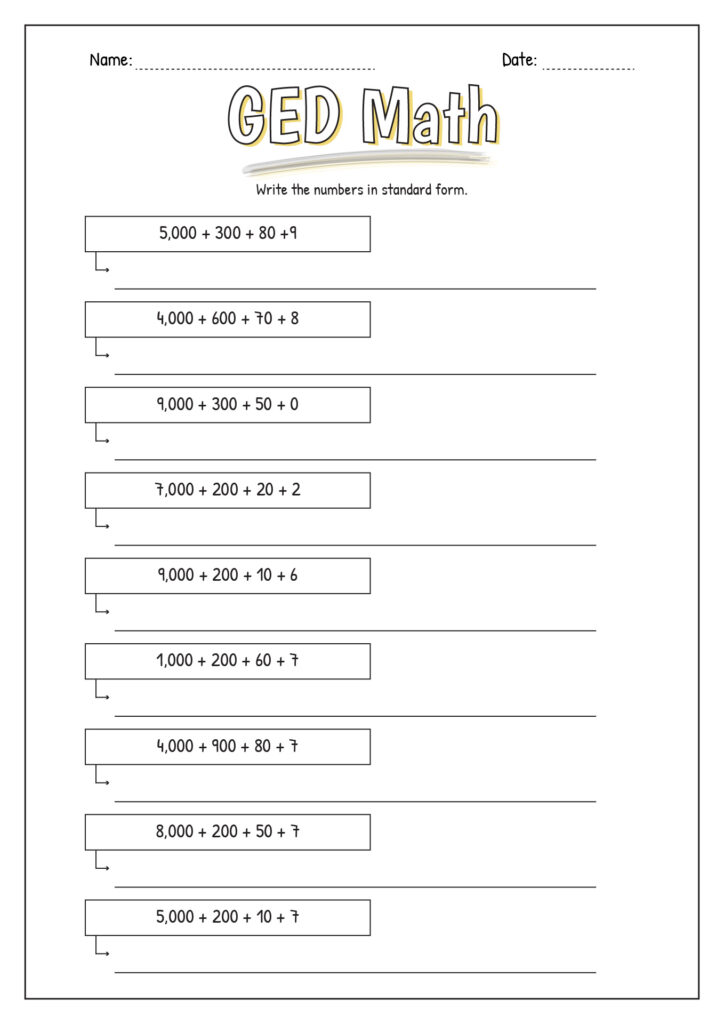
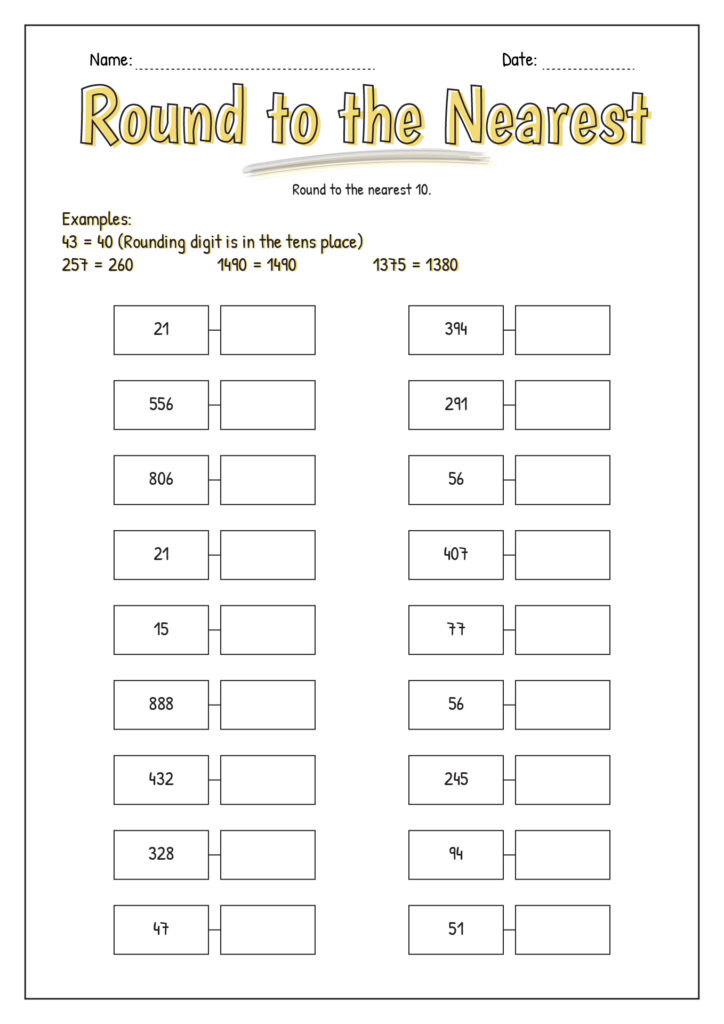
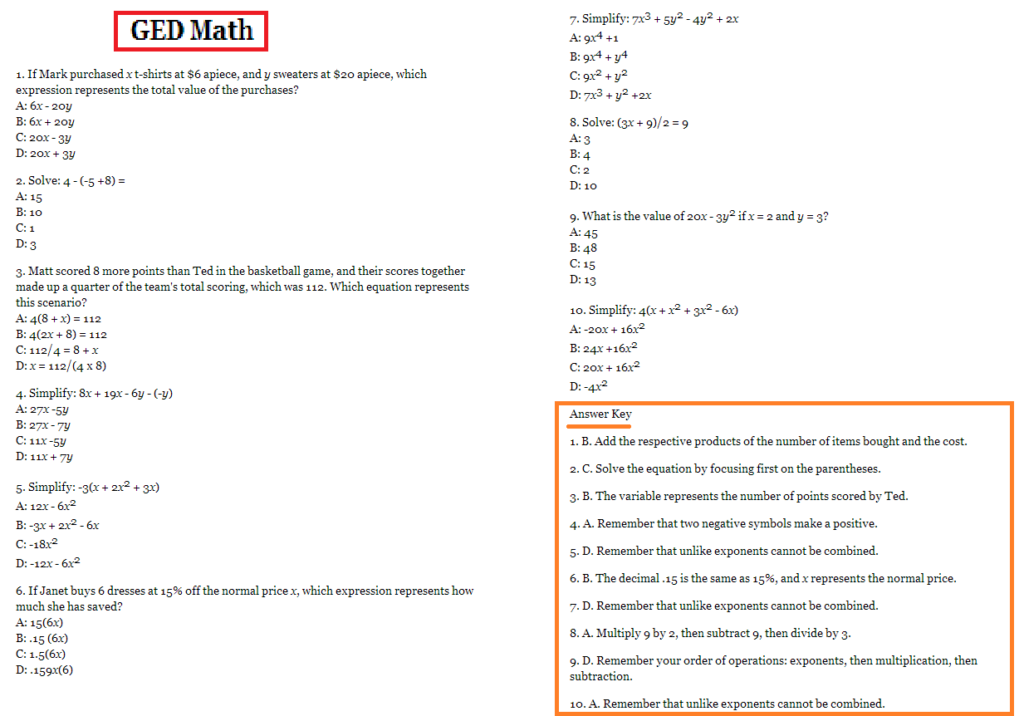
GED math practice worksheets work best when they mirror the skills and question styles on the GED Math test. A good worksheet set should cover arithmetic, algebra, geometry, data interpretation, and word problems, while giving learners a way to practice both calculation and reasoning. The goal is not just more problems, but the right mix of problems that reveal strengths, gaps, and test readiness.
Core skill areas
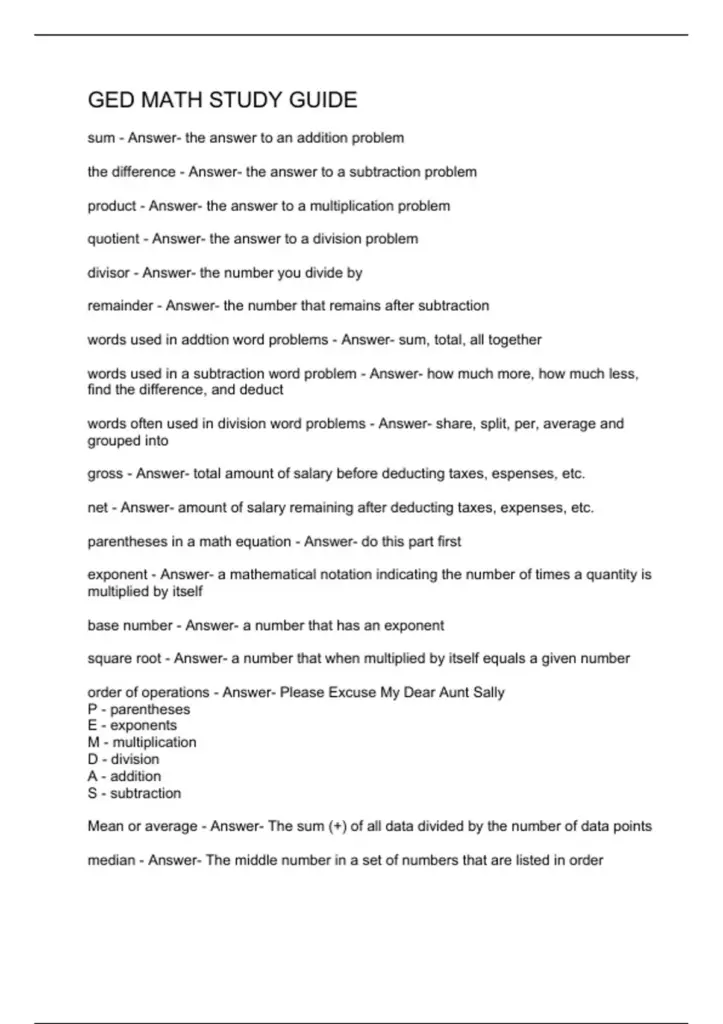
Strong GED math practice worksheets should include whole numbers, fractions, decimals, ratios, percentages, and number operations, since these basics support many test questions. They should also move into algebra topics such as expressions, equations, inequalities, and interpreting variables. Geometry practice should cover perimeter, area, volume, angle facts, and coordinate plane work. Data skills matter too, so tables, graphs, charts, and averages should appear regularly. Word problems should connect these topics to real contexts, because the GED often asks learners to choose and apply a math method rather than just compute.
Match GED question style
Worksheets are most effective when they resemble GED wording and layout. Questions should be short enough to read quickly but structured enough to require one or more steps. Include multiple-choice items, fill-in responses, and problems that ask learners to interpret a situation from a graph, table, or text prompt. It also helps to separate practice into calculator and no-calculator work when relevant, so learners can build speed without relying on the calculator for every task.
The best worksheets do not over-explain; they train learners to read, select a strategy, and solve efficiently.
Learners get the most value from GED math practice worksheets when they use them in focused rounds. Start with a small set of questions on one topic, then review every miss to find the exact mistake: misunderstanding the concept, using the wrong operation, or making a careless calculation. Mark weak areas and return to them later with similar problems. To check readiness, mix topics the way test questions are mixed and time the work to see whether accuracy holds under pressure. A worksheet is most useful when it leads to correction, not just completion.



