
Greater than less than kindergarten worksheets help young learners compare numbers in a simple, visual way. The best pages introduce the meanings of >,
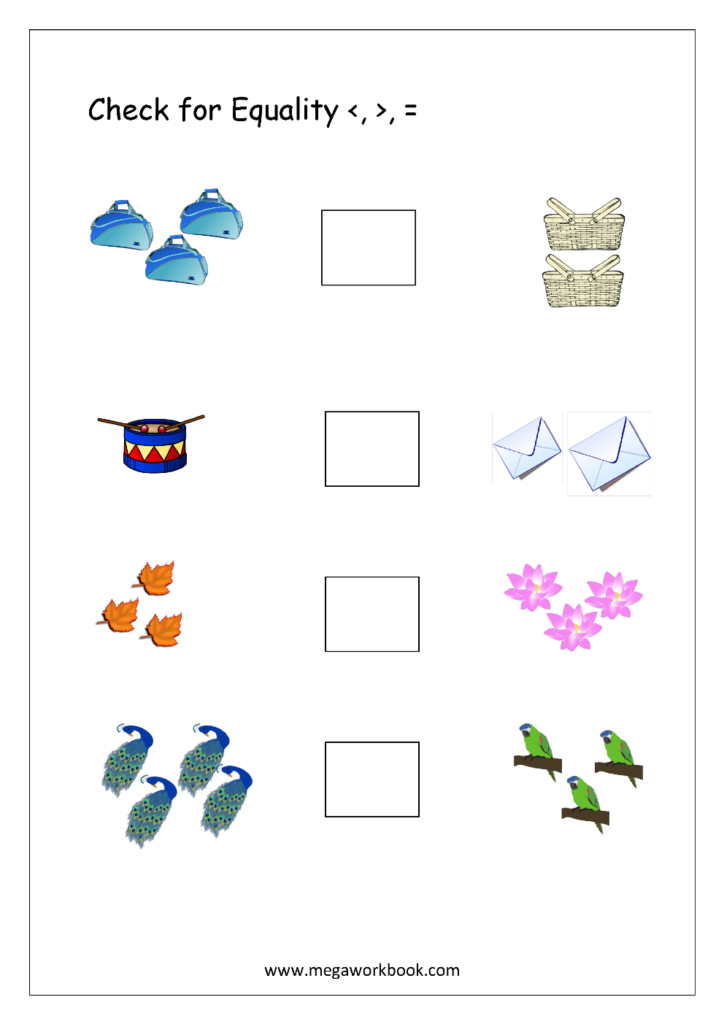
Symbols and meanings
A strong worksheet teaches the symbols in child-friendly language. > means the first number is greater, < means the first number is smaller, and = means the numbers are the same. In kindergarten, this should be shown with small numbers and familiar objects, not long explanations. A child might compare 3 apples and 5 apples, then choose the sign that matches what they see. Repeated examples help the symbol meaning become automatic.
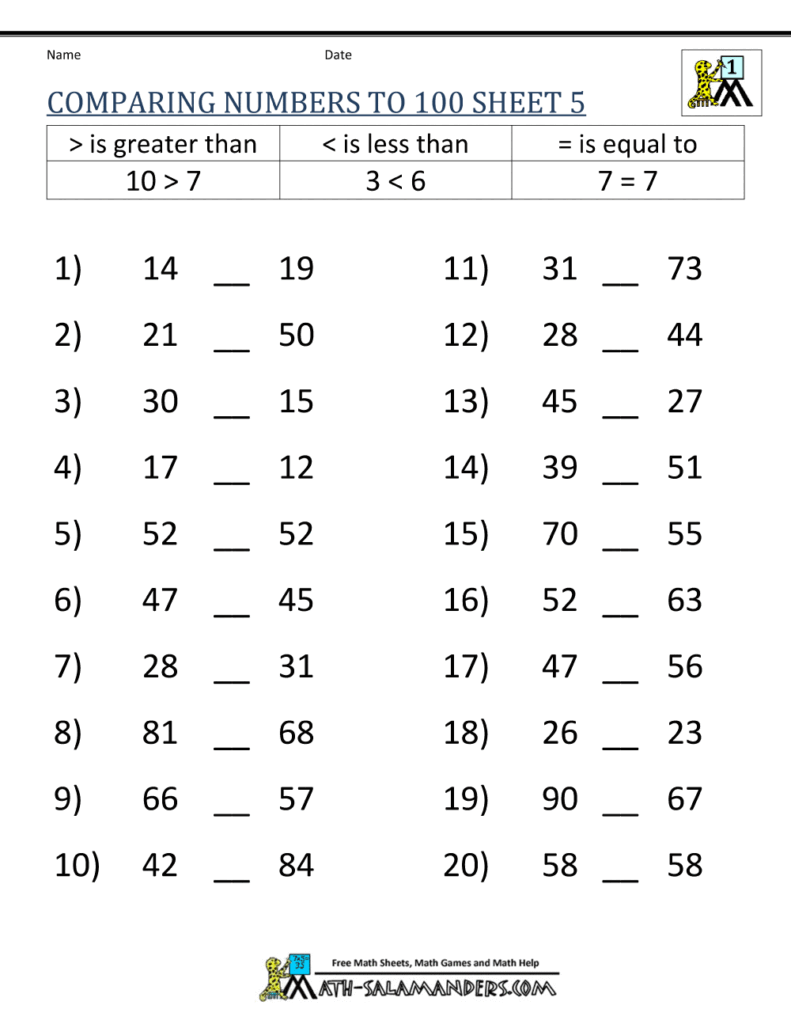
What young learners need
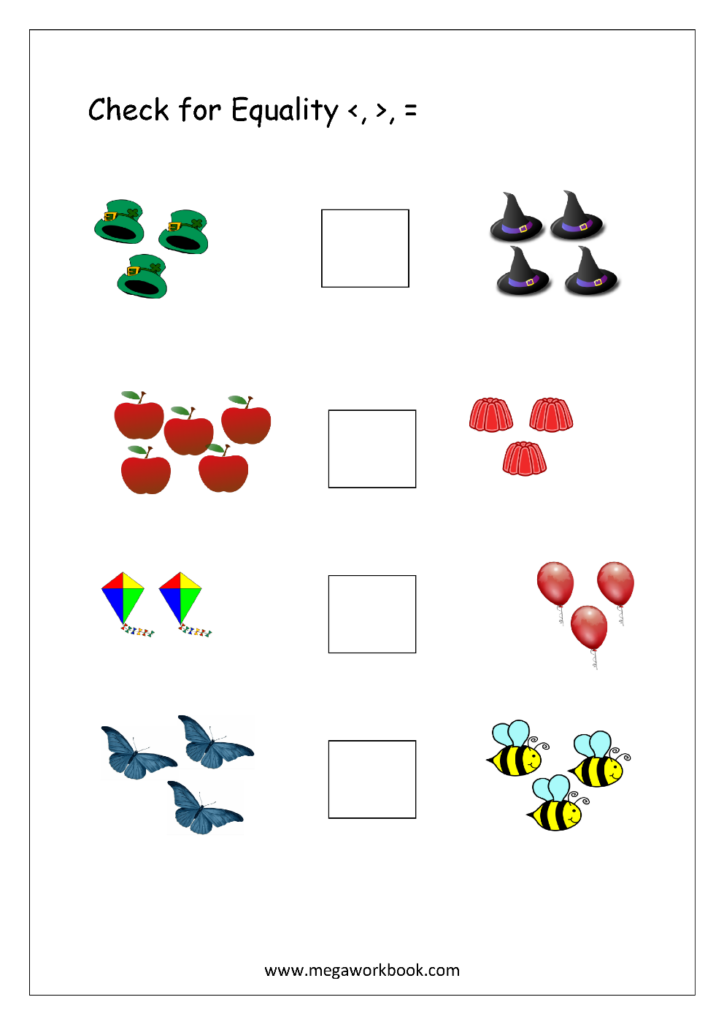
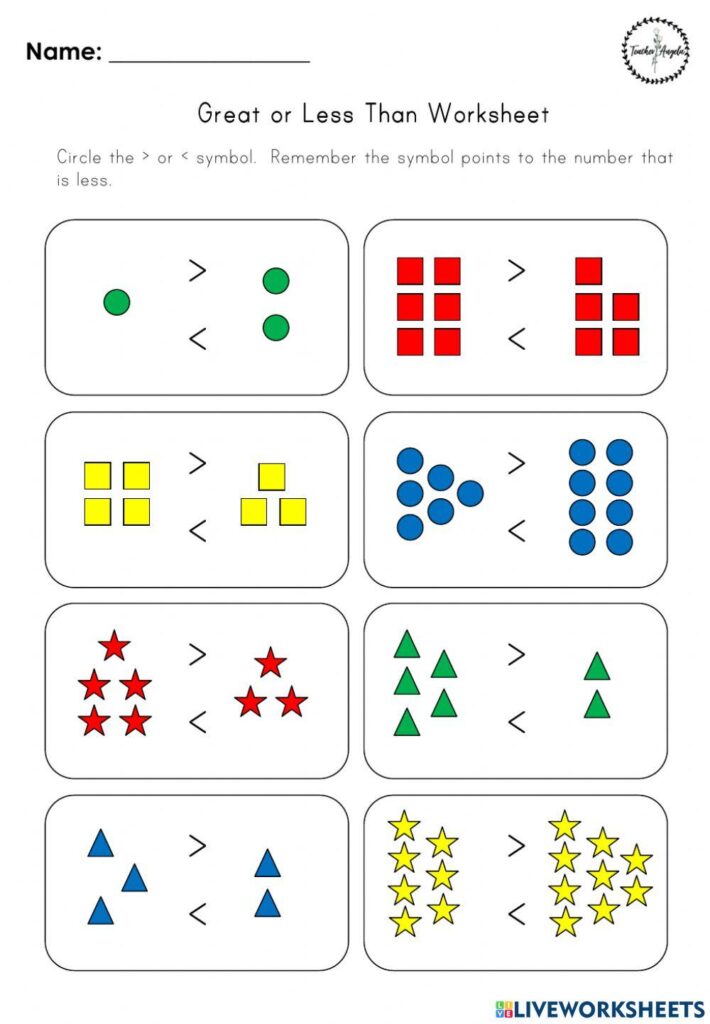
Kindergarten-suitable worksheets usually include counting pictures, groups of objects, and pairs of numbers within a small range. Children can count stars, blocks, or animals, then decide which set has more, which has fewer, or whether the amounts match. The practice should be guided and repetitive so children see the pattern many times. This kind of work supports early number sense without adding advanced steps or extra math topics.
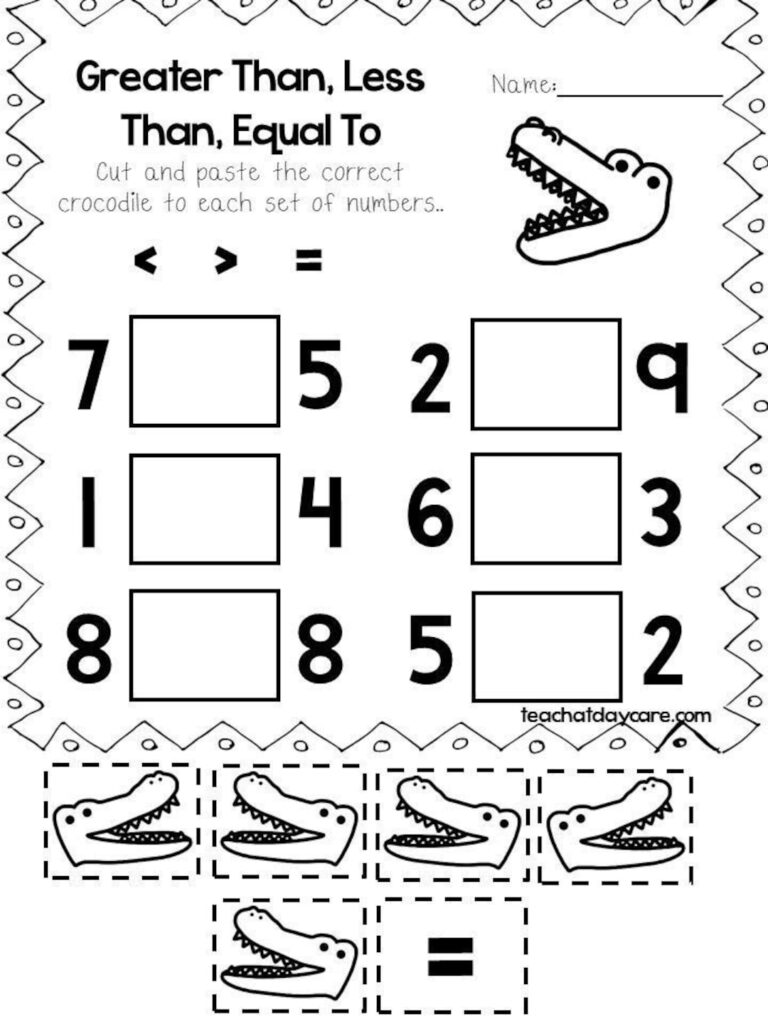
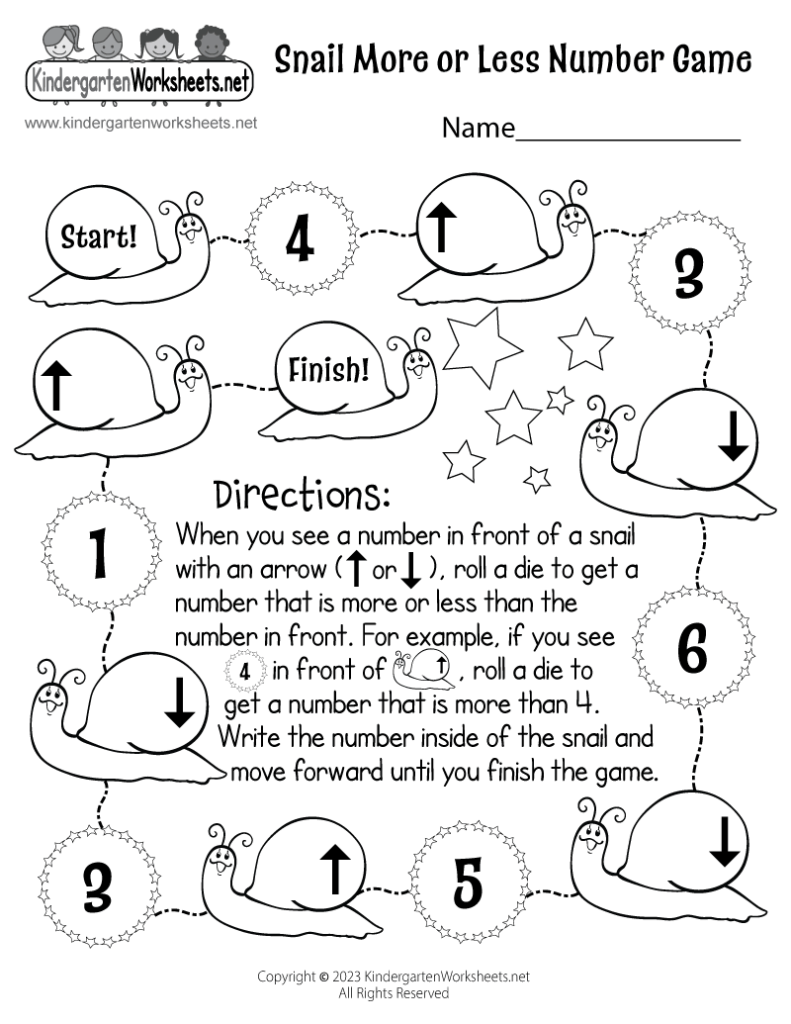
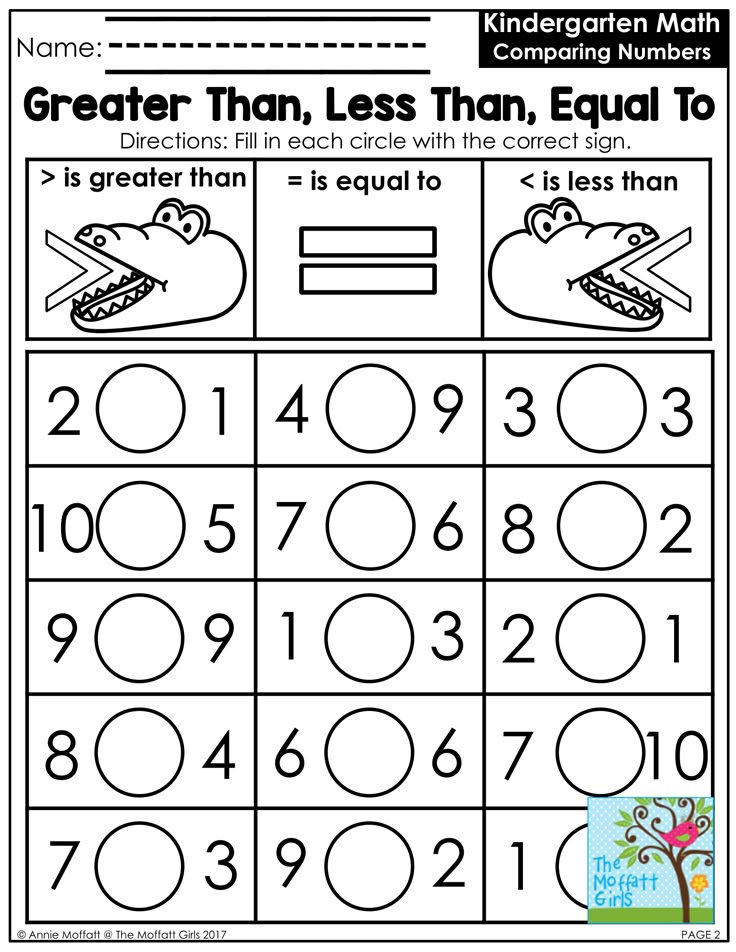
The most effective worksheets for this age group use large visuals, plenty of white space, and minimal text. Directions should be short, with the task shown clearly through examples or pictures. Pages that ask children to circle, color, draw a line, or choose a symbol are usually easier to use than dense pages with many problems at once. For best results, look for worksheets that repeat the same comparison skill in several simple ways. That makes practice manageable and helps the lesson stick.



