
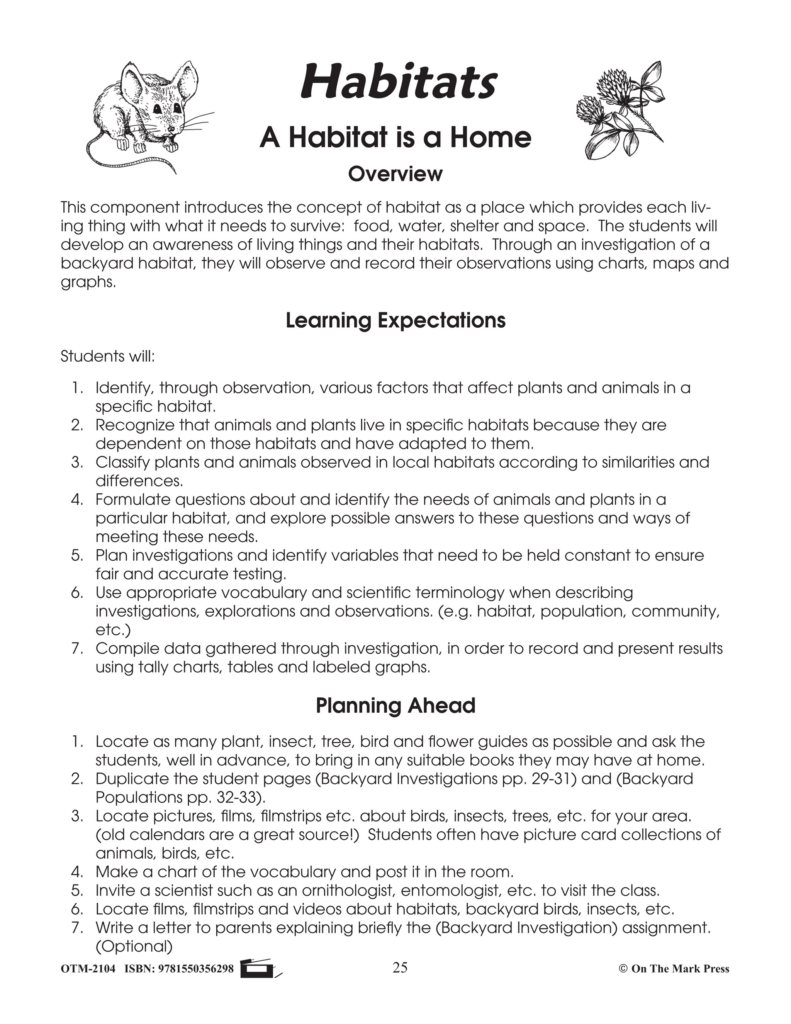
Habitat observation worksheets help students look closely at a place, notice what is living and nonliving there, and record evidence in a simple, organized way. The best worksheets turn observation into a clear task: spot features, write or draw what is seen, and describe patterns using age-appropriate language. That makes them useful for short outdoor walks, classroom nature studies, or a quick science center activity.
Purpose and use
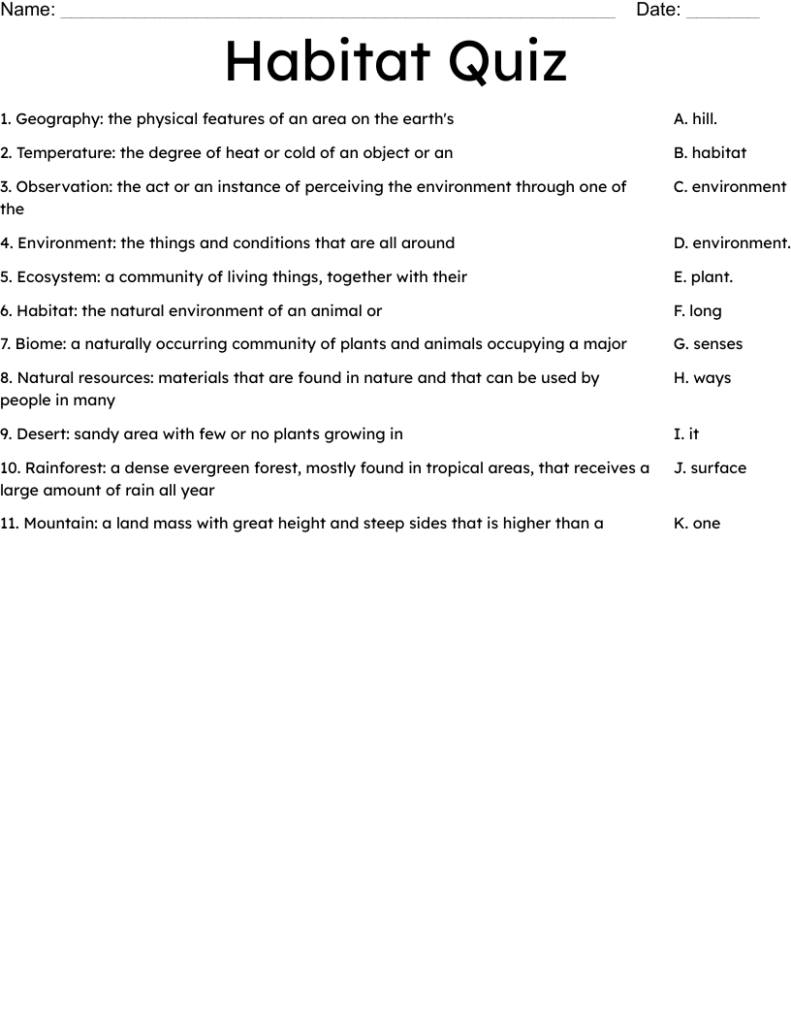
A useful worksheet should guide observation without doing the thinking for the student. Look for prompts that ask what animals, plants, water, soil, rocks, light, or weather conditions are present, plus space to note how they interact. A strong format may include boxes for “I see,” “I hear,” or “I notice,” because those cues help students gather evidence from the habitat itself. This keeps the focus on careful recording rather than guessing or memorizing facts.
Key worksheet features
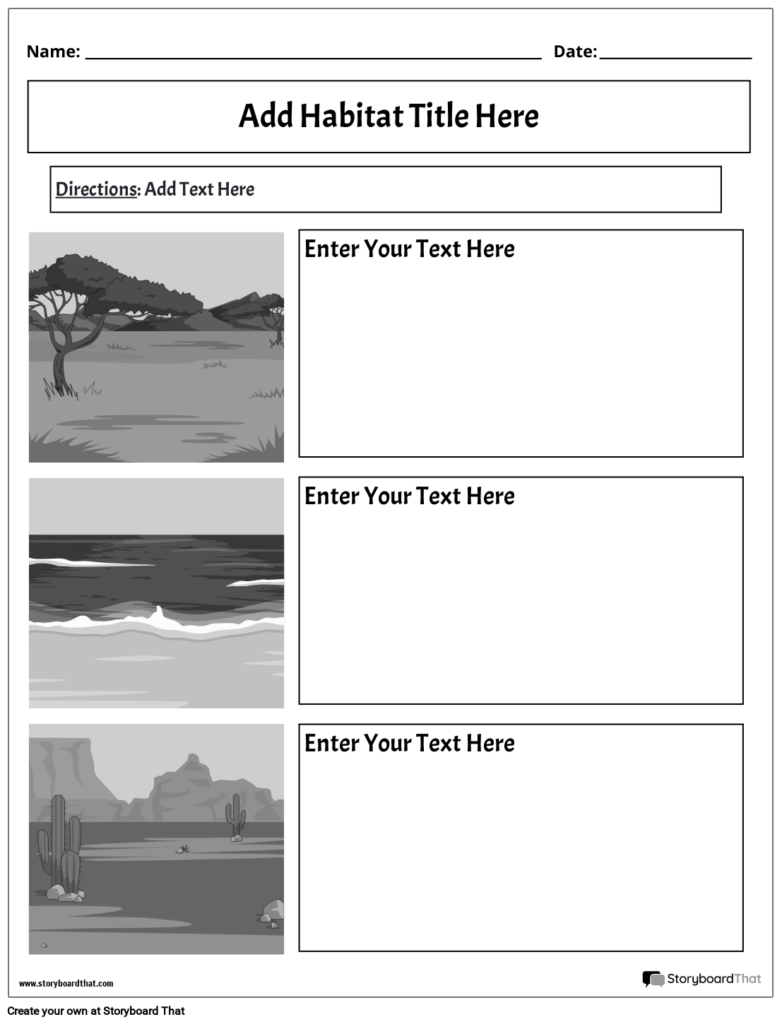
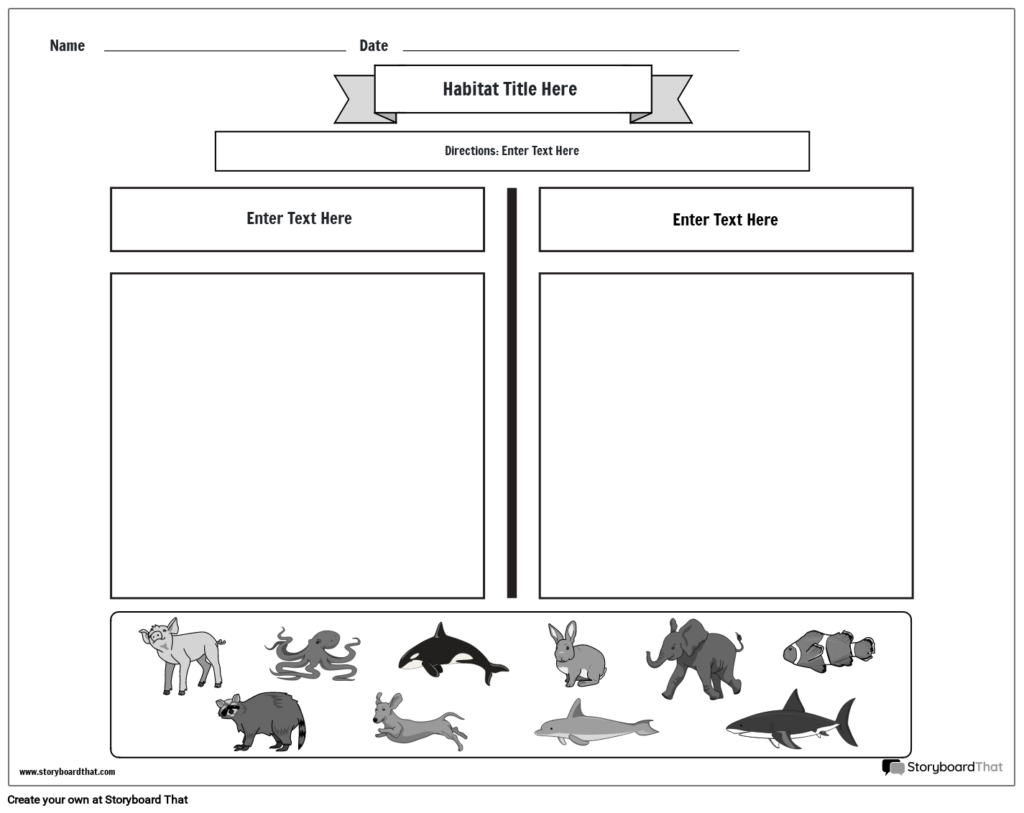
Good habitat observation worksheets usually include a place for sketches, labels, and short written responses. Simple graphic organizers work well because they help students sort observations into living and nonliving categories, compare two areas, or describe what makes the habitat different from another one. Habitat-specific questions matter too: a pond worksheet might ask about water edges, while a woodland worksheet might ask about shade and ground cover. The goal is to make the page easy to follow while still prompting detailed noticing.
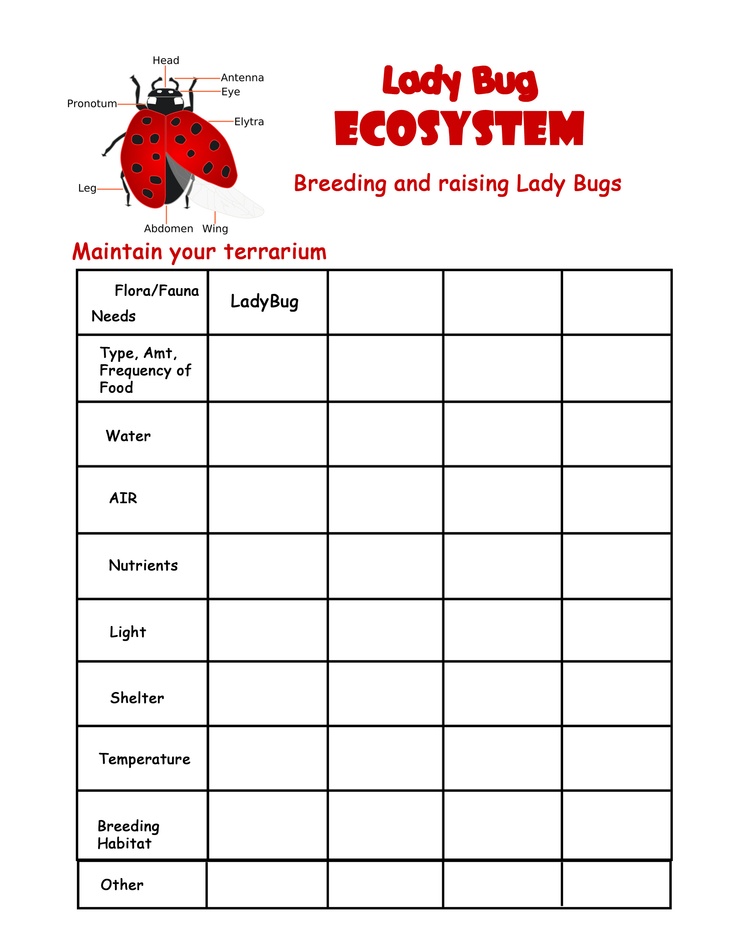
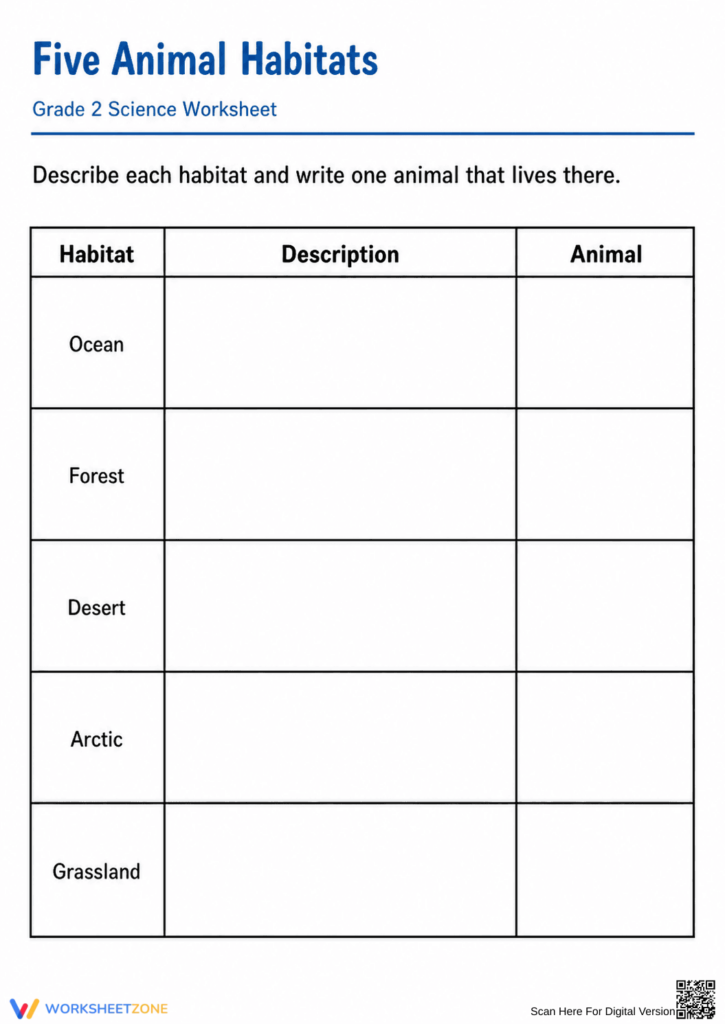
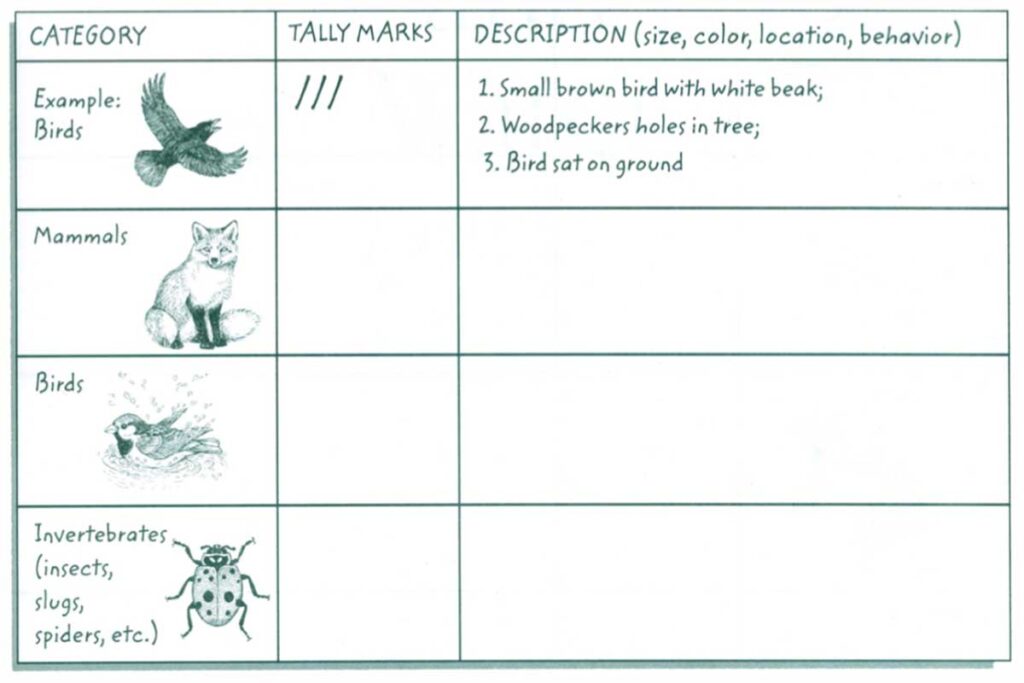
Choose the worksheet level to fit both the learners and the habitat. Younger students usually need larger writing spaces, picture cues, and one-step prompts; older students can handle more specific questions, comparison boxes, or evidence statements. The habitat itself should also shape the worksheet. A beach, garden, forest, or schoolyard each calls for different prompts, because students should observe what is actually present rather than try to force every habitat into the same form. The best choice is the one that supports clear, focused observation without adding unnecessary complexity.



