
Making inferences worksheets help students practice figuring out what a text or picture suggests without saying it directly. In simple terms, an inference is a smart guess based on clues and what the reader already knows. These worksheets are useful because they keep the skill focused and manageable, giving children short tasks that build confidence with evidence-based thinking.
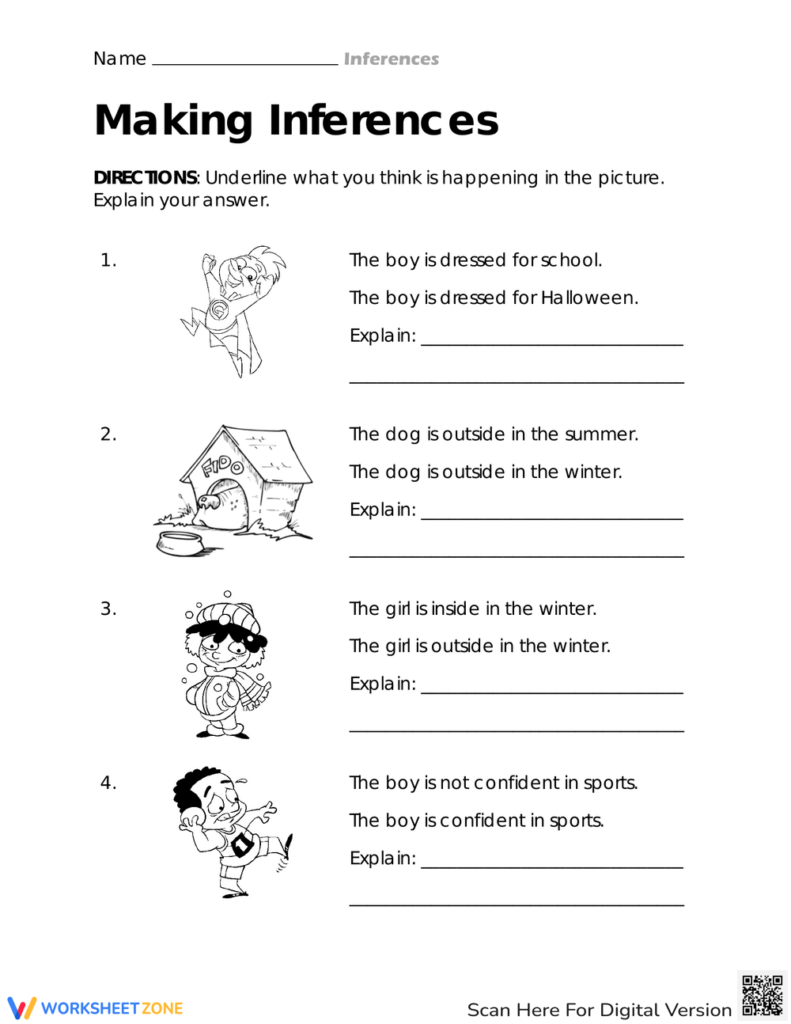
What Inference Practice Looks Like
The best making inferences worksheets usually start with short passages or clear images so students can focus on clues instead of long reading. Look for questions that ask what a character might feel, why something happened, or what may come next. Strong worksheets also include text evidence, so students point to the words or details that support their answer. This keeps the practice grounded in the page, not in random guessing.
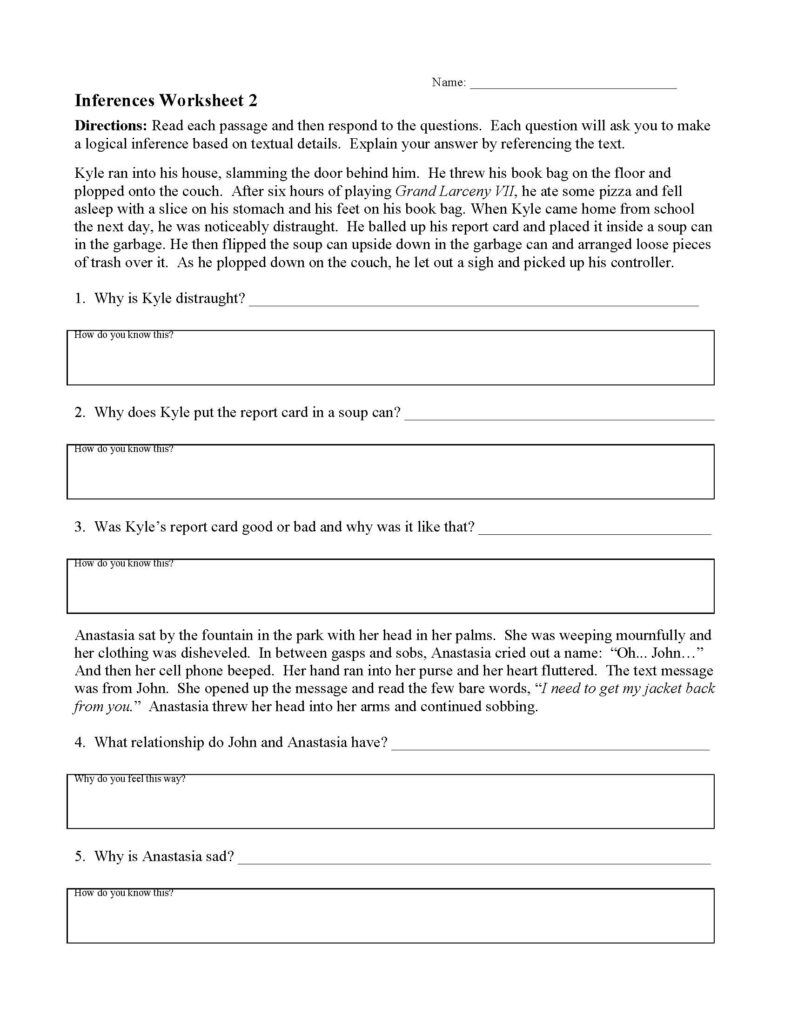
Choosing the Right Level
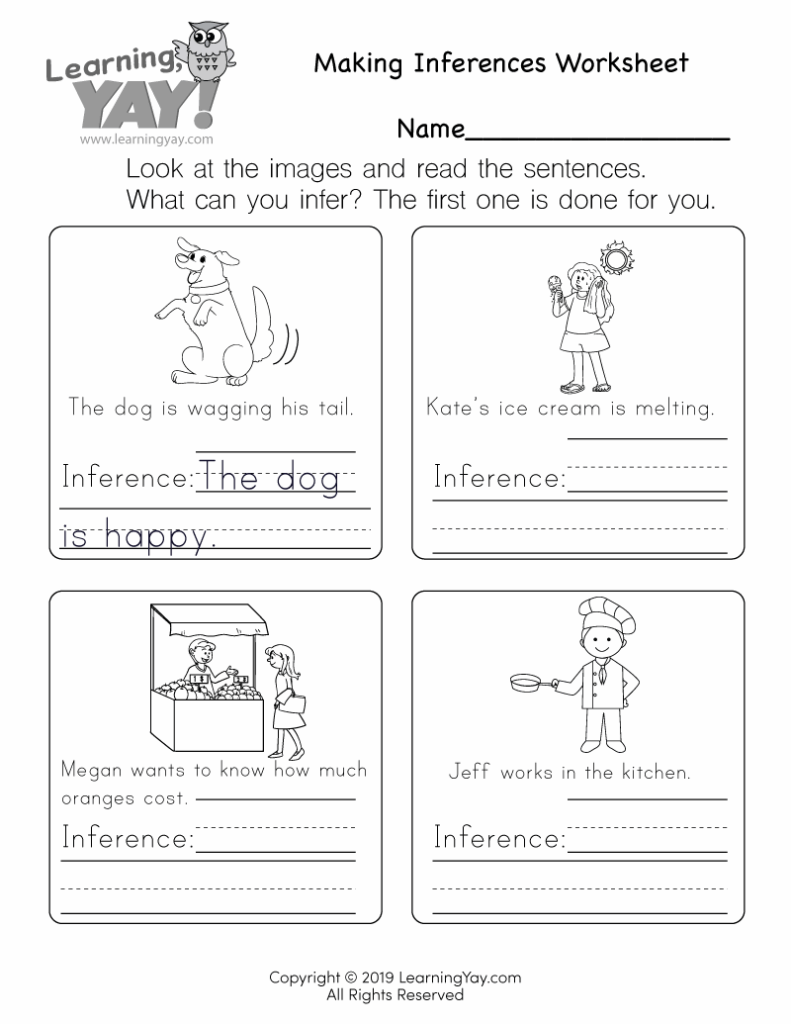
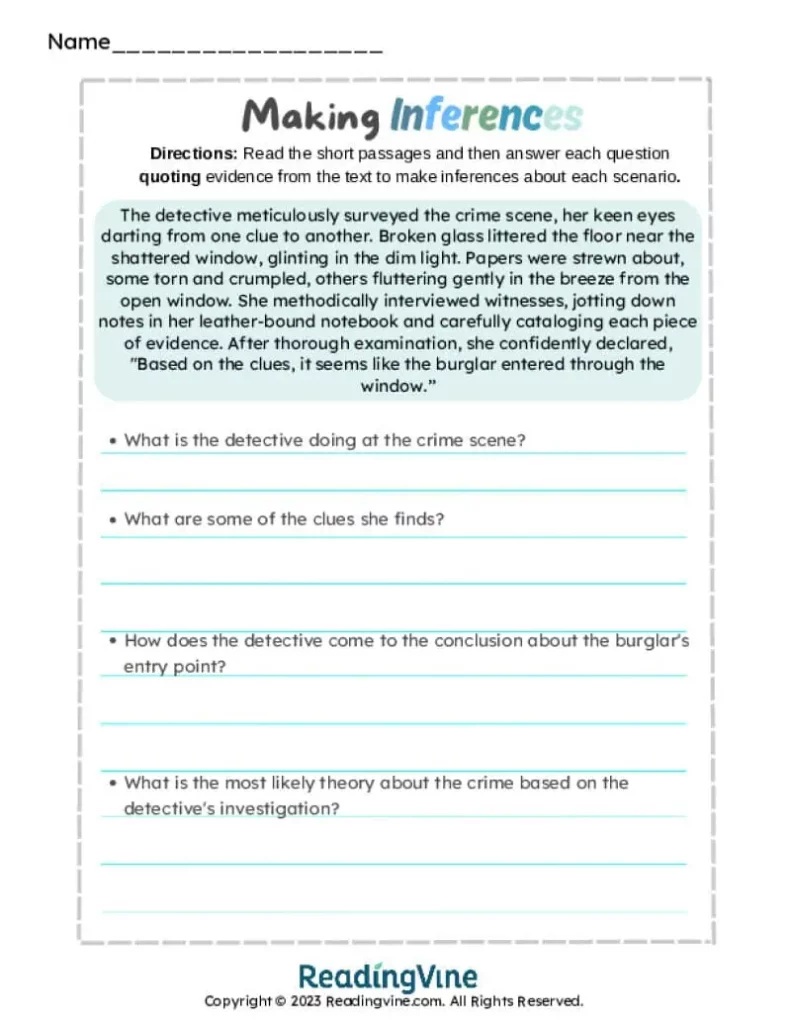
Match the worksheet to the learner’s grade level or reading ability. Younger students often do better with picture clues, simple sentences, and two- or three-choice responses. Older or more confident readers can handle longer passages and open-ended answers that require stronger evidence. A good worksheet should feel challenging but not overwhelming. If a child cannot read the passage smoothly, the inference task may be too advanced for independent work.
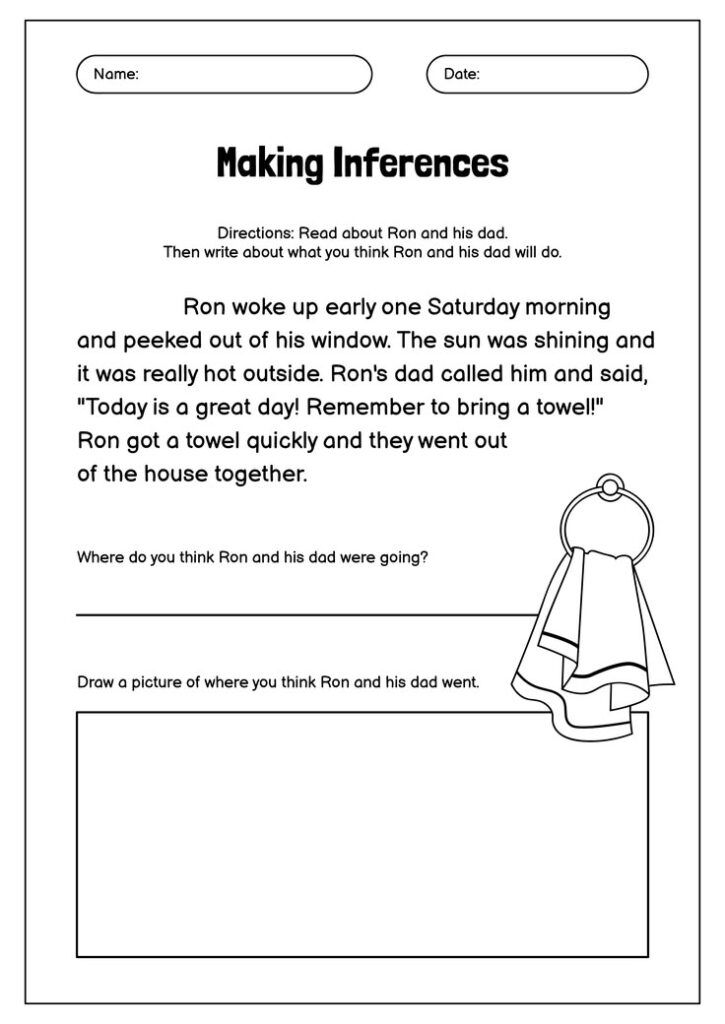
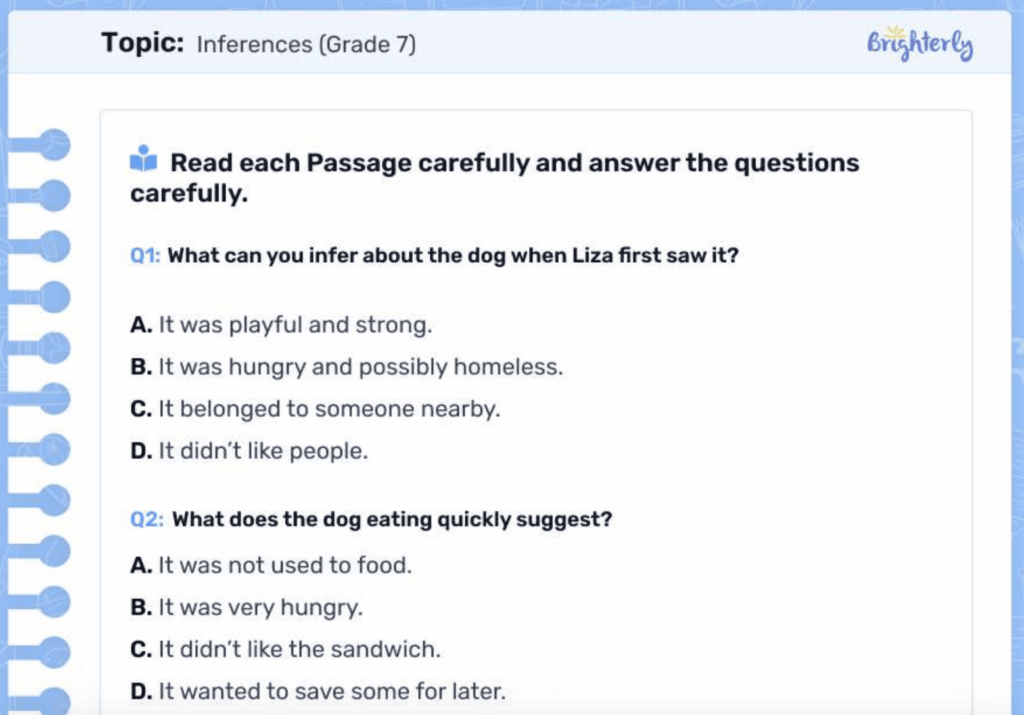
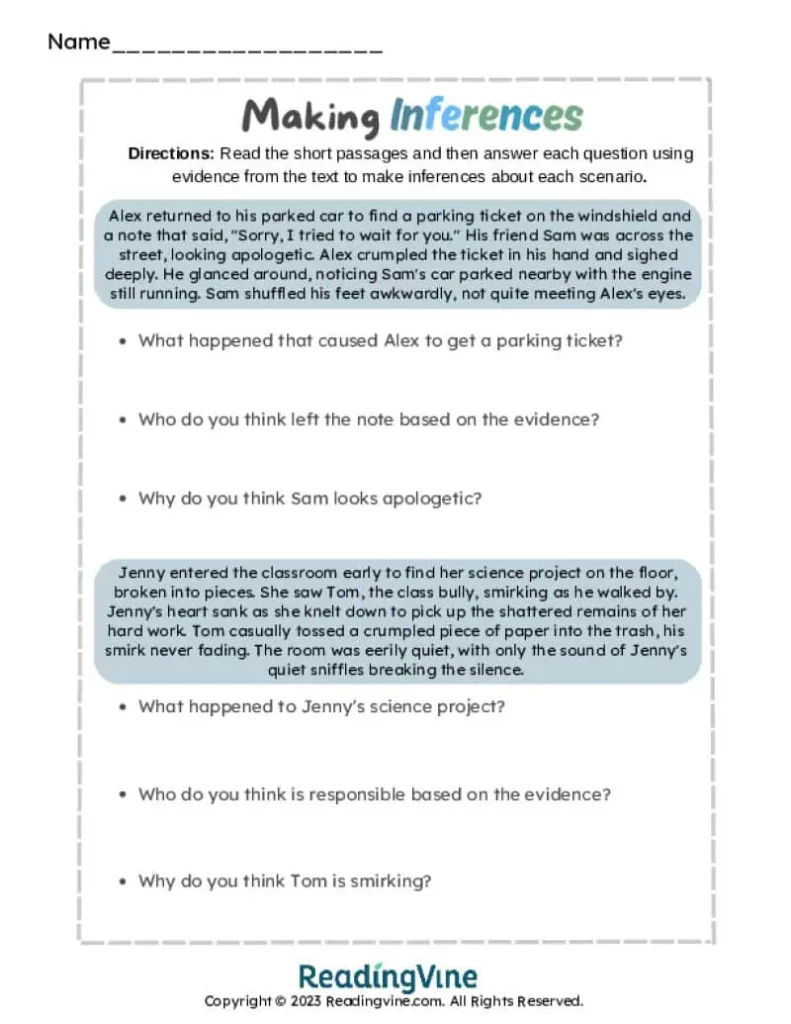
Making inferences worksheets work well for guided practice, independent seatwork, homework, or a quick check for understanding. In class, teachers can model how to find clues before students finish on their own. At home, parents and tutors can use one page at a time to practice a single skill without extra setup. Answer keys are especially helpful because they make review faster and let adults check whether students explained their thinking clearly. For the best results, choose worksheets that are short, clear, and matched to the reader’s level.



