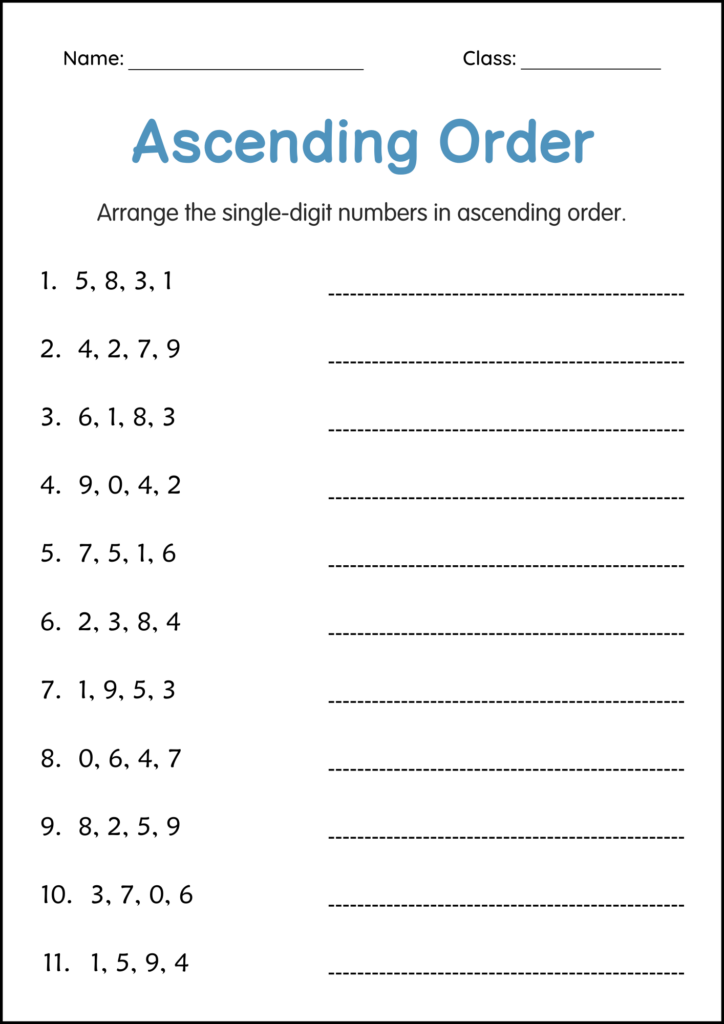
Number order worksheets help learners practice placing numbers in ascending or descending sequence. They are useful when you want focused work on a single skill: deciding what comes next, what comes before, or how a short list should be arranged. A good set matches the learner’s current range and keeps the task clear enough to complete without extra math demands.
Core ordering skills
The most basic number order worksheets use short sequences with a small number range, such as 1–10 or 1–20, so learners can concentrate on the order itself. More advanced versions may stretch to larger ranges or ask students to arrange three to five numbers in the correct sequence. The best worksheets make the direction obvious: ascending order moves from smallest to largest, while descending order moves from largest to smallest.
Look for clear instructions, enough spacing between items, and problems that stay within one format at a time. That consistency helps learners build confidence before moving to mixed practice.
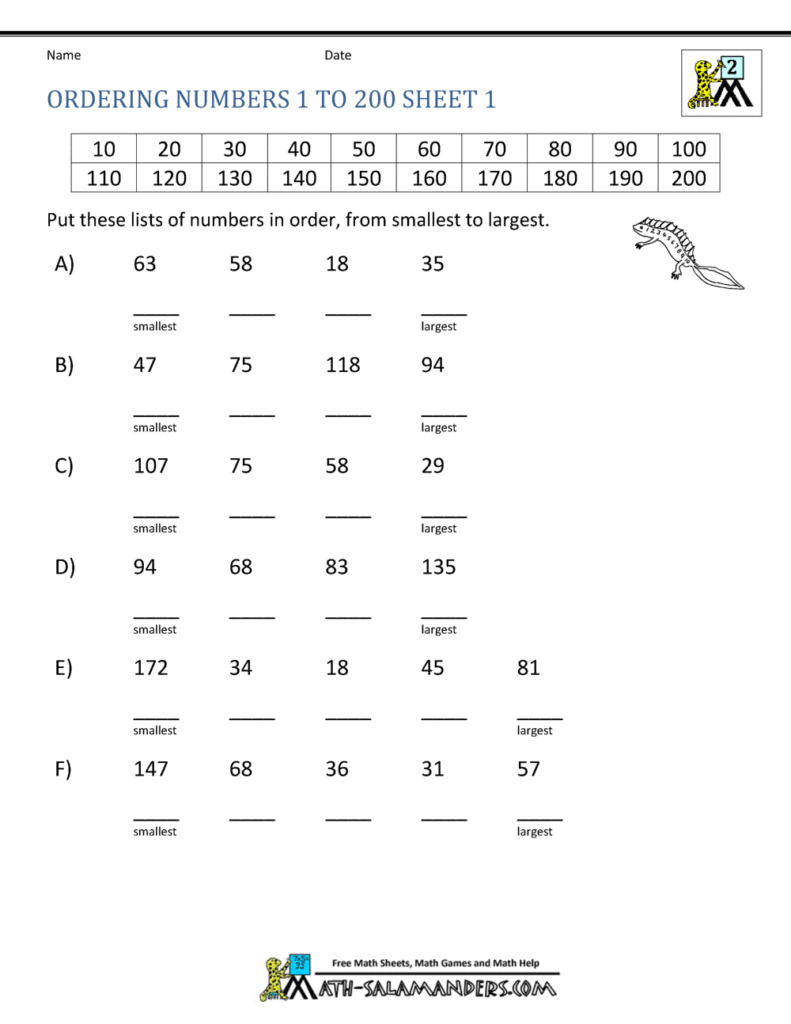
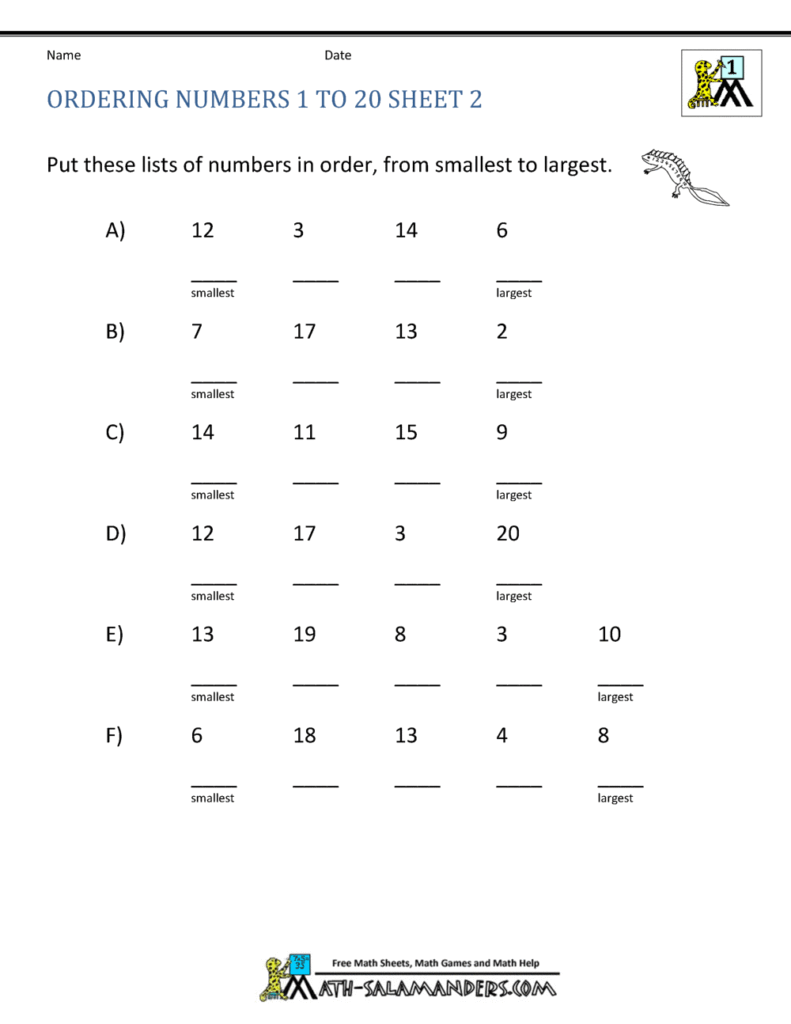
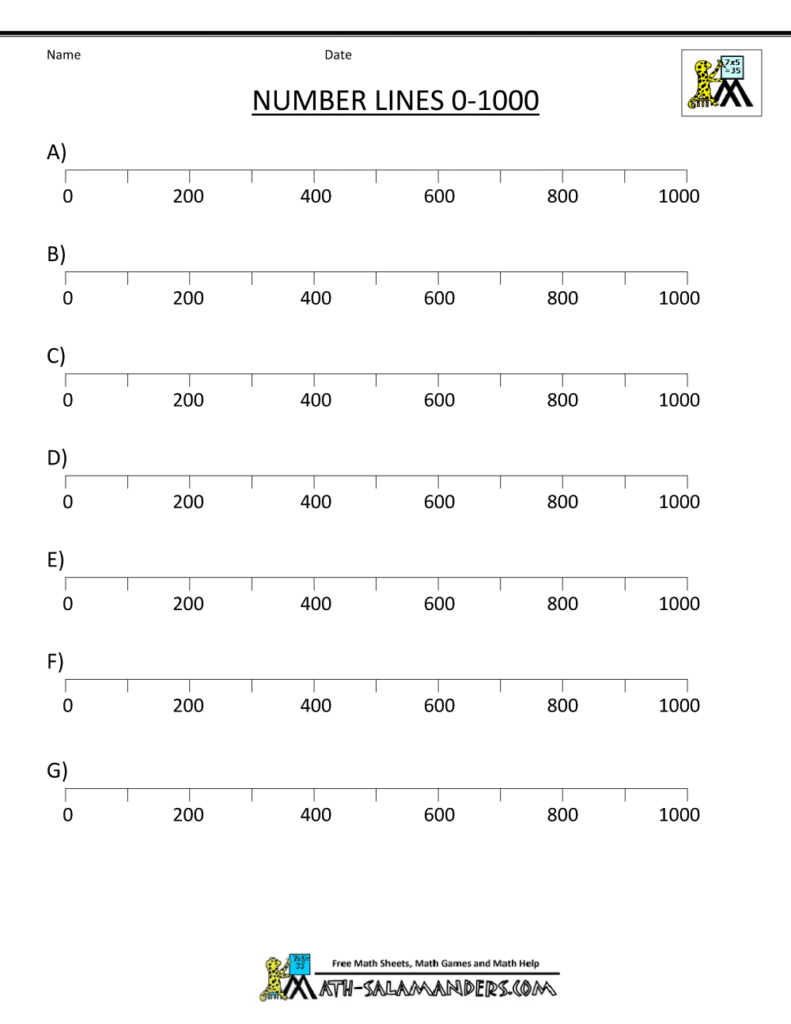
Useful variations often include missing-number sequences, where one or more numbers are left out and the learner fills in the gap. These are especially helpful because they reinforce order without turning the page into a counting exercise. Some worksheets also present simple number ranges in boxes, number lines, or vertical lists, which can make the sequence easier to follow. Visual support matters for younger learners: arrows, labeled starts, or lightly printed guides can reduce confusion.
Answer format is another key feature. Some sheets ask learners to write missing numbers, circle the correct order, or cut and paste items into place. The best choice depends on whether the learner needs tracing, writing, or sorting practice.
Choosing for the learner
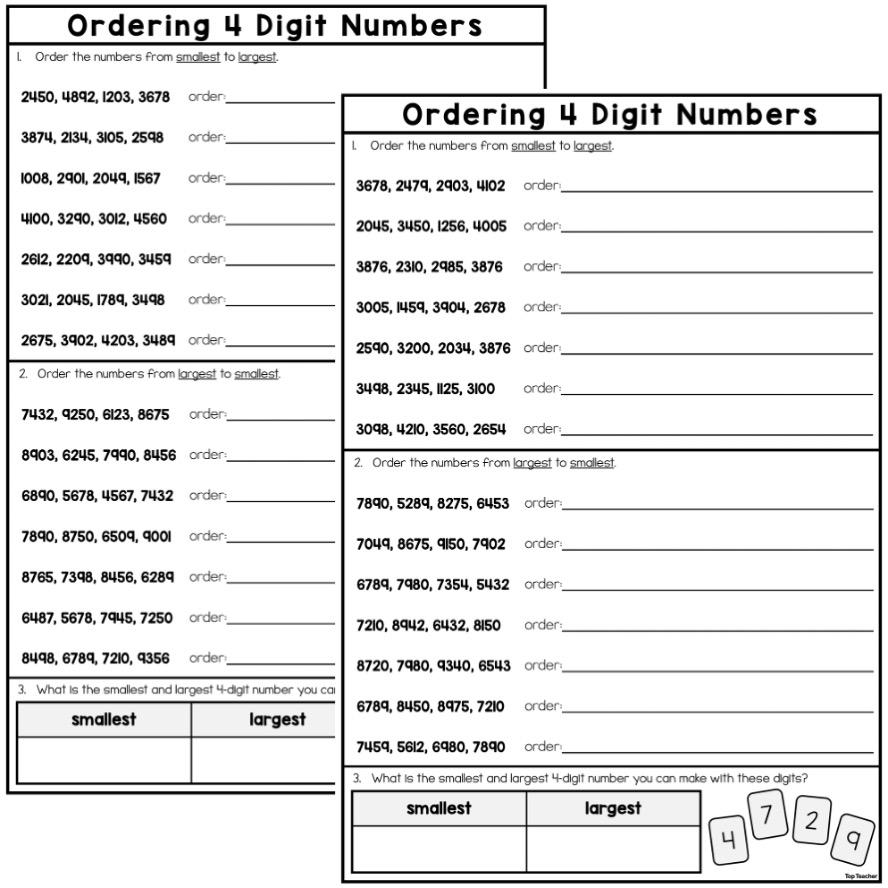
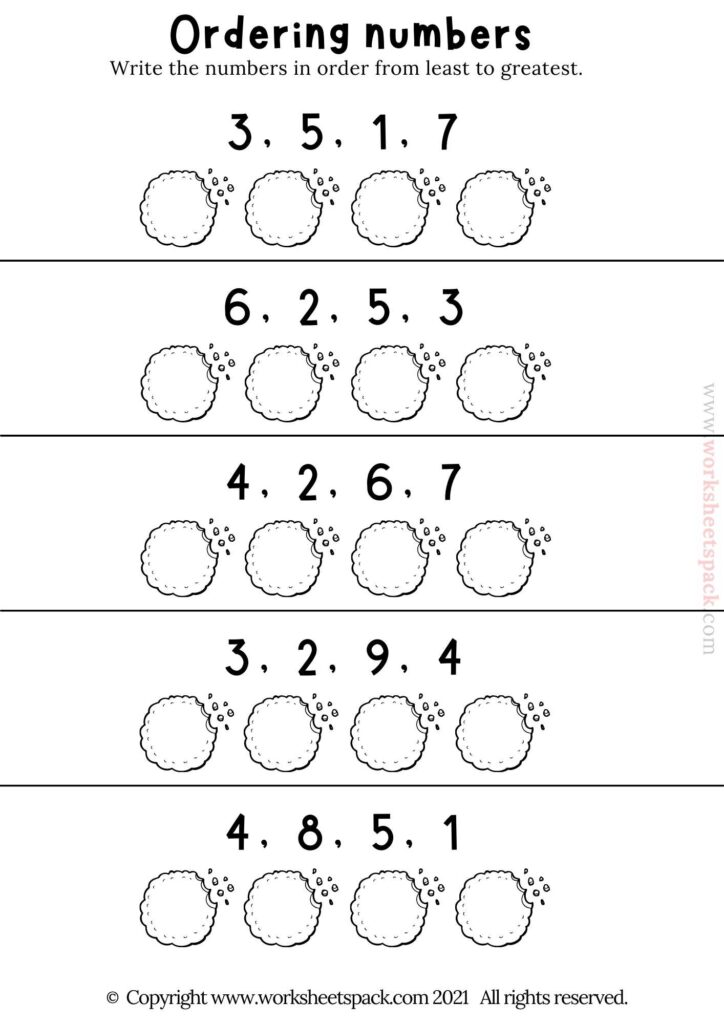
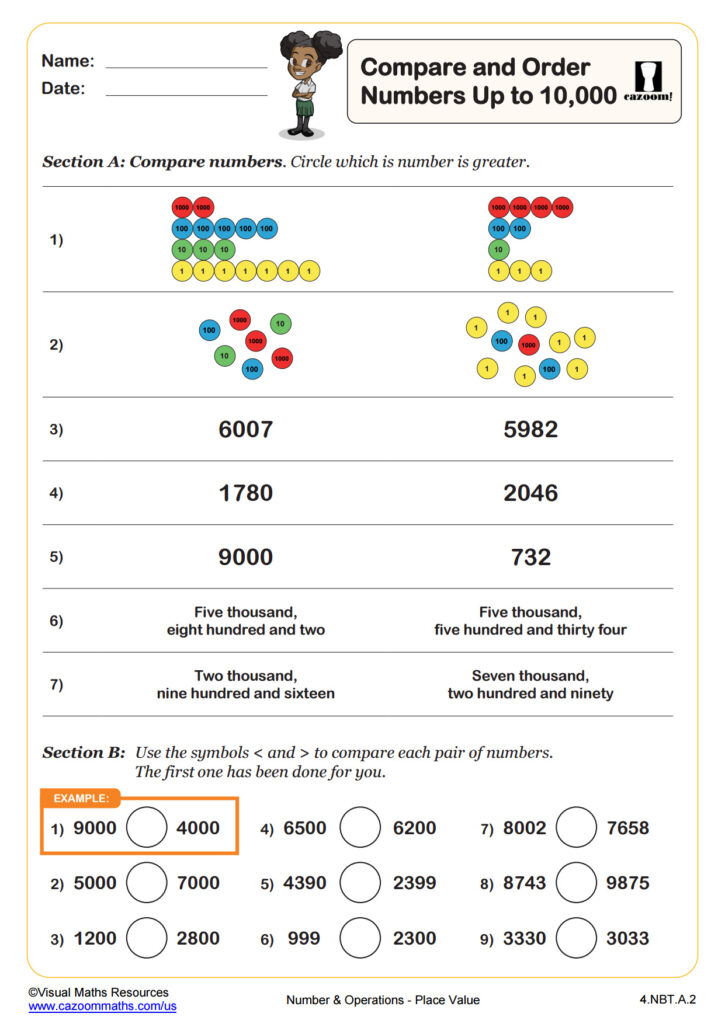
A worksheet is most suitable when the number range, layout, and response style match the learner’s readiness. Beginners usually benefit from small ranges, large print, and one clear ordering direction. Learners who are more confident can handle longer sequences or mixed ascending and descending items. If handwriting is still developing, worksheets with circles, boxes, or multiple-choice responses may be easier than full written answers.
For learners who need visual structure, number lines or lightly guided formats can make the task more manageable. In practice, the best number order worksheets keep attention on sequencing only, so the learner can build fluency with placing numbers in the correct order before moving on to harder variations.