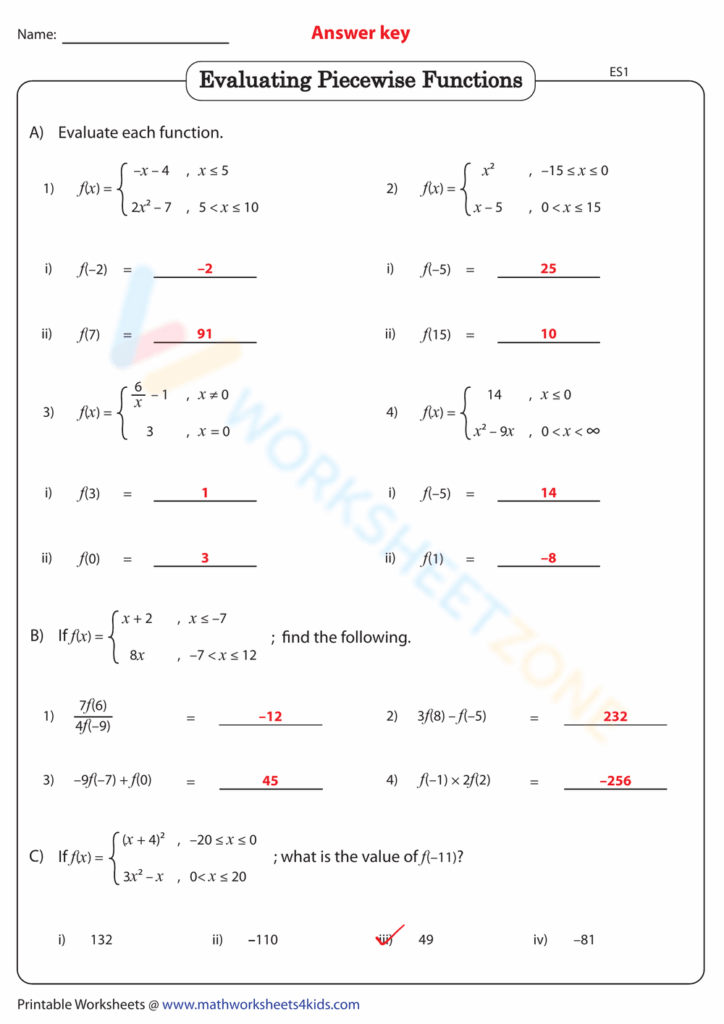
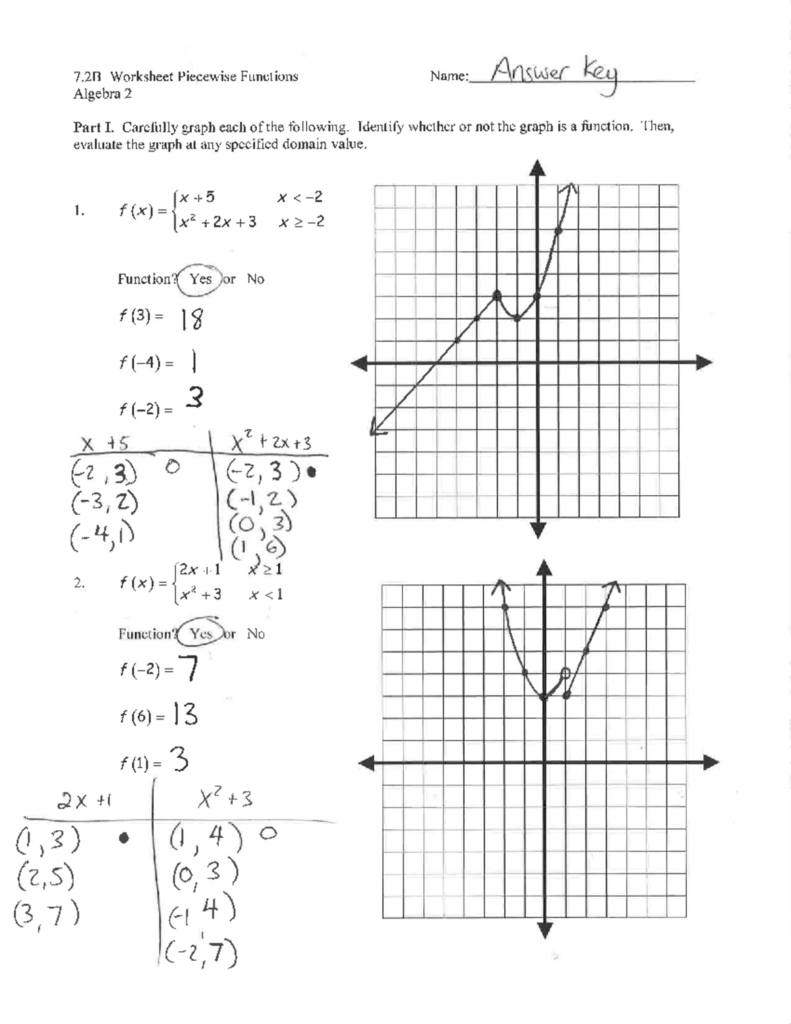
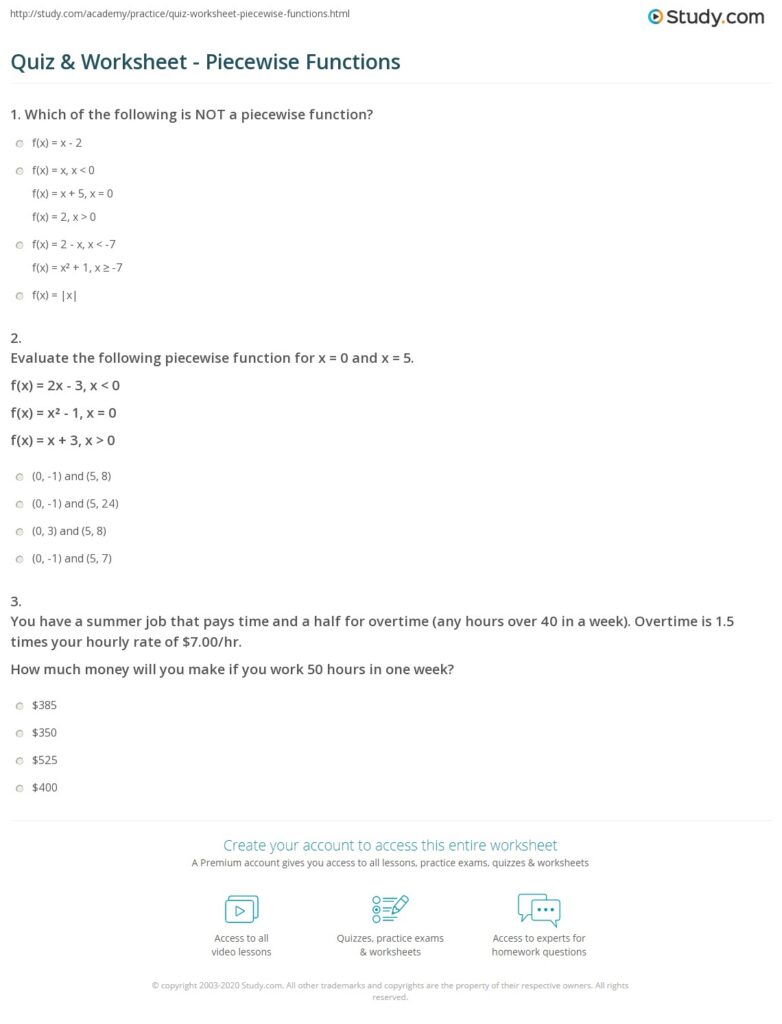
A piecewise function worksheet should help students practice how different rules apply to different x-values. The most useful versions focus on three core skills: evaluating the function at a given input, choosing the correct rule from the interval, and reading or sketching a simple graph. Clear interval notation and boundary-point handling matter because they show exactly where each expression starts and ends.
Evaluating Values
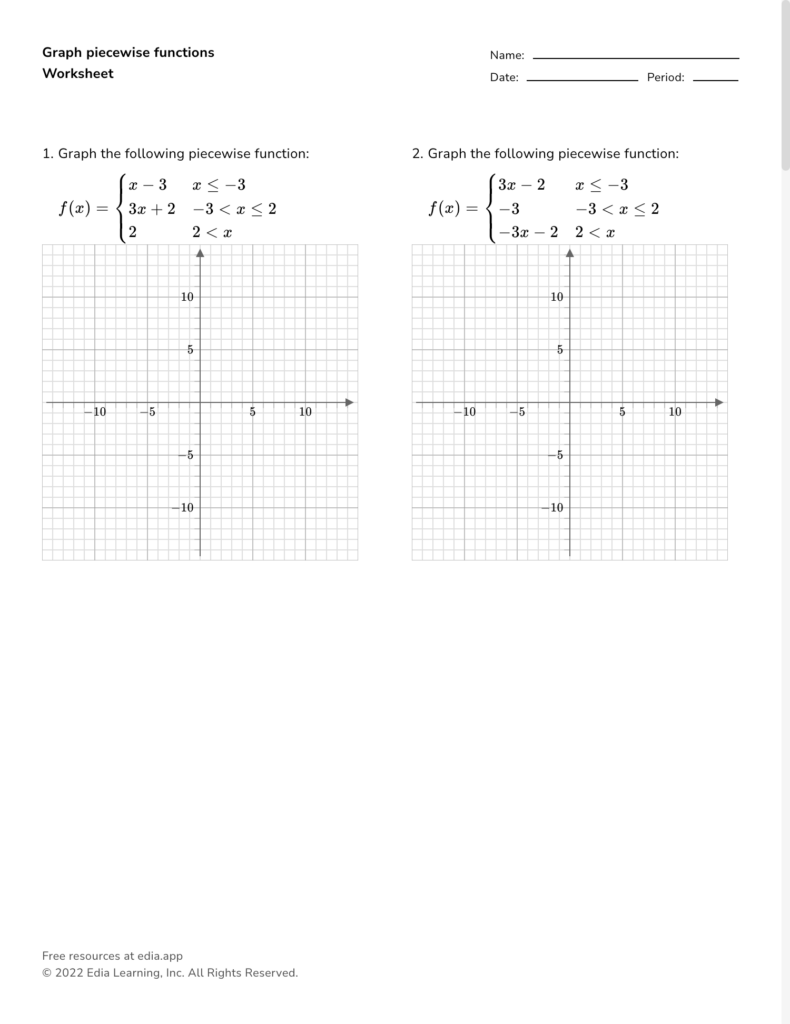
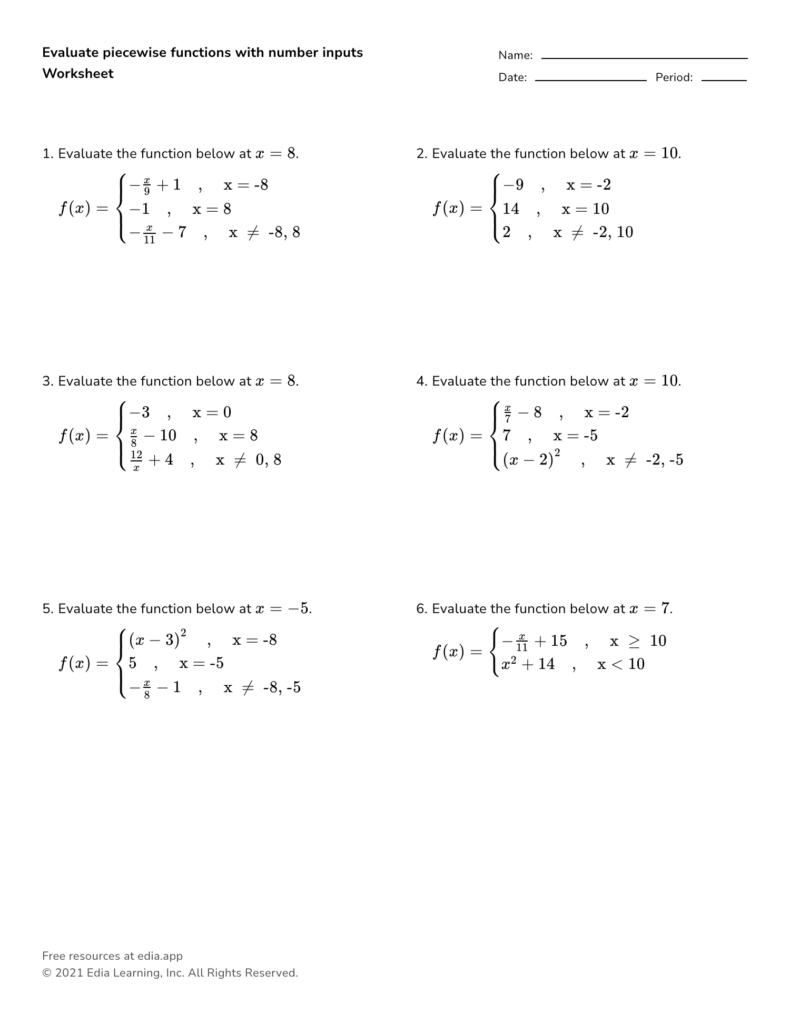
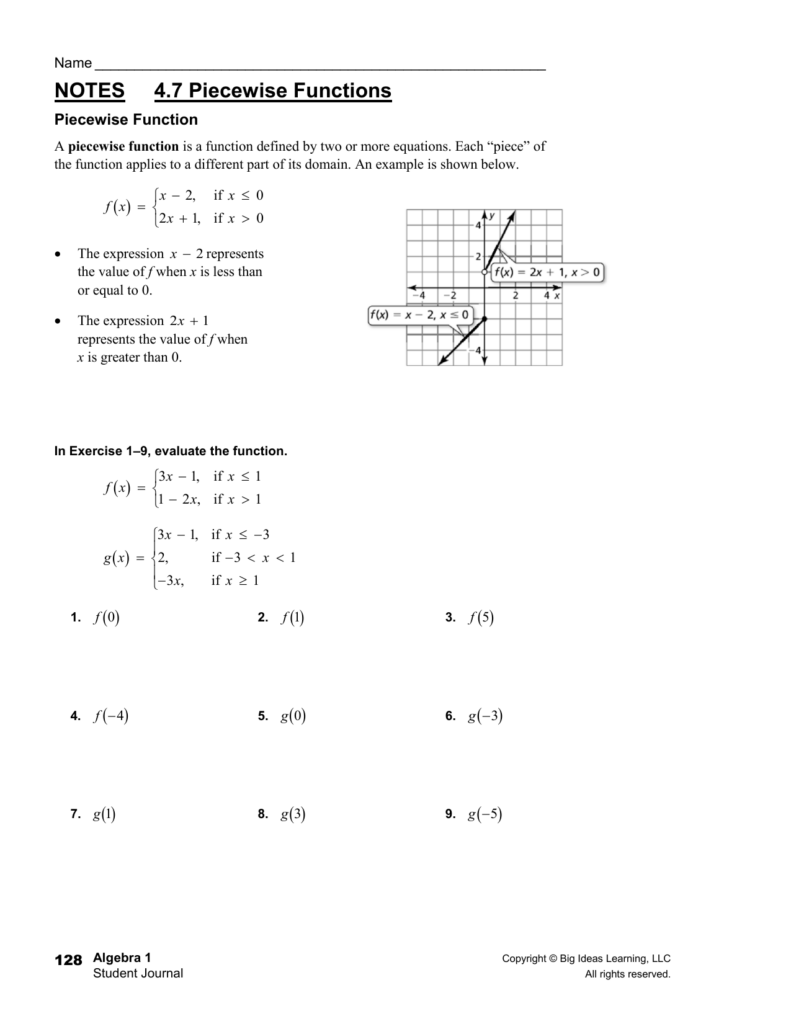
The first skill a strong piecewise function worksheet should cover is evaluating values. Students should plug in specific x-values and use the rule that matches the interval containing that input. Good practice includes numbers that fall inside each interval, along with a boundary value such as x = 0 or x = 2, so learners can see how the worksheet treats endpoints. A helpful item might ask for f(-3), f(0), and f(4) from a two- or three-part definition. This builds accuracy and prevents guessing based only on the look of the formula.
Intervals and Rules
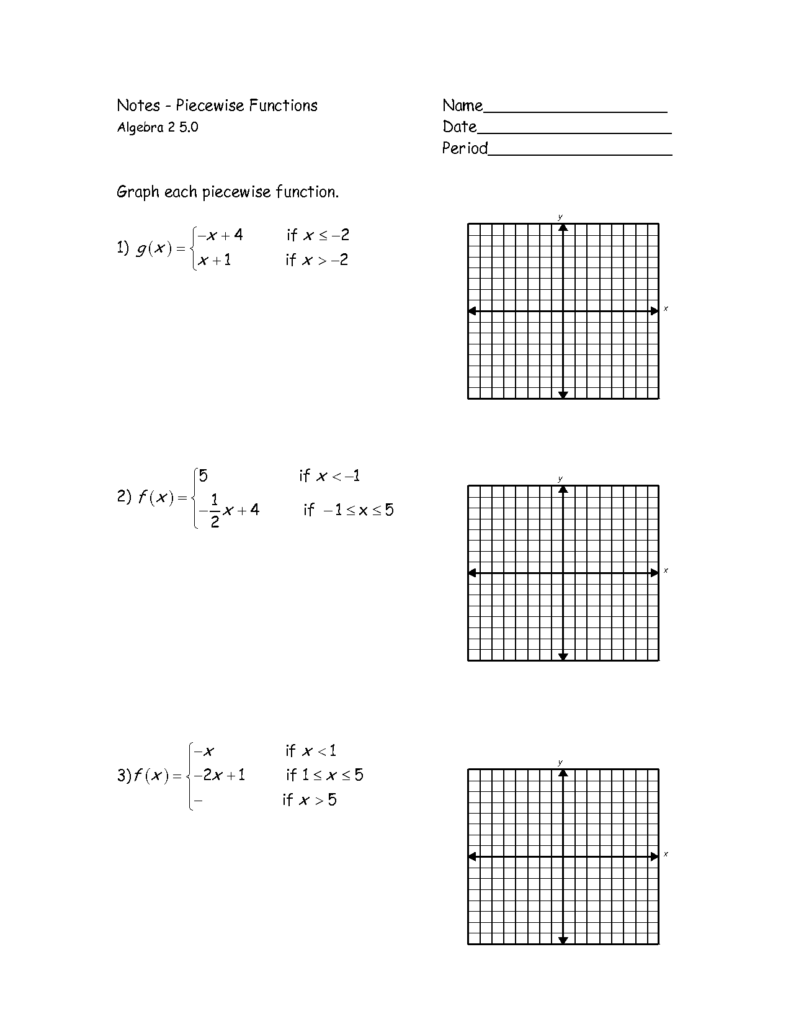
A useful worksheet should also ask students to identify which rule applies to a given x-value or to match each interval with its expression. This can be done with short response items, tables, or multiple choice prompts. The key is making the interval notation easy to read, especially when symbols like , and ≥ determine whether a boundary point is included. Students should learn to decide whether the point belongs to the left rule or the right rule before evaluating. That skill supports both algebraic work and graph interpretation.