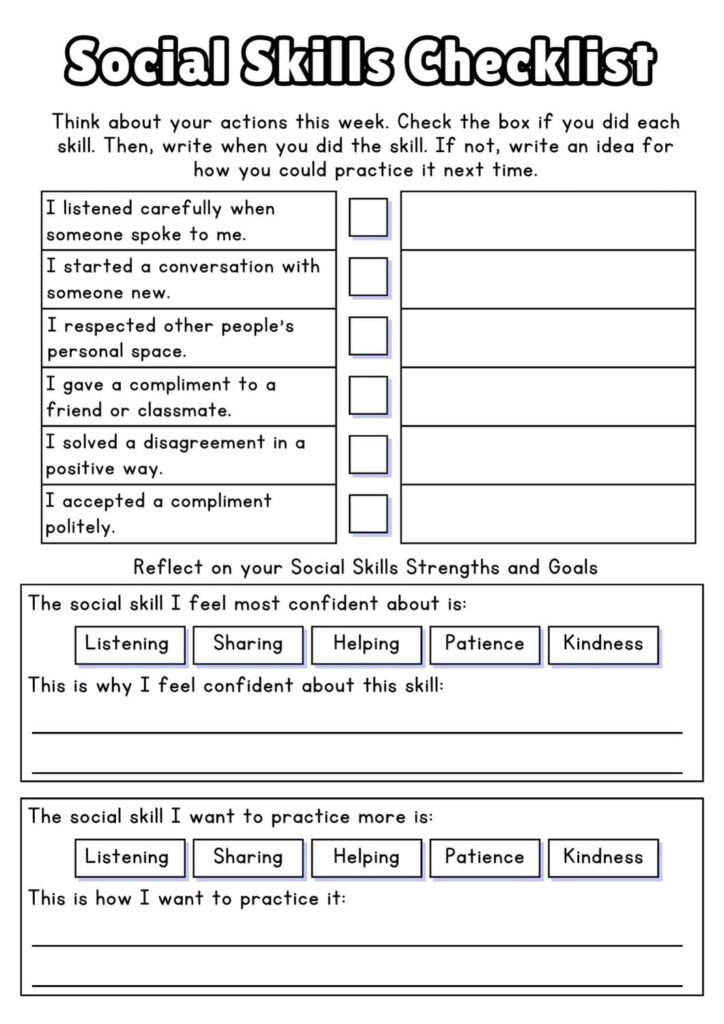
Preschool social skills worksheets can help young children practice simple, important interactions in a low-pressure way. The best pages focus on one skill at a time, use clear pictures, and keep directions short enough for early learners to follow. They work well when adults guide the activity, talk through the answers, and connect the worksheet to real-life practice.
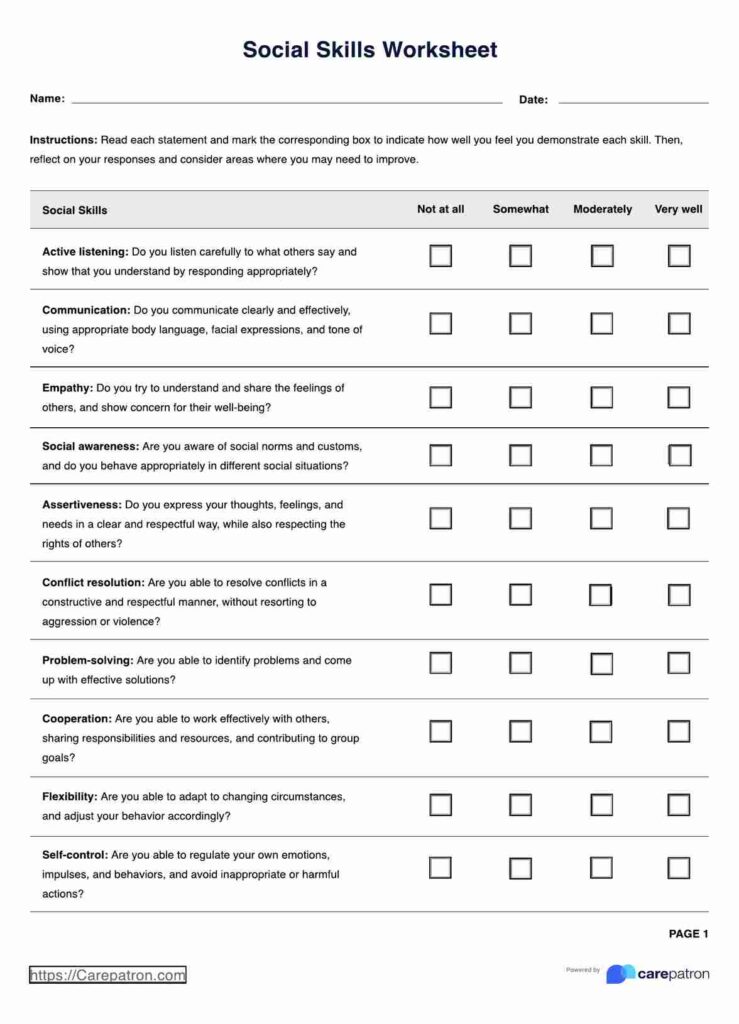
Skills to Target
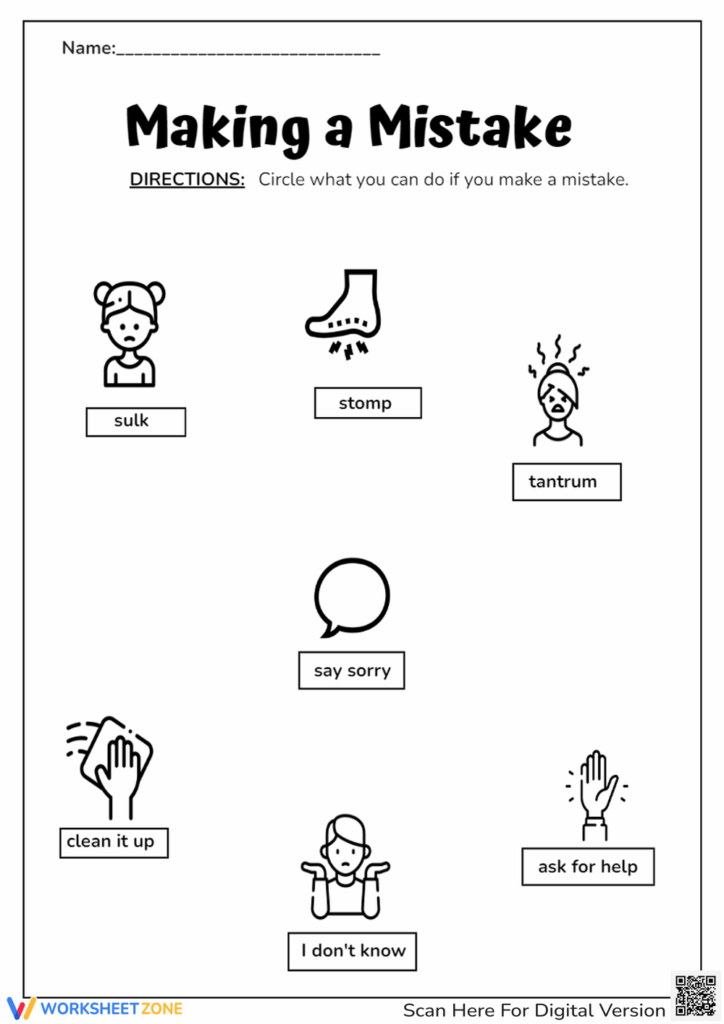
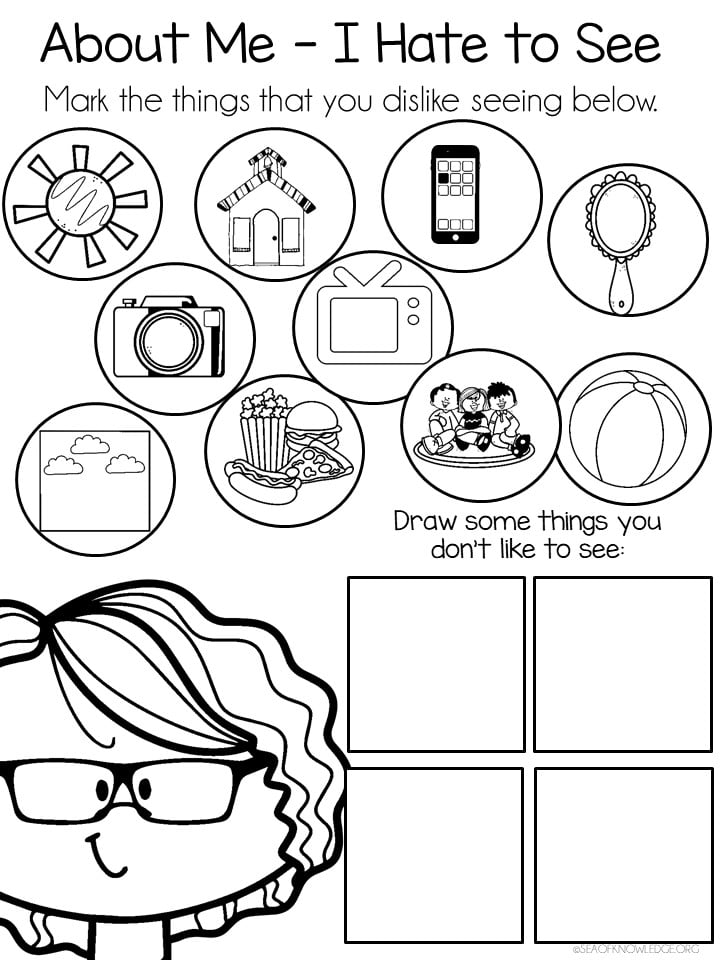
The most useful preschool worksheets usually center on a small set of core social skills: sharing, turn-taking, listening, greeting others, and identifying feelings. At this age, the goal is not mastery from paper alone, but awareness and vocabulary. A child might circle the face that looks sad, match children taking turns, or point to the right greeting for morning time. These tasks are simple, but they help preschoolers notice how social situations work and what words or actions fit them.
What Makes Them Preschool-Friendly
A developmentally appropriate worksheet for preschoolers should be visually clear and physically easy to manage. Look for large pictures, minimal text, one-step directions, and activities that can be completed quickly. Matching, circling, coloring, and simple cut-and-paste tasks usually fit this age well. Avoid crowded layouts or long written responses, since many preschoolers are still developing fine-motor and language skills. The page should feel inviting, not demanding, so the child can focus on the social idea rather than decoding the worksheet itself.
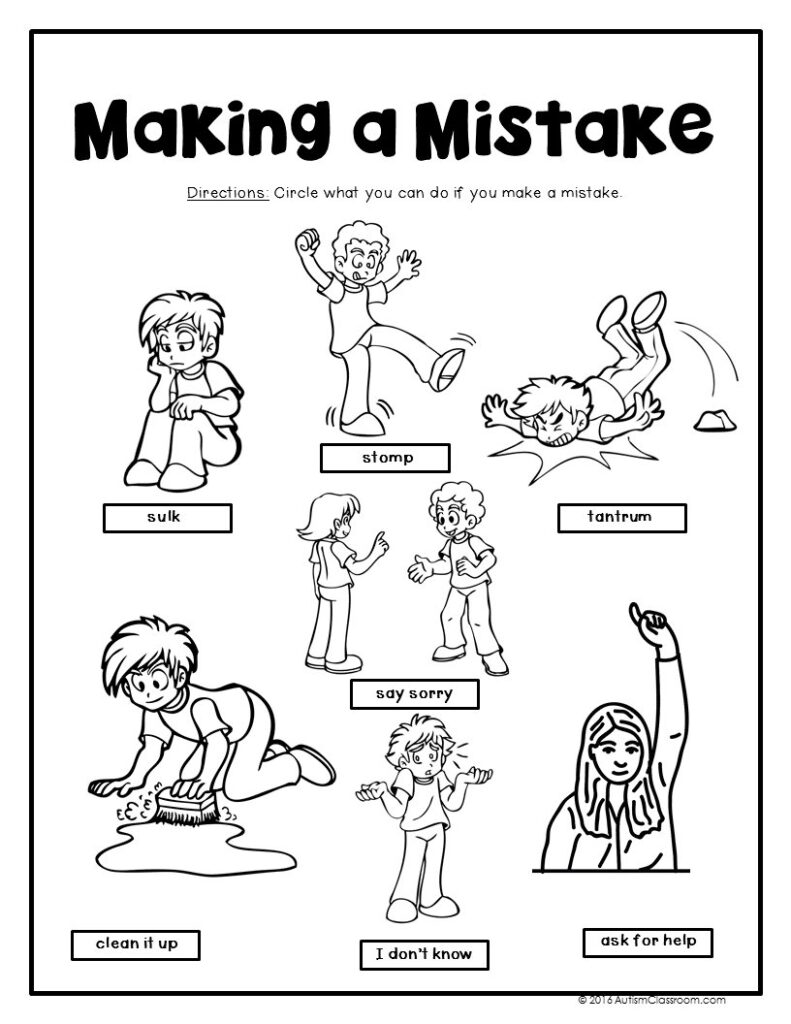
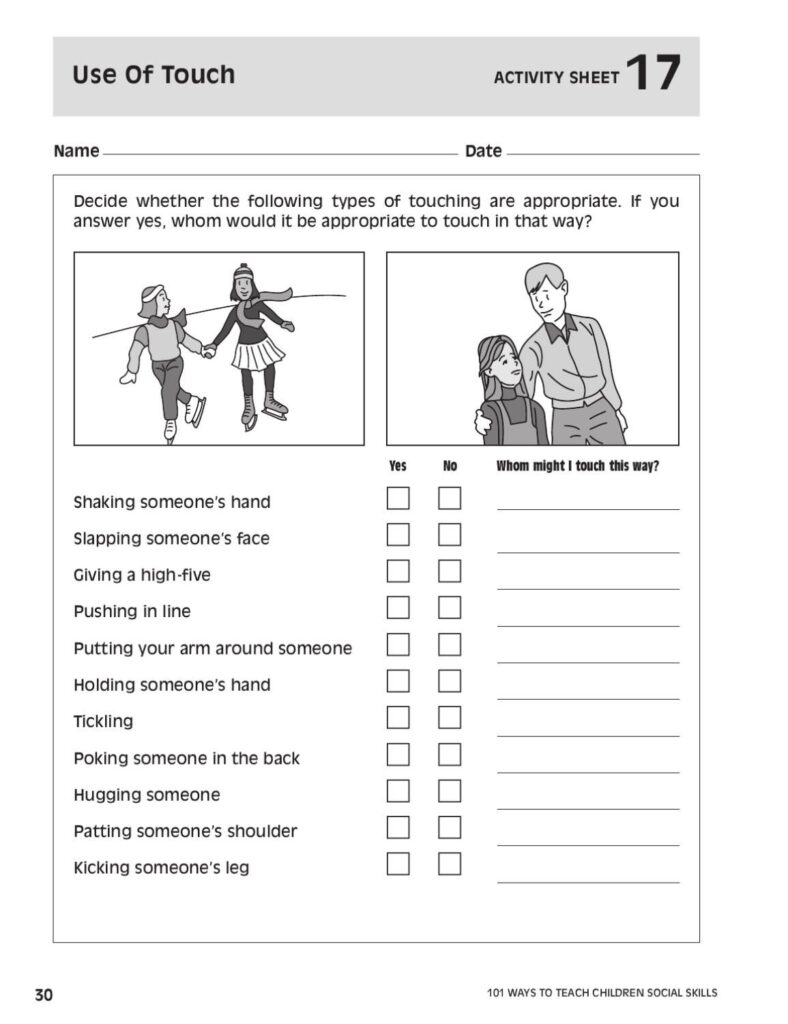
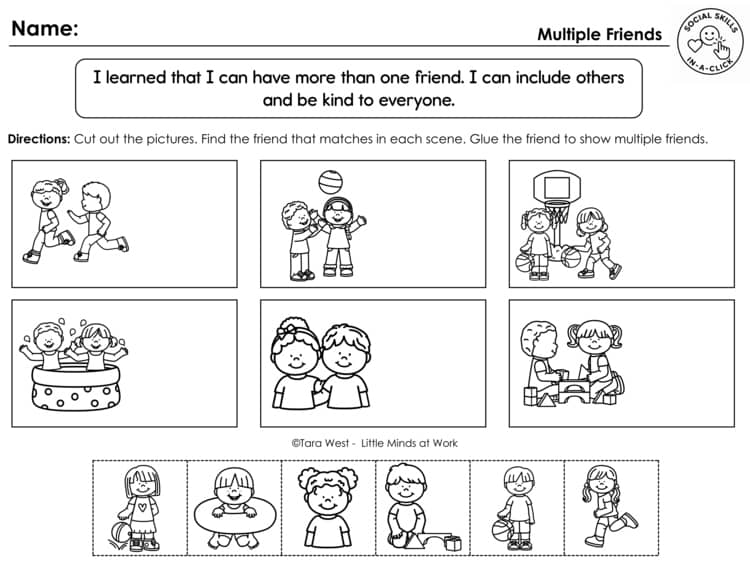
Worksheets are most effective when they support, not replace, adult-guided teaching. A caregiver or teacher can introduce the skill, model it, and then use the worksheet as a short practice activity. Afterward, role-play makes the idea more concrete: a child who matched a “share” picture can practice handing over a toy, or a child who identified a happy face can name when someone might feel that way. The worksheet becomes a bridge from pictures to behavior, and that connection is what makes the lesson stick.