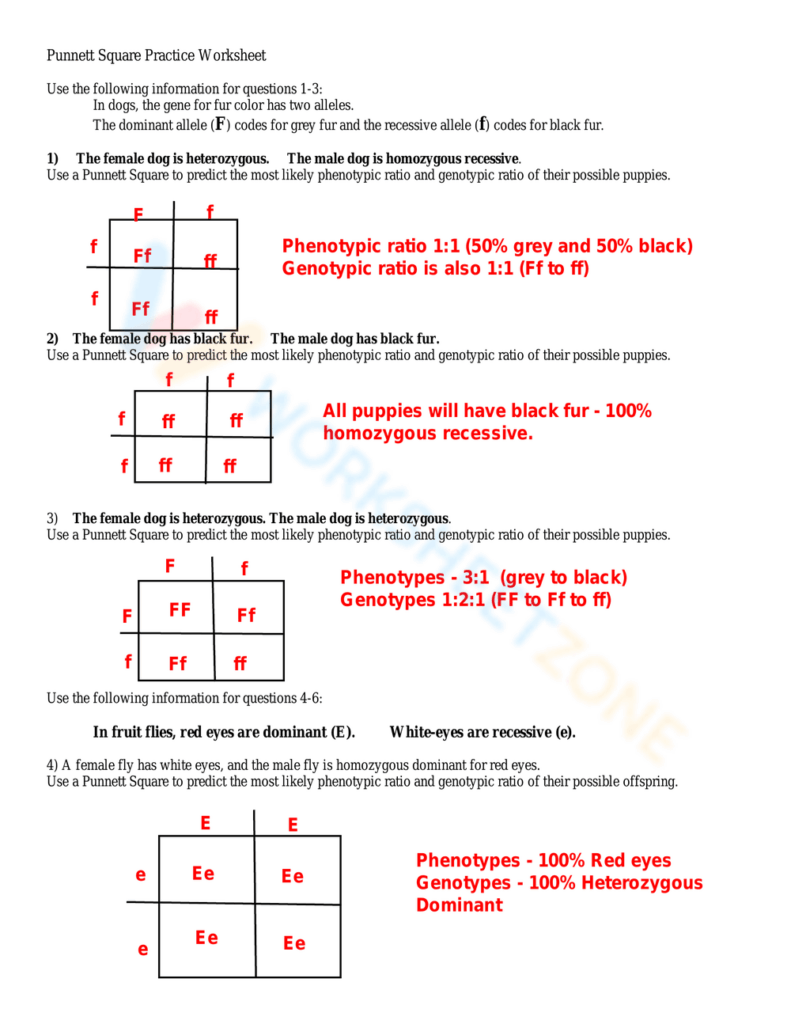
A punnett square practice worksheet is most useful when it gives students a simple way to set up crosses, predict outcomes, and check their work. The best worksheets keep the focus on basic monohybrid problems, where learners match parent alleles, fill in the boxes, and identify likely genotype and phenotype results without extra genetics detail.
How to Set It Up
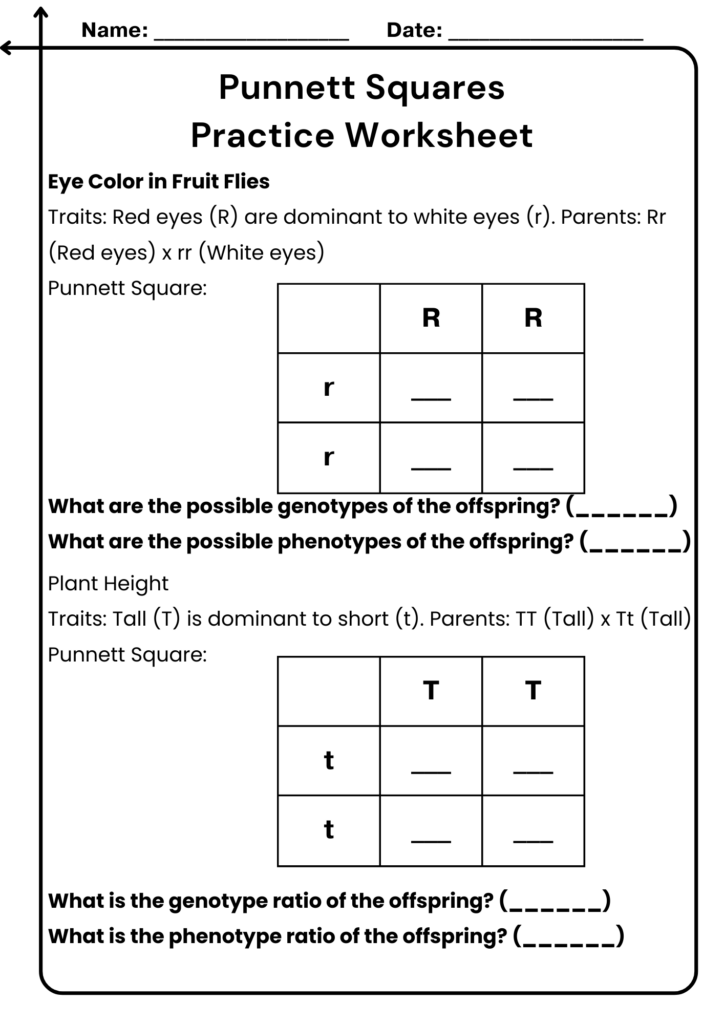
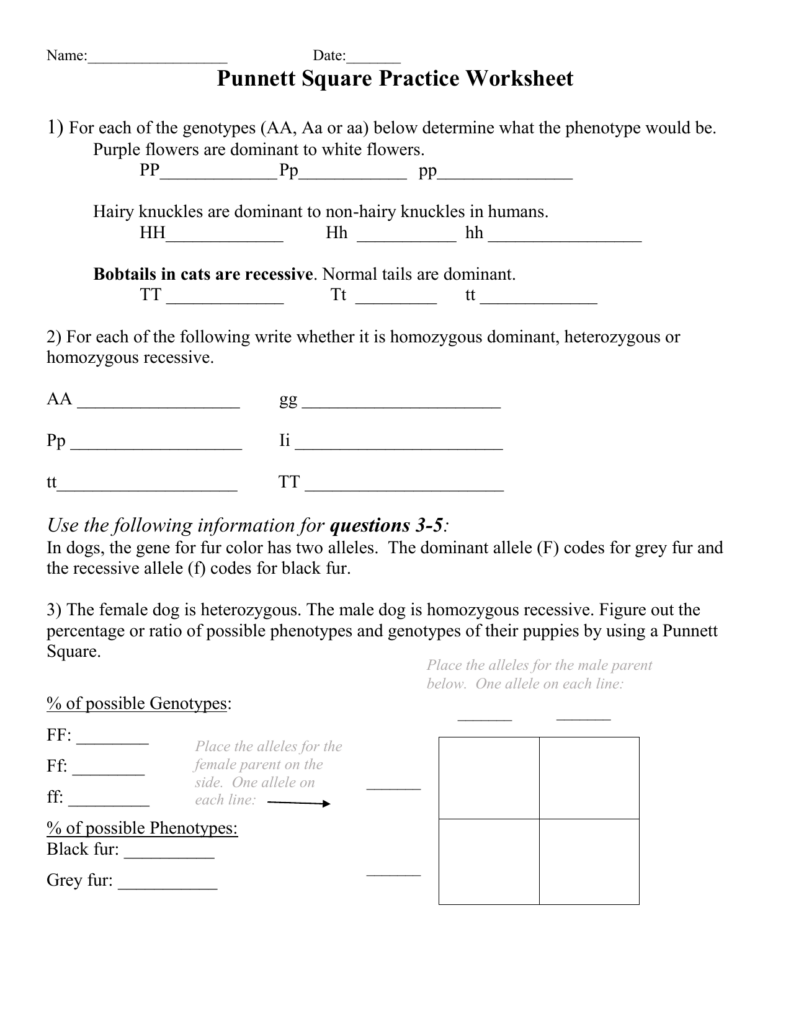
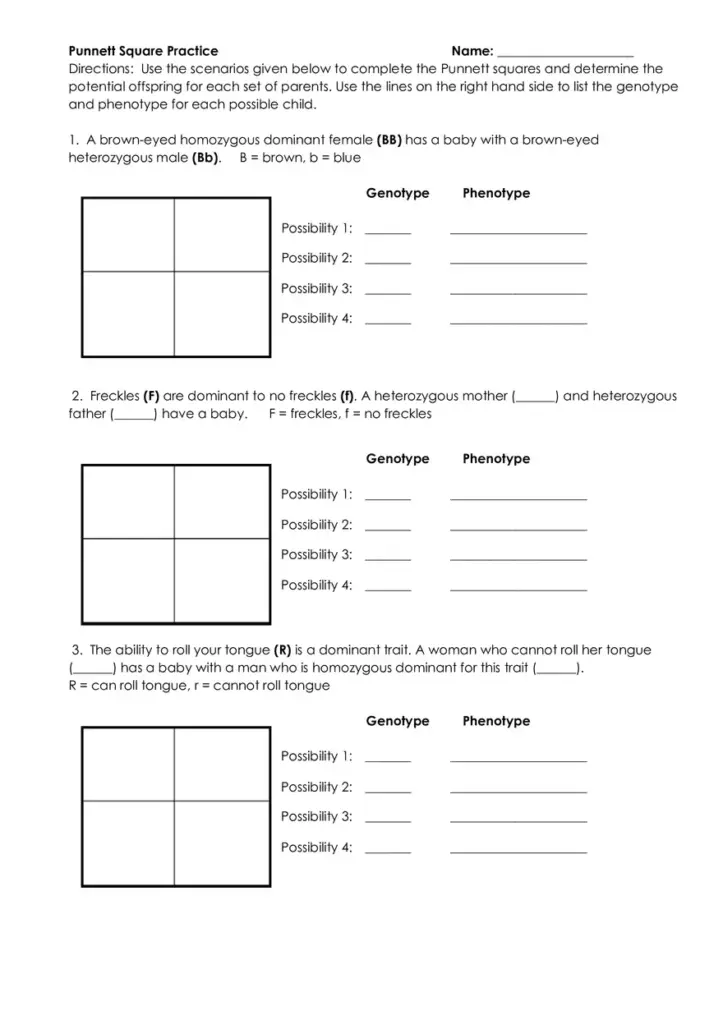
Start by writing the parent alleles above and beside the Punnett square. For example, if one parent is Aa and the other is Aa, place one allele from each parent along the top and side of the grid. Then combine the alleles in each box to show possible offspring genotypes. This step matters because the square only works if the parent gametes are entered correctly.
A good worksheet usually includes a short reminder of dominant and recessive notation, such as using uppercase letters for dominant traits and lowercase letters for recessive traits. That is enough structure for students to begin solving without turning the page into a full lesson on inheritance.
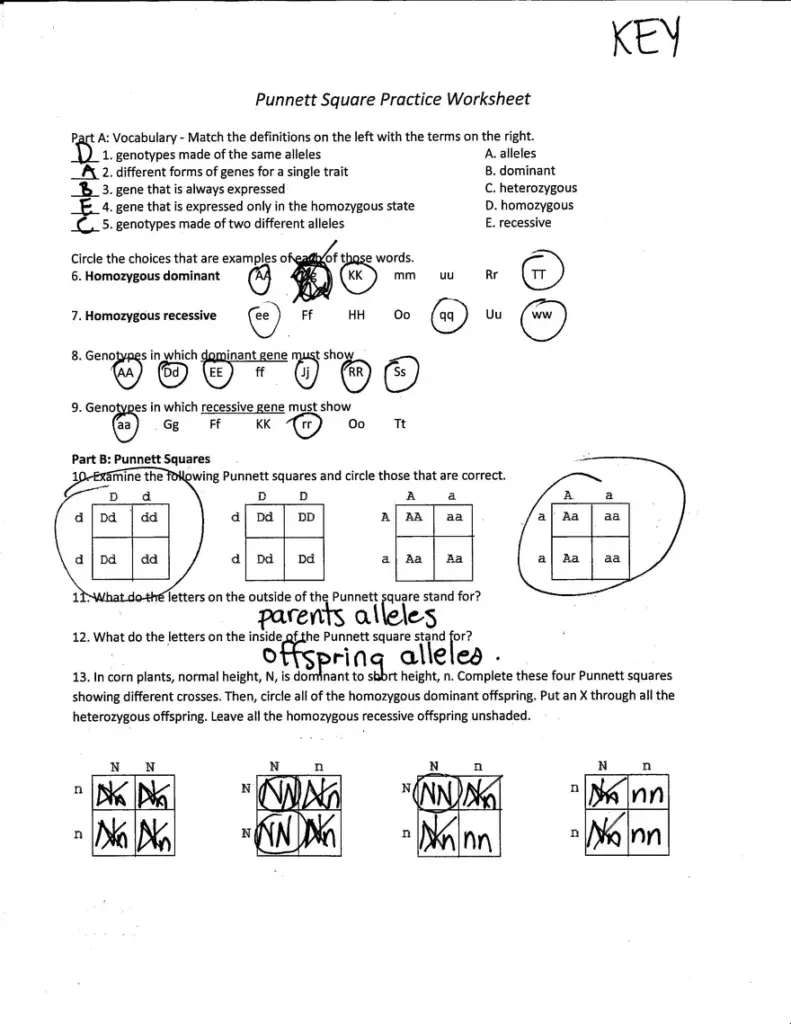
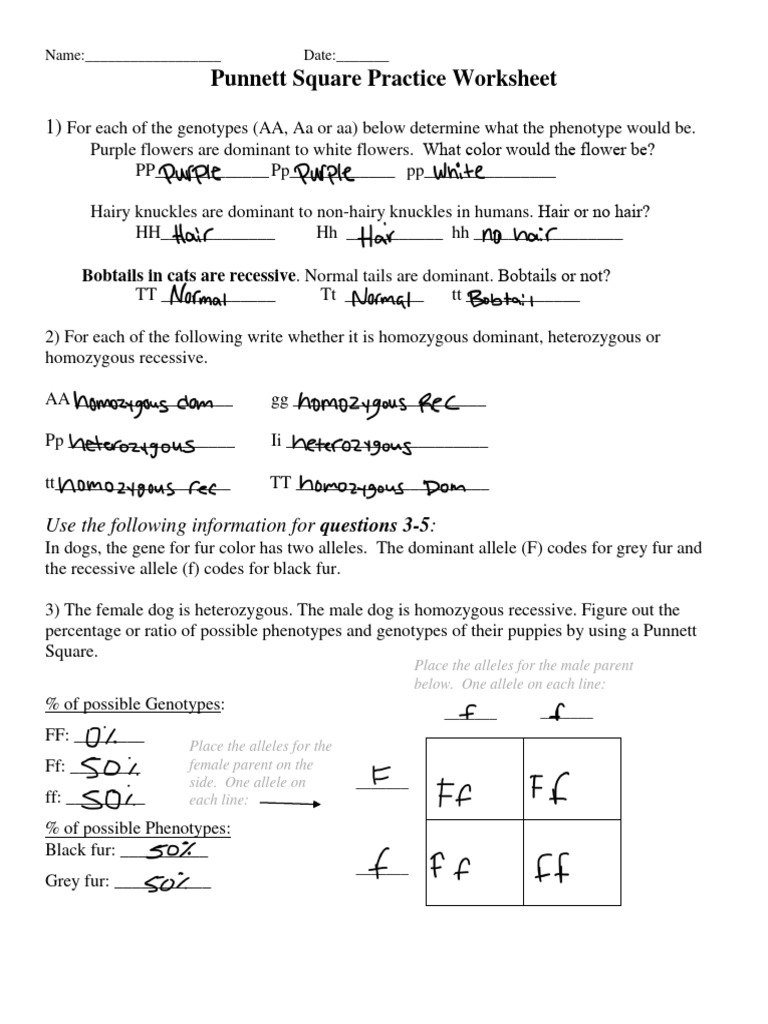
Practice problems should move from simple to slightly more challenging monohybrid crosses, such as AA x aa, Aa x Aa, and Aa x aa. These let students practice predicting both genotype ratios and phenotype outcomes. The worksheet should also ask them to state the visible trait for each offspring possibility, not just write letters in the boxes. That connection between genotype and phenotype is the main skill being tested.
Clear directions help, especially if the worksheet asks students to count how many boxes show each outcome and then reduce the results to a ratio or percentage. This keeps the work focused on accuracy rather than memorizing long explanations.
Check Answers
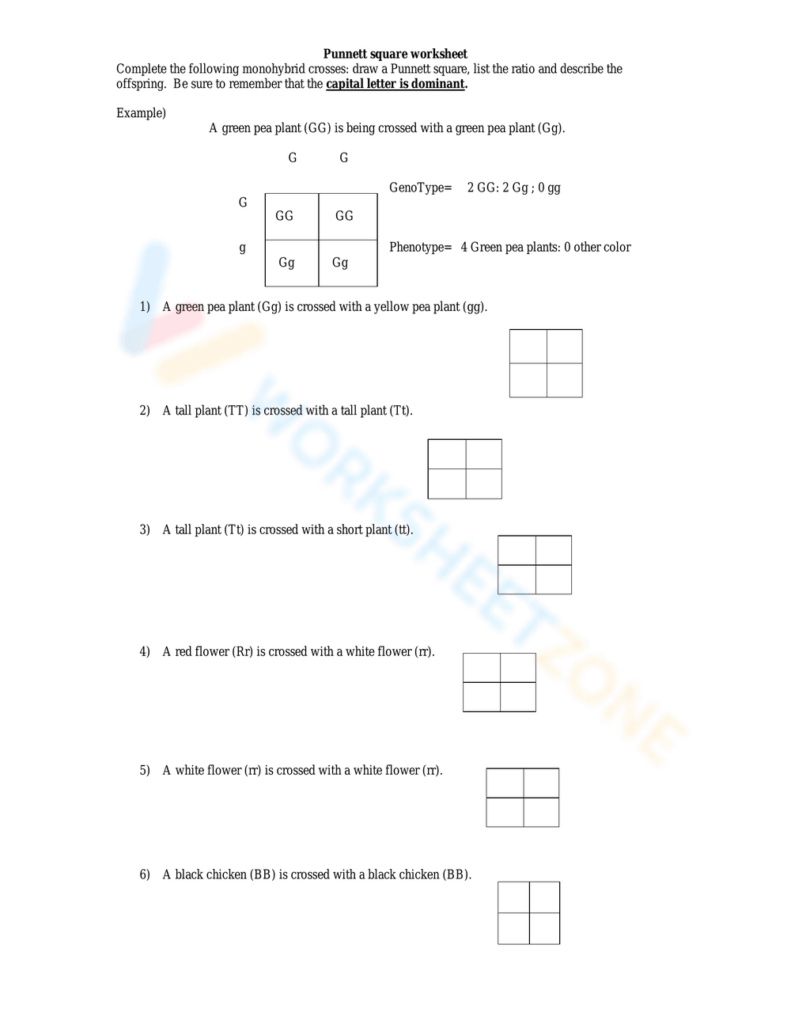
An answer key or worked examples make the worksheet much more effective because students can self-check immediately after solving. The best practice sheets show at least one completed Punnett square so learners can compare their setup with the correct method. If the resource includes answer ratios, phenotype labels, or brief explanations for each cross, students can see where a mistake came from, whether it was in placing alleles or interpreting the results.
For classroom use or independent study, that kind of feedback is especially helpful. A strong punnett square practice worksheet should be short, clear, and checkable so students can practice repeatedly until the process feels automatic.