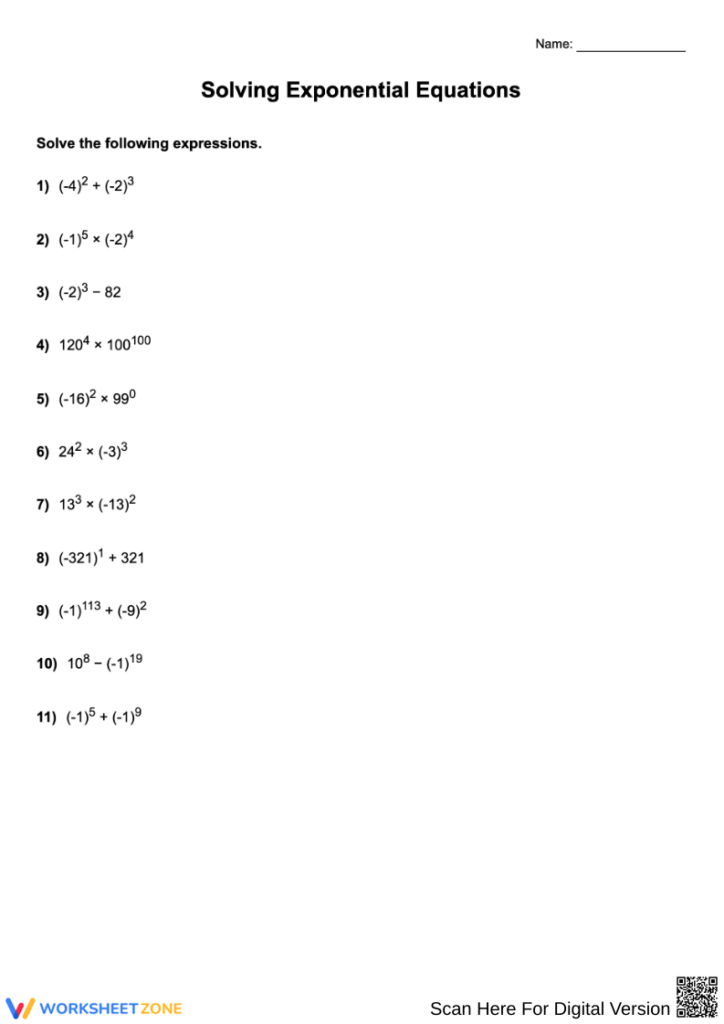
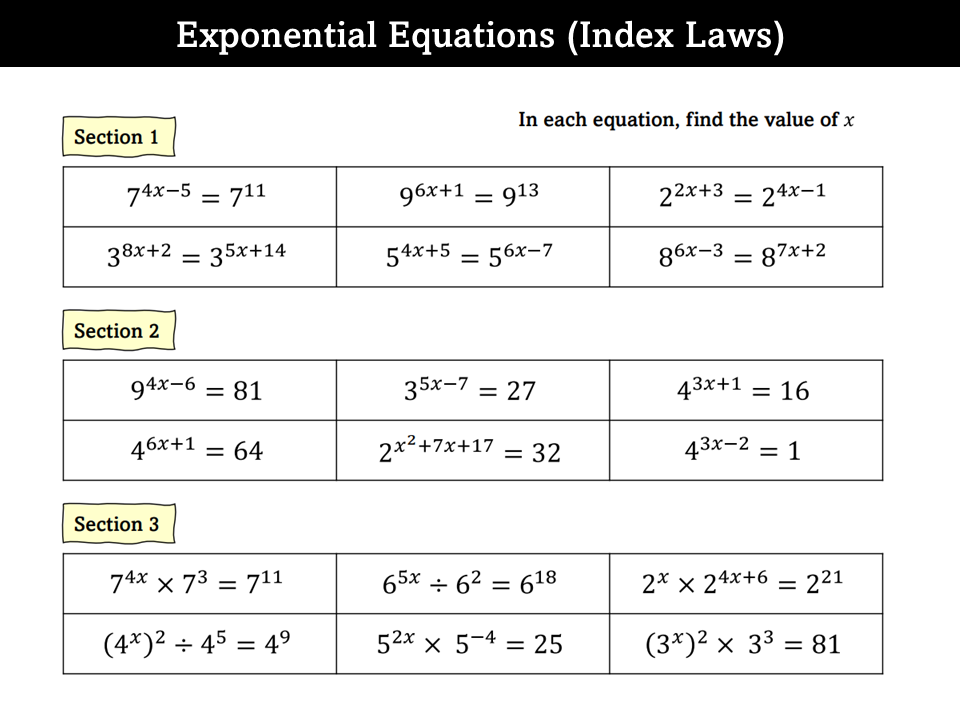
A solving exponential equations worksheet should help learners practice equations where the variable appears in the exponent. The best versions start with clear, manageable problems and build toward situations that require rewriting bases or using logarithms. It should also train students to check answers, since exponential equations can produce restrictions or extraneous results after solving. That makes the worksheet useful for both skill practice and self-correction.
Core equation skills
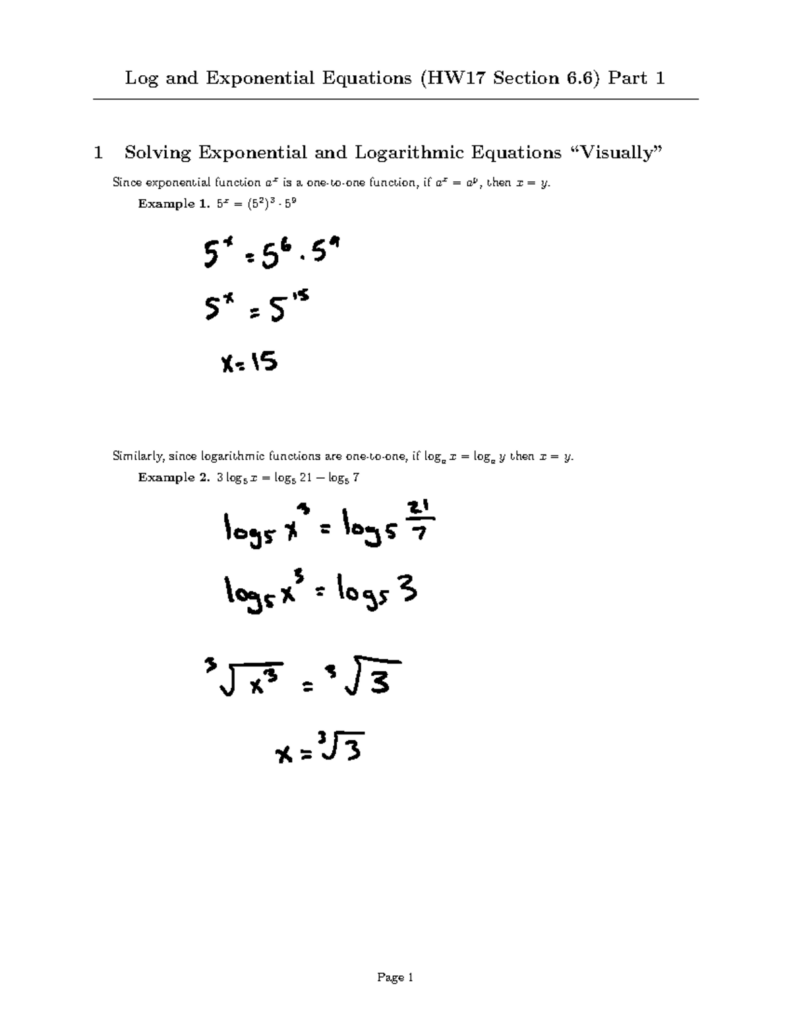
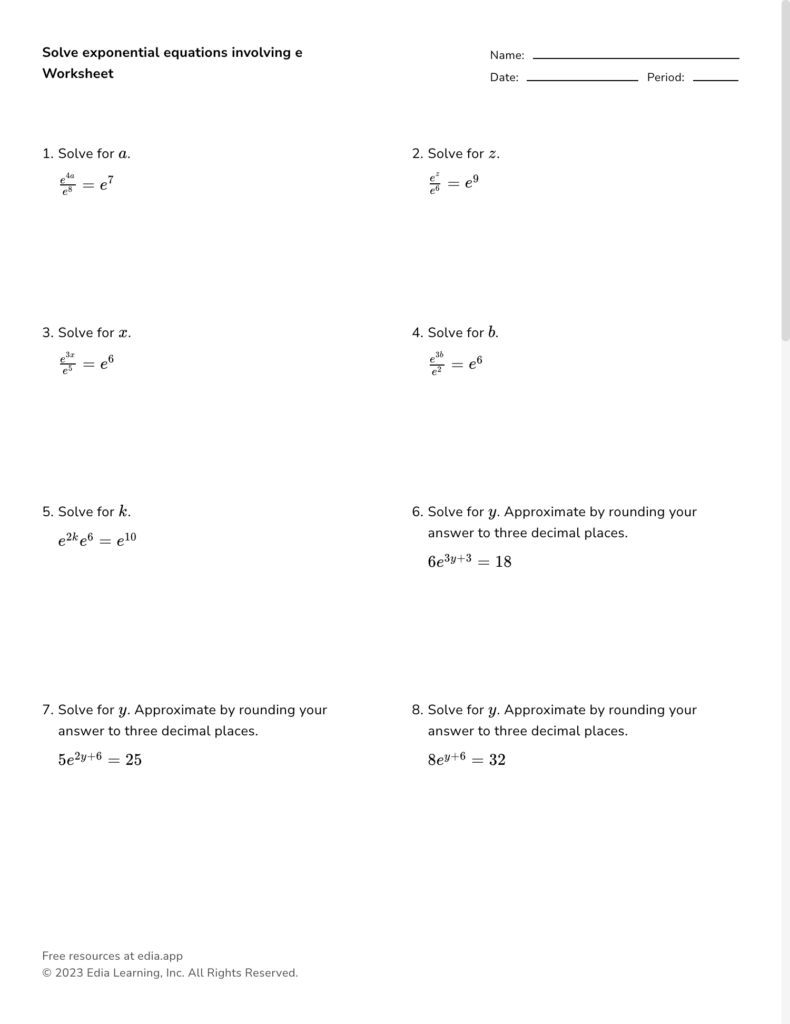
The main skill is recognizing when an equation is truly exponential, such as 2^x = 16 or 3^(x+1) = 81. A good worksheet should include problems that can be solved by expressing both sides with the same base, because that helps students see the structure of the equation. For example, 2^x = 32 becomes 2^x = 2^5, so x = 5. This method builds fluency with exponent rules and powers of common bases.
Check and confirm
A strong worksheet should also include equations that cannot be rewritten with equal bases, which is where logarithms come in. Students should practice isolating the exponential expression first, then applying a log to solve for the exponent, such as 5^x = 12. This section should reinforce that logs are the inverse of exponentials. Problems should gradually move from direct applications to ones with parentheses or coefficients, since those require careful algebra before the log step.
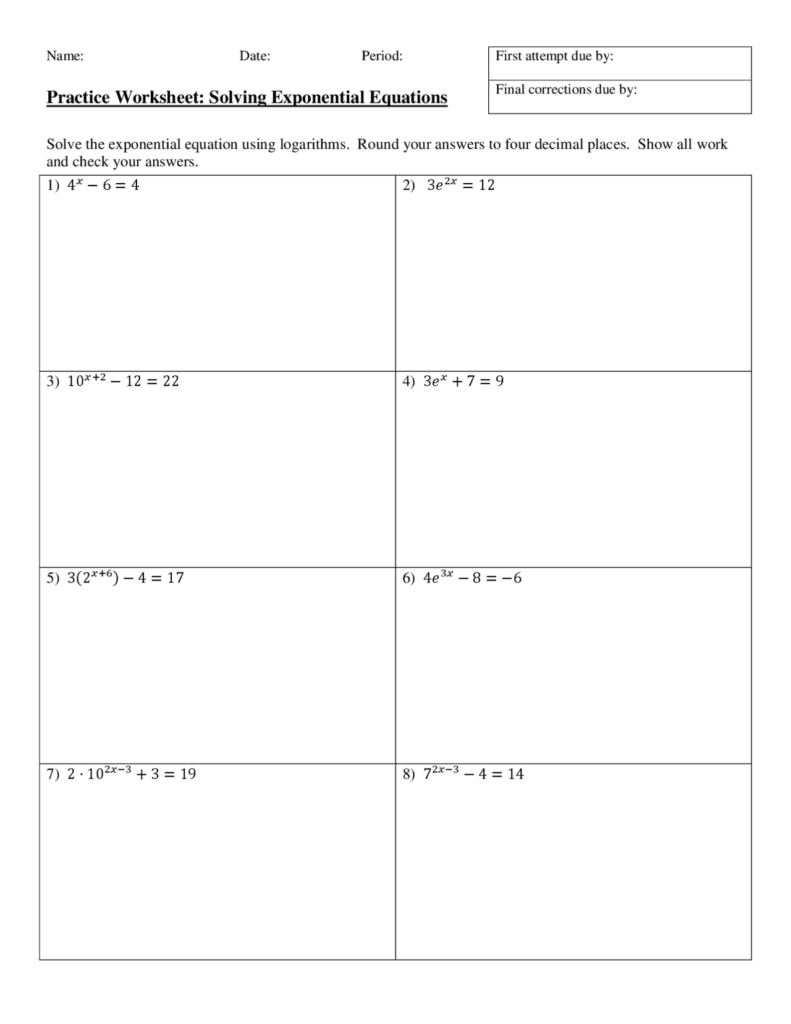
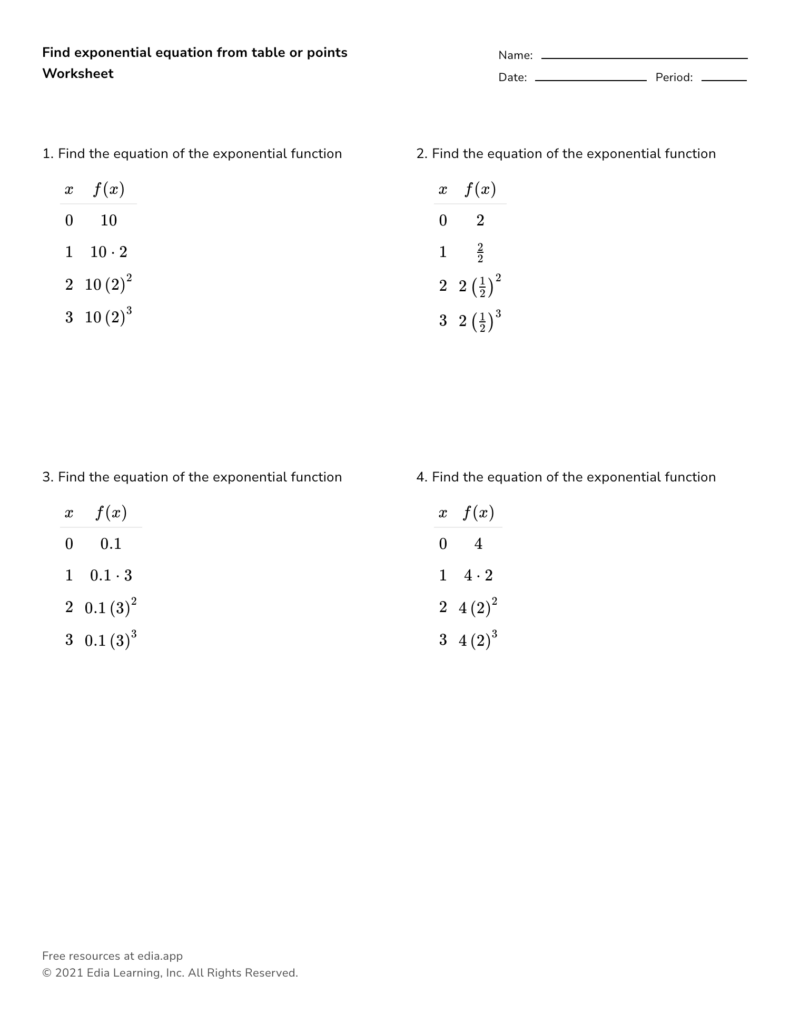
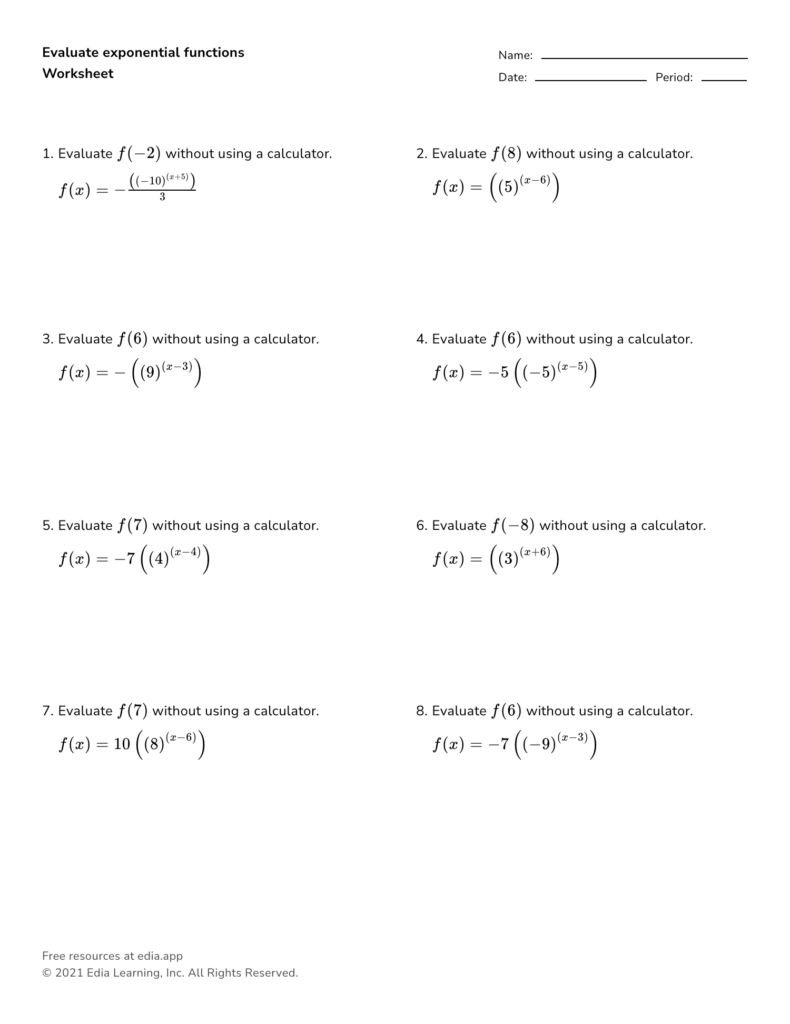
Because verification matters, the worksheet should expect students to substitute answers back into the original equation. This is especially important after log-based solutions or when equations are rearranged. A valid answer must make both sides equal, not just look reasonable. The worksheet is most appropriate for students who already know exponent rules, basic algebraic isolation, and how to evaluate powers. Used well, it gives focused practice on the exact steps needed to solve exponential equations accurately.