A special right triangles worksheet answer key is most useful when you already know the two patterns to check: 45-45-90 and 30-60-90. With those ratios, you can verify whether each missing side on a worksheet makes sense before you move on. The key is less about memorizing every answer and more about confirming that the numbers fit the correct triangle rule.
Core Triangle Types
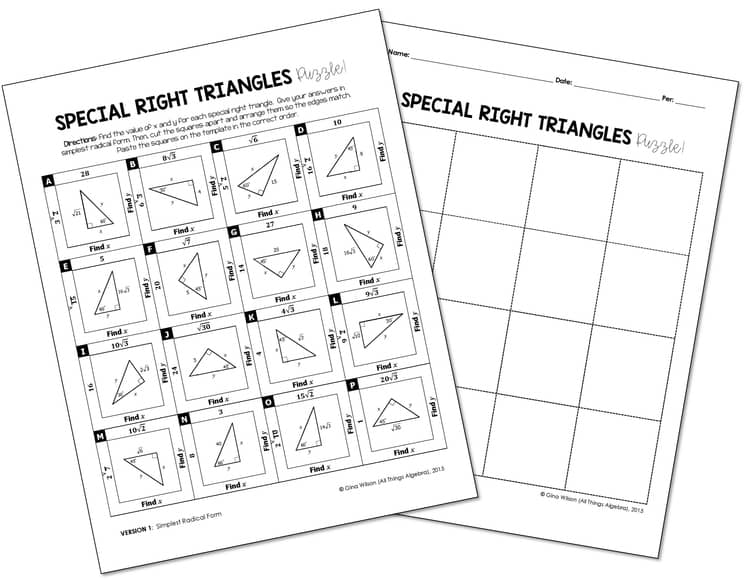
The first special right triangle is the 45-45-90 triangle. Its sides follow the ratio 1:1:√2, which means the two legs are equal and the hypotenuse is the leg multiplied by √2. The second is the 30-60-90 triangle, with the ratio 1:√3:2. In that triangle, the shortest side is opposite 30°, the middle side is opposite 60°, and the longest side is twice the shortest side. Those two ratios are the main tools for checking worksheet answers.
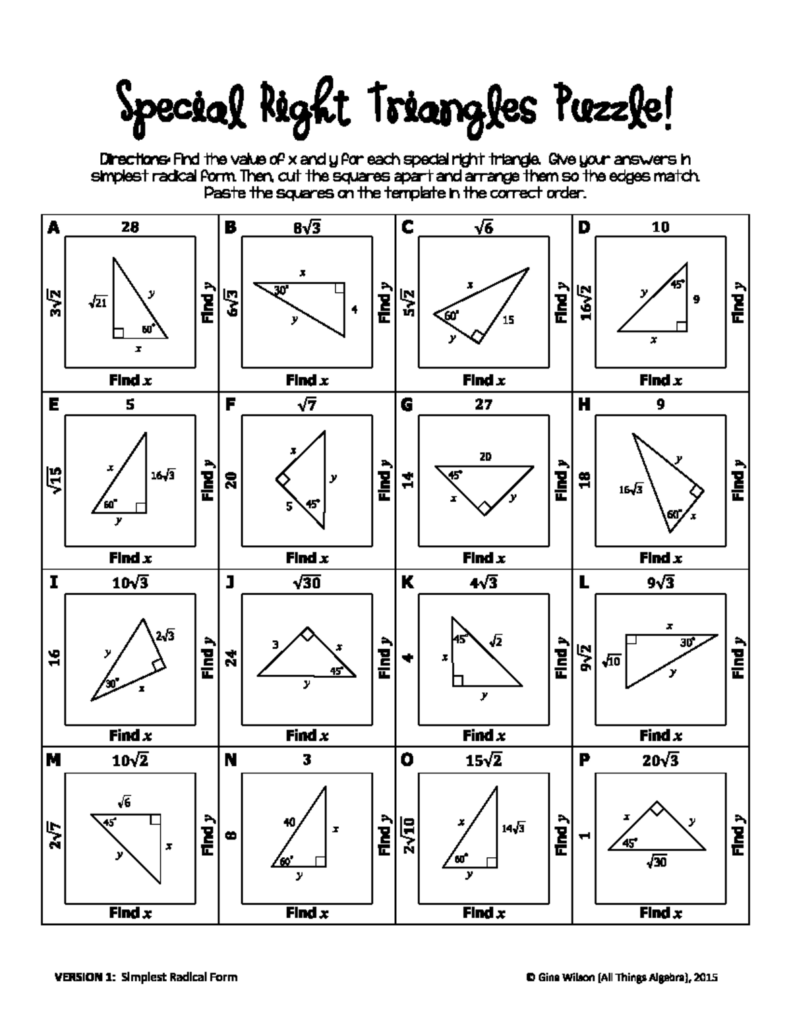
To verify a missing side, start by identifying which special triangle you have from the angles or side pattern. Then match the known side to the correct part of the ratio and scale the rest. For example, if a 45-45-90 triangle has one leg of 8, the other leg should also be 8 and the hypotenuse should be 8√2. If a 30-60-90 triangle has the shortest side 5, the longer leg should be 5√3 and the hypotenuse 10. If an answer does not match the ratio, it is probably incorrect.
Checking Worksheet Answers
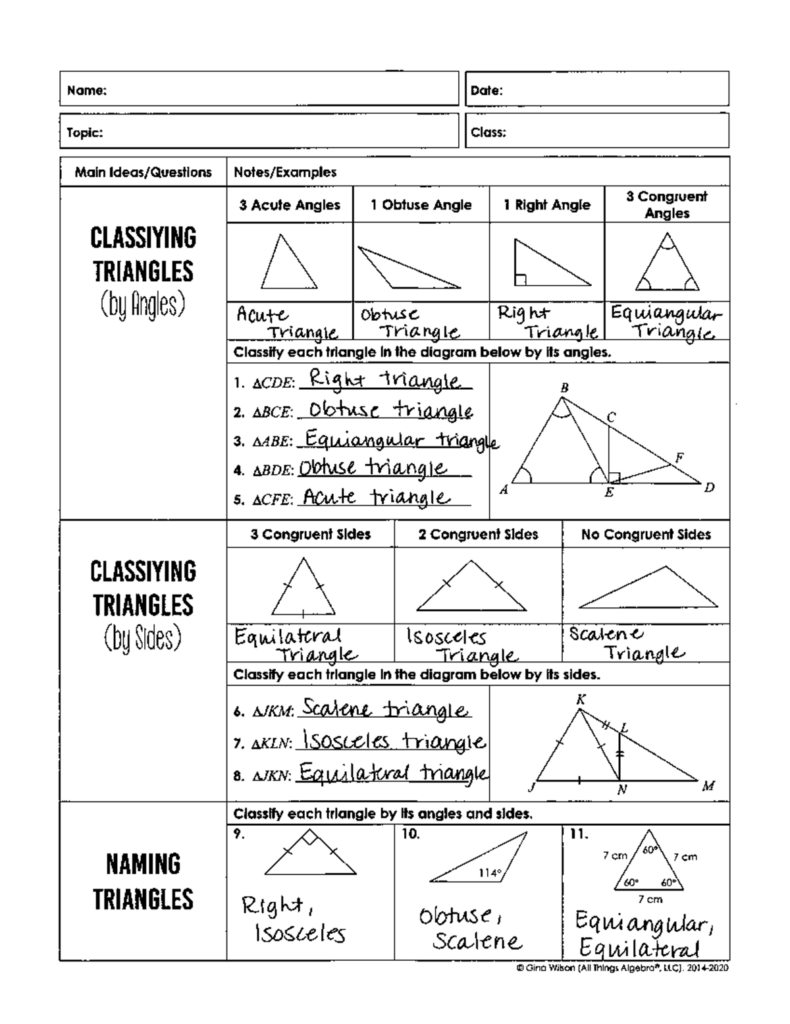
When using an answer key, focus on whether each response is reasonable for the triangle shown. A value can be simplified differently and still be correct, such as 2√8 versus 4√2 if the worksheet expects simplified form. Also check that the answer fits the angle placement, especially in 30-60-90 problems where side order matters. If a worksheet gives a diagram with labeled sides, use those labels before comparing with the key so you are matching the right side to the right ratio.
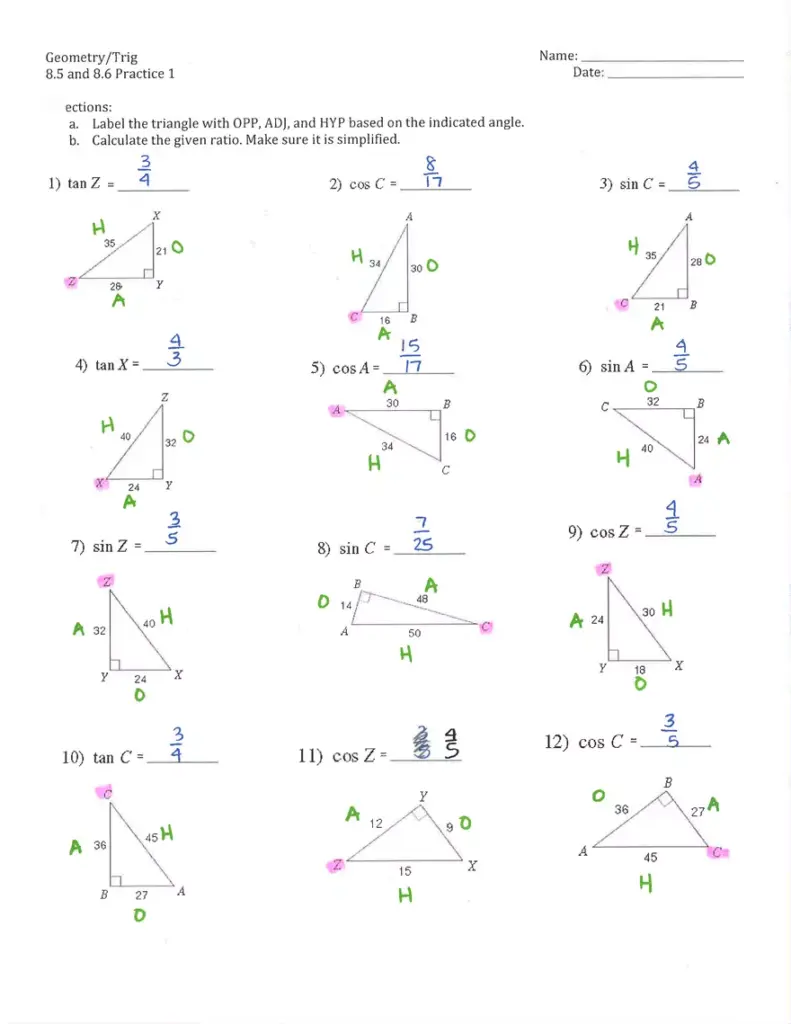
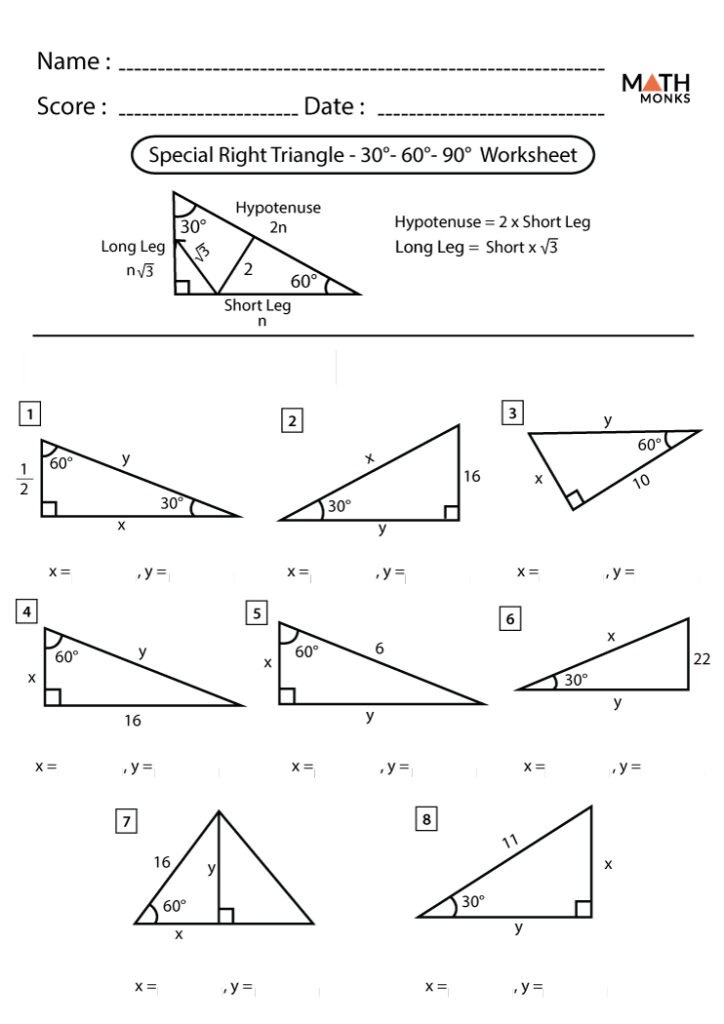
The exact answer key must match the exact worksheet version, because problem sets often change the order of questions, labels, or numbers. If you are checking work, use the ratios first and the key second: the ratios confirm the logic, and the key confirms the final form expected on that page. That approach makes it easier to catch mistakes quickly and know whether a solution is truly correct.