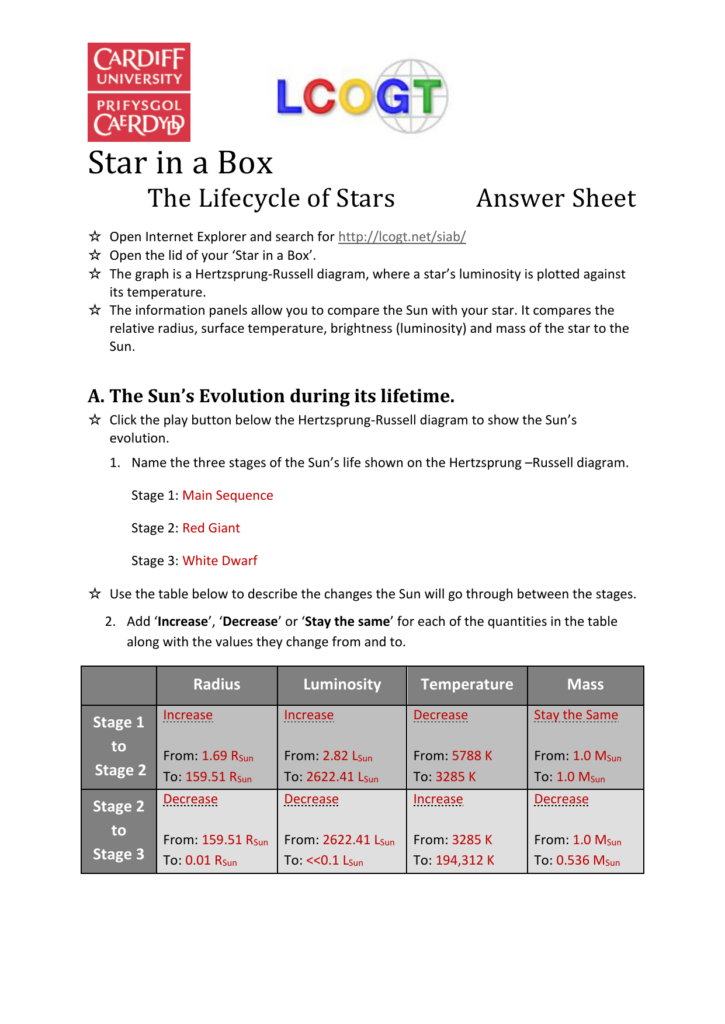
If you need star life cycle worksheet answers, the usual sequence starts with a nebula, then a protostar, then a main sequence star. After that, many worksheets split into two paths: a low-mass star becomes a red giant and ends as a white dwarf, while a massive star becomes a red supergiant and ends as a neutron star or black hole.
Standard sequence
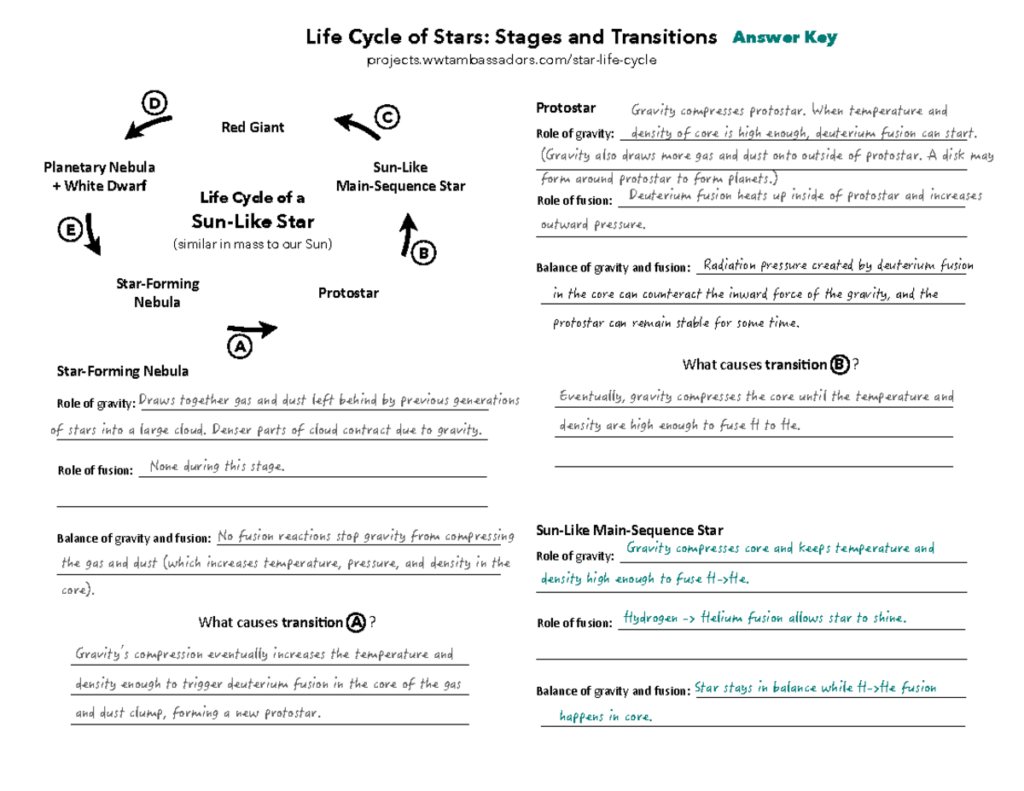
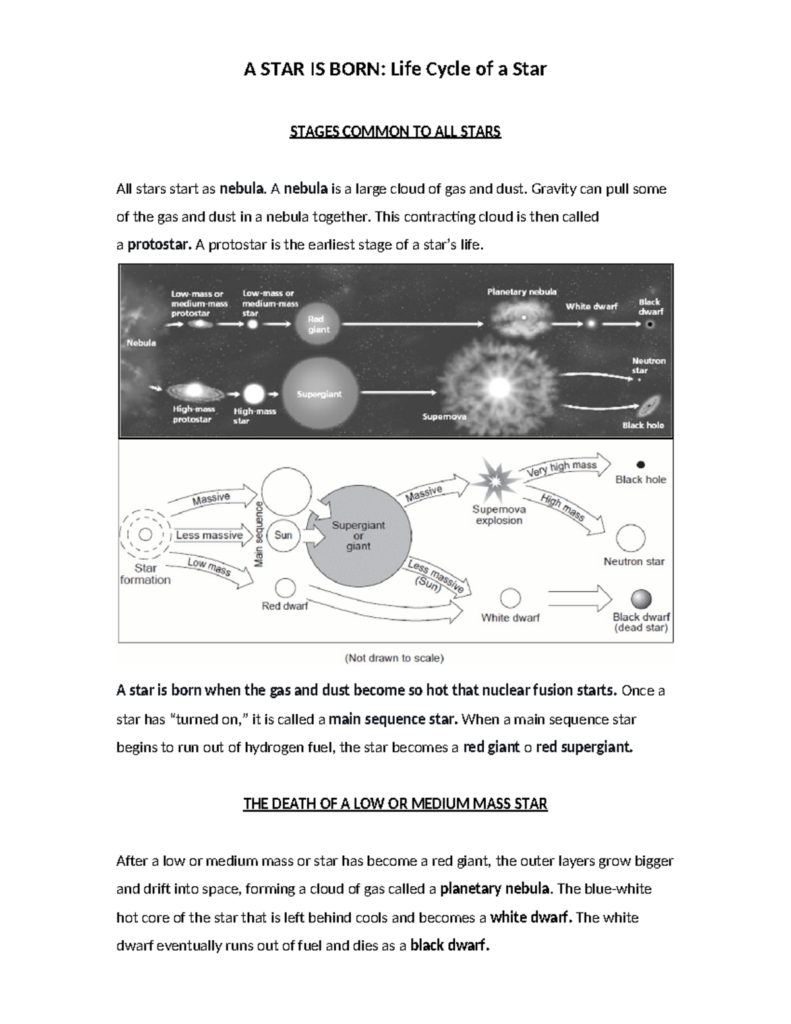
For a typical worksheet that shows one main path, the best answer order is nebula, protostar, main sequence star, and final remnant. Some diagrams include a final label such as white dwarf, neutron star, or black hole, depending on the star’s mass. If your worksheet uses arrows or boxes, place the stages in that same progression. The key idea is that a star forms from gas and dust, stabilizes during the main sequence, and then ends in different ways.
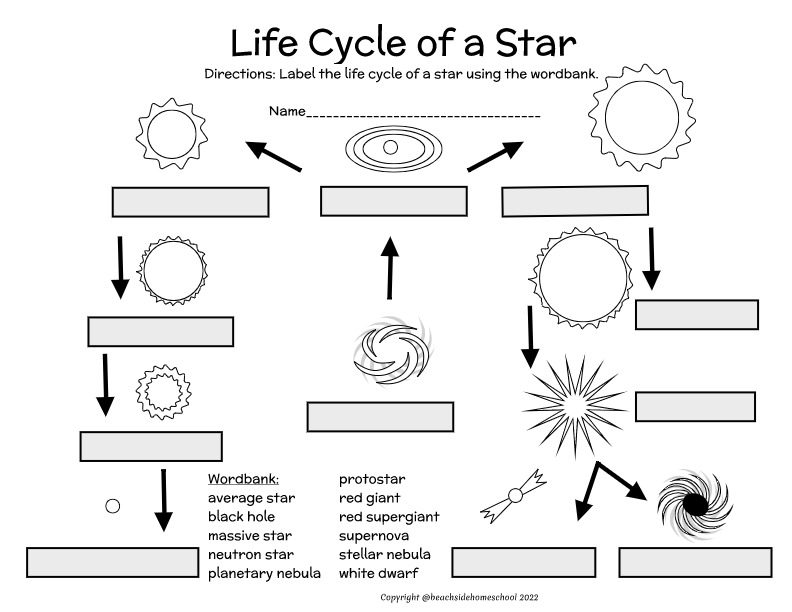
If the worksheet includes both low-mass and massive stars, the branch point usually comes after the main sequence stage. From there, the low-mass path is main sequence to red giant to planetary nebula to white dwarf. The massive-star path is main sequence to red supergiant to supernova to neutron star or black hole. Some classroom diagrams skip planetary nebula or supernova and go straight to the final remnant, so match the labels on the page exactly.
Match worksheet labels
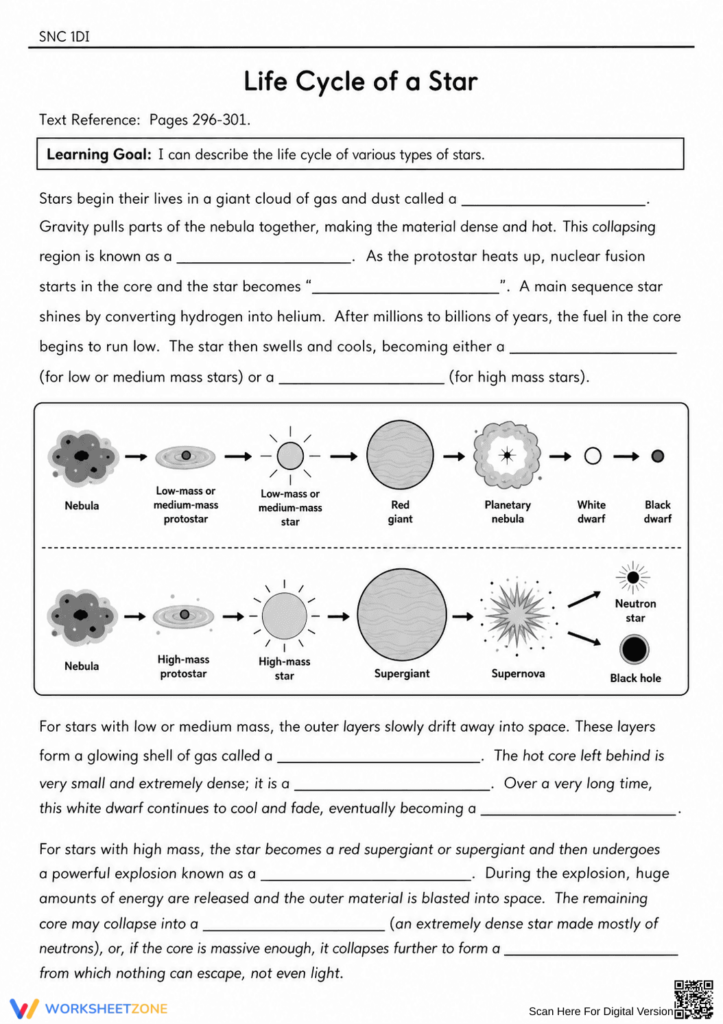
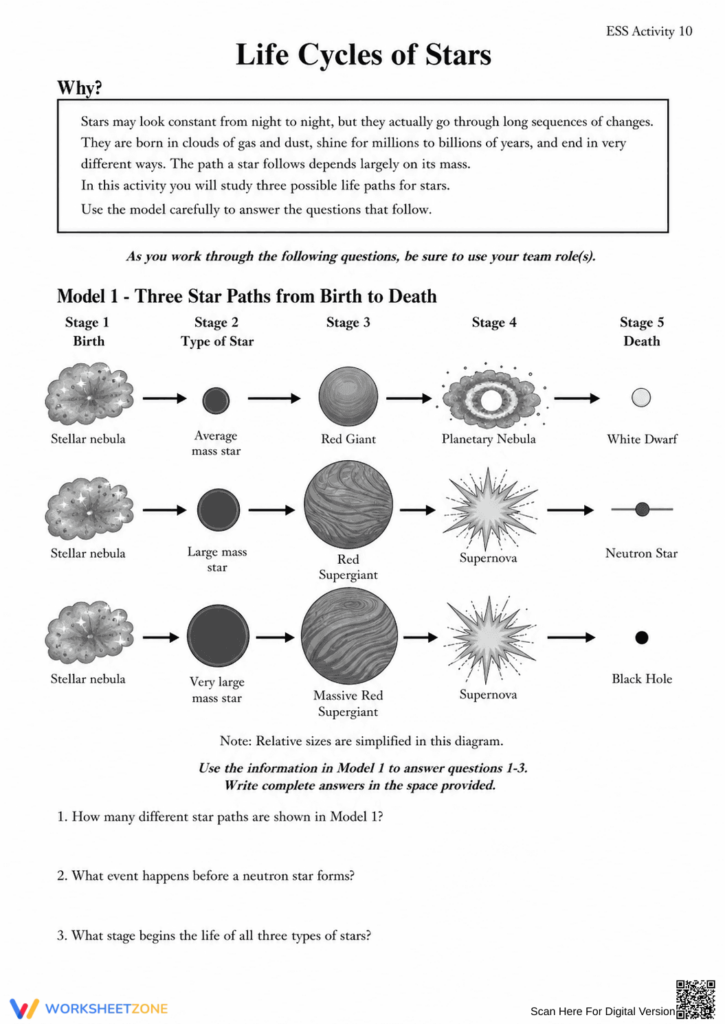
Use the wording on the worksheet rather than changing it to a different science term. For example, one page may say “red giant,” while another may say “red supergiant,” and those are not interchangeable on the answer key. The same is true for the final stage: a low-mass star usually ends as a white dwarf, while a massive star may end as a neutron star or black hole. If the worksheet has a word bank, follow that word bank first.
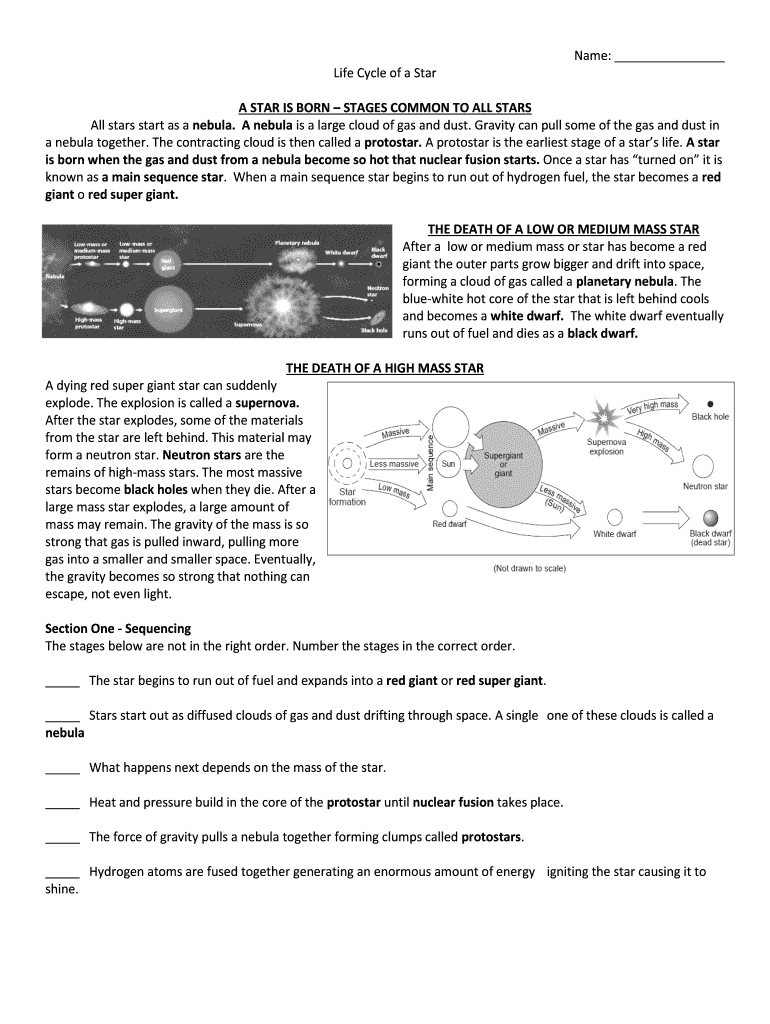
The safest answer strategy is to trace the arrows and fill in the stages in order instead of relying on memory alone. For checking work, the most common classroom sequence is nebula, protostar, main sequence, then the correct branch for the star’s mass. If you are matching a specific worksheet, copy the exact labels used on that diagram so the answers line up with the teacher’s version.