
A types of reactions worksheet helps students look at a chemical equation and decide what kind of reaction it shows. That makes it a strong fit for middle school or early high school chemistry review. The best versions focus on the five common reaction types students are usually expected to recognize: synthesis, decomposition, single replacement, double replacement, and combustion.
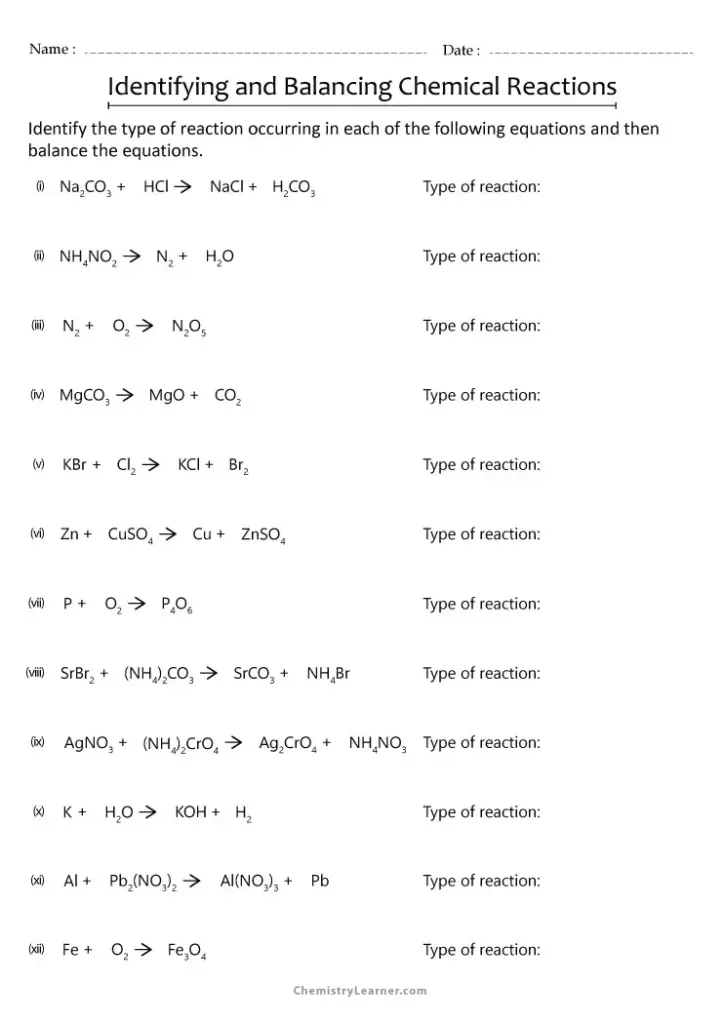
A clear worksheet should define each type in student-friendly language. Synthesis combines simpler substances into one product. Decomposition breaks one compound into smaller substances. Single replacement swaps one element into a compound. Double replacement exchanges ions between two compounds. Combustion usually involves a fuel reacting with oxygen and producing energy. Short example prompts help students connect each definition to an equation, such as identifying which pattern matches A + B → AB or AB → A + B.
Practice Sorting
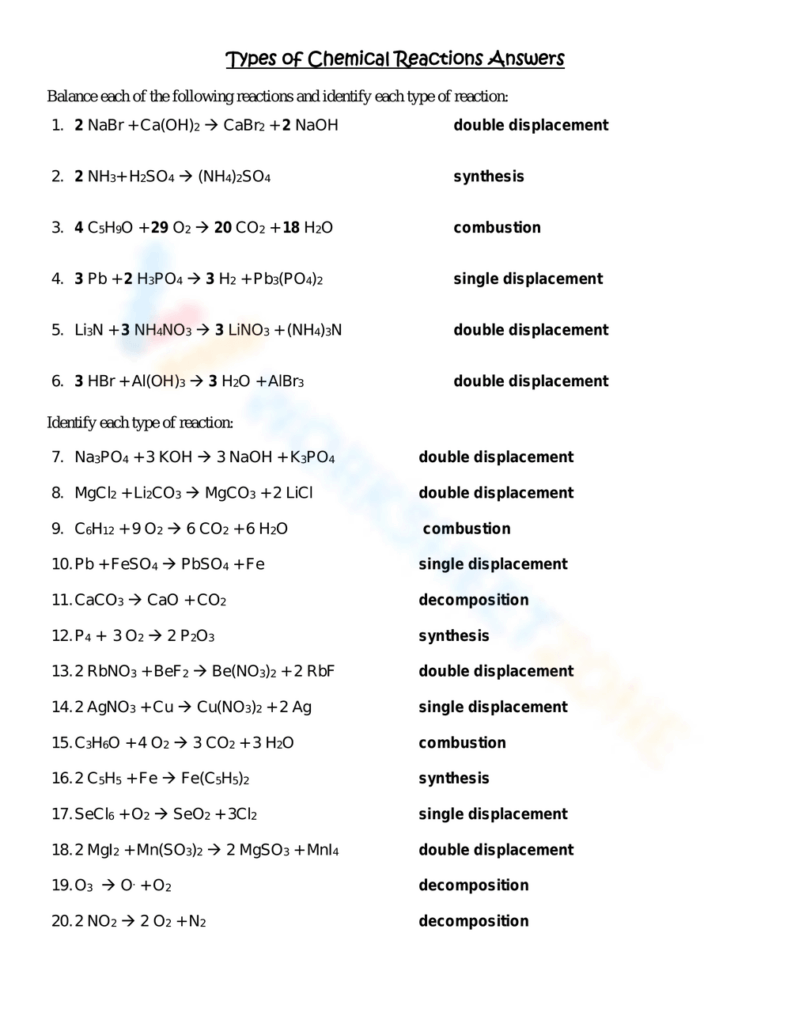
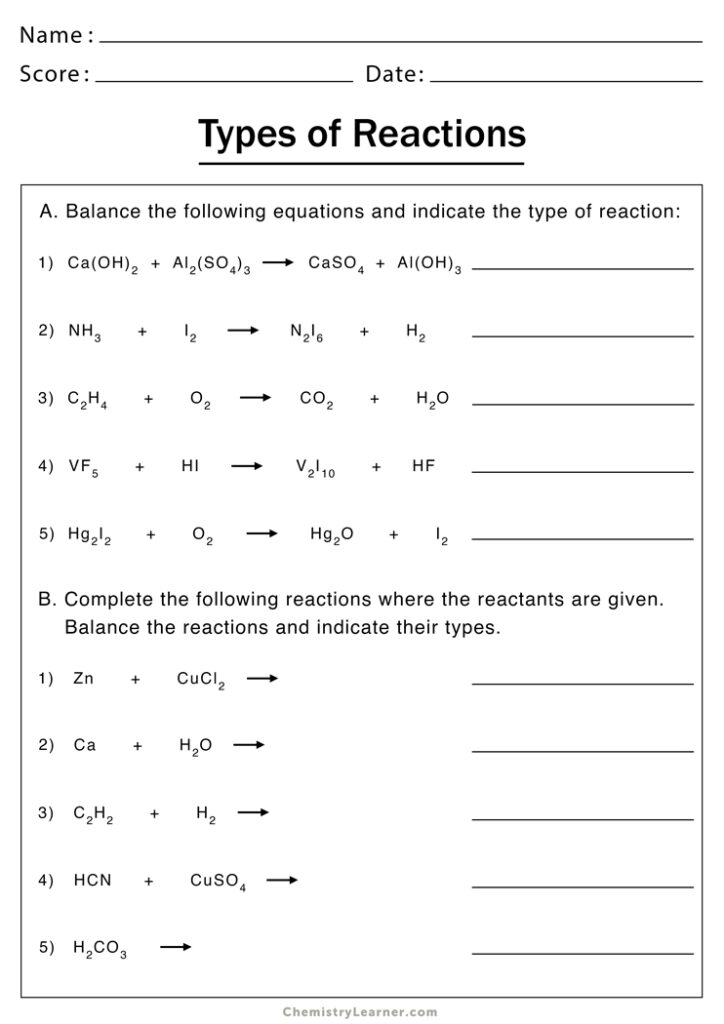
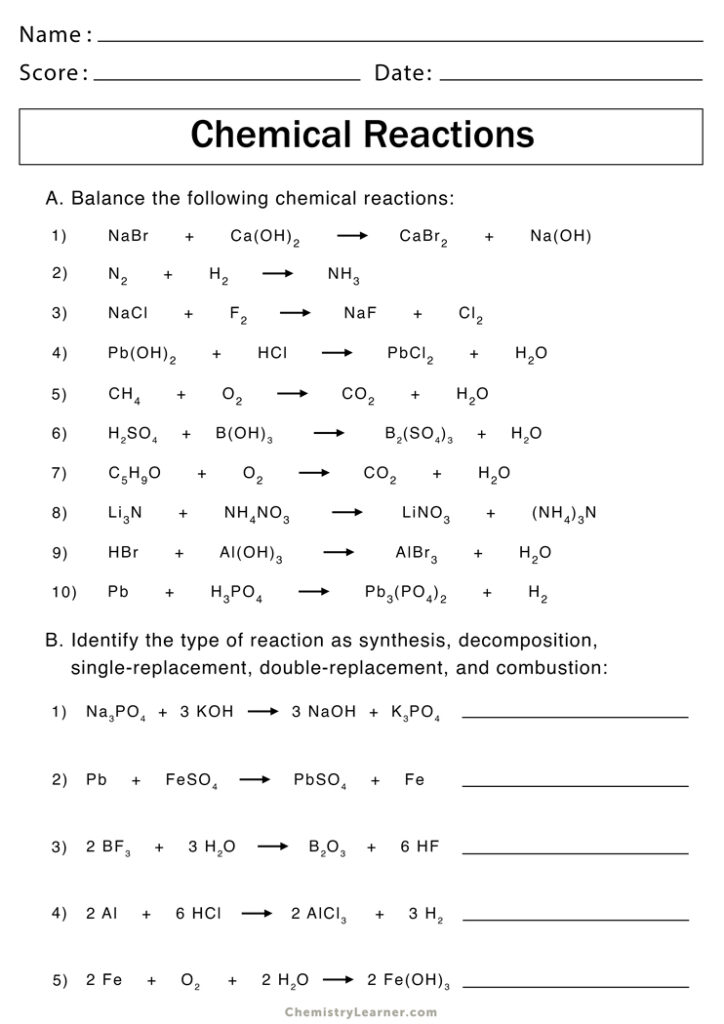
The most useful practice section gives learners a mix of equation cards or numbered examples to classify. For instance, students might sort reactions like 2H2 + O2 → 2H2O, CaCO3 → CaO + CO2, Zn + 2HCl → ZnCl2 + H2, AgNO3 + NaCl → AgCl + NaNO3, and CH4 + 2O2 → CO2 + 2H2O. Keeping the equations simple lets students focus on reaction type, not balancing or advanced details.
Answer Key Support
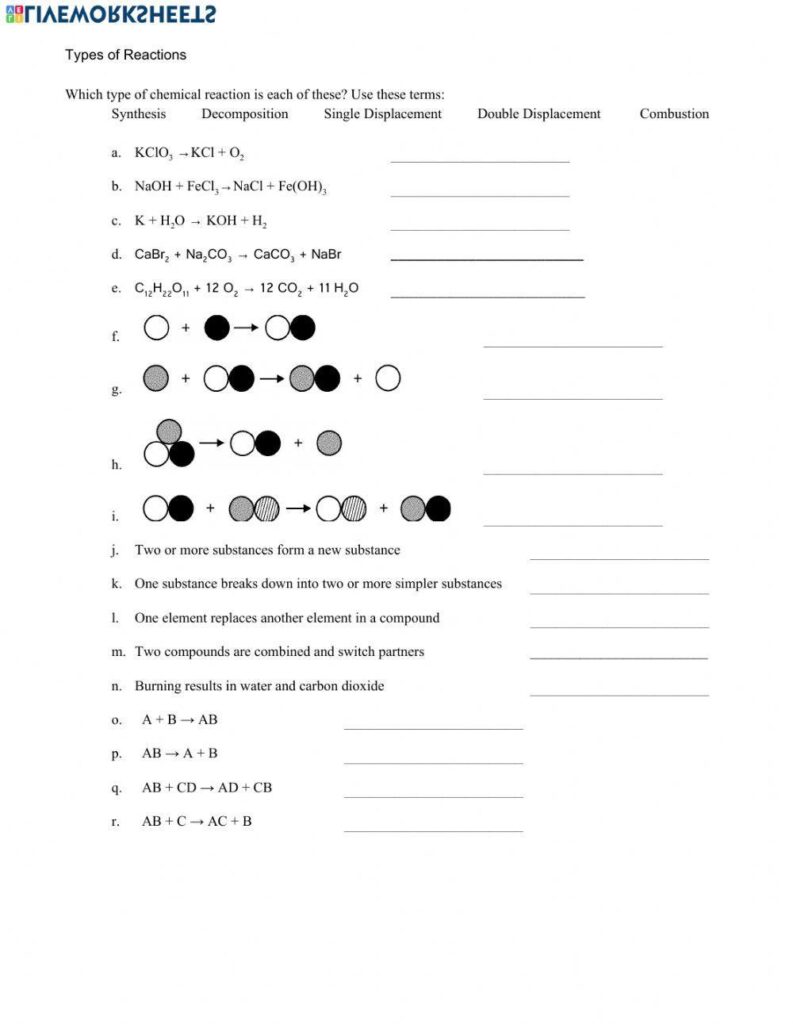
An independent worksheet works best when it includes an answer key or self-check guide. A simple key can list each equation with its reaction type, or it can use color matching so students can check their work quickly. If the worksheet is used in class, the key also helps teachers review common mistakes, such as confusing synthesis with double replacement or missing oxygen in a combustion example. Clear feedback makes the practice more effective.
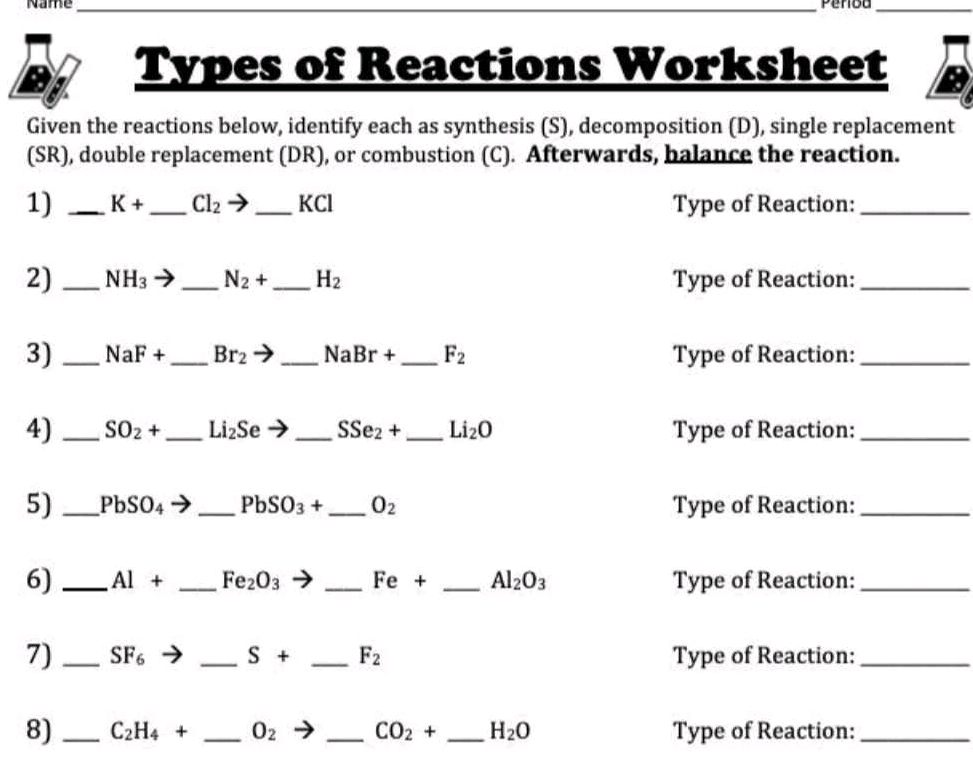
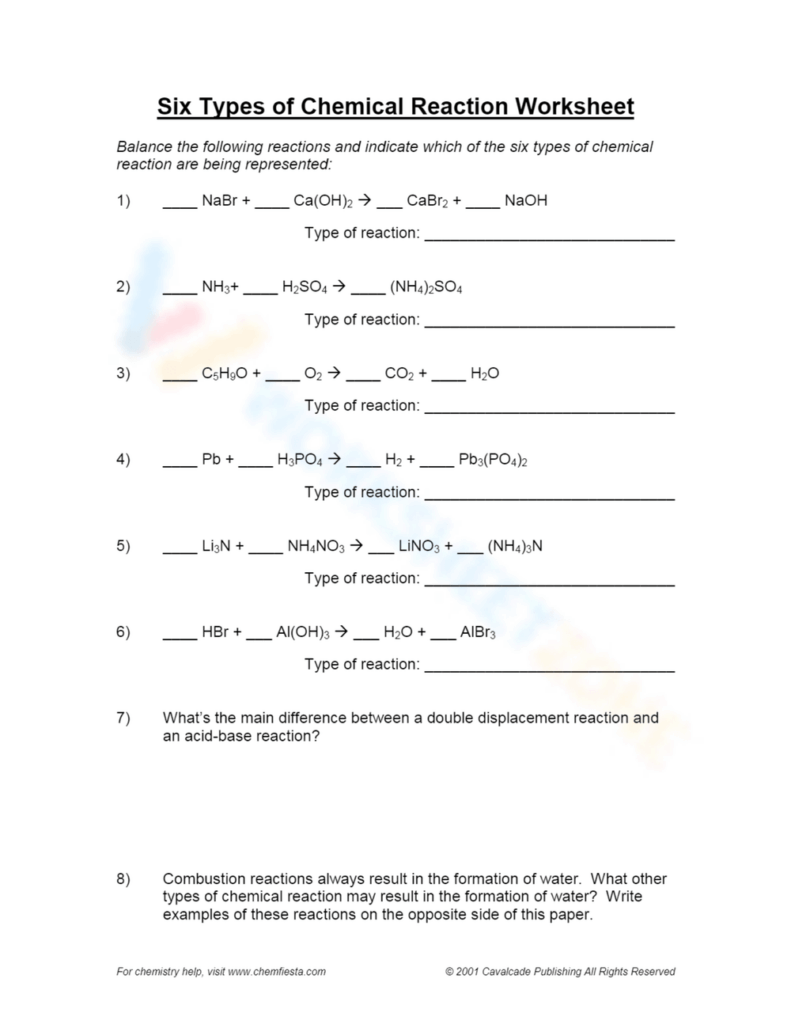
For classroom use, choose a worksheet that is short, visually clean, and limited to the core reaction types students need to know. That keeps the activity approachable and makes it easier to use as warm-up work, homework, or review. A good types of reactions worksheet should teach recognition first, then reinforce it with a few simple examples and an answer key so students can check their understanding right away.



