A percent of change worksheet helps students practice finding how much a number increases or decreases from one value to another. It is useful for middle school math and any lesson that introduces percent increase and percent decrease. The best worksheets keep the steps clear: identify the original value, find the amount of change, and use the percent of change formula to get an answer.
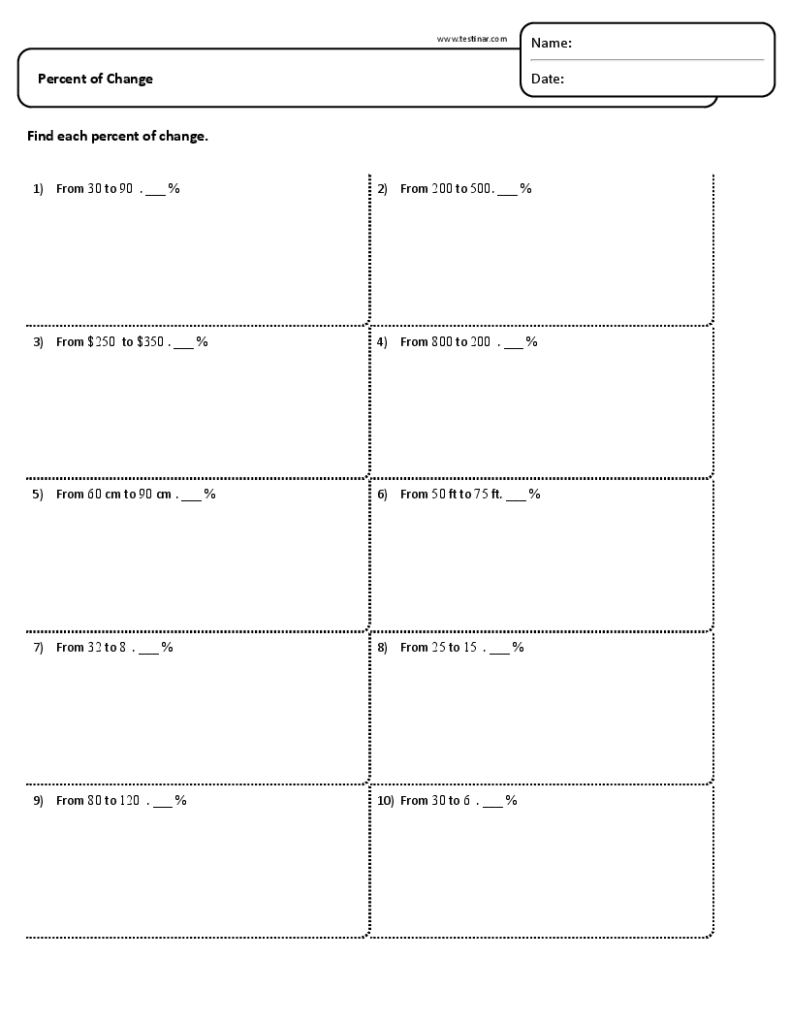
The core calculation on a percent of change worksheet is change divided by original value, then multiplied by 100. In symbols, it is often written as percent of change = (change ÷ original) × 100. Students should first subtract the original value from the new value to find the change, then decide whether the result shows an increase or a decrease. This makes the worksheet a strong practice tool for ratios, fractions, and decimals.
Increase and decrease practice
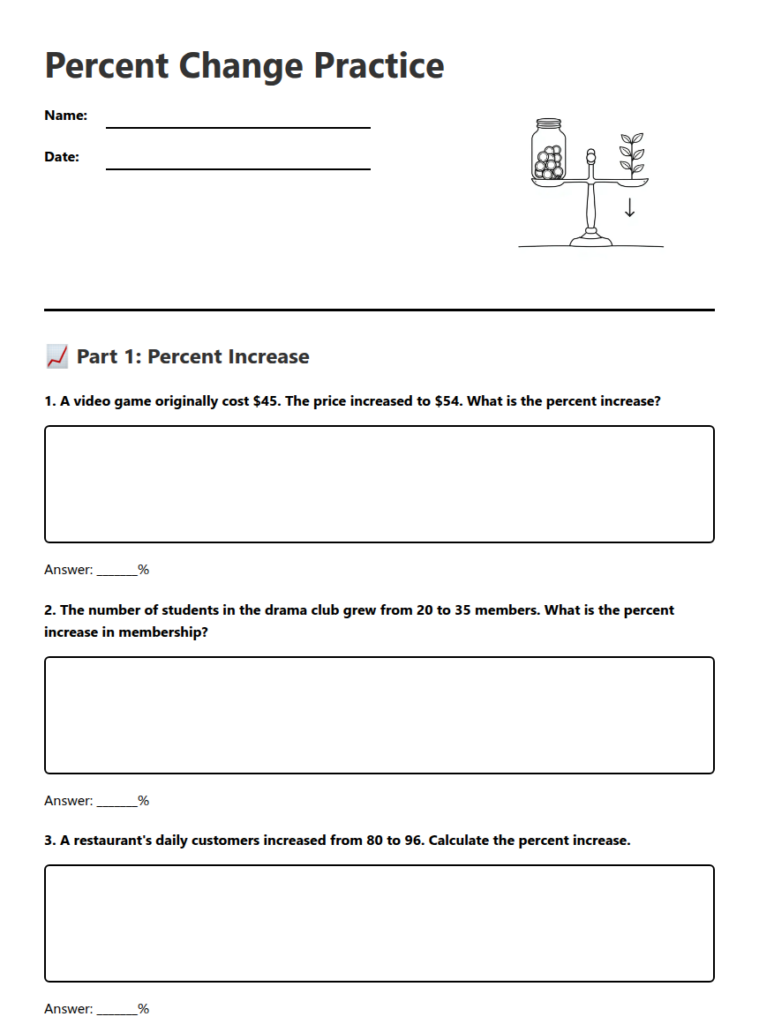
A helpful worksheet should make it clear whether it includes increases, decreases, or both. Many classroom versions mix both types so learners must interpret the situation before calculating. That keeps the practice realistic and helps students notice the sign of the change. The difficulty is usually basic to moderate, with whole numbers or simple decimals rather than multi-step word problems. That level works well for independent practice, partner work, or quick review before a quiz.
How to check answers
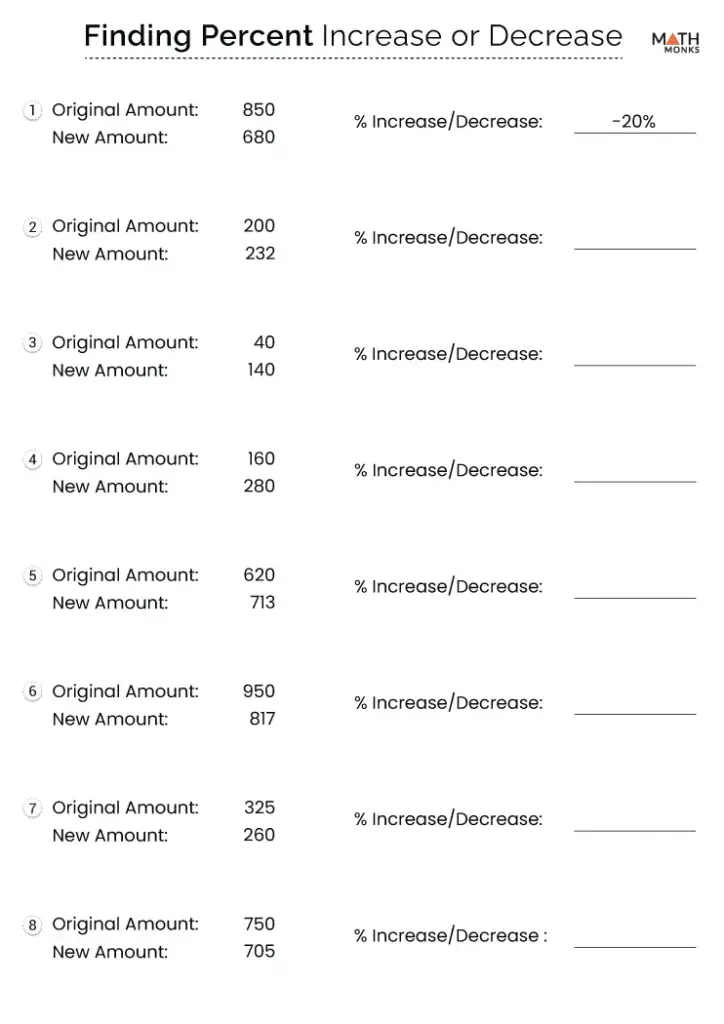
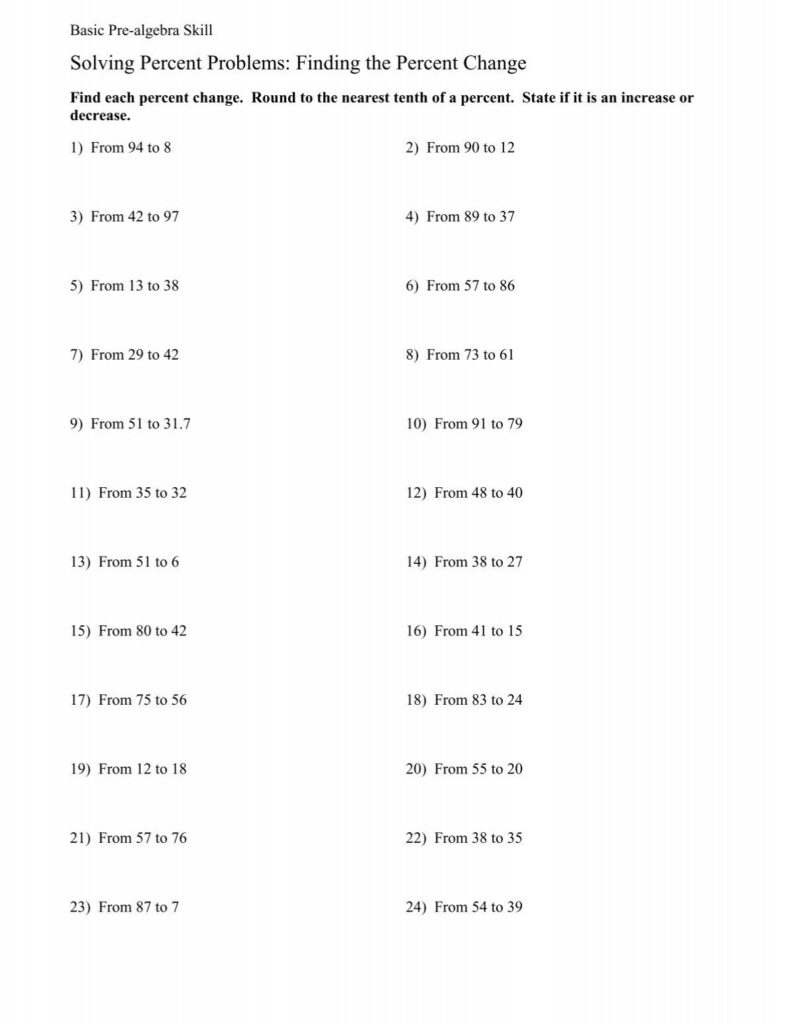
Answer-check guidance should be simple enough for students to use on their own. One good method is to estimate first: if the new value is larger, the answer should be a percent increase; if it is smaller, it should be a percent decrease. Students can also reverse the process by using the percent to see whether the new value makes sense. For worksheets with answer keys, comparing the setup of the formula is just as important as checking the final number.
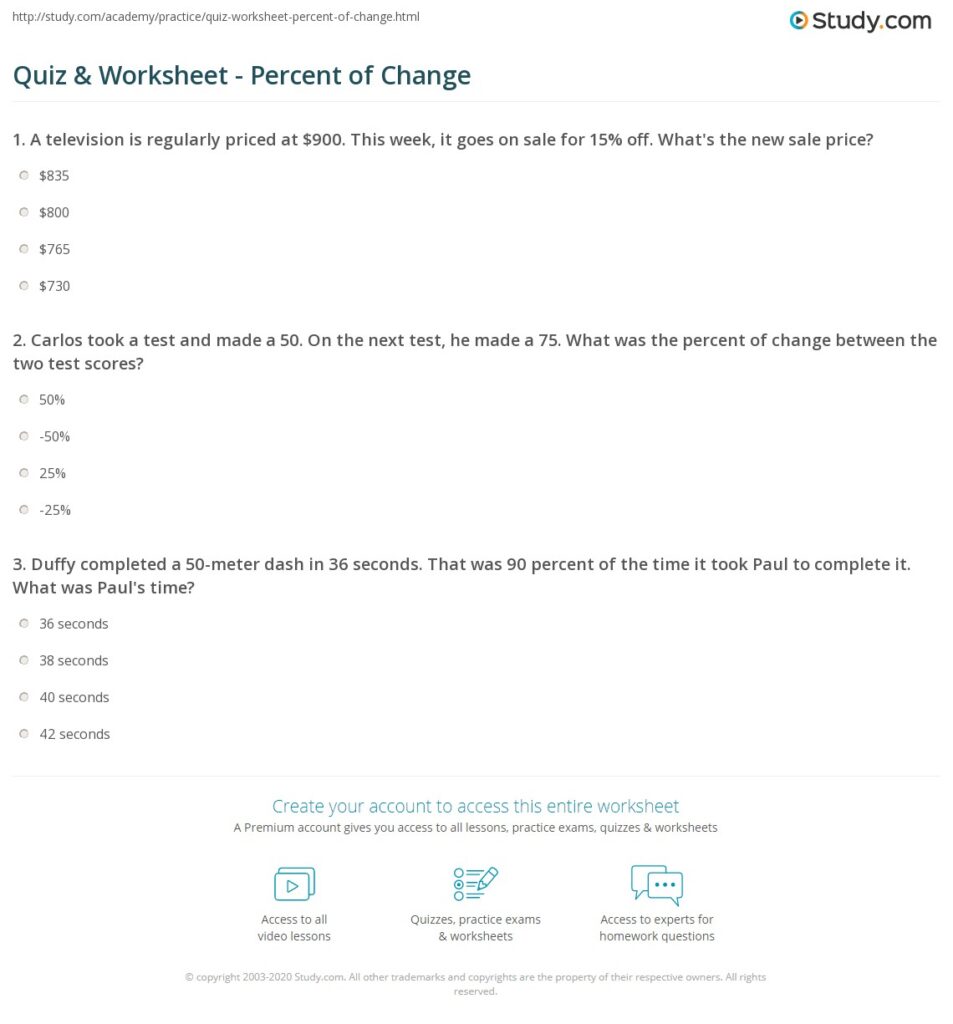
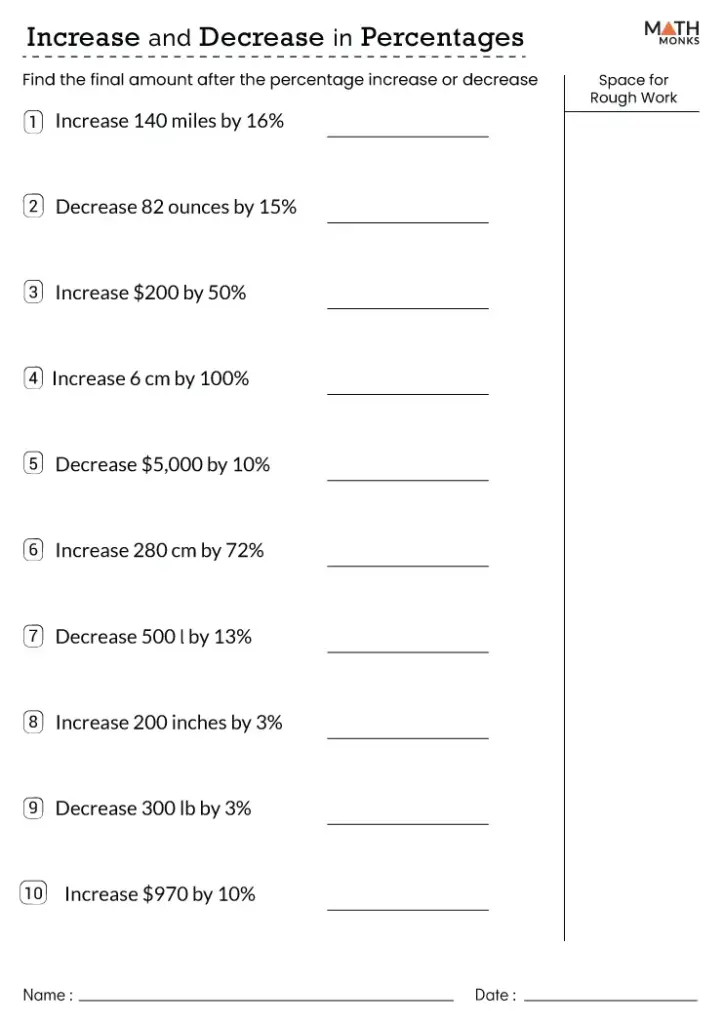
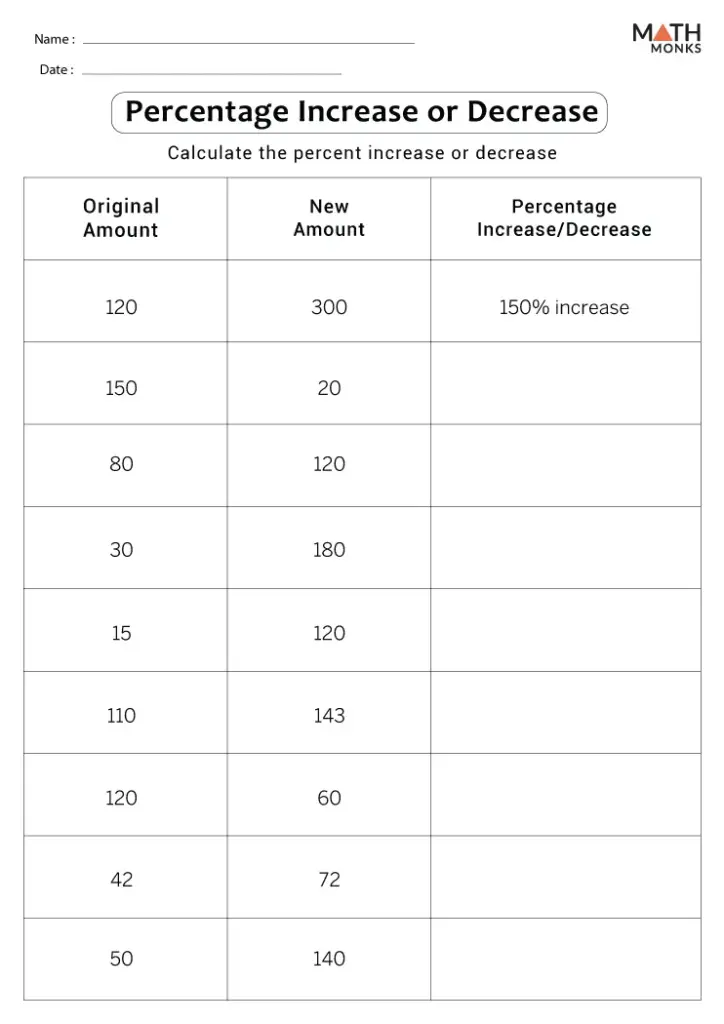
For classroom use, a percent of change worksheet works best when students have a short model problem before they begin. Then they can apply the same steps to each item without guessing. Look for practice that is clear, focused on percent increase and decrease, and supported by an answer key or self-check directions. That combination helps learners build confidence with the formula and use it correctly on their own.