
Function table worksheets help kids practice one simple math idea: an input goes in, and an output comes out. These worksheets are useful for building pattern recognition without jumping into harder algebra topics. A good set should make the table easy to read, show what to do, and give enough examples for students to work independently or with light support.
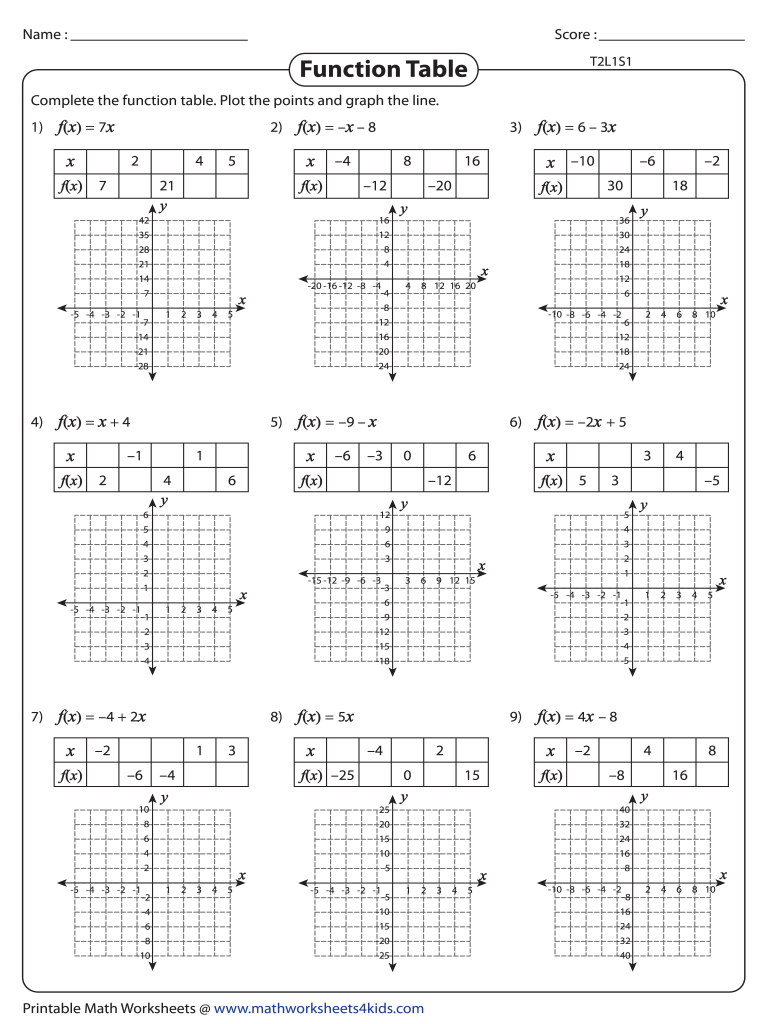
In plain language, a function table is an input-output table. One column lists the input number, and the matching column shows the output number. Students look at the relationship between the two and figure out what happens from one side to the other. For example, if the pattern adds 2, then 3 becomes 5 and 7 becomes 9. This kind of practice helps children notice rules and use them to fill in missing answers.
What the Tables Show
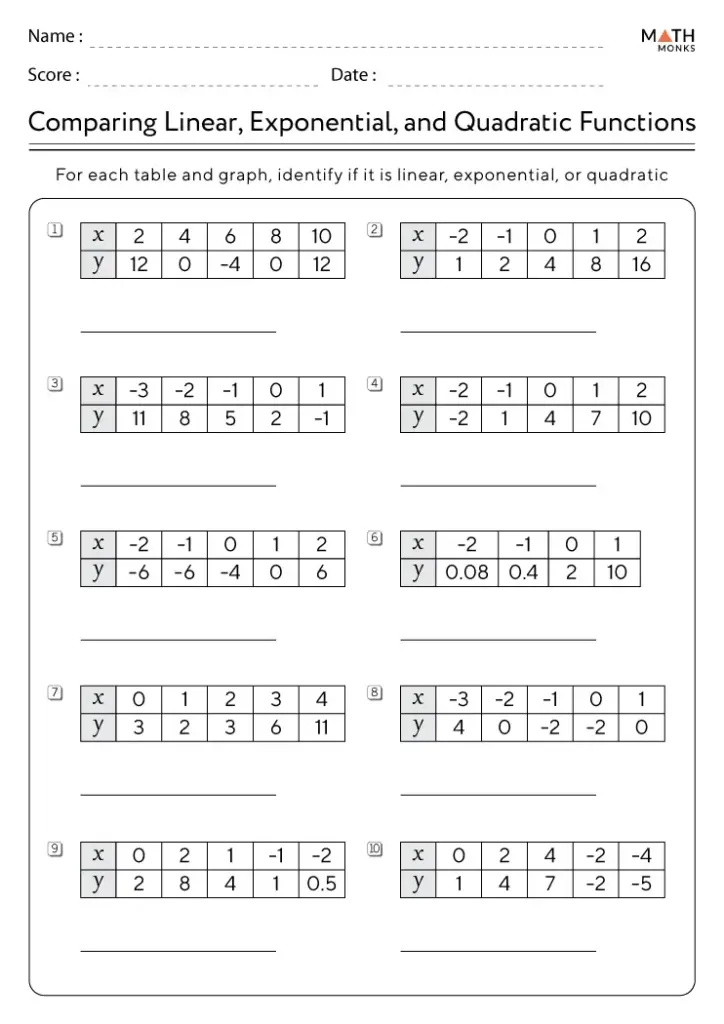
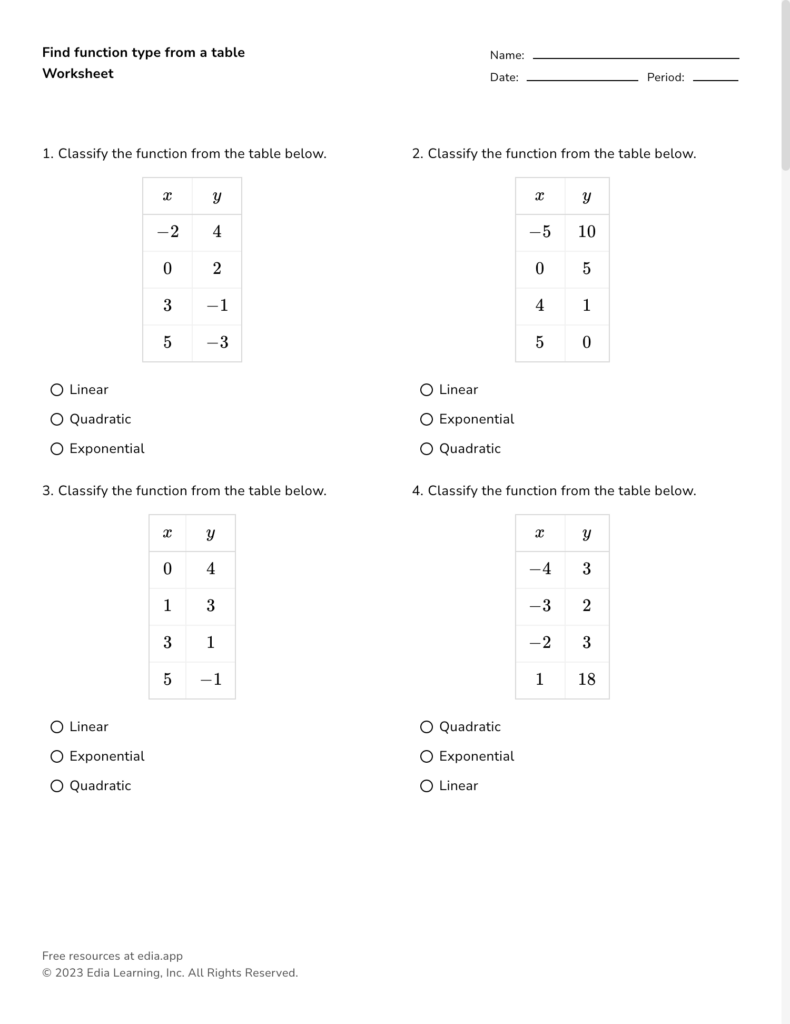
The most useful worksheets have clear rows and columns, with enough spacing for young learners to track their work. They should include a few worked examples so students can see how a sample table is completed before they try one alone. Some worksheets also use blank boxes or missing values to make the thinking step explicit. When the layout is uncluttered, students can focus on the pattern instead of reading around extra decoration.
Helpful Worksheet Features
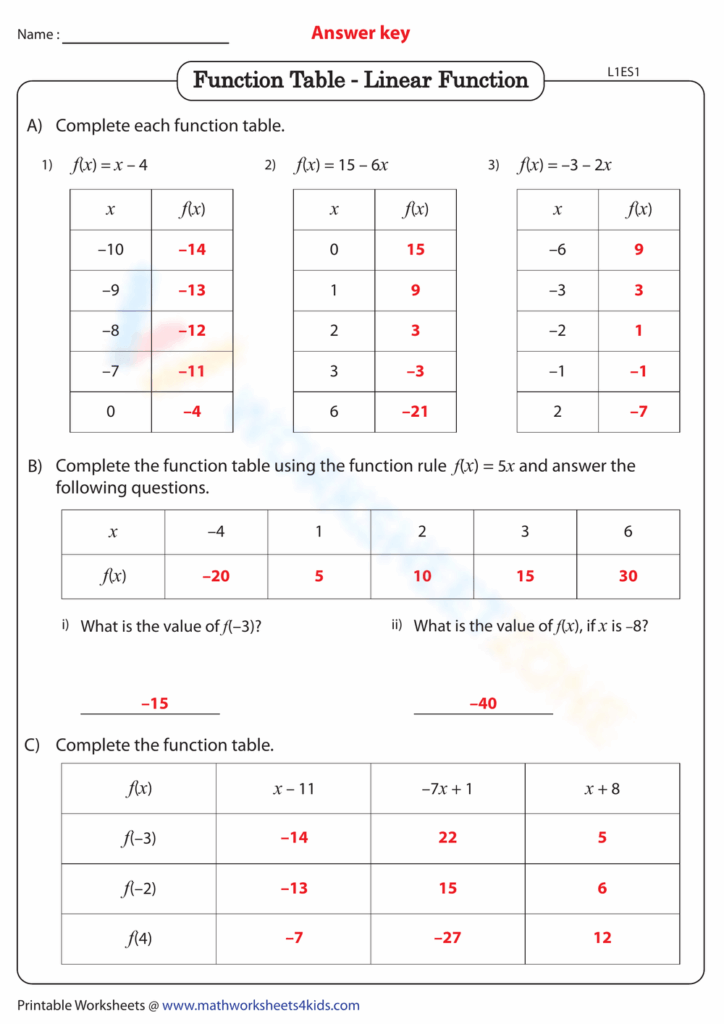
Answer keys are important if the worksheets are used at home or in a busy classroom. They let adults check quickly and help students correct mistakes right away. A strong worksheet set may also mix easier tables with slightly more challenging ones, so practice stays manageable but not repetitive. The best pages keep the math centered on identifying the rule, completing the missing inputs or outputs, and checking whether the pattern makes sense.
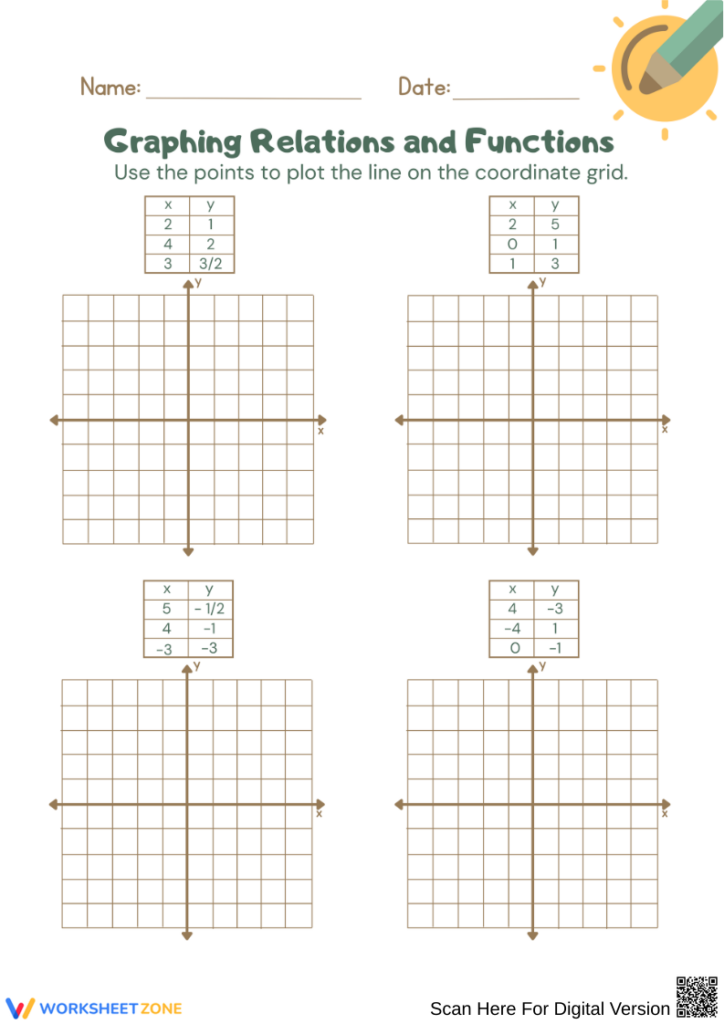
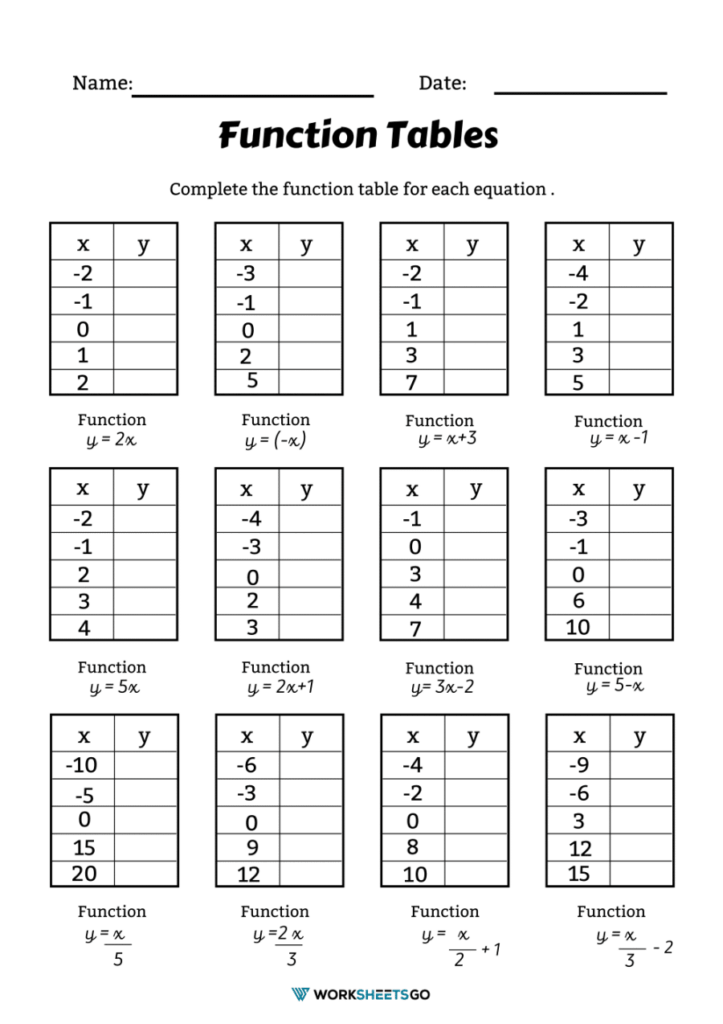
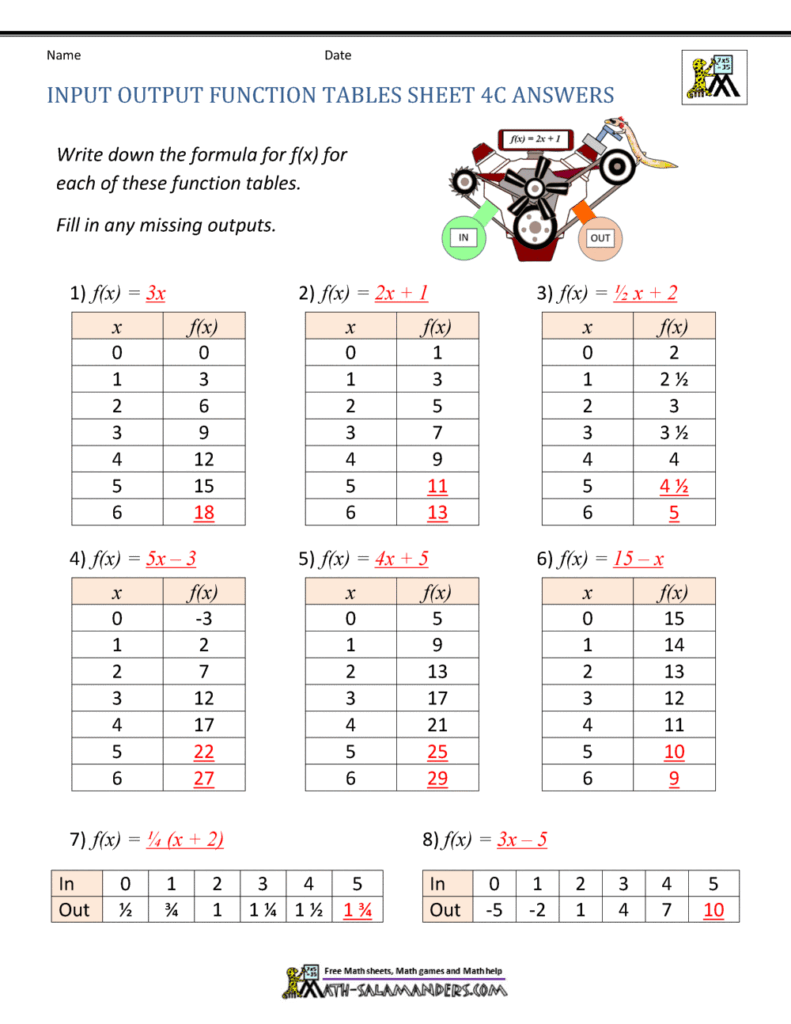
When choosing function table worksheets, look for pages that match the learner’s level and keep the task simple. Early learners usually do best with small numbers and obvious patterns, while more confident students can handle tables with a little more variety. The goal is steady practice, not confusion. A clear worksheet set gives children repeated chances to spot a pattern, fill in the table, and build confidence with input-output thinking.



