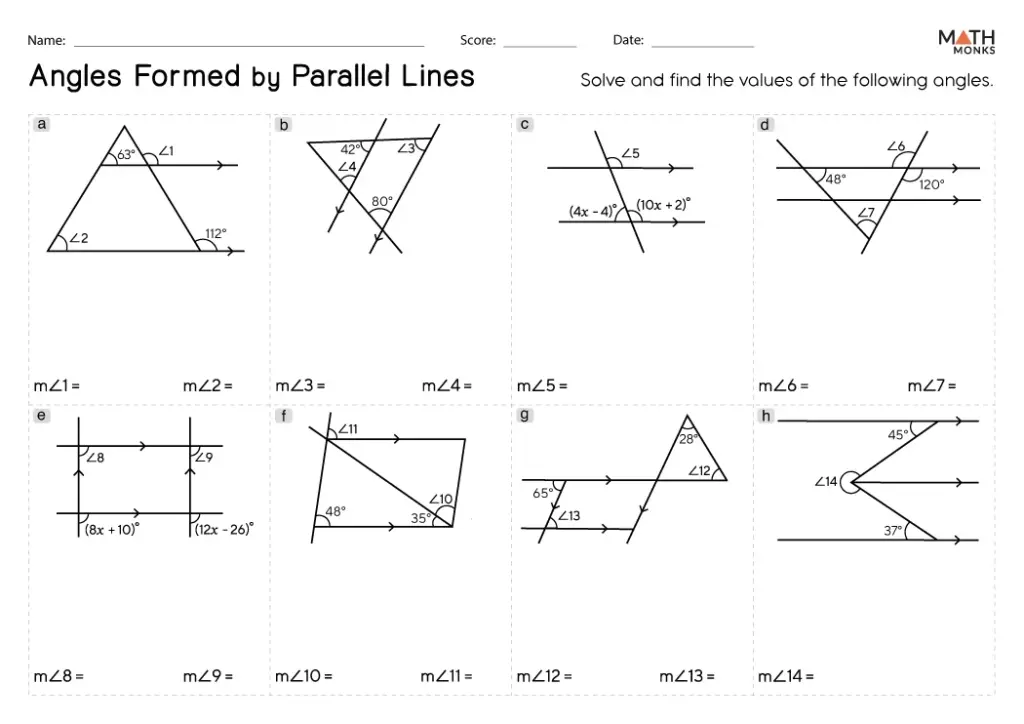
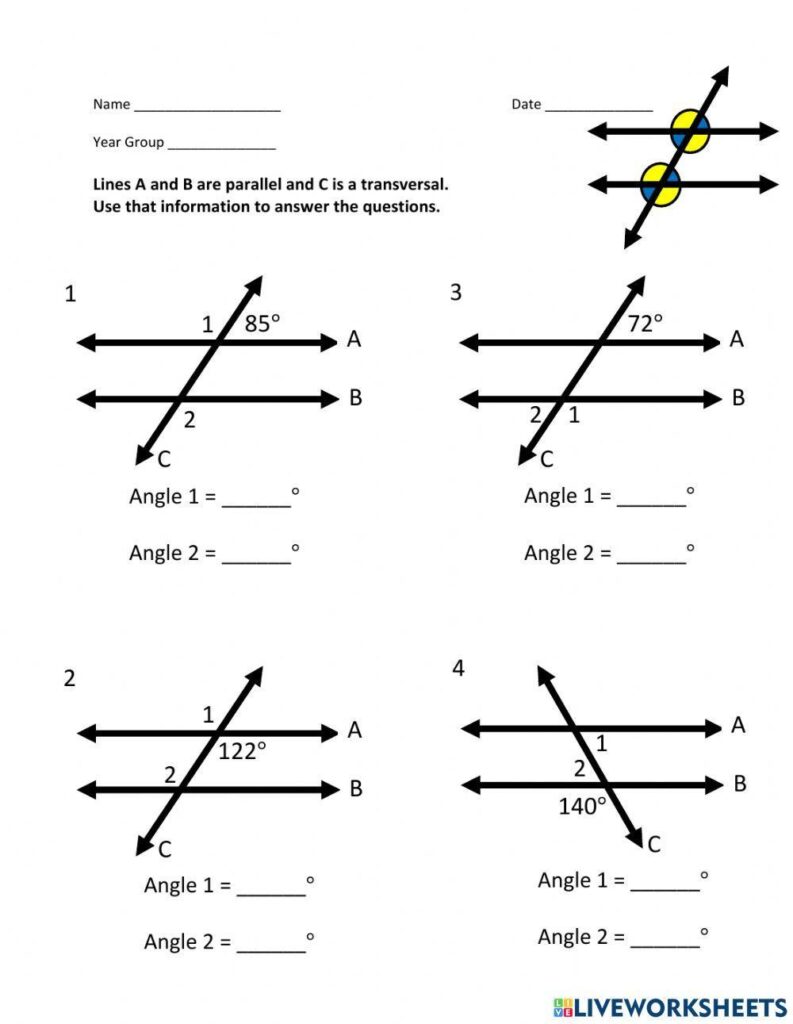
A parallel lines and transversals worksheet helps students practice one specific geometry skill: reading angle relationships and using them to solve for missing measures. The best worksheets keep the focus on identifying corresponding, alternate interior, alternate exterior, same-side interior, and vertical angles. Students should not only label the pairs but also decide when angles are congruent or supplementary, since that rule connection is the key to solving most problems.
Angle Pair Basics
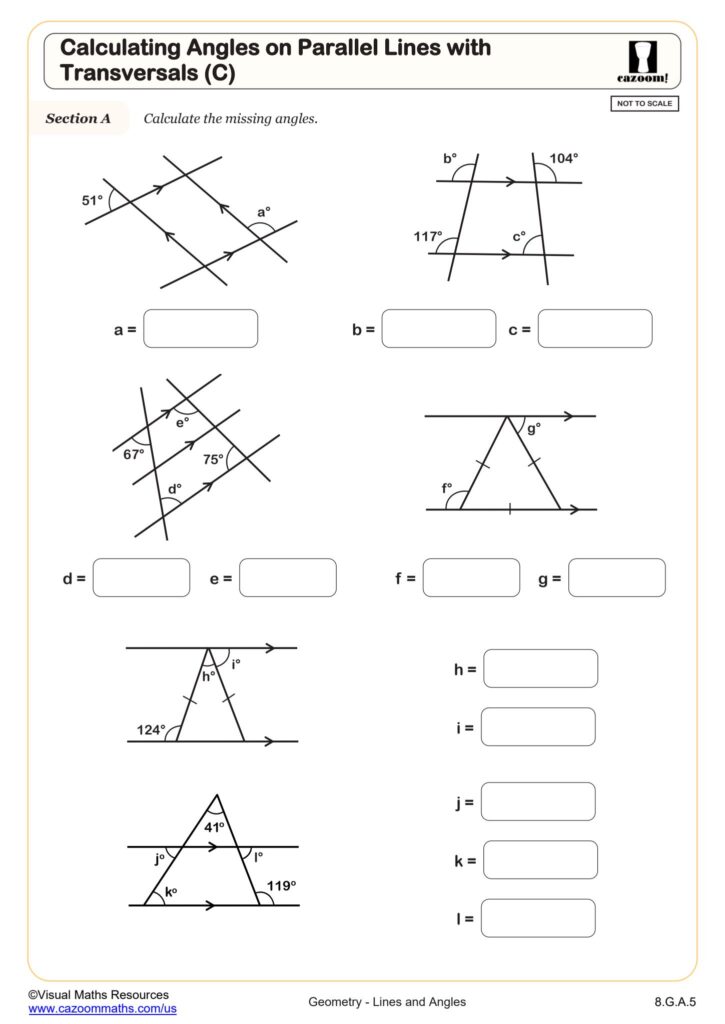
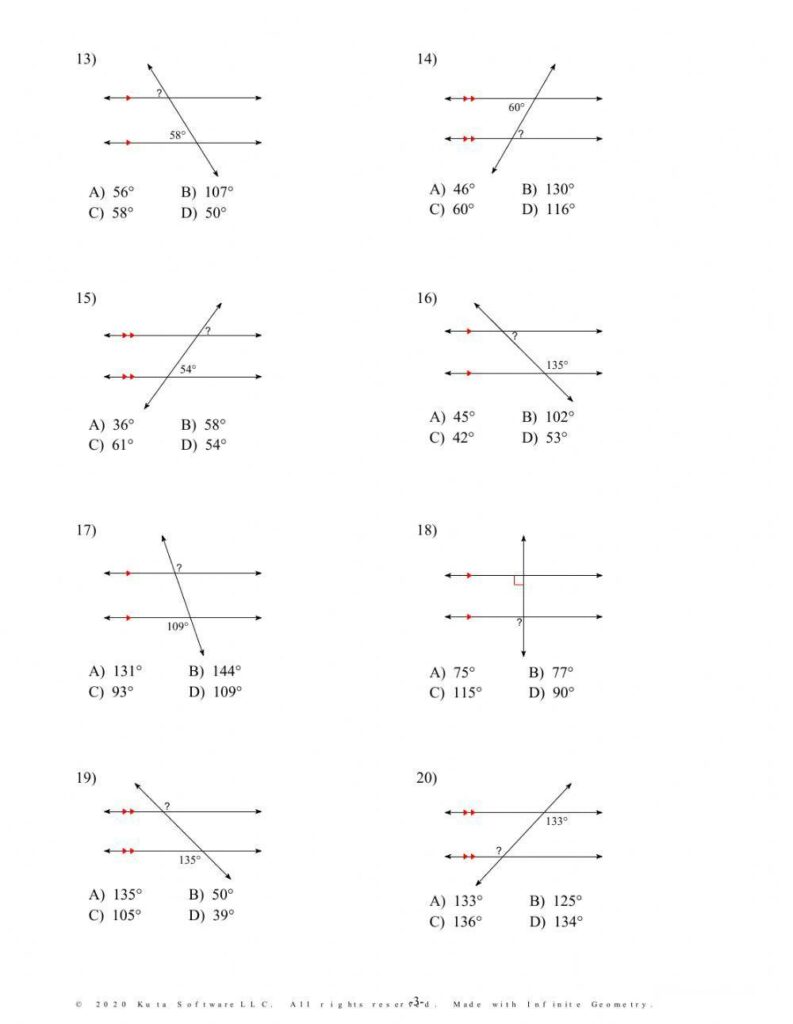
A strong worksheet should start with naming angle pairs from diagrams. Students may be asked to circle corresponding angles, match alternate interior angles, or mark same-side interior angles. This kind of practice builds recognition before calculation. It also helps students connect the position of the angles to their relationship, which is essential when a transversal cuts across two parallel lines. Including vertical angles is useful too, because students often use them as an extra clue when finding missing values.
Solve for Missing Angles
The next useful task type is finding missing angle measures. A good parallel lines and transversals worksheet includes problems where one angle is given and students must use the correct relationship to determine the unknown. For example, congruent angle pairs have equal measures, while same-side interior angles add to 180 degrees. Mixing these cases helps students choose the right rule instead of guessing. Clear diagrams with labeled angle numbers make the practice easier to follow and check.
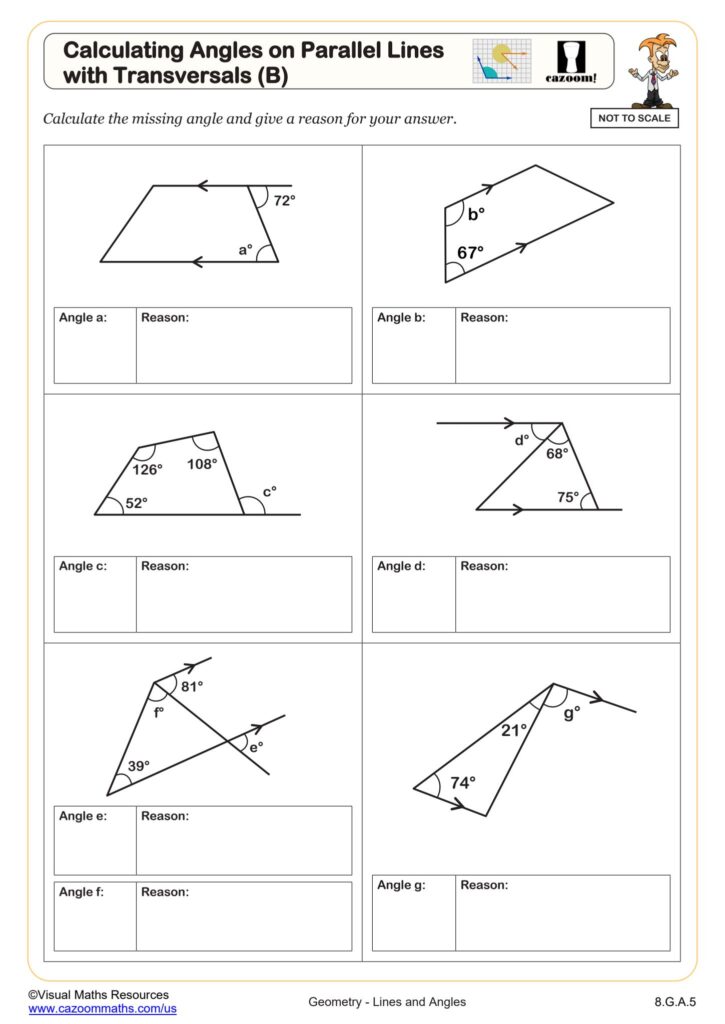
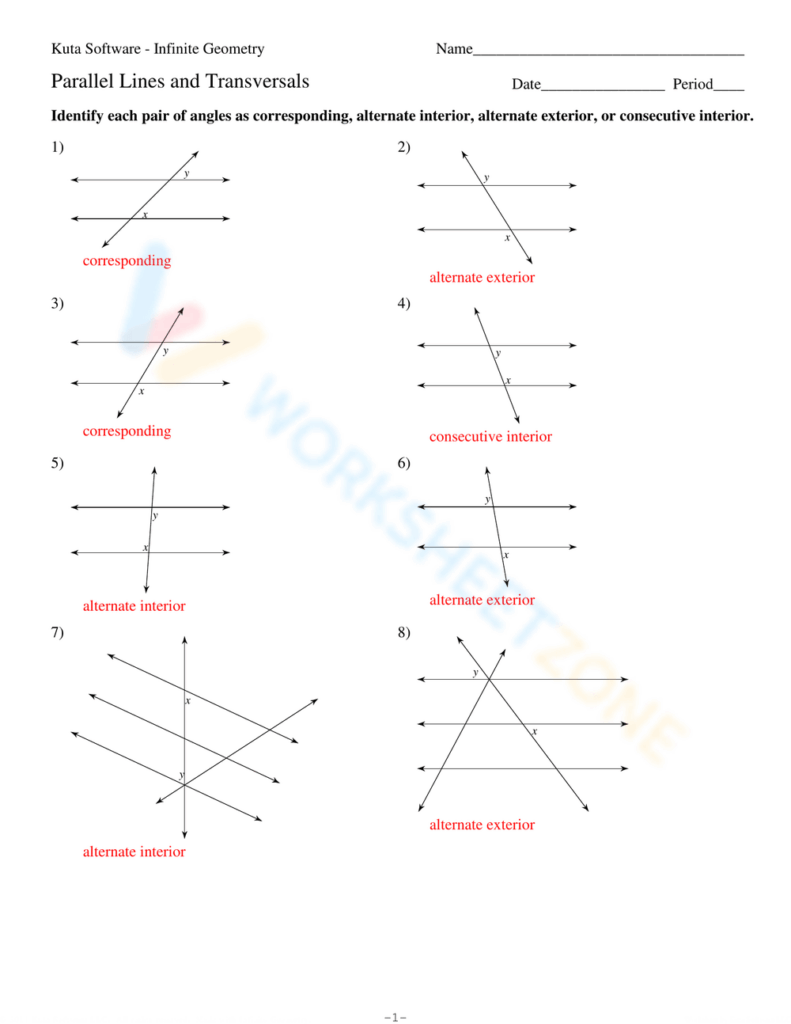
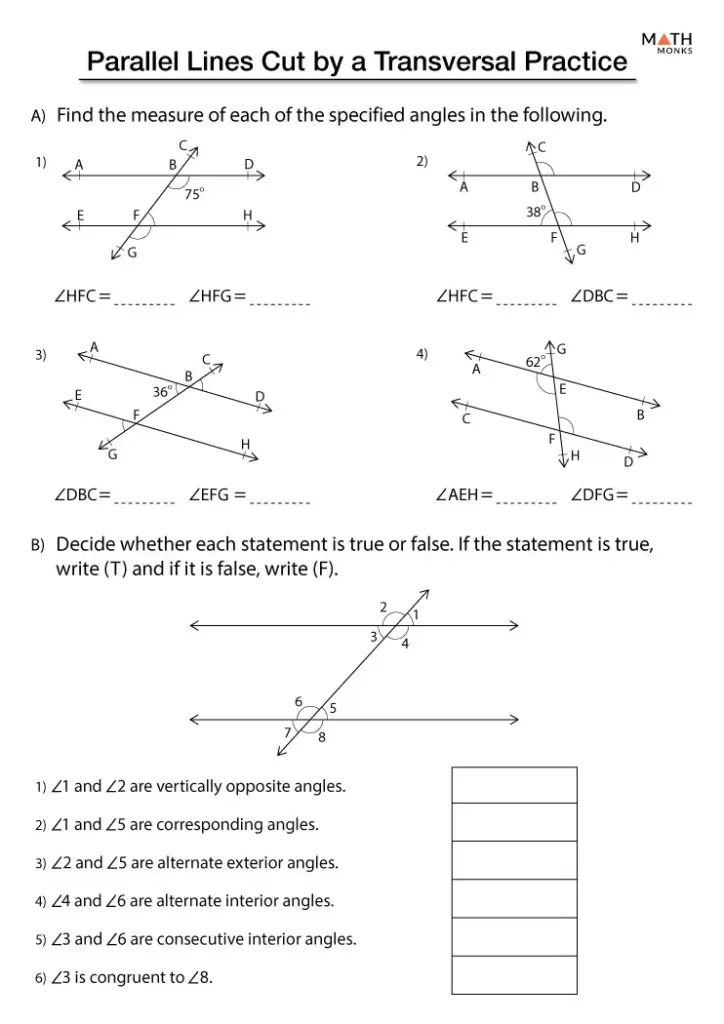
Worksheets are even stronger when they ask students to explain their reasoning in a sentence or two. A simple prompt such as “What relationship do these angles have?” pushes students to justify why two angles are equal or supplementary. This is especially helpful when several angle pairs appear in the same diagram. A good worksheet should stay focused on these core skills so students practice naming, calculating, and explaining angle relationships with parallel lines and a transversal. That focused repetition builds confidence quickly.